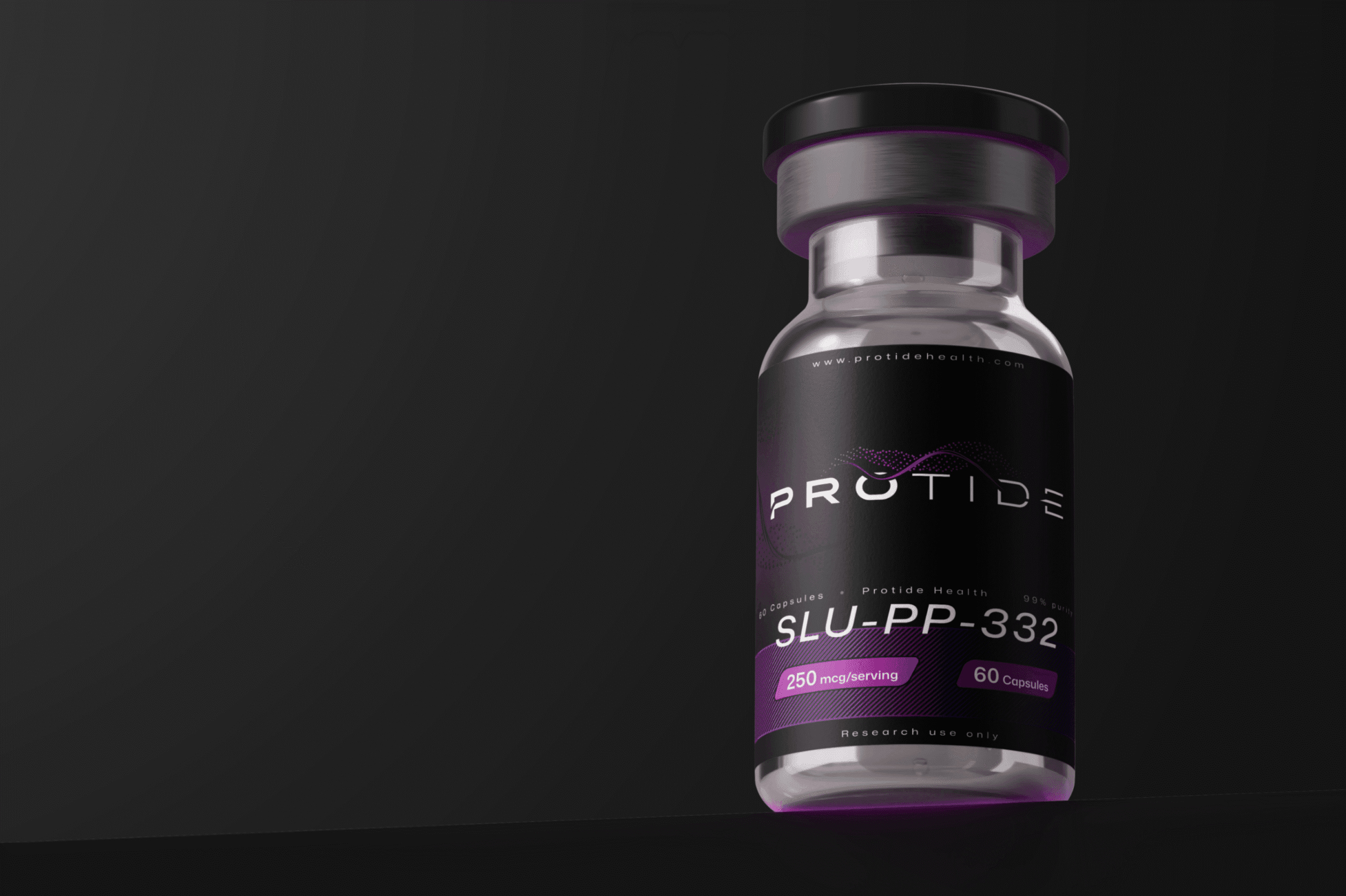
SLU-PP-332: Laboratory Guide to an ERR Agonist for Metabolic Research
Research‑Use‑Only Notice: All content on this website and all product information are for educational and informational purposes only. All products referenced are for laboratory research, analytical, and in‑vitro or preclinical in‑vivo use only. They are not medicines or drugs, have not been evaluated or approved by the FDA, and are not intended to diagnose, treat, cure, or prevent any disease. Any bodily introduction into humans or animals is strictly prohibited.
SLU-PP-332 is a synthetic estrogen-related receptor (ERR) agonist investigated in preclinical models for mitochondrial biogenesis, fatty acid oxidation, and metabolic regulation pathways. Studies examine this small molecule compound (not a peptide) for mechanisms underlying exercise-like cellular adaptations in laboratory settings.
What is SLU-PP-332?
SLU-PP-332 (4-hydroxy-N-[(Z)-naphthalen-2-ylmethylideneaminobenzamide) is a small molecule compound developed at Saint Louis University School of Medicine. Research measures its binding affinity to ERRα (EC₅₀ = 98 nM), ERRβ (EC₅₀ = 230 nM), and ERRγ (EC₅₀ = 430 nM) in cell-based assays. The compound exhibits no estrogenic receptor activity despite structural similarity. Molecular weight is 290.32 Da.
Mechanisms Investigated in Laboratory Models
Mitochondrial Biogenesis
SLU-PP-332 is studied for activation of the PGC-1α/ERRα pathway in mouse C2C12 myocyte cultures. Studies measure:
- TFAM (mitochondrial transcription factor A) expression
- Mitochondrial DNA replication markers
- MitoTracker staining showing organelle proliferation
Research examines concentration-response relationships in vitro for defined treatment periods.
Fatty Acid Oxidation Pathways
Animal studies investigate SLU-PP-332 for upregulation of β-oxidation enzymes in skeletal muscle and hepatic tissue. Laboratory models measure:
- CPT1 (carnitine palmitoyltransferase 1) gene expression
- ACOX1 (acyl-CoA oxidase) pathway activation
- Respiratory exchange ratio (RER) changes indicating lipid substrate preference
Studies report measured RER values in mouse metabolic chambers.
Exercise-Mimetic Signaling
Research examines ERRα-dependent aerobic exercise genetic programs in rodent models. Investigations measure:
- Type IIa oxidative muscle fiber percentage
- Pyruvate dehydrogenase kinase 4 (Pdk4) expression
- AMPK (AMP-activated protein kinase) pathway activation
Mouse studies investigate running endurance endpoints in treadmill assays. Human exercise-related outcomes remain unvalidated.
Preclinical Research Findings
Metabolic Models
Diet-induced obese (DIO) mice and ob/ob genetic obesity models investigate SLU-PP-332 across defined exposure protocols in published studies. Studies measure:
- Body mass as a metabolic endpoint
- Fat mass composition via imaging
- Glucose tolerance test (GTT) curves and area-under-curve
- Fasting insulin levels
Research also examines hepatic steatosis markers and inflammatory cytokine expression in liver tissue. Human metabolic outcomes are not established.
Aging Research Models
Aged rodent studies investigate SLU-PP-332 for mitochondrial function endpoints in kidney and liver tissue. Laboratory endpoints include:
- Mitochondrial respiration capacity
- IL-6 and TNF-α inflammatory markers
- Oxidative DNA damage assays
- Autophagy and mitophagy pathway markers
Studies measure fibrotic tissue markers in preclinical contexts. Human evidence is absent.
Cardiac Models
Preliminary research examines SLU-PP-332 in ischemia-reperfusion injury models. Studies investigate:
- Cardiomyocyte contractility preservation
- Myocardial fatty acid oxidation pathways
- Ventricular remodeling markers
Human cardiovascular data remains unavailable.
Research Applications
| Model System | Pathway Investigated | Measured Endpoints |
|---|---|---|
| C2C12 Myocytes | Mitochondrial biogenesis | Oxygen consumption rate, TFAM expression |
| DIO Mice | Metabolic regulation | Body mass, fat composition, GTT curves |
| Aged Rodents | Inflammatory pathways | Cytokine levels, oxidative stress markers |
| Skeletal Muscle | Fiber-type adaptation | Type IIa fiber percentage, endurance assays |
Where to Source SLU-PP-332 for Research
Laboratory-grade SLU-PP-332 is available from Protide Health with third-party HPLC verification.
Quality Standards for Laboratory Research
Research-grade compounds feature:
- Third-party purity verification (HPLC, LC-MS)
- Certificate of analysis (COA) documentation
- USA-based manufacturing with GMP protocols
Limitations and Considerations
Laboratory studies report:
- Limited brain tissue penetration in rodent pharmacokinetic studies
- Exposure frequency varies across published animal protocols
- High-concentration effects in vitro may activate non-target nuclear receptors
- Mild hyperthermia and elevated heart rate measured in animal studies
Human pharmacokinetics, safety, and efficacy remain unestablished. SLU-PP-332 is classified as a research chemical, not approved for human consumption.
Frequently Asked Questions
Is SLU-PP-332 a peptide?
No. Despite “PP” nomenclature, SLU-PP-332 is a synthetic small molecule (molecular weight 290.32 Da). It is a hydrazone-linkage compound, not an amino acid polymer.
What pathways distinguish SLU-PP-332 from traditional metabolic compounds?
SLU-PP-332 targets ERRα/β/γ nuclear receptors that regulate mitochondrial gene transcription. Unlike AMPK activators or GLP-1 agonists, it does not directly modulate appetite signaling or insulin secretion pathways in preclinical models.
What concentrations are used in laboratory studies?
In vitro cell culture studies use concentration ranges determined by EC₅₀ values for defined treatment durations. Mouse model exposure parameters vary across published studies and should be referenced from peer-reviewed protocols. Human dosing parameters do not exist.
How is SLU-PP-332 stored for laboratory use?
Store powder form at -20°C protected from light and moisture. Once dissolved in research-grade DMSO or vehicle, use within specified timeframes per manufacturer COA. Avoid repeated freeze-thaw cycles.
Disclaimer: SLU-PP-332 is for laboratory research purposes only and is not intended for human consumption, medical use, or veterinary use. Information provided is educational and not medical advice.
References
- Billon C, et al. Synthetic ERRα/β/γ Agonist Induces an ERRα-Dependent Exercise Program. Cell Chemical Biology, 2023. (PubMed)
- Billon C, et al. A Synthetic ERR Agonist Investigated in Metabolic Models. Science Translational Medicine, 2024. (PubMed)
- Wang XX, et al. Estrogen-Related Receptor Agonism and Mitochondrial Endpoints in Aging Models. American Journal of Pathology, 2023. (ScienceDirect)
- ERR agonist exercise-related pathway investigation. BioRxiv preprint, 2022. (BioRxiv)