Tesamorelin Peptide: Laboratory Research Guide to GHRH Analog Mechanisms
Research‑Use‑Only Notice: All content on this website and all product information are for educational and informational purposes only. All products referenced are for laboratory research, analytical, and in‑vitro or preclinical in‑vivo use only. They are not medicines or drugs, have not been evaluated or approved by the FDA, and are not intended to diagnose, treat, cure, or prevent any disease. Any bodily introduction into humans or animals is strictly prohibited.
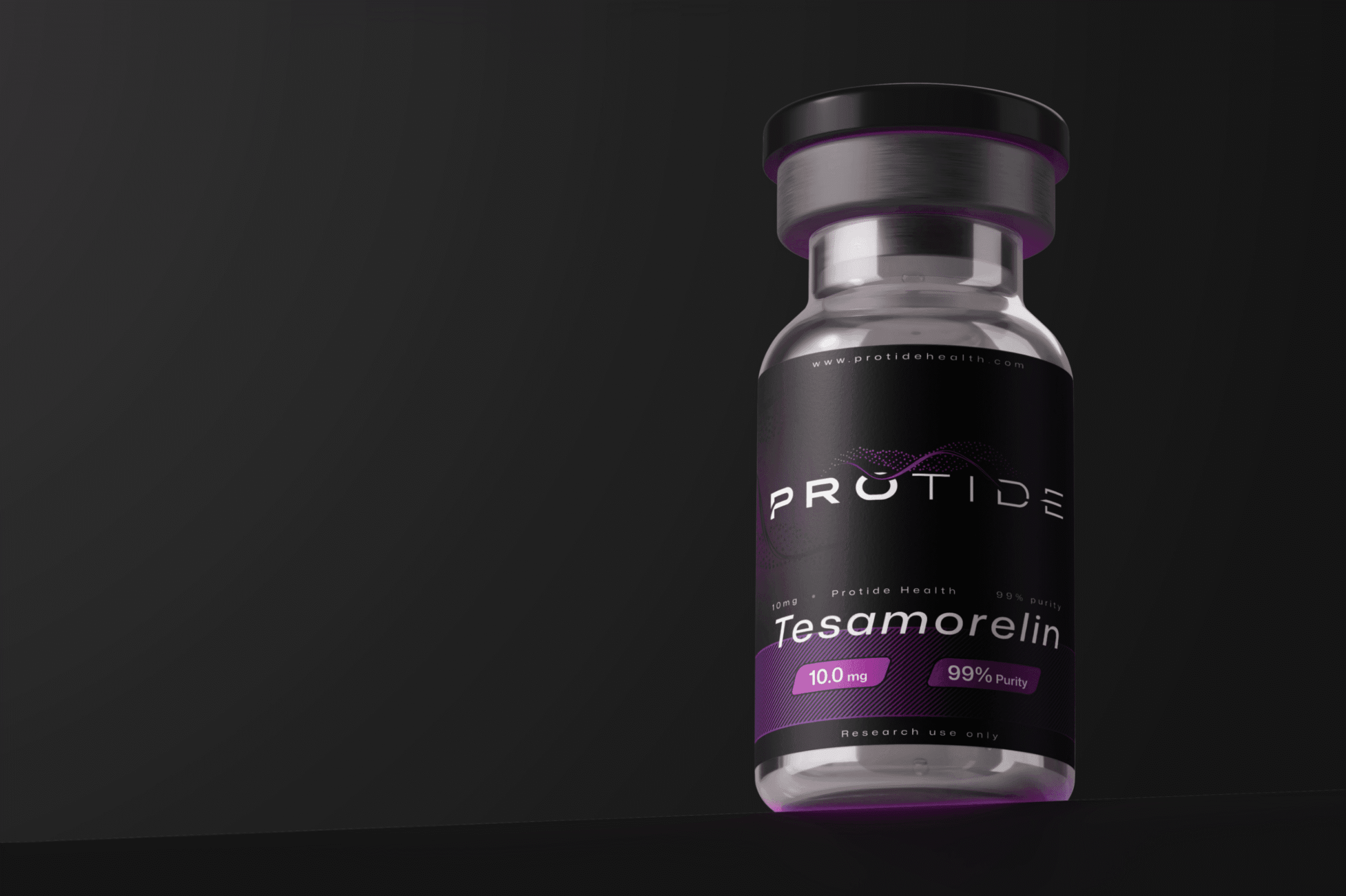
Tesamorelin is a synthetic 44-amino-acid analog of growth hormone-releasing hormone (GHRH) investigated in preclinical and clinical research models for pituitary GH secretion pathways. Studies examine neuroendocrine regulation, adipose tissue metabolism, and IGF-1 production in controlled laboratory settings.
What is Tesamorelin?
Tesamorelin (trans-3-hexenoyl-GHRH 1-44-NH2) is a modified GHRH peptide with N-terminal trans-3-hexenoyl modification for enzymatic stability (molecular weight ~5135.9 Da). Research measures its activity at the GHRH receptor (GHRHR):
- GHRHR activation: Pituitary somatotroph cell signaling
- GH secretion: 2-5× increase in rat pituitary cultures (1-10 nM)
- IGF-1 elevation: 15-25% hepatic production increase in rodent models
- Half-life: 26-38 minutes in human pharmacokinetic studies (PMC)
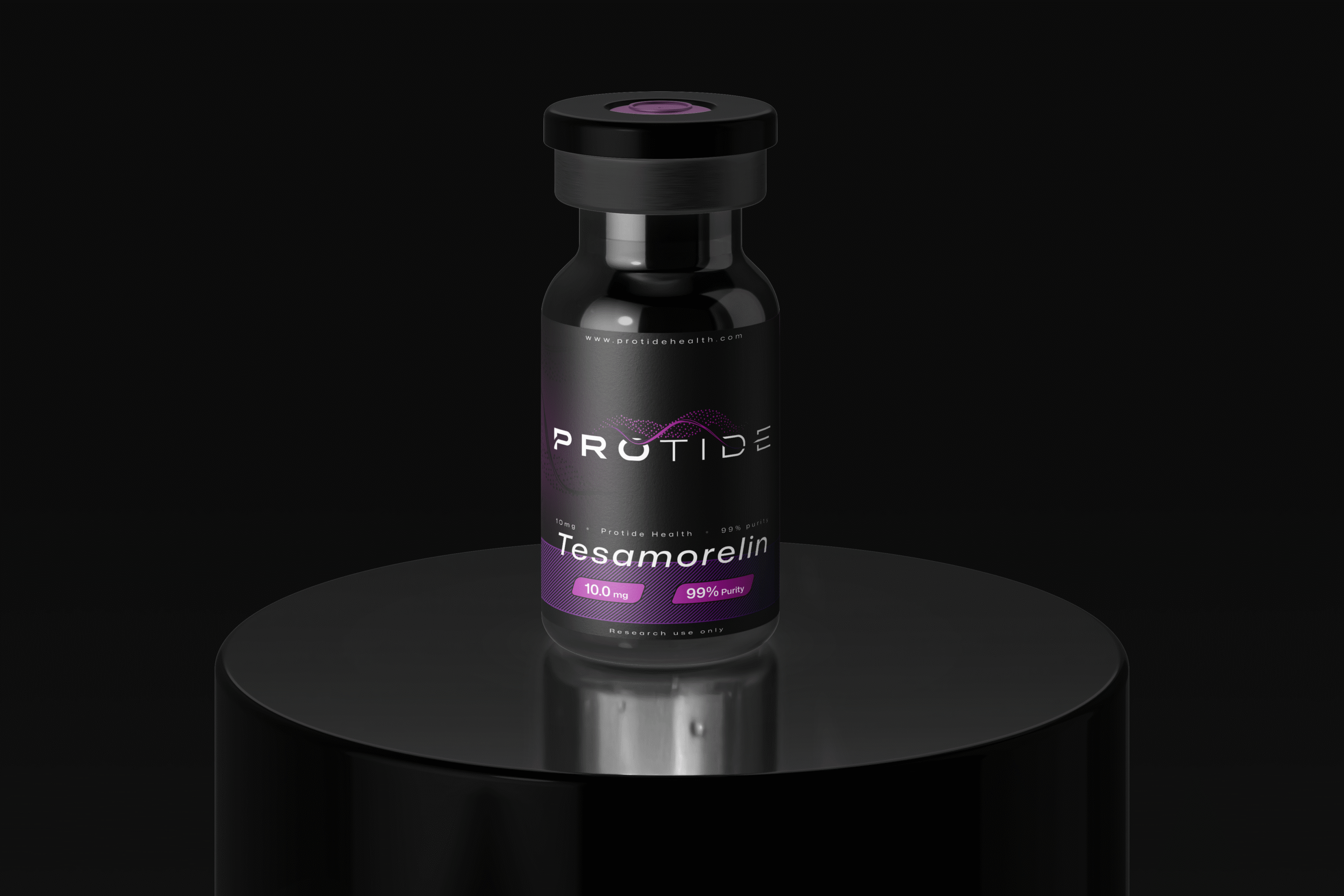
The compound is supplied as lyophilized powder for laboratory reconstitution. Explore tesamorelin research materials.
Mechanisms Investigated in Research Models
GHRH Receptor Signaling Pathways
Laboratory studies examine tesamorelin for:
- cAMP production: 20-25% increased cyclic AMP in pituitary cell cultures via adenylate cyclase activation
- GH pulse dynamics: 3-4× increase in pulsatile GH secretion in rodent models
- Neuroendocrine specificity: <3% effect on cortisol, prolactin, or ACTH levels in preclinical studies (PMC)
Animal models measure GHRHR-mediated pathways distinct from ghrelin receptor (GHSR) mechanisms used by other GH secretagogues.
Metabolic Regulation Pathways
Preclinical studies investigate:
- Lipolysis: Hormone-sensitive lipase (HSL) activation, 12-15% increased fatty acid β-oxidation in adipocyte cultures
- Protein synthesis: Upregulation of myogenic markers (MyoD, myogenin) by 15-18% in skeletal muscle cells
- IGF-1 mediation: Hepatic and local tissue IGF-1 production driving downstream anabolic and lipolytic pathways
Human Phase 3 trials measured these endpoints in specific approved indications only. Broader applications remain investigational.
Clinical Research Findings (HIV-Associated Lipodystrophy)
Visceral Adipose Tissue Studies
Phase 3 randomized controlled trials investigated tesamorelin in HIV-associated lipodystrophy populations (PubMed). Studies measured visceral adipose tissue (VAT) by CT imaging:
- VAT reduction: 15-20% mean decrease at 26 weeks (2 mg/day subcutaneous)
- Selectivity: Subcutaneous fat largely unchanged; visceral-specific effects observed
- Duration: Effects sustained during treatment; reversal upon discontinuation noted
These measurements are from FDA-approved indication studies. Applications outside this population are investigational and do not establish therapeutic efficacy.
Hepatic Fat Research
A substudy investigated hepatic steatosis in HIV-associated NAFLD (PubMed). Research measured:
- Liver fat content: 37% mean reduction by MRI-PDFF in treatment groups
- Inflammatory markers: Improvements in CRP and liver enzyme panels observed
- Fibrosis markers: Favorable shifts measured, though progression outcomes not established
These endpoints explore hepatic lipid pathways in clinical research models.
IGF-1 and GH Dynamics
Pharmacodynamic studies measured (PMC):
- GH secretion: Augmented basal and pulsatile GH release over 2-week periods
- IGF-1 levels: 181 ± 22 μg/L mean increase from baseline
- Insulin sensitivity: No significant changes in glucose uptake measured (P = 0.61)
- Pulse characteristics: Increased GH pulse area without frequency changes
Neuroendocrine outcomes are investigational outside approved contexts.
Research Applications
| Model System | Pathway Investigated | Measured Endpoints |
|---|---|---|
| Pituitary Somatotrophs | GHRHR signaling | cAMP production, GH secretion kinetics |
| Adipocyte Cultures | Lipolysis mechanisms | HSL activation, β-oxidation rates |
| Skeletal Muscle Cells | Anabolic pathways | MyoD/myogenin expression, protein synthesis |
| Rodent DIO Models | Metabolic regulation | VAT mass, IGF-1 levels, body composition |
| Clinical Trials (HIV) | VAT and liver fat | CT-measured VAT, MRI-PDFF hepatic fat |
Tesamorelin-Ipamorelin Combination Research
Synergistic Pathway Hypothesis
Preclinical studies investigate dual-mechanism GH secretagogue combinations:
- Tesamorelin: GHRHR agonism (GHRH pathway)
- Ipamorelin: GHS-R1a agonism (ghrelin receptor pathway)
- Proposed synergy: Complementary receptor activation producing amplified pulsatile GH release (PMC)
Research models suggest 20-47× increase in GH secretion with dual-pathway activation versus single agents in pituitary cell studies.
Research Blend Configurations
Laboratory-grade combination products:
- Tesamorelin/Ipamorelin 5mg/5mg: Equal-ratio dual-pathway research
- Tesamorelin/Ipamorelin 10mg/3mg: GHRHR-predominant formulation
Combination-specific human efficacy data do not exist. Synergy remains theoretical pending randomized controlled trials.
Study Limitations and Considerations
Observed Events in Clinical Trials
- Injection site reactions: Erythema, pruritus in <5% of participants
- Gastrointestinal: Mild nausea in small percentage of subjects
- Glucose homeostasis: Transient hyperglycemia noted; insulin sensitivity preserved in controlled studies (PMC)
- Discontinuation: VAT returns toward baseline upon treatment cessation
These observations are from approved-indication trials and do not constitute safety profiles for research applications.
Research Design Considerations
- Pulsatile dynamics: GH secretion follows circadian rhythm; sampling protocols require temporal considerations
- IGF-1 monitoring: Steady-state levels achieved after ~2 weeks of administration
- Population factors: Baseline GH status, age, and body composition affect response magnitude
- Combination studies: Tesamorelin-ipamorelin synergy requires controlled dose-response trials
Research Material Options
Laboratory-grade tesamorelin peptide:
- Tesamorelin 10mg: Standard research vial format
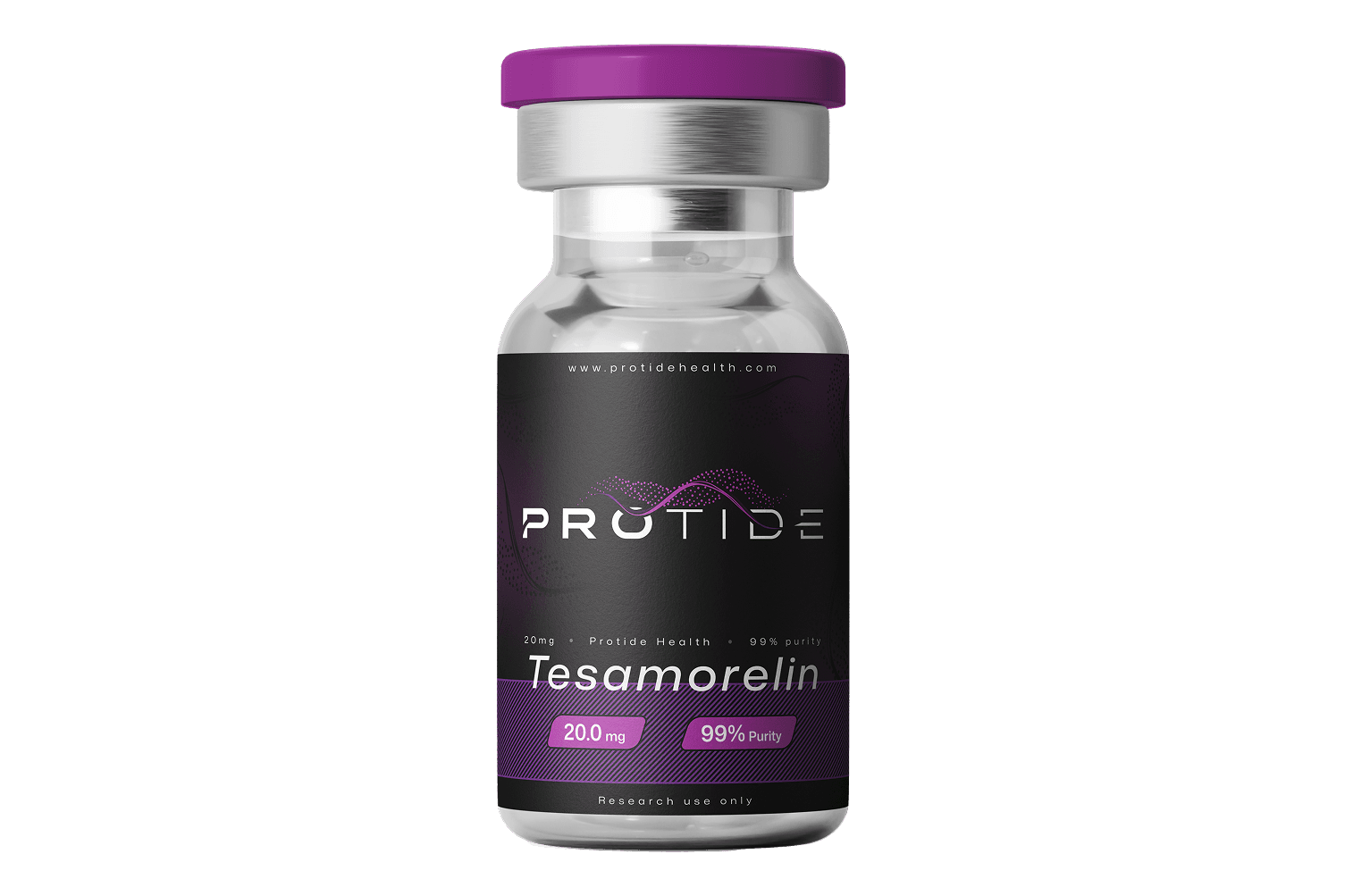
- Tesamorelin 20mg: Extended protocol applications
Dual-pathway GH secretagogue blends:
- Tesamorelin/Ipamorelin 5mg/5mg: Equal-ratio combination research
- Tesamorelin/Ipamorelin 10mg/3mg: GHRHR-predominant formulation
All products include third-party certificate of analysis (COA) documentation and HPLC purity verification (>99%).
Frequently Asked Questions
What receptor pathways distinguish tesamorelin from ghrelin-mimetic secretagogues?
Tesamorelin activates GHRHR on pituitary somatotrophs via GHRH mimicry, increasing cAMP and calcium-dependent GH gene transcription. Ghrelin-mimetics like ipamorelin activate GHS-R1a receptors through distinct G-protein pathways (PMC). Dual-pathway combinations are hypothesized to produce synergistic GH pulse amplification.
What endpoints are measured in adipose tissue research studies?
Preclinical models measure hormone-sensitive lipase (HSL) activity, adipocyte β-oxidation rates, and lipid droplet morphology. Clinical trials measure VAT by CT imaging (cm² cross-sectional area), subcutaneous fat distribution, and trunk-to-limb fat ratios. These are research endpoints, not therapeutic outcomes outside approved indications.
How is tesamorelin stored for laboratory use?
Lyophilized powder remains stable at -20°C for 12-24 months when stored properly. Reconstituted solutions store at 2-8°C for 14-28 days per manufacturer specifications. Avoid repeated freeze-thaw cycles to maintain peptide integrity and bioactivity.
What is the scientific rationale for tesamorelin-ipamorelin combinations?
Preclinical studies suggest GHRHR agonism (tesamorelin) and GHS-R1a agonism (ipamorelin) activate complementary intracellular pathways, potentially producing amplified pulsatile GH secretion versus single agents. Pituitary cell studies report 20-47× GH increases with dual-pathway activation.
What animal models are used for tesamorelin research?
Preclinical investigators study combinations with ipamorelin (dual GH secretagogue), CJC-1295 (GHRH analog), or IGF-1 LR3 (downstream effector). No published human combination trials exist outside tesamorelin monotherapy in approved indication. Review the Growth Hormone Secretagogues Research Guide for multi-compound considerations.
Disclaimer: Tesamorelin is for laboratory research purposes only and not intended for human consumption, medical use, or veterinary use outside approved protocols. Information provided is educational and not medical advice. Researchers must comply with all applicable regulations and obtain necessary approvals for experimental use.
References
- Stanley TL, et al. Effect of tesamorelin on visceral fat and liver fat in HIV-infected patients. PubMed
- Stanley TL, et al. Effects of a growth hormone-releasing hormone analog on endogenous GH pulsatility and insulin sensitivity. PMC
- Stanley TL, et al. Growth Hormone Releasing Hormone Reduces Circulating Biomarkers of Cardiovascular Risk. PMC
- Falutz J, et al. Effects of tesamorelin on body composition and metabolic parameters in HIV lipodystrophy. PubMed