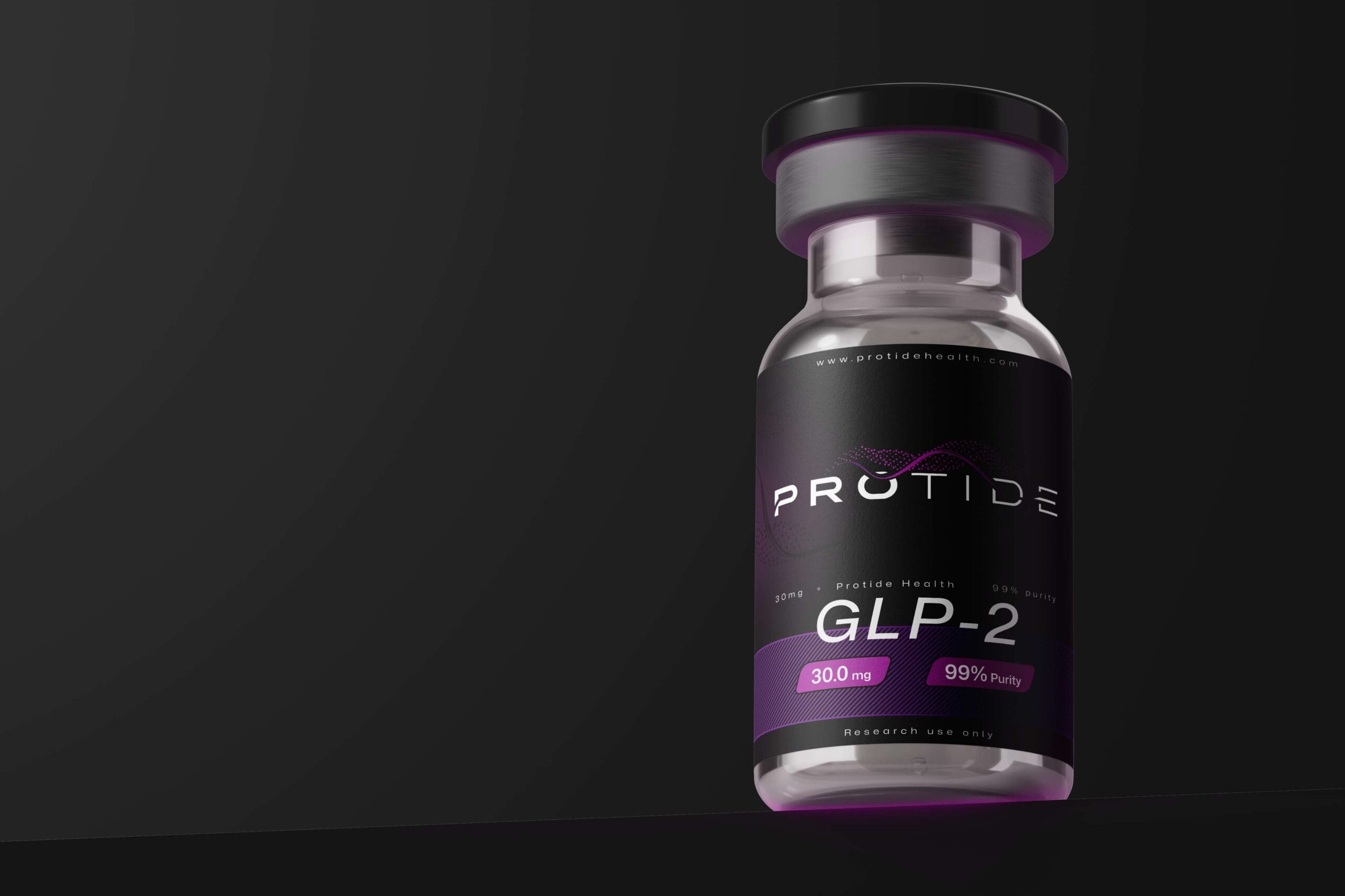
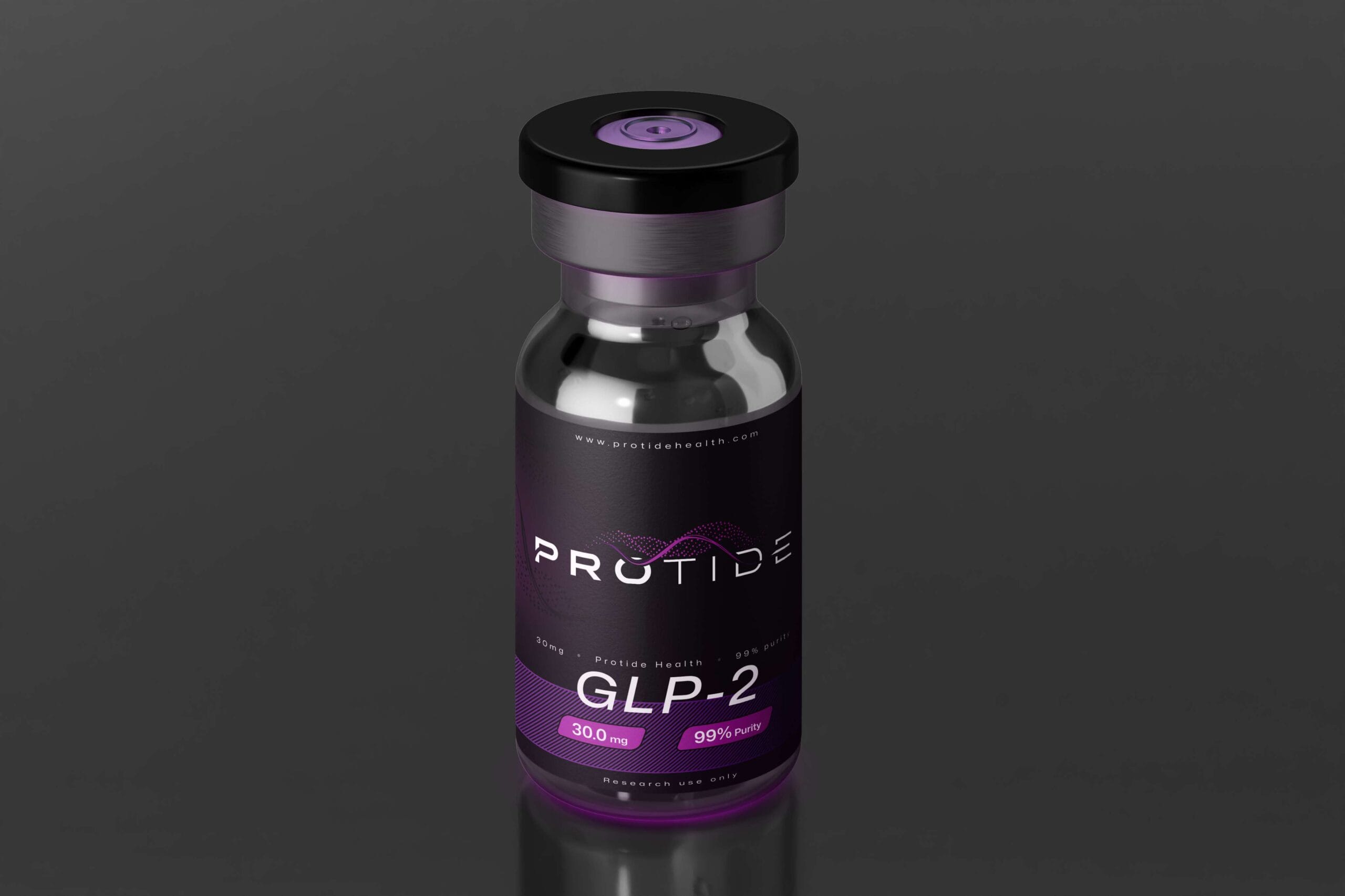
GLP-2 30mg
$250.00
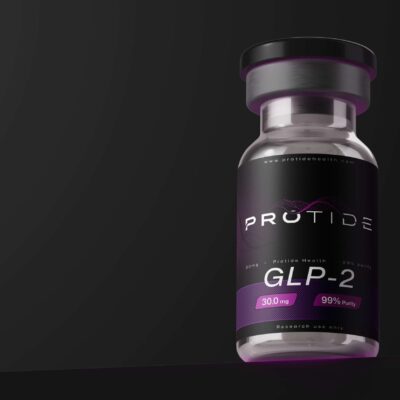
GLP-2 is a high-purity dual incretin agonist peptide designed to simultaneously target the GIP and GLP-1 receptors. This next-generation research tool is engineered for advanced laboratory models investigating appetite regulation, insulin sensitivity, and body composition. Each 30mg vial from Protide Health is supplied in a stable lyophilized form.
In stock
Free shipping on orders over $149!
- 99% Purity
- Third-Party Tested
- Secure Payments
- Free BAC Water
- Satisfaction Guaranteed
What is GLP-2?
GLP-2 is a synthetic research peptide that mimics two natural gut hormones involved in blood sugar and appetite signaling. In lab and clinical research, GLP-2 peptide 30mg has been explored as a dual incretin agonist, meaning it can activate both GIP (glucose-dependent insulinotropic polypeptide) and GLP-1 (glucagon-like peptide-1) receptors in experimental models.1 PubMed
This GLP-2 peptide is provided as a 30mg vial of lyophilized (freeze-dried) powder, designed for controlled reconstitution and use in qualified laboratory settings. Researchers often explore this compound in metabolic and weight-related models where appetite signaling, insulin response, and body composition are of interest. PMC
Peptide type: Single peptide; dual GIP/GLP-1 receptor agonist explored in metabolic research.
Vial content: 30mg lyophilized powder for laboratory reconstitution.
Primary research focus: Metabolic health, weight and body-composition models, and incretin signaling pathways.
GLP-2 Peptide Overview & Key Properties
GLP-2 is a fully synthetic peptide designed to imitate and enhance the activity of two key incretin hormones: GIP and GLP-1. These hormones help the body respond to food by signaling insulin release, appetite, and feelings of fullness in preclinical and clinical research settings. PubMed
Structurally, GLP-2 is an acylated peptide that binds to both GIP and GLP-1 receptors, a “dual agonist” profile that has been linked to strong effects on glucose control and body weight in human trials. PMC In the lab, GLP-2 peptide 30mg is typically stored in cool, dry, and dark conditions according to standard operating procedures (SOPs).
Peptide class or family: Dual GIP/GLP-1 receptor agonist (incretin co-agonist) studied in metabolic and obesity-focused research.2
Vial content and typical lab handling: 30mg lyophilized powder; labs reconstitute the vial with suitable sterile diluent for in vitro, ex vivo, or preclinical use.
Suggested storage concept in lab settings: Store frozen or refrigerated, protected from light and moisture, and follow institutional SOPs for thawing, aliquoting, and disposal.
Common research models: Metabolic syndrome and obesity models, glucose regulation studies, appetite and satiety signaling, and body-composition research. NEJM
GLP-2 Mechanism of Action
GLP-2 mainly works by activating both GIP and GLP-1 receptors, which are found on pancreatic beta cells and in brain regions that help control appetite. When these receptors are stimulated in research models, cells can release more insulin in a glucose-dependent way, while also lowering glucagon and slowing gastric emptying. PMC
In obesity and diabetes trials, this dual signaling has been associated with lower blood glucose, reduced energy intake, and meaningful changes in body weight and fat mass.3 Mechanistic work suggests that GIP receptor activation is important for the full effect of GLP-2, enhancing the GLP-1–like actions on insulin secretion and appetite control in experimental systems. Together, these pathways make GLP-2 peptide an important tool for studying how the incretin system shapes metabolism, body weight, and cardiometabolic risk markers.
GLP-2 Peptide Research
1. GLP-2 and Metabolic Health Models
In subjects with type 2 diabetes, phase 3 trials have shown that GLP-2 can lead to strong improvements in blood sugar control, along with notable reductions in body weight, compared with placebo. These studies help researchers understand how dual GIP/GLP-1 agonism influences insulin sensitivity, beta-cell function, and overall glucose regulation in clinical settings. PubMed
2. GLP-2 and Weight Management Research
Obesity-focused trials have reported large and sustained body-weight reductions in adults living with overweight or obesity who received GLP-2 compared with placebo. Participants in these trials often reached double-digit percentage losses in body weight over more than a year of treatment, with many achieving 15–20% or more. NEJM
3. Body Composition and Cardiometabolic Markers
Beyond weight loss alone, studies have explored how GLP-2 may influence body composition and cardiometabolic risk factors such as blood pressure, lipids, and inflammatory markers. Analyses suggest that much of the weight change may come from fat mass rather than lean tissue, though more precise body-composition work is ongoing.4 ScienceDirect
4. Multi-System Incretin Research
Emerging reviews point out that both GIP and GLP-1 receptors are found not only in the gut and pancreas, but also in the brain and other organs. This has led to research questions around appetite regulation, reward pathways, and even cognitive processes such as learning and memory in experimental models. GLP-2’s broad receptor profile makes it a candidate for multi-system studies looking at how metabolic signals interact with the nervous system.5 PMC
GLP-2 Peptide Specifications Table
| Parameter | Details |
| Peptide name | GLP-2 |
| Vial content | 30mg (lyophilized powder) |
| Peptide type | Single peptide (dual GIP/GLP-1 receptor agonist) |
| Typical use case | Metabolic, weight, and body-composition research models |
| Storage guidance | Cool, dry, dark; follow lab SOPs |
| Intended use | Laboratory research only, not for human use |
GLP-2 Peptide FAQs
What is GLP-2 peptide used for in research?
In research, GLP-2 peptide is mainly used to study metabolic health, including how the body handles glucose, insulin, appetite, and body weight. Clinical trials in people with type 2 diabetes and obesity provide background data on how dual GIP/GLP-1 agonists can affect these systems.6 NEJM
How is GLP-2 peptide 30mg typically stored in a lab?
Labs usually keep GLP-2 peptide vials in a cold, dry, and dark environment, such as a dedicated peptide freezer or refrigerator. Once reconstituted, many labs aliquot the solution into smaller portions and minimize freeze–thaw cycles according to their quality standards.
Is GLP-2 peptide similar to other incretin-based peptides?
Yes. GLP-2 belongs to the incretin family, similar to GLP-1 receptor agonists, but it is distinct because it activates both GIP and GLP-1 receptors. This dual action is one reason trials have shown strong effects on blood sugar and body weight compared with single-pathway peptides. PubMed
Where to buy GLP-2 online?
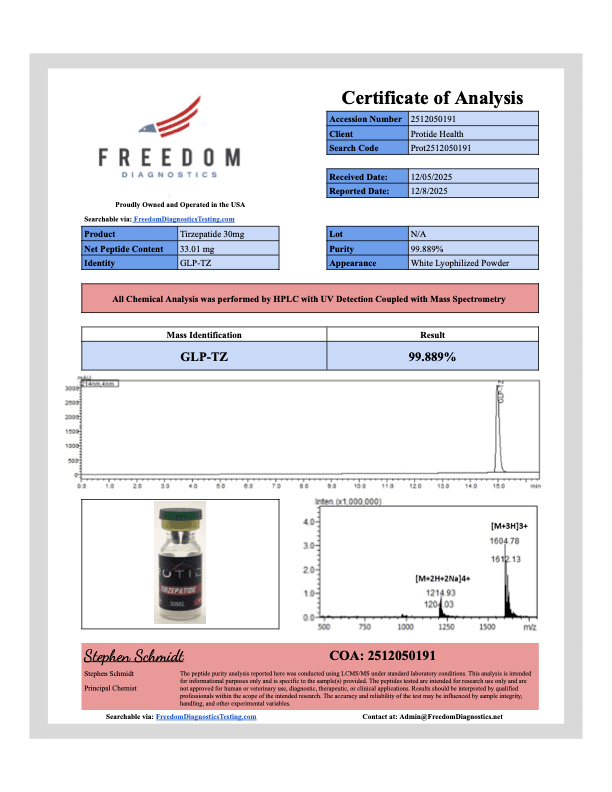
You can buy GLP-2 online in the United States at Protide Health. Each research peptide is clearly labeled and supported by third-party testing to help labs maintain quality and consistency in their work.
What does “dual GIP/GLP-1 agonist” mean?
“Dual GIP/GLP-1 agonist” means that the peptide can activate both GIP and GLP-1 receptors.7 In research, this dual activity allows scientists to explore how combined incretin signaling might produce different effects than targeting GLP-1 alone. PMC
Conclusion: Summary of GLP-2 Peptide for Research
GLP-2 peptide is a synthetic, dual GIP/GLP-1 receptor agonist supplied as a 30mg lyophilized vial for laboratory use. It has become a central tool for scientists exploring how incretin hormones shape metabolism, body weight, and appetite in both preclinical and clinical research. From obesity and diabetes trials to mechanistic lab studies, GLP-2 provides a rich foundation for new experiments.
Citations
Jastreboff AM et al., 2022. GLP-2 once weekly for the treatment of obesity (SURMOUNT-1). NEJM.
Rosenstock J et al., 2021. Efficacy and safety of a novel dual GIP and GLP-1 receptor agonist (SURPASS-1). The Lancet.
Nauck MA et al., 2022. GLP-2, a dual GIP/GLP-1 receptor co-agonist for the treatment of type 2 diabetes.
Sokary S et al., 2025. The promise of GLP-2: narrative review of metabolic effects and weight loss.
Ghaleb J et al., 2025. Unveiling GLP-2’s therapeutic spectrum: dual GIP/GLP-1 agonist with multiorgan actions.
Legal Disclaimer
The information provided in this description is for research purposes only. The GLP-2 peptide is not approved by the U.S. Food and Drug Administration (FDA) or any regulatory authority for human consumption or therapeutic use. It is intended solely for investigational use in controlled laboratory settings by qualified researchers. Researchers must comply with all applicable local, state, and federal regulations. Products sold by Protide Health are for laboratory research purposes only and are not intended for human consumption, medical use, or veterinary use.
| Weight | 1 lbs |
|---|---|
| Dimensions | 1 × 1 × 1 in |