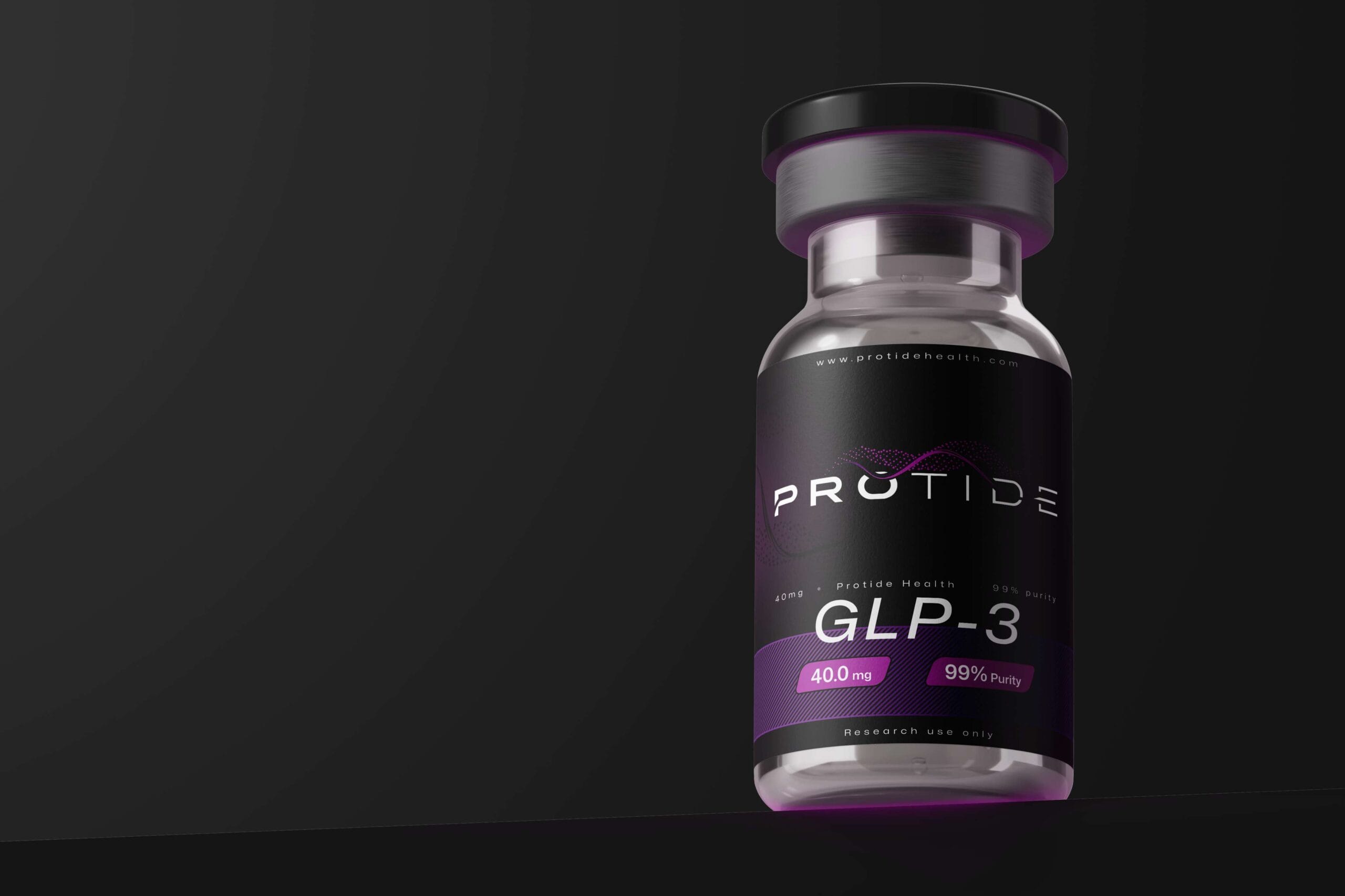
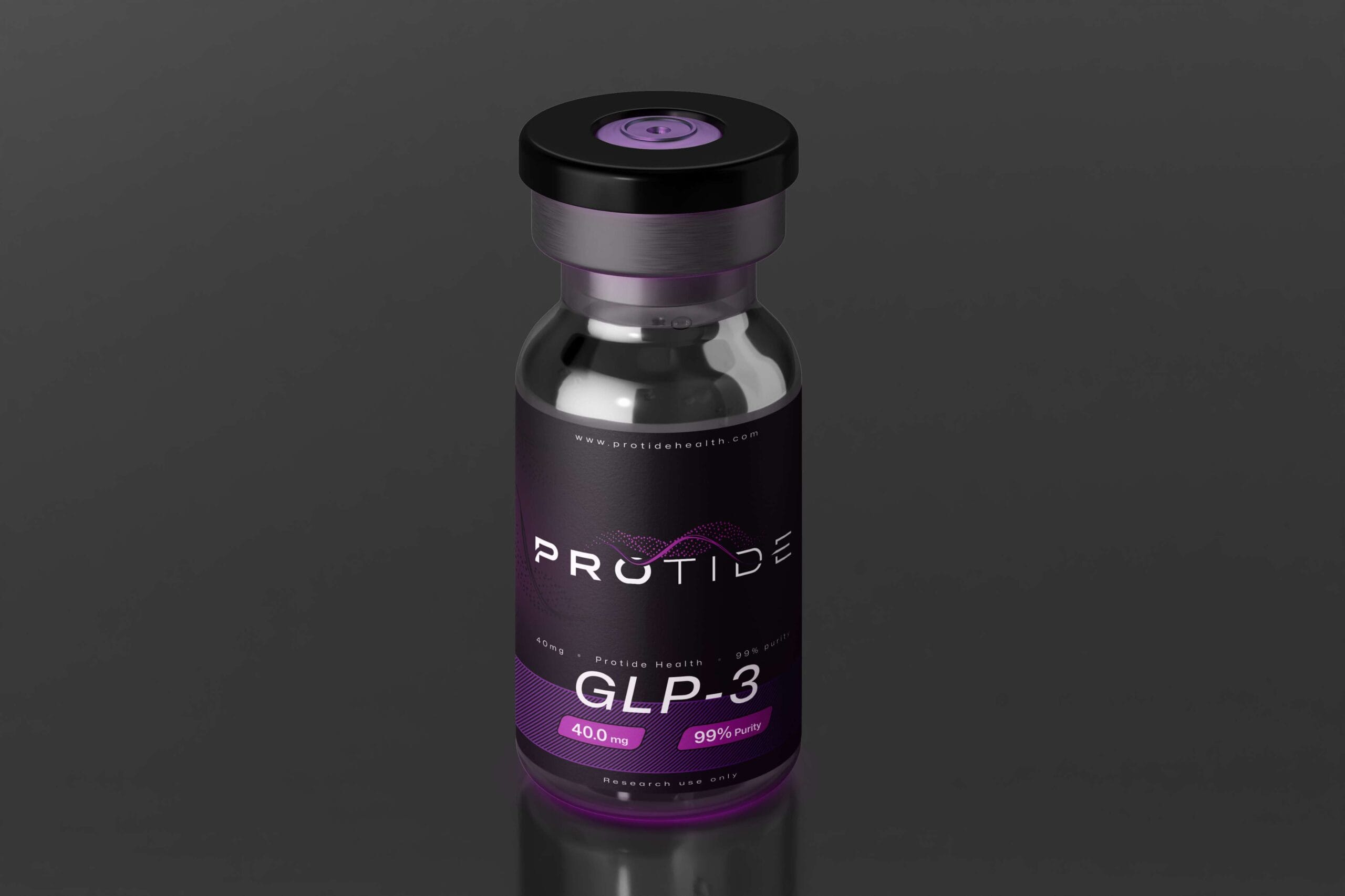
GLP-3 40mg
$295.00
GLP-3 is a pioneering triple hormone receptor agonist engineered for advanced research into metabolic health and energy regulation. This single peptide molecule provides simultaneous activation of the GLP-1, GIP, and glucagon receptors, allowing investigators to explore multi-pathway signals in obesity, glucose control, and liver fat research models. Each 40mg vial is supplied as a lyophilized powder.
In stock
Free shipping on orders over $149!
- 99% Purity
- Third-Party Tested
- Secure Payments
- Free BAC Water
- Satisfaction Guaranteed
What is GLP-3?
GLP-3 is a synthetic research peptide designed as a “triple agonist,” meaning it can signal three different hormone receptors studied in metabolic health models. This GLP-3 peptide 40mg vial is provided as a research-only compound for laboratories exploring weight, glucose, and liver-related pathways in preclinical and clinical settings. GLP-3 is an investigational molecule and is not approved for medical use, but it has become a central focus within advanced research peptide science.
Each vial of GLP-3 peptide contains 40mg of lyophilized (freeze-dried) powder intended for reconstitution and use in controlled laboratory environments. Researchers commonly explore this molecule in models related to energy balance, appetite signaling, and hepatic fat changes under carefully designed protocols.
Peptide Type: Single peptide triple agonist designed to activate GLP-1, GIP, and glucagon receptors in research models.
Vial Content: 40mg lyophilized powder for laboratory handling and reconstitution.
Primary Research Focus: Metabolic and weight regulation models, glucose, and liver function models.
GLP-3 Peptide Overview & Key Properties
GLP-3 is a fully synthetic peptide modeled to act on three hormone systems simultaneously: glucagon-like peptide-1 (GLP-1), glucose-dependent insulinotropic polypeptide (GIP), and glucagon receptors. These hormone pathways, often categorized as “incretin and glucagon pathways,” help regulate appetite signals, insulin release, glycemic control, and energy expenditure in the body. In scientific literature, GLP-3 (also known as LY3437943) is described as a single peptide with potent agonist activity at all three receptors. Coskun et al., 2022
In laboratory and clinical research, GLP-3 peptide 40mg is typically supplied as a lyophilized powder stored under cold, dry, and light-protected conditions according to standard operating procedures (SOPs). Labs may explore its efficacy in cell systems, animal models, and human clinical trials focused on body weight, glucose regulation, and liver fat accumulation. Jastreboff et al., 2023
Laboratory Specifications
Peptide Class: Triple agonist research peptide targeting GLP-1, GIP, and glucagon receptors (part of the incretin-based metabolic research family).
Handling: 40mg lyophilized powder usually reconstituted with sterile diluent under aseptic conditions for in vitro or in vivo models.
Storage: Keep cool, dry, and away from light; follow internal lab SOPs and stability guidelines for peptide research.
Research Models: Metabolic and obesity models, type 2 diabetes models, and liver fat/steatosis models. Sanyal et al., 2024
GLP-3 Mechanism of Action
GLP-3 is defined as a “triple hormone receptor agonist.” In research contexts, it sends signals through three distinct receptors that help the body sense nutrient intake, manage blood sugar, and utilize stored energy.
GLP-1 & GIP Receptors: These are incretin hormones that typically rise after eating, assisting the pancreas in releasing insulin in a glucose-dependent manner.
Glucagon Receptor: Activation of this receptor can increase energy expenditure and support changes in liver fat handling in research models. Coskun et al., 2022
Because all three receptor pathways are engaged concurrently, researchers believe the cumulative signal may be more robust and balanced than that of single-pathway peptides (like GLP-1) or dual-pathway peptides (like GLP-2). In clinical obesity and type 2 diabetes trials, this triple agonist pattern has been linked to significant changes in body weight and improved metabolic markers. Jastreboff et al., 2023; Rosenstock et al., 2023; Sanyal et al., 2024
GLP-3 Peptide Research
1. GLP-3 and Metabolic Health Models
A primary focus of GLP-3 peptide research is body weight and metabolic homeostasis. In a 48-week phase 2 obesity trial, triple agonist signaling with GLP-3 was associated with dose-dependent reductions in body weight and improvements in several cardiometabolic markers. Jastreboff et al., 2023
2. GLP-3 and Type 2 Diabetes Research
GLP-3 is also being investigated for its impact on glycemic control. In phase 2 trials, adults with type 2 diabetes receiving GLP-3 showed significant improvements in blood sugar markers and notable reductions in weight compared with placebo across multiple doses. Rosenstock et al., 2023
3. GLP-3 and Liver Fat / Steatotic Liver Disease Models
A substudy focused on metabolic dysfunction-associated steatotic liver disease (MASLD) indicated that GLP-3 was associated with large relative reductions in liver fat content at 24 weeks. This suggests triple agonist peptides may significantly influence how the liver processes lipids in specific research populations. Sanyal et al., 2024
GLP-3 Peptide Dosing Concepts for Lab Research
Note: This section is for educational purposes only and is not prescriptive for human use.
In research, dosing for GLP-3 peptide 40mg is determined based on the specific model (cell work, animal studies, or controlled trials). Scientists typically test a range of dose levels to observe changes in body weight, glucose, or liver fat.
Focus: Standardizing peptide delivery to ensure data consistency across study groups.
Study Design: Utilizing time-course sampling and comparing regimens to map effectiveness and safety profiles.
Reconstitution: Researchers may use the peptide dosage calculator to plan vial reconstitution and aliquots accurately.
GLP-3 Peptide Specifications Table
| Parameter | Details |
| Peptide Name | GLP-3 |
| Vial Content | 40mg (Lyophilized Powder) |
| Peptide Type | Single Peptide Triple Agonist |
| Primary Use Case | Metabolic, Obesity, Glucose, and Liver Research |
| Storage Guidance | Cool, Dry, Dark; follow laboratory SOPs |
| Intended Use | Laboratory Research Only |
GLP-3 Peptide FAQs
What is GLP-3 peptide used for in research?
In research, GLP-3 peptide is used to study how triple agonist signaling at GLP-1, GIP, and glucagon receptors affects body weight, blood sugar, and liver fat. It is utilized in cell, animal, and clinical trial settings to understand advanced metabolic pathways.
How is GLP-3 peptide 40mg typically stored in a lab?
Labs usually store GLP-3 peptide 40mg as a lyophilized powder in a cool, dry, and dark environment. After reconstitution, vials are generally kept refrigerated or frozen according to internal SOPs to protect peptide integrity.
Is GLP-3 peptide similar to any other well-known peptides?
GLP-3 is part of the “incretin-based” research space, similar to GLP-1 and GLP-2. However, it is distinct because it targets three receptors at once, whereas the others target one or two.
Is GLP-3 peptide FDA-approved?
No. GLP-3 is an investigational molecule and is not approved by the FDA for any medical indication. It is strictly for laboratory research.
Where to buy GLP-3 online?
You can buy GLP-3 peptide online in the United States through research-only suppliers such as Protide Health. Our compounds are third-party tested and labeled strictly for laboratory use by qualified researchers.
Conclusion: Summary of GLP-3 Peptide for Research
GLP-3 peptide is a 40mg single peptide triple agonist that targets GLP-1, GIP, and glucagon receptors, making it a premier tool for advanced metabolic research. From obesity and type 2 diabetes trials to liver fat studies, GLP-3 offers a unique pathway for researchers to explore multi-receptor signaling. It remains an investigational compound and must only be used in controlled laboratory environments.
Citations
Coskun T et al., 2022. LY3437943, a novel triple glucagon, GIP, and GLP-1 receptor agonist.
Urva S et al., 2022. LY3437943, a triple GIP, GLP-1, and glucagon receptor agonist in type 2 diabetes.
Jastreboff AM et al., 2023. Triple–hormone–receptor agonist (GLP-3) for obesity: a phase 2 trial.
Rosenstock J et al., 2023. GLP-3 in people with type 2 diabetes.
Sanyal AJ et al., 2024. Triple hormone receptor agonist and liver fat reduction.
Abouelmagd AA et al., 2025. Efficacy and safety of a novel triple agonist.
Abdul-Rahman T et al., 2024. Role of triple agonists in modern therapy.
Legal Disclaimer
The information provided is for research purposes only. GLP-3 peptide is not approved by the FDA for human consumption or therapeutic use. It is intended solely for investigational use in controlled laboratory settings by qualified researchers. Protide Health products are for laboratory research purposes only and are not intended for human consumption, medical use, or veterinary use.
| Weight | 1 lbs |
|---|---|
| Dimensions | 1 × 1 × 1 in |