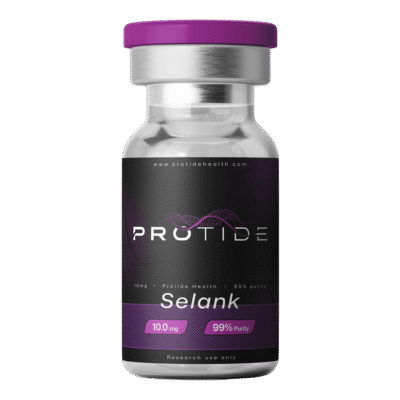
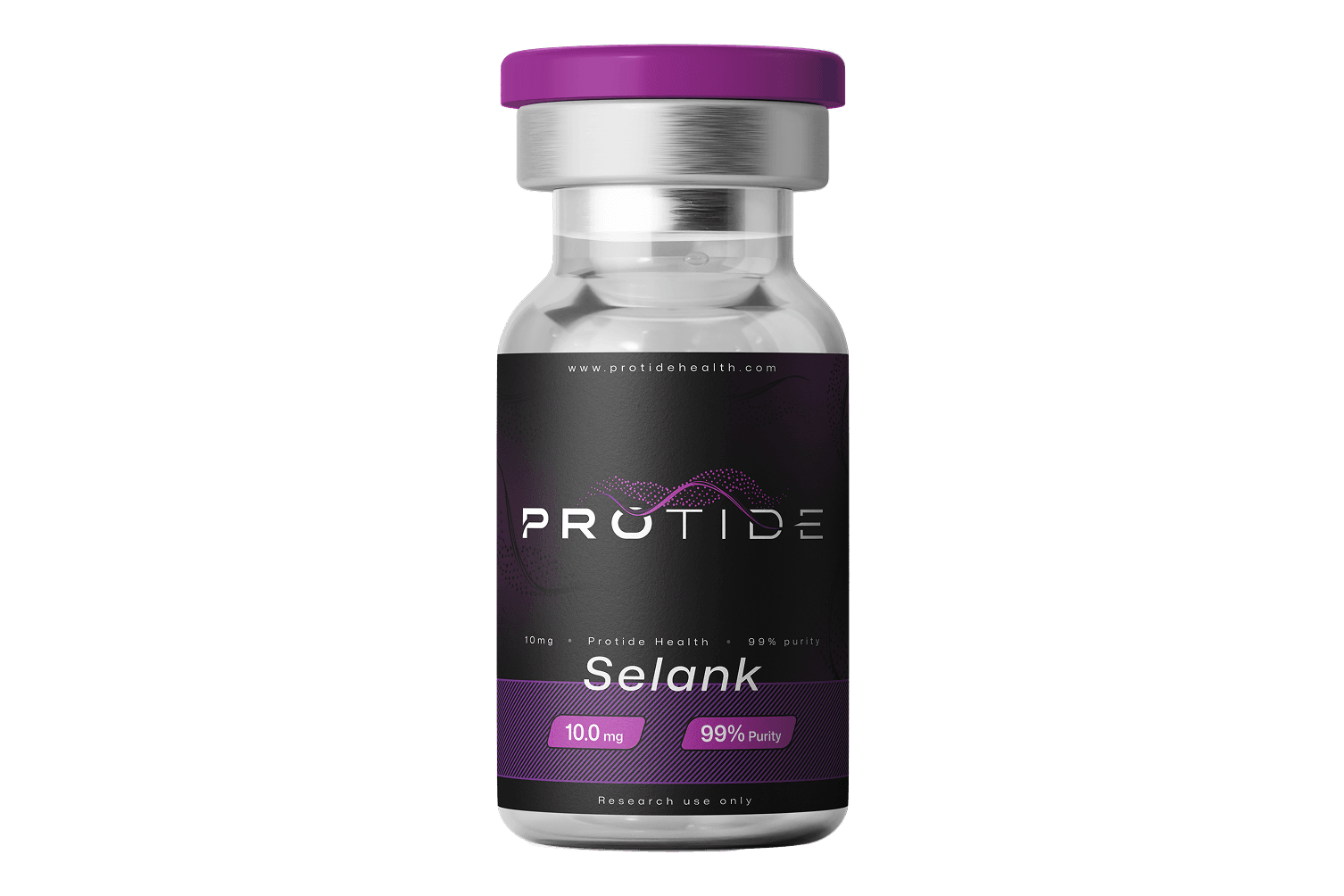
Selank 10mg

$65.00

In stock

Earn 65 Points with this purchase!

Free shipping on orders over $149!

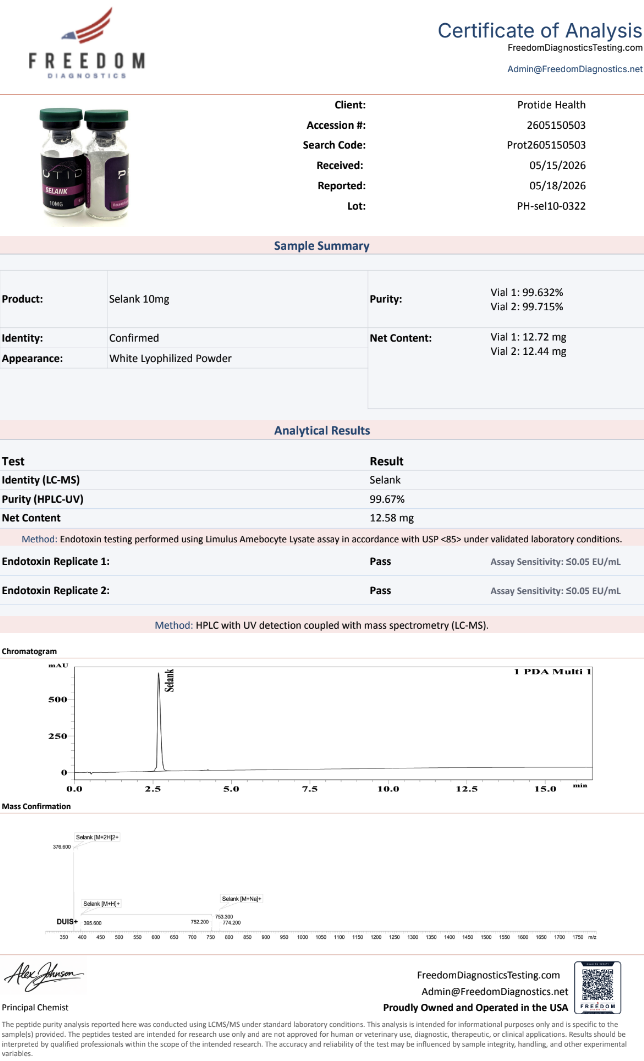
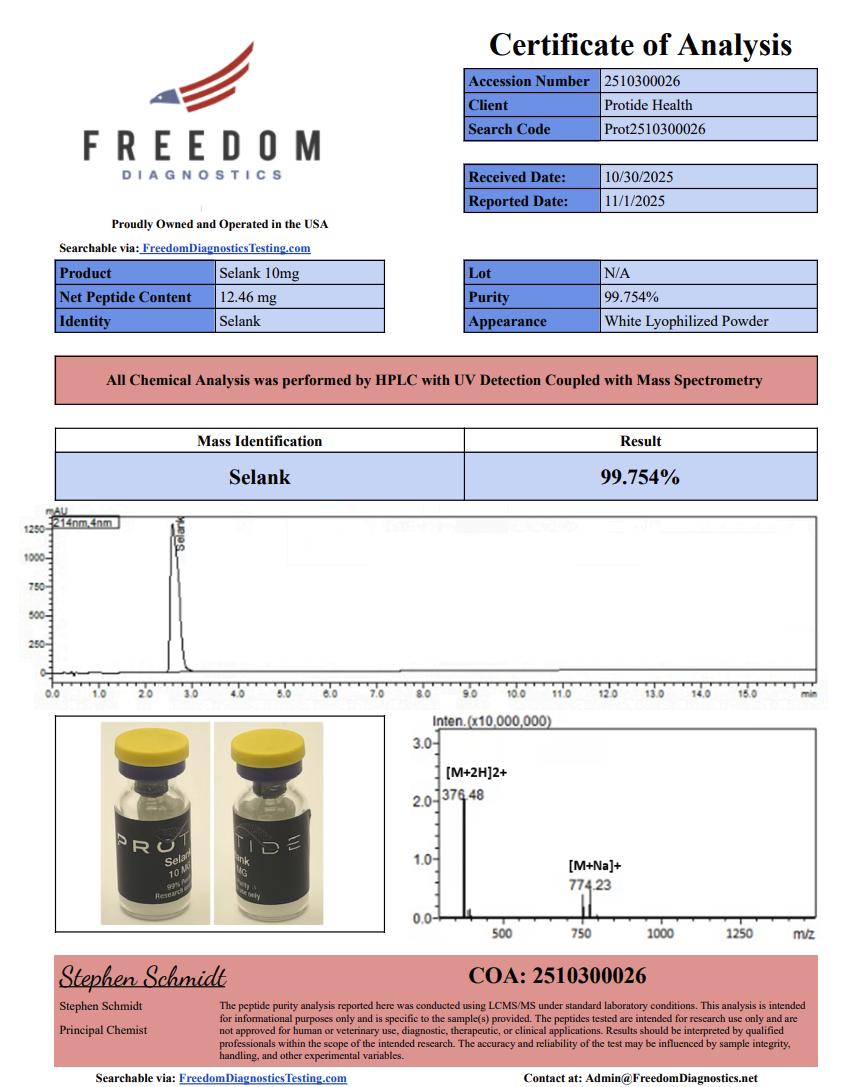
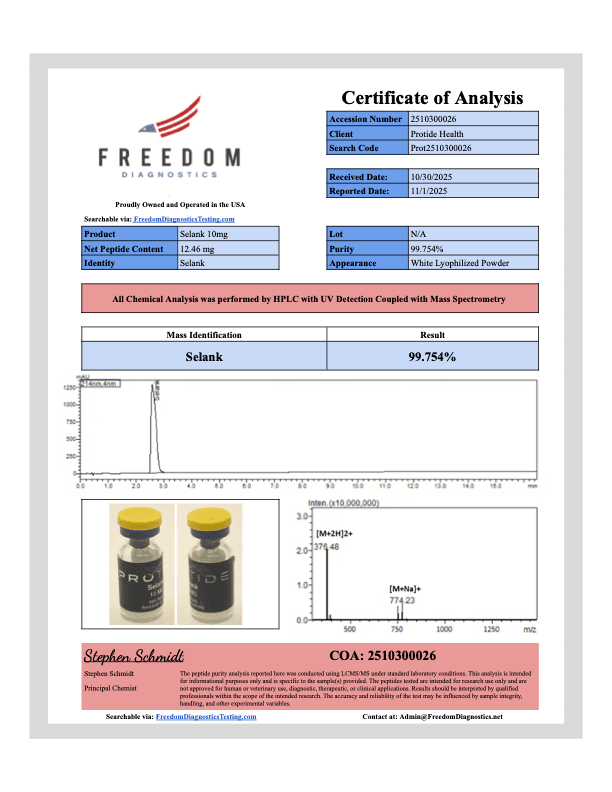
  • Done 99% Purity
  • Done Third-Party Tested
  • Done Secure Payments
  • Done Free BAC Water
  • Done Satisfaction Guaranteed
GUARANTEED SAFE CHECKOUT
  • Visa Card
  • MasterCard
  • American Express
  • PayPal

What is Selank?

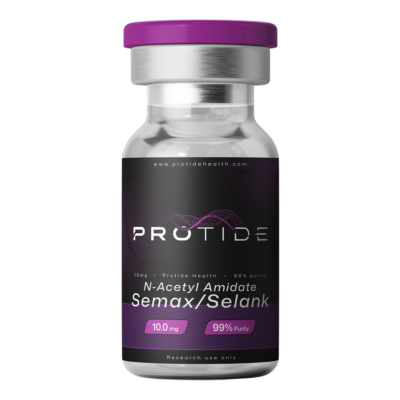
Selank is a research peptide studied in preclinical models for how it may influence stress-response signaling and brain communication pathways. This Selank vial contains 10mg and is provided as a lyophilized (freeze-dried) powder for laboratory research use.

Many labs explore Selank peptide in controlled settings to better understand how short peptides can interact with brain signaling (like neurotransmitters) and gene activity tied to stress-related pathways.

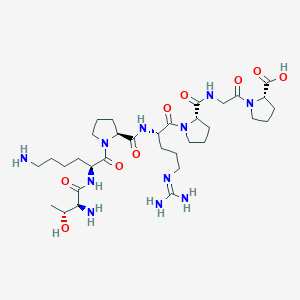
  • Peptide type: single peptide, a tuftsin-inspired heptapeptide used in research models
  • Vial content: 10mg (lyophilized powder)
  • Primary research focus: stress-response models and cognitive/brain signaling models

Selank Peptide Overview & Key Properties

Selank is a synthetic, tuftsin-inspired peptide. In simple terms, it is designed to resemble a naturally occurring peptide fragment (tuftsin) while adding extra amino acids to improve stability in research settings. This “naturally inspired, lab-made” design is discussed in research literature on Selank’s structure and biology (see: Volkova et al., 2016).

Selank is commonly supplied as a lyophilized powder and is typically handled with standard lab practices to help protect peptide integrity, such as cold, dry storage and minimizing light exposure.

  • Peptide class or family: tuftsin-analog “glyproline” heptapeptide explored in neurobiology research (short signaling peptide models)
  • Vial content and typical lab handling: lyophilized powder; reconstituted and aliquoted per lab SOPs
  • Suggested storage concept in lab settings: keep cool, dry, and away from light according to lab SOPs
  • Common research models: cell studies, animal models, and gene-expression assays (brain tissue focus)

Selank Mechanism of Action

Selank is studied for how it may shift “messaging” in the brain by influencing gene activity tied to neurotransmission. Neurotransmission is how brain cells send signals using chemicals like GABA, serotonin, and others. In rat brain studies, researchers observed changes in expression of multiple genes involved in neurotransmission after Selank exposure, suggesting it may influence signaling pathways indirectly through gene-level regulation (Volkova et al., 2016).

Selank is also studied for effects on BDNF, a growth-support signal sometimes described as a “brain support” factor because it helps with neuron health and plasticity (plasticity means the brain’s ability to adapt and form connections). In rat hippocampus research, intranasal Selank was reported to regulate BDNF expression in vivo (Inozemtseva et al., 2008).

Selank Peptide Research

1. Selank and Stress-Response Models

Several preclinical studies explore Selank in animal stress paradigms (designed to model stress-like states and behavioral shifts). In these setups, researchers track changes in behavior and biological markers over time to see how peptide signaling might relate to stress-response pathways (Sarkisova et al., 2008).

Other work has examined immune signaling during stress exposure, including cytokines (small immune “messenger” proteins). In animal “social stress” conditions, researchers reported Selank-associated shifts in cytokine levels, which may help labs study stress-immune signaling links (Leonidovna et al., 2021).

2. Selank and Brain Plasticity Models (BDNF Signaling)

Some Selank research focuses on BDNF expression in the hippocampus, a brain region often studied for learning, memory, and stress processing. In rat studies, researchers reported that intranasal Selank regulated BDNF gene expression in vivo, which makes it a point of interest for labs studying plasticity-related pathways (Inozemtseva et al., 2008).

Importantly, findings like these are research observations in controlled models. Results in animals do not mean the peptide is approved, proven, or intended for human use.

3. Selank and Neurotransmitter-Related Gene Expression

Neurotransmitters are the brain’s “chemical messages.” In rat frontal cortex work, researchers measured gene-expression changes across many neurotransmission-related targets after Selank exposure, including genes linked to inhibitory signaling pathways (often discussed around GABA signaling) (Volkova et al., 2016).

Other research has explored monoamine pathways (like serotonin), which are commonly studied in behavior and cognition models. Studies in rats reported Selank-related effects on serotonin metabolism measures in specific brain regions under certain experimental conditions (Semenova et al., 2009).

4. Selank and Memory Performance Research Models

Selank has also been explored in animal cognition and memory paradigms, including models involving stressors like chronic alcohol exposure. In one study, researchers reported effects consistent with altered memory performance measures and discussed possible links to neurotrophin mechanisms involving BDNF (Kolik et al., 2019).

These are still preclinical findings. They help researchers form hypotheses, but they do not establish approved medical use in humans.

Selank Peptide Dosing Concepts for Lab Research

This section is educational, not prescriptive.

In research, dosing is usually designed around the model being studied (cell culture vs. animal work), the timing of measurements (early vs. late sampling), and the outcome markers (behavioral readouts, gene expression, or protein levels). Researchers often test multiple ranges and compare results across time points to understand dose-response patterns and how stable the signal is across repeats.

  • Focus: standardizing how much peptide each model receives so results are easier to compare
  • Study design: using time-course sampling (early vs later time points) to track changes over time
  • Use the peptide dosage calculator to plan vial reconstitution and aliquots.

Selank Peptide Specifications Table

ParameterDetails
Peptide nameSelank peptide
Vial content10mg (lyophilized powder)
Peptide typeSingle peptide
Typical use casePreclinical / in vitro stress-response and brain signaling research models
Storage guidanceCool, dry, dark; follow lab SOPs
Intended useLaboratory research only, not for human use

Selank Peptide FAQs

What is Selank peptide used for in research?

Selank peptide for research is commonly explored in preclinical models related to stress-response signaling, brain communication pathways, and gene-expression changes. Studies often look at markers like neurotransmission-related genes and neurotrophin signals such as BDNF. These are research observations only, not approved human uses.

What makes Selank different from other research peptides?

Selank is a short, tuftsin-inspired peptide studied in neurobiology and stress-response models. Many peptides target metabolism, growth signaling, or tissue models, while Selank research often focuses on brain signaling pathways and gene-expression outcomes. Different peptides can fit different research goals.

How is Selank 10mg typically stored in a lab?

Selank 10mg is typically kept cool, dry, and protected from light in lab settings. Because peptides can degrade with heat and moisture, labs usually follow internal SOPs for storage, reconstitution, and aliquoting. This helps improve consistency across experiments.

Is Selank peptide similar to tuftsin?

Selank is described in the literature as a synthetic analog of tuftsin, meaning it is designed to resemble tuftsin while adding modifications for stability. Tuftsin itself is a naturally occurring peptide fragment associated with immune signaling research. Selank builds on that concept and is explored in broader preclinical models.

What kinds of studies mention BDNF with Selank?

Some animal studies have measured BDNF gene expression after Selank exposure, especially in the hippocampus. BDNF is often studied as a marker linked to neuron support and plasticity (the brain’s ability to adapt). These findings are specific to controlled research designs and do not imply approved human use.

Where to buy Selank online?

You can buy Selank online in the United States at Protide Health. Every compound is backed by science, clearly labeled, and third-party tested.

Is Selank peptide approved for human use?

No. Selank is sold for laboratory research only and is not approved as a drug or therapy for human use. Any findings discussed in studies are research-only observations and should be interpreted within controlled experimental settings.

Conclusion: Summary of Selank Peptide for Research

Selank peptide 10mg is a tuftsin-inspired research peptide supplied as a lyophilized powder for controlled lab work. It is commonly explored in preclinical models focused on stress-response signaling, neurotransmission-related gene activity, and brain plasticity markers like BDNF.

As with all research peptides, Selank is intended only for controlled laboratory and preclinical research and is not for human use.

Citations

  • Volkova A et al., 2016. Selank as a tuftsin analog and gene-expression effects in brain tissue. Frontiers in Pharmacology (PMC)
  • Inozemtseva LS et al., 2008. Intranasal Selank and BDNF expression in rat hippocampus. Doklady Biological Sciences (PubMed)
  • Volkova A et al., 2016. Selank administration and genes involved in GABAergic neurotransmission. PubMed
  • Sarkisova KI et al., 2008. Selank in animal behavior research models. PubMed
  • Leonidovna YA et al., 2021. Selank effects on cytokines under social stress conditions in animals. PubMed
  • Semenova TP et al., 2009. Selank and tuftsin effects on serotonin metabolism in rats. PubMed
  • Kolik LG et al., 2019. Selank as a tuftsin analogue in memory research models with ethanol exposure. PubMed

Legal Disclaimer for Selank Peptide

The information provided in this description is for research purposes only. The Selank peptide is not approved by the U.S. Food and Drug Administration (FDA) or any regulatory authority for human consumption or therapeutic use. It is intended solely for investigational use in controlled laboratory settings by qualified researchers. Protide Health does not endorse or promote the use of Selank peptide in humans or animals outside of approved research protocols. Researchers must comply with all applicable local, state, and federal regulations, including obtaining necessary approvals for experimental use. Consult with regulatory authorities before initiating any research involving Selank peptide.

Products sold by Protide Health are for laboratory research purposes only and are not intended for human consumption, medical use, or veterinary use.

Weight1 lbs
Dimensions1 × 1 × 1 in

You may also like…

  • Pinealon High Quality Peptides

    Pinealon 20mg

    $69.00
    Add to cartLoading Done
  • High Quality Research Peptides

    Semax 10mg

    $60.00
    Add to cartLoading Done
  • Three bottles of cognitive focus supplements

    Cognitive Focus Research Bundle

    $235.00
    Add to cartLoading Done