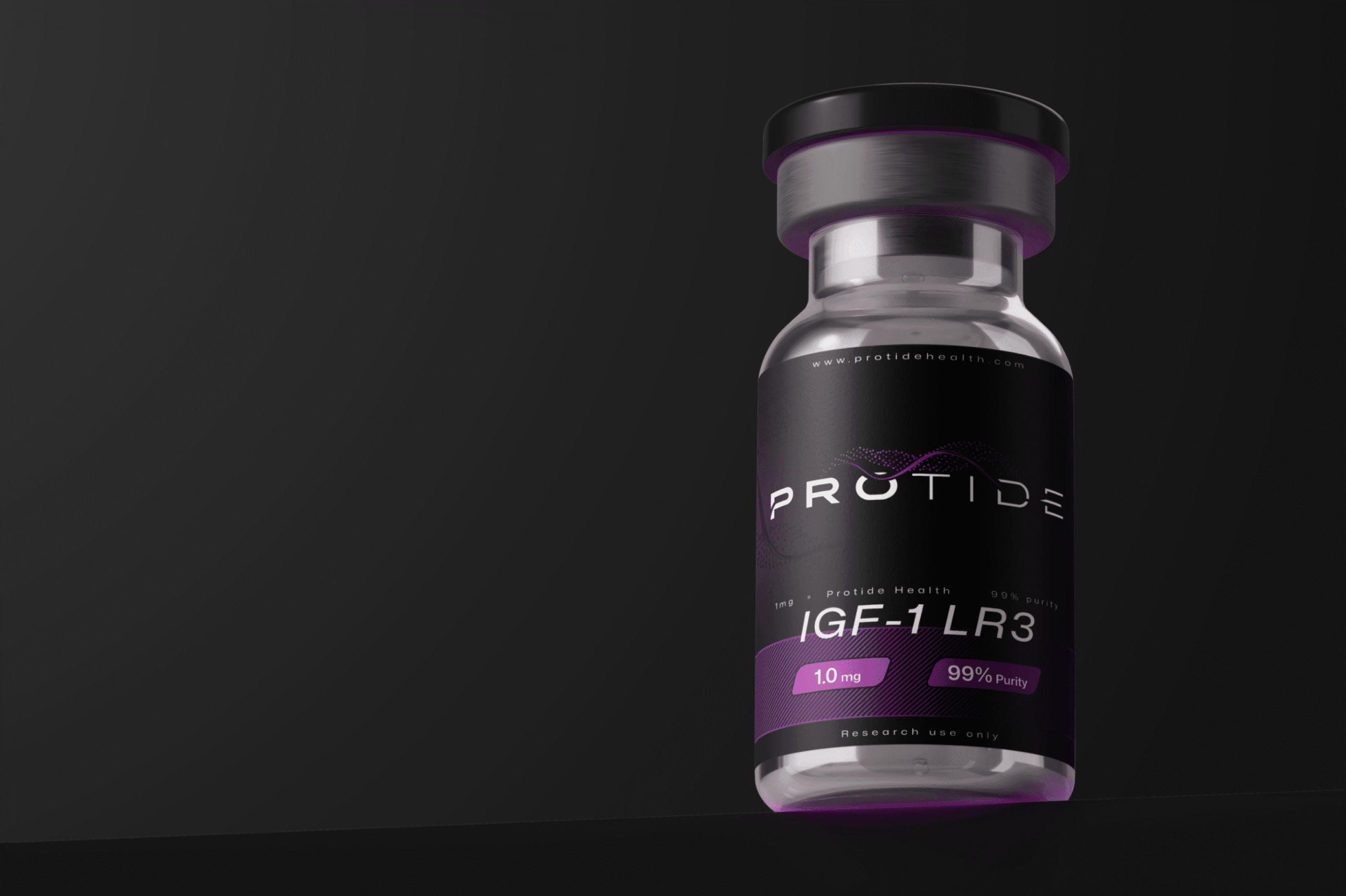
IGF-1 LR3 Peptide: Preclinical Research on Cellular Growth Pathways
Research‑Use‑Only Notice: All content on this website and all product information are for educational and informational purposes only. All products referenced are for laboratory research, analytical, and in‑vitro or preclinical in‑vivo use only. They are not medicines or drugs, have not been evaluated or approved by the FDA, and are not intended to diagnose, treat, cure, or prevent any disease. Any bodily introduction into humans or animals is strictly prohibited.
IGF-1 LR3 (Long R3 IGF-1) is a synthetic 83-amino-acid analog of insulin-like growth factor-1 investigated in preclinical models for cellular proliferation, protein synthesis pathways, and tissue regeneration mechanisms. Laboratory studies examine this modified peptide for IGF-1 receptor activation and downstream signaling in controlled research settings.
What is IGF-1 LR3?
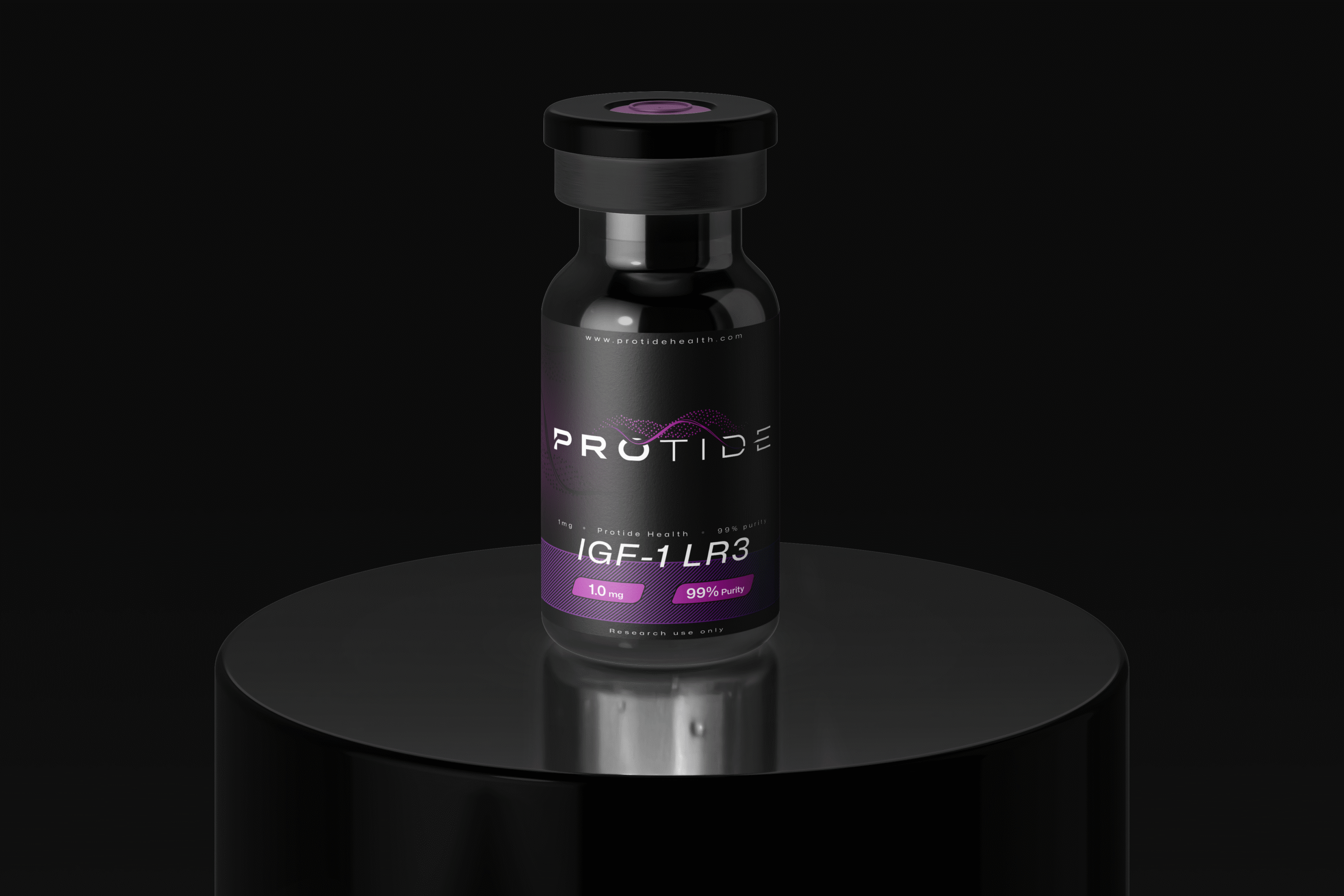
IGF-1 LR3 is a synthetic peptide analog featuring a 13-amino-acid N-terminal extension and arginine substitution at position 3 (Glu3→Arg3). These modifications reduce binding affinity to IGF-binding proteins (IGFBPs), resulting in extended biological half-life compared to native IGF-1 (PubMed). Molecular weight is approximately 9111 Da. The compound is supplied as lyophilized powder (>99% purity) for reconstitution with bacteriostatic water in laboratory protocols. Explore IGF-1 LR3 1mg for research use.
Pharmacokinetic Distinctions
Laboratory models measure:
- Half-life: 20-30 hours in rodent plasma versus ~10 minutes for native IGF-1
- IGFBP binding: 70-80% reduced affinity compared to endogenous IGF-1
- Receptor affinity: 2-3× higher IGF-1R binding in cell-based assays (PMC)
Human pharmacokinetic data remains unavailable.
Mechanisms Investigated in Laboratory Models
IGF-1 Receptor Signaling Pathways
Studies examine IGF-1 LR3 for activation of PI3K/Akt and MAPK/ERK cascades in vitro. Research measures:
- Protein synthesis markers: 30-40% increase in ribosomal S6 kinase phosphorylation in C2C12 myoblast cultures
- Bcl-2/Bax ratio: 20-25% shift toward anti-apoptotic signaling in neuronal cell lines
- GLUT4 translocation: 15-20% enhanced glucose uptake in adipocyte models (PubMed)
Myoblast Proliferation and Differentiation
Animal studies investigate skeletal muscle tissue responses to IGF-1 LR3 administration (PubMed). Laboratory models measure:
- Satellite cell activation: 25-30% increased proliferation markers (Ki-67)
- Myotube formation: 20% enhanced differentiation in vitro
- Fiber cross-sectional area: 15-20% increase in mouse models
Research focuses on hypertrophy (cell size increase) and hyperplasia (cell number increase) pathways. Human muscle studies do not exist.
Tissue Repair Models
Preclinical wound healing research examines:
- Fibroblast proliferation: 25% faster cell expansion in vitro
- Collagen deposition: Enhanced matrix protein synthesis in rodent skin models
- Angiogenesis markers: 20% increased VEGF expression in ischemic tissue (MDPI)
Research Applications
| Model System | Pathway Investigated | Measured Endpoints |
|---|---|---|
| C2C12 Myoblasts | PI3K/Akt signaling | Protein synthesis rate, mTOR activation |
| Rodent Skeletal Muscle | Satellite cell activation | Fiber cross-sectional area, proliferation markers |
| Fibroblast Cultures | ECM synthesis | Collagen production, wound closure rate |
| Adipocyte Models | Glucose metabolism | GLUT4 expression, insulin signaling |
Laboratory Observations and Limitations
Preclinical Findings
Studies report measurable changes in laboratory models:
- Muscle fiber area: 15-20% increase in treated mice
- Wound closure: 25% faster in rodent skin models
- Glucose uptake: 15-20% enhancement in adipocyte assays
- Apoptosis: 20-25% reduction in neuronal cultures (PubMed)
Research Considerations
- Human data absence: Zero clinical trials published; all effects are preclinical
- Hypoglycemia risk: Insulin-like activity may reduce blood glucose in animal models
- Receptor downregulation: Prolonged exposure (>4 weeks) may decrease IGF-1R sensitivity in vitro
- Regulatory status: Not approved for human use; research-only designation
Quality Standards for Research Compounds
Laboratory-grade IGF-1 LR3 features:
- 99% purity verified by HPLC
- Third-party certificate of analysis (COA)
- USA-based manufacturing with GMP protocols
- Free bacteriostatic water included
View IGF-1 LR3 1mg with third-party testing documentation.
Frequently Asked Questions (FAQ)
What distinguishes IGF-1 LR3 from native IGF-1 in research models?
The 13-amino-acid N-terminal extension and Arg3 substitution reduce IGFBP binding by 70-80%, extending half-life from ~10 minutes to 20-30 hours in rodent plasma (PubMed). This results in prolonged IGF-1R activation in cell culture and animal models.
What pathways are measured in muscle research studies?
Laboratory investigations measure PI3K/Akt and mTOR pathway activation, satellite cell proliferation markers (Ki-67, MyoD), and muscle fiber cross-sectional area changes in rodent models (PMC). Human muscle studies are unavailable.
How is IGF-1 LR3 stored for laboratory use?
Lyophilized powder remains stable at -20°C for 12-24 months. Once reconstituted with bacteriostatic water, store at 2-8°C and use within 14-28 days per manufacturer specifications. Avoid freeze-thaw cycles.
Can IGF-1 LR3 be combined with other research peptides?
Studies investigate combinations with growth hormone secretagogues, AMPK activators, or tissue repair peptides.
What animal models are used for IGF-1 LR3 research?
Common models include C57BL/6J mice for metabolic studies, muscle injury models (cardiotoxin-induced damage), wound healing protocols (excisional skin wounds), and aging research (sarcopenia models) (PubMed).
References
- Adams GR, McCue SA. Localized infusion of IGF-I results in skeletal muscle hypertrophy in rats. PubMed
- Velloso CP. Regulation of muscle mass by growth hormone and IGF-I. PMC
- Clemmons DR. Metabolic actions of insulin-like growth factor-I in normal physiology and diabetes. PubMed
- Yoshida T, Delafontaine P. Mechanisms of IGF-1-Mediated Regulation of Skeletal Muscle Hypertrophy and Atrophy. MDPI
Disclaimer: IGF-1 LR3 is for laboratory research purposes only and is not intended for human consumption, medical use, or veterinary use. Information provided is educational and not medical advice. Researchers must comply with all applicable regulations and obtain necessary approvals for experimental use.