
Epithalon Peptide: A Research Guide to Telomere Science (2026)
Research‑Use‑Only Notice: All content on this website and all product information are for educational and informational purposes only. All products referenced are for laboratory research, analytical, and in‑vitro or preclinical in‑vivo use only. They are not medicines or drugs, have not been evaluated or approved by the FDA, and are not intended to diagnose, treat, cure, or prevent any disease. Any bodily introduction into humans or animals is strictly prohibited.
Telomere and cellular longevity science often examines compounds like epithalon peptide in laboratory environments. Researchers study this synthetic tetrapeptide (a four-amino-acid chain) to understand its interaction with cellular aging mechanisms. This guide outlines current laboratory investigations into telomere biology and pineal gland activity.
What Is Epithalon Peptide?
Epithalon (also written as Epitalon, or by its chemical name Ala-Glu-Asp-Gly) is a synthetic tetrapeptide derived from Epithalamin, a natural polypeptide extracted from the bovine pineal gland. It was originally developed by Dr. Vladimir Khavinson at the St. Petersburg Institute of Bioregulation and Gerontology in Russia, where his team conducted decades of preclinical and clinical research into peptide bioregulators.
Compound Classification: Entity-Attribute-Value Reference
- Compound Type: Synthetic tetrapeptide (Research Use Only)
- Amino Acid Sequence: Ala-Glu-Asp-Gly (Alanine, Glutamic Acid, Aspartic Acid, Glycine)
- Derived From: Epithalamin (bovine pineal gland polypeptide extract)
- Primary Research Target: Telomerase activation and telomere length maintenance
- Secondary Research Target: Pineal bioregulator activity and melatonin signaling
- Research Origin: St. Petersburg Institute of Bioregulation and Gerontology (Khavinson et al.)
- Regulatory Status: Not FDA-approved; sold strictly for in-vitro and laboratory research purposes
As a tetrapeptide, Epithalon is composed of four amino acids: alanine, glutamic acid, aspartic acid, and glycine. This short amino acid sequence is thought to mimic the signaling activity of naturally occurring peptides that regulate the pineal gland and, by extension, the hypothalamic-pituitary axis. Much of the research interest centers on its interaction with telomerase, the enzyme responsible for maintaining telomere length.
Epithalon and Telomere Research: What the Studies Show
Telomeres function as protective caps at the ends of chromosomes. Each time a cell divides, these telomeres shorten. When they become critically short, cells stop dividing and enter senescence. This cellular mechanism is a hallmark of aging, and telomere length remains a primary focus in laboratory investigation.
Telomerase Expression in Models
Epithalon is investigated in preclinical models for its interaction with telomerase, an enzyme associated with telomere structure. Studies investigate:
- Telomerase upregulation pathways (PMC)
- Alternative lengthening of telomeres (ALT) activity
- Telomere length variations in in vitro blood cell lines
These findings establish a biological mechanism for why researchers examine this synthetic tetrapeptide. The relationship between telomere length and cellular change is established in the literature. Compounds that interact with telomerase pathways represent an active area of scientific inquiry, though human evidence remains limited.
Epithalon and the Pineal Gland
The pineal gland plays a central role in circadian signaling pathways, primarily through melatonin secretion. As animal models age, measured pineal function declines and melatonin output decreases. This decline correlates with altered circadian rhythms, modified antioxidant capacity, and markers associated with cellular senescence.
Melatonin Secretion Pathways
Research examines how epithalon interacts with pineal pathways by influencing the gland’s peptide bioregulator activity. Preclinical models measure changes in melatonin secretion among aging animal subjects. Researchers propose this as a secondary mechanism through which the peptide may influence biological markers, separate from telomerase pathways.
This dual mechanism, examining direct telomere interaction and indirect influence on circadian regulation, makes it a compound of interest for researchers studying multi-pathway biological aging. Researchers exploring related pineal bioregulator models may also review Pinealon 20mg as a relevant reference point within this research category.

Epithalon Peptide: Research Terminology Guide
Understanding technical terminology surrounding the epithalon peptide is necessary for evaluating laboratory data. These definitions assist researchers in reviewing scientific literature and sourcing compounds for in vitro studies.
Tetrapeptide Structures
A tetrapeptide consists of exactly four amino acids linked by peptide bonds. The sequence for epithalon (Ala-Glu-Asp-Gly) classifies it within this structural category. This short chain length influences its stability in preclinical models.
Telomerase Enzymes
Telomerase is an enzyme that interacts with chromosome ends in cellular models. This enzyme remains naturally active in stem cells but inactive in most somatic (body) cells. Compounds that upregulate telomerase activity remain a central focus in laboratory investigation (PMC).
Telomere Sequences
A telomere is a repetitive nucleotide sequence that caps chromosome ends. In human cell lines, this sequence is TTAGGG. Telomere shortening serves as a measured biomarker of cellular aging. Researchers actively measure telomere length during cell division studies.
Peptide Bioregulators
These are short-chain peptides originally derived from specific tissue extracts. Bioregulators are investigated for tissue-specific signaling pathways in animal studies. This synthetic tetrapeptide is studied as a pineal bioregulator, while other compounds target different tissues.
Lyophilized Peptides
Lyophilized peptides undergo a freeze-drying process to remove water content. This process preserves structural integrity for laboratory storage.
Certificates of Analysis (COA)
A COA is a batch-specific document from a third-party analytical laboratory. It verifies the exact identity and purity of research chemicals.
A standard analytical COA includes:
- Sequence verification for the specific targeted compound
- High-Performance Liquid Chromatography (HPLC) for purity verification
- Mass spectrometry data for molecular identity confirmation
Frequently Asked Questions About Epithalon Peptide
What do researchers study regarding the epithalon peptide?
Epithalon peptide is primarily studied for its interactions with telomere biology and cellular markers. Research measures its ability to upregulate telomerase (the enzyme that maintains chromosome length). It is also investigated for its influence on pineal gland pathways and melatonin secretion. All applications remain strictly for in vitro (test tube) and preclinical laboratory use.
Is Epithalon the same as Epitalon?
Yes, both terms refer to the identical synthetic tetrapeptide (a four-amino-acid chain). The exact chemical sequence is Ala-Glu-Asp-Gly. Both names reference the same compound investigated by research teams in laboratory settings. The published literature uses these two names interchangeably.
What is a peptide bioregulator?
Peptide bioregulators are short-chain peptides, typically two to four amino acids in length. They are originally derived from glandular tissue extracts. Scientists investigate these compounds for their interactions with specific tissue pathways in animal models. Epithalon is studied as a pineal bioregulator. Cartalax is investigated as a cartilage bioregulator. Both belong to this broader research category.
How does this peptide interact with telomeres in models?
Telomeres shorten with each cellular division. When they become too short, cells stop dividing normally. Multiple in vitro studies measure how this compound stimulates telomerase (the enzyme extending protective chromosome caps).
Where can laboratories buy Epithalon?
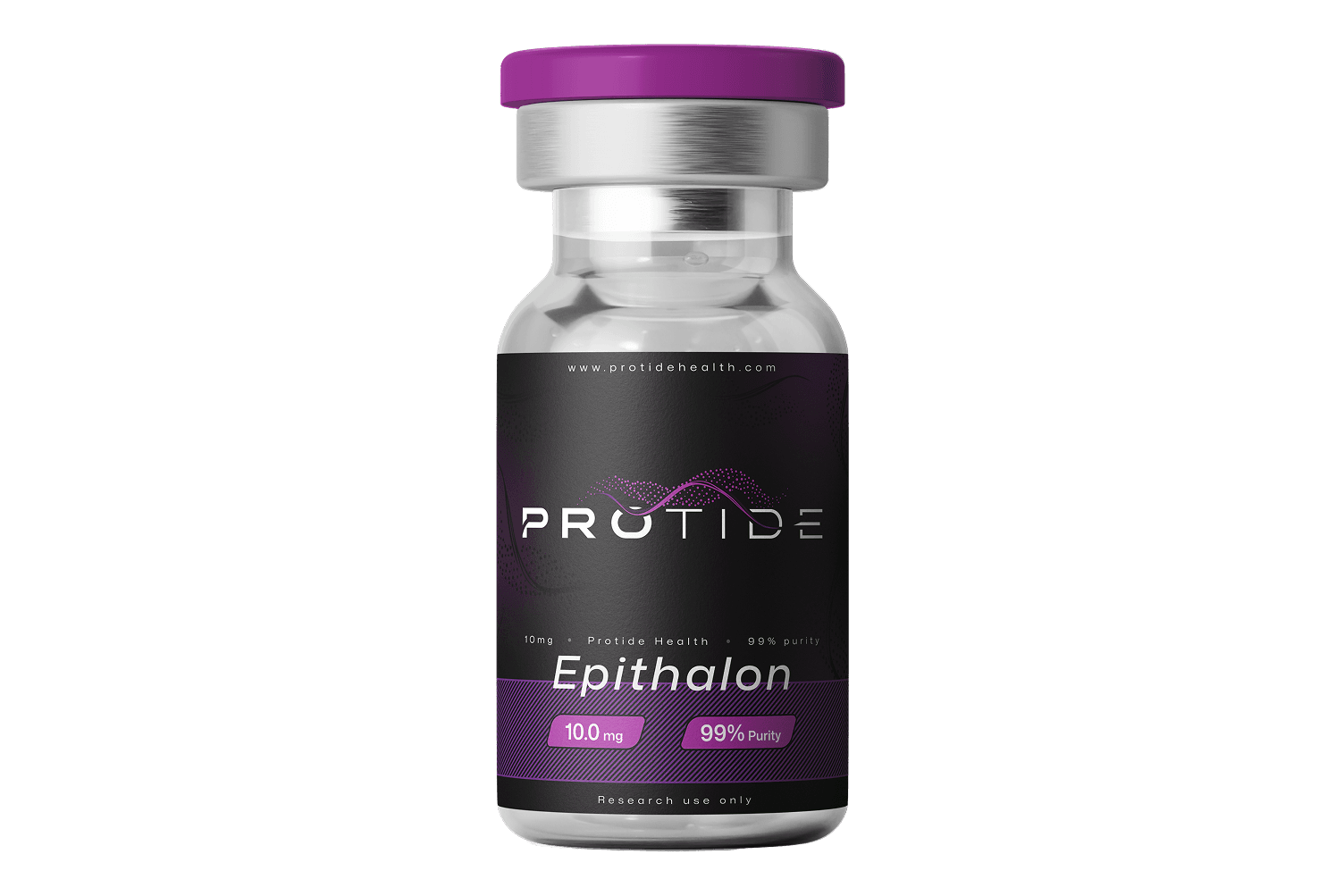
This compound is available strictly for research purposes within the United States. Protide Health stocks Epithalon 10mg for qualified researchers. It is not sold for human consumption.
What differentiates Epithalon from Epithalamin?
Epithalamin is a naturally occurring polypeptide extract from the bovine pineal gland. It served as the precursor compound in early animal studies. Epithalon is a synthetic tetrapeptide designed to replicate the targeted active sequence. The synthetic version offers consistent purity and composition for controlled laboratory applications.
Key Takeaways in Epithalon Research
The epithalon peptide occupies a unique position in cellular aging research. As a synthetic version of a naturally occurring pineal bioregulator, it provides a model for studying complex biological mechanisms.
Current laboratory investigations focus on:
- Telomere biology and in vitro telomerase activity
- Circadian signaling in preclinical animal studies
- Cellular senescence (aging) biological markers
For laboratories exploring this area, understanding the existing evidence remains the best starting point. Protide Health stocks Epithalon 10mg exclusively for laboratory purposes. Laboratory professionals must follow standard safety guidelines before incorporating any chemical into an in vitro investigation.
Disclaimer: Products are for laboratory research only, not human consumption, medical use, or veterinary use. Educational purposes only; not medical advice.