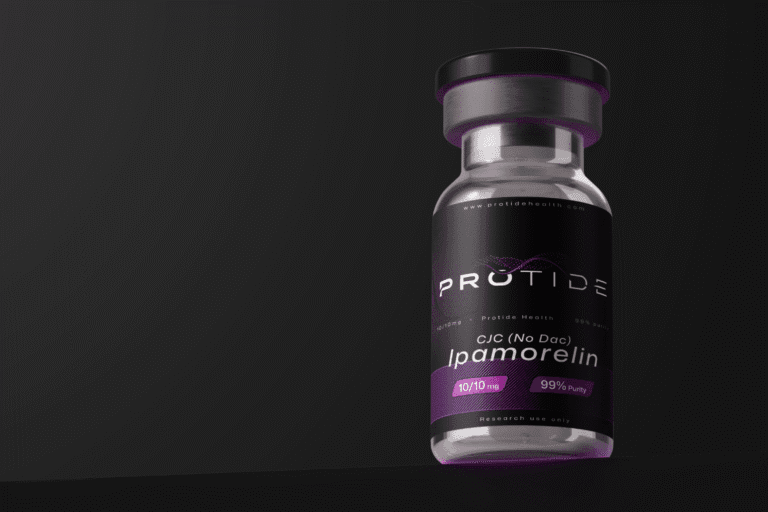

Glow Peptide: Research Guide to the Glow Blend
Research‑Use‑Only Notice: All content on this website and all product information are for educational and informational purposes only. All products referenced are for laboratory research, analytical, and in‑vitro or preclinical in‑vivo use only. They are not medicines or drugs, have not been evaluated or approved by the FDA, and are not intended to diagnose, treat, cure, or prevent any disease. Any bodily introduction into humans or animals is strictly prohibited.
The Glow peptide blend is a three-peptide research combination investigated in preclinical models for tissue-pathway signaling, extracellular matrix markers, and angiogenesis mechanisms. This research-focused guide explains the blend’s components, how each is studied in laboratory systems, and how researchers design experimental protocols. Protide Health provides clearly labeled, third-party-tested compounds and educational resources for laboratory investigation.
Glow Peptide Blend Scientific Research Summary
- What it is: A three-peptide research blend combining GHK-Cu, TB-500, and BPC-157
- Why it’s studied: Investigated for tissue-pathway signaling, matrix remodeling markers, angiogenesis mechanisms, and inflammatory pathway modulation in preclinical models
- Where to start: Define target concentrations and volumes based on your model system, then use the peptide reconstitution tool for mass-to-volume conversions in laboratory solutions
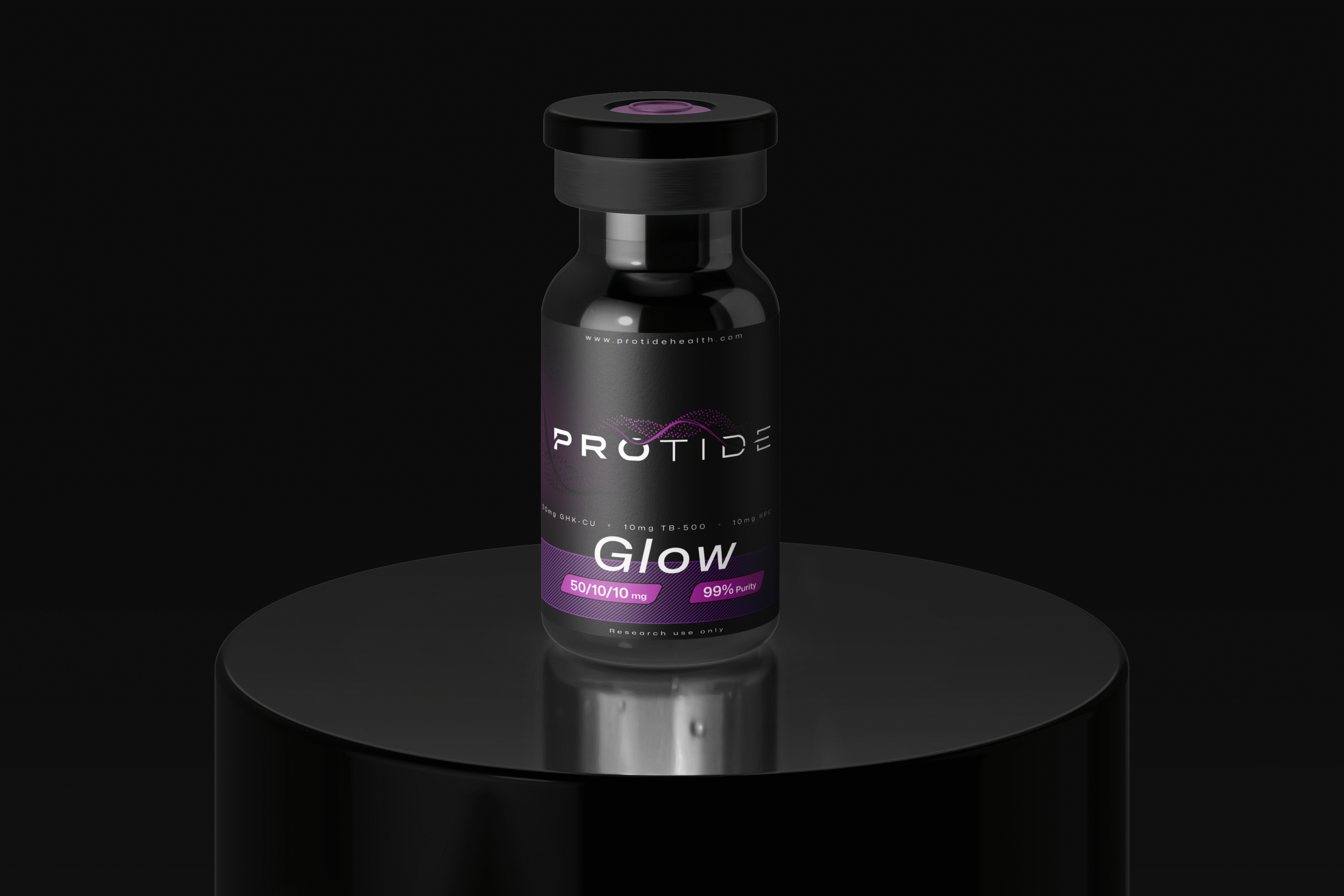
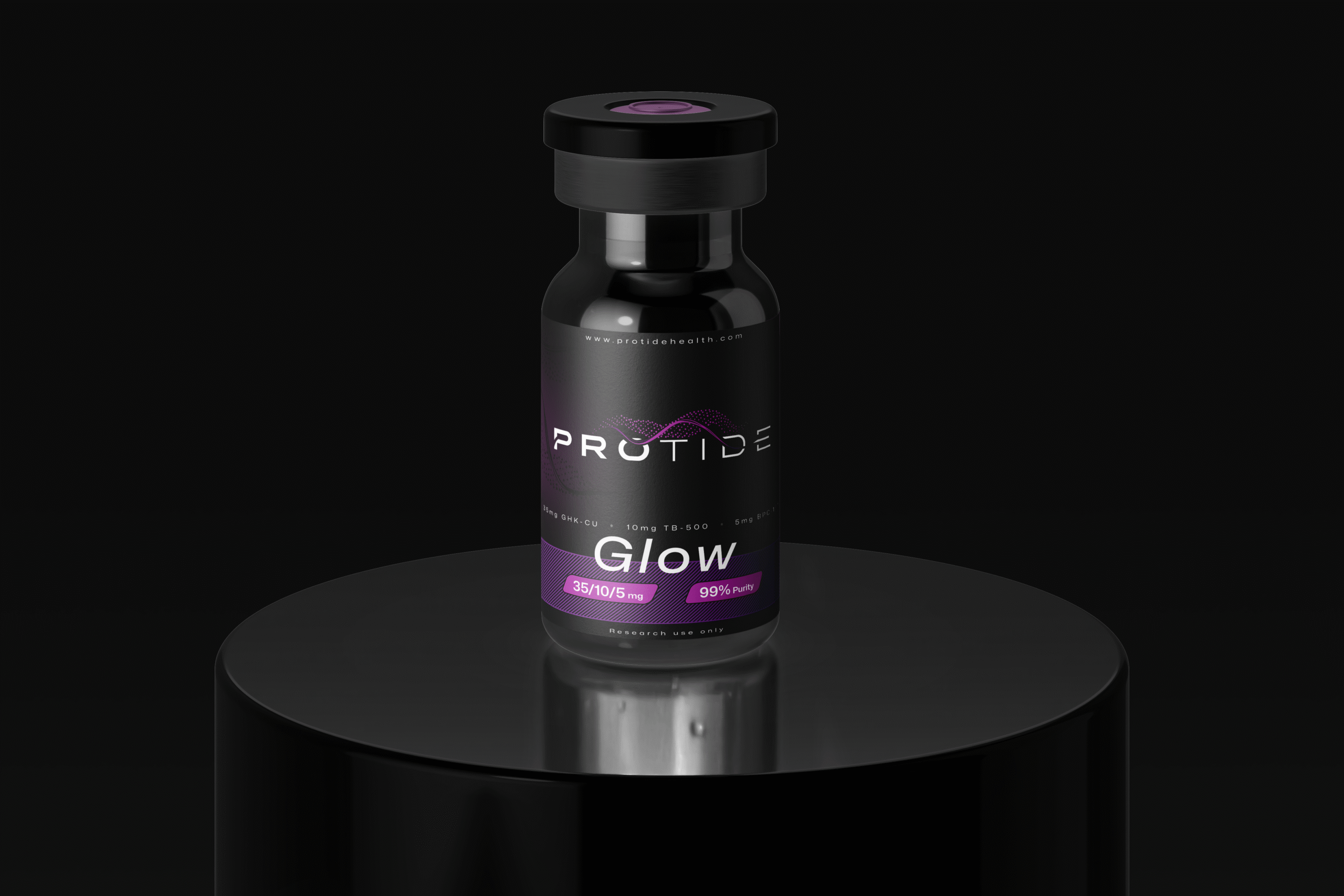
- Where to find it: See Glow 50/10/10 mg and Glow 35/10/5 mg options below
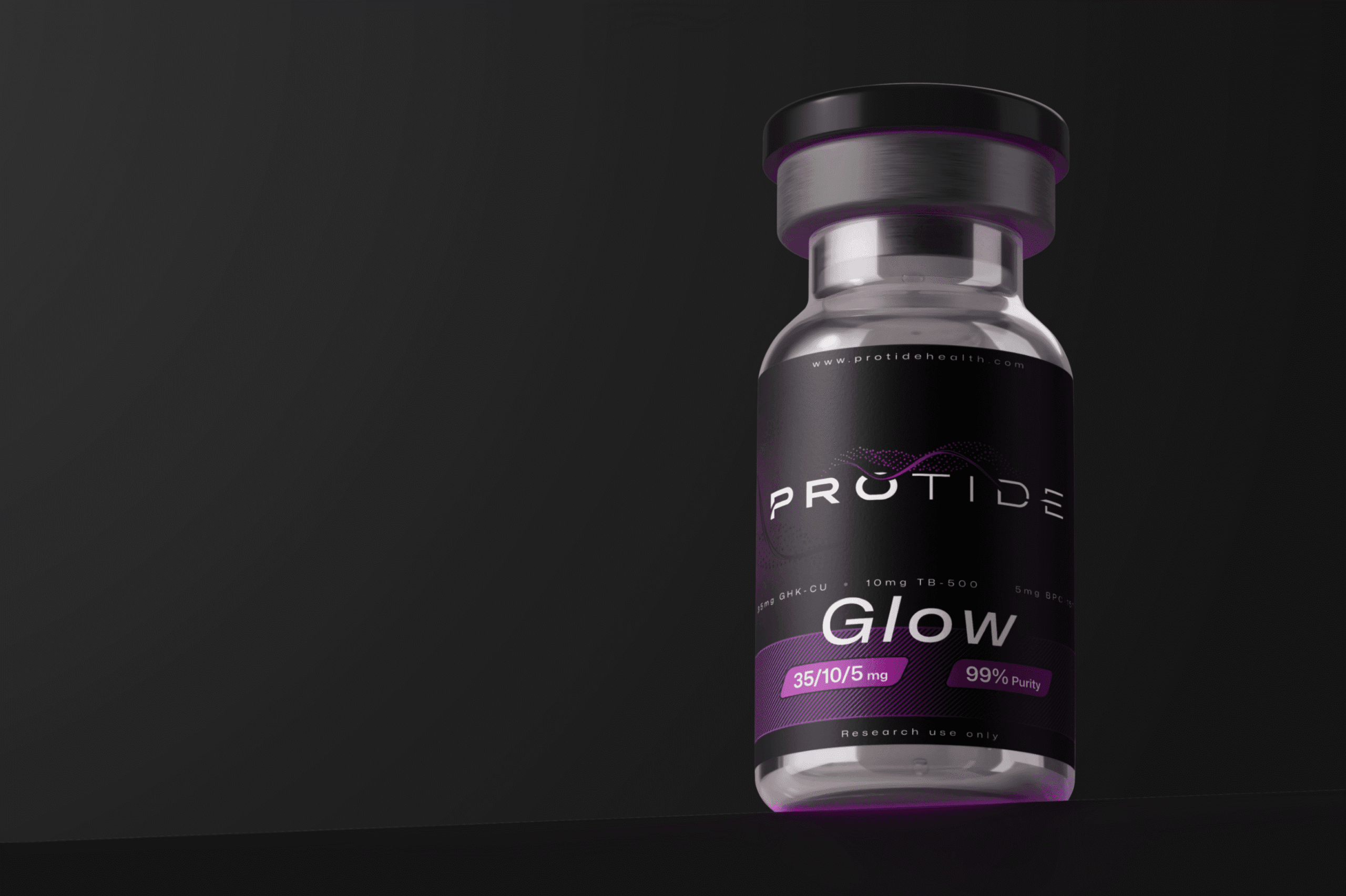
What Is the Glow Peptide?
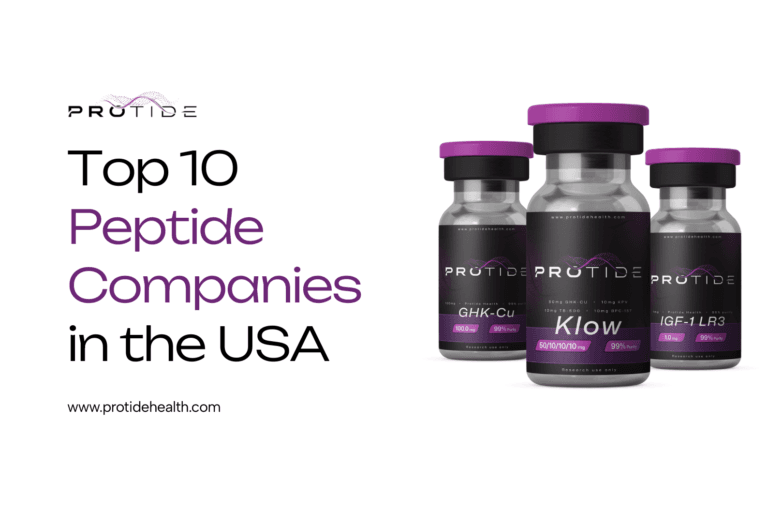
The Glow peptide blend is a research-grade combination of GHK-Cu, TB-500, and BPC-157 used to investigate combined pathway effects on tissue-signaling markers, matrix modulation, and cellular migration mechanisms in preclinical systems. At Protide Health, Glow is available in two configurations:
Key takeaways
- Research-only compound: Not for human consumption or veterinary use
- Three complementary peptides: Collagen and matrix signaling pathways (GHK-Cu), actin dynamics and angiogenesis mechanisms (TB-500-related), and tissue-pathway markers in tendon/ligament and mucosal models (BPC-157)
- Laboratory investigation areas: Examined in skin-equivalent and soft-tissue models, cell-migration assays, and tissue-pathway signaling studies
How the Glow Peptide Works (Simple Science)
GHK-Cu (glycyl-L-histidyl-L-lysine-copper): A naturally occurring tripeptide that binds copper and is studied for its role in extracellular matrix signaling pathways, collagen-synthesis markers, and dermal biology in in-vitro systems and limited human exploratory research. Researchers measure antioxidant activity and gene-expression patterns in dermal and matrix-remodeling models.
TB-500 (thymosin beta-4-related): A research peptide related to the thymosin β4 pathway, investigated for effects on cell-migration markers, actin remodeling mechanisms, angiogenesis signaling, and tissue-pathway indicators in ocular, dermal, and cardiac preclinical models.
BPC-157 (Body Protection Compound-157): A synthetic pentadecapeptide studied predominantly in animal models for tissue-pathway markers in tendon-to-bone attachment sites, gastric mucosal tissue, and inflammatory signaling, with proposed mechanisms involving nitric oxide pathways and angiogenesis markers. Human evidence remains extremely limited.
Glow Peptide Blend Overview Table
| Component | Pathway Investigated | Research Model Focus | Notes |
|---|---|---|---|
| GHK-Cu | Copper-dependent signaling; ECM and collagen pathway markers | Dermal matrix models, fibroblast culture systems | In vitro and cosmetic-sector human studies measure collagen-pathway and matrix-turnover markers |
| TB-500 (Tβ4-related) | Actin dynamics; cell-migration markers; angiogenesis signaling | Ocular, dermal, cardiac tissue models | Preclinical evidence; gel and drop formulations with Tβ4 analogs studied in corneal and dermal systems |
| BPC-157 | Tissue-pathway signaling; angiogenesis markers; NO signaling | Tendon/ligament attachment, GI mucosa, inflammation models | Primarily animal data; human interventional data are limited and exploratory |
Glow Peptide Research Findings & Applications
Animal / in-vitro emphasis
Dermal and matrix models: Studies examine collagen-synthesis markers, fibroblast activity, epithelial migration, and angiogenesis signaling in cell and animal models. Research measures gene expression, protein markers, and histological parameters.
Musculoskeletal tissue models: Tendon, ligament, and muscle research investigates tissue-attachment markers, vessel-density indicators, and inflammatory pathway modulation in load-bearing systems. Studies measure biomechanical and molecular endpoints in preclinical models.
Mucosal tissue pathways: Preclinical BPC-157 work examines GI mucosal tissue structure and systemic inflammatory signaling markers in animal and in-vitro systems. Research focuses on pathway mechanisms rather than therapeutic outcomes.
Human evidence (limited and exploratory)
GHK-Cu: Limited human cosmetic-oriented studies and small exploratory evaluations measure changes in dermal markers and extracellular matrix parameters; findings remain preliminary and represent measured endpoints in specific study contexts, not evidence of therapeutic benefit.
TB-4-related agents: Topical and ophthalmic formulations have been evaluated in small human studies measuring tissue-pathway endpoints; data are early-stage and do not establish clinical indications.
BPC-157: Human data remain sparse; most publications involve animal or in-vitro models. There are no FDA-approved indications for these peptides.
All observed effects represent measured research endpoints in laboratory models that inform preclinical hypotheses, not evidence of clinical benefit or human-use guidance.
Safety, Quality, and Sourcing
Select third-party-tested, clearly labeled research compounds with batch traceability. Store peptides under temperature-controlled laboratory conditions, avoid repeated freeze-thaw cycles, and follow institutional SOPs for sterile handling and reconstitution. Protide Health provides transparent labeling and educational resources for laboratory investigation. Browse our full catalog: research peptides.
How to Get Started With Glow Peptide
- Review background: Visit our peptide research guides to learn about pathway mechanisms, study endpoints, and laboratory-planning concepts.
- Select a Glow configuration: Compare Glow 50/10/10 mg and Glow 35/10/5 mg based on the requirements of your in-vitro or preclinical model system.
- Define experimental parameters: Use the peptide reconstitution tool to calculate solution concentrations, and document concentrations, volumes, and exposure schedules according to your lab’s SOPs before initiating any study.
Glow Peptide FAQs
What is the Glow peptide?
The Glow peptide is a research blend of GHK-Cu, TB-500-related, and BPC-157 offered by Protide Health in two ratios. It is used to investigate pathway interactions in tissue-signaling models, dermal and soft-tissue systems, and inflammatory marker modulation in preclinical settings. Not for human consumption or veterinary use.
What research areas is the Glow blend used to explore?
Researchers study Glow in dermal matrix-remodeling models, tissue-pathway signaling assays, and cell-migration systems. Evidence derives from animal and in-vitro studies; human data are limited and exploratory, representing measured endpoints rather than established therapeutic effects.
What does the Glow peptide do in research settings?
In preclinical studies, components of Glow are associated with collagen-pathway and matrix-signaling markers (GHK-Cu), cell-migration and angiogenesis indicators (TB-500-related), and tissue-pathway parameters in tendon/ligament and mucosal models (BPC-157). Measured outcomes vary by model system, exposure parameters, and study design and represent research endpoints, not clinical benefits.
What study timelines are used in Glow peptide research?
In preclinical settings, researchers often design multi-week studies to measure changes in matrix-biology markers and tissue parameters. Timelines depend entirely on model type, exposure schedule, and predefined endpoints. There is no validated human timeline for any outcomes.
What are the Glow peptide blend ingredients?
Glow contains GHK-Cu, TB-500-related, and BPC-157. Protide Health currently offers 50/10/10 mg and 35/10/5 mg configurations, each with clear labeling and third-party testing for laboratory research use only.
How do I design a Glow peptide research protocol?
Experimental design should follow institutional guidelines, published literature, and oversight requirements. Many laboratories define target concentrations, total volume, and exposure schedule for their model system, then use the peptide reconstitution tool to calculate solution concentrations for in-vitro or preclinical assays. The tool is for laboratory calculations only and is not a dosing or treatment planner.
How should Glow peptides be stored?
Store and handle Glow according to institutional SOPs and supplier documentation. As general laboratory practice, keep lyophilized vials in dry, cold storage protected from light; after reconstitution, follow institutional protocols for temperature control, sterility, and stability tracking.
Disclaimer: Products sold by Protide Health are for laboratory research purposes only and are not intended for human consumption, medical use, or veterinary use.
References
- Pickart L, et al. “The human tripeptide GHK and tissue remodeling.” BioMed Research International (2014). (PubMed)
- Maquart FX, et al. “Stimulation of collagen synthesis by the tripeptide-copper complex GHK-Cu.” J Invest Dermatol (1988). (PubMed)
- Pickart L, et al. “Copper peptides in skin regeneration.” Dermatologic Surgery (2015). (PubMed)
- Malinda KM, et al. “Thymosin β4 stimulates endothelial cell migration and angiogenesis.” PNAS (1997). (PubMed)
- Philp D, et al. “Thymosin β4 accelerates wound healing.” J Clin Invest (2003). (PubMed)
- Sosne G, et al. “Thymosin β4 for ocular surface diseases.” Ophthalmology and Therapy (2015). (PubMed)
- Sikiric P, et al. “Stable gastric pentadecapeptide BPC 157 in healing and GI protection.” Current Pharmaceutical Design (2020). (PubMed)
- Sikiric P, Seiwerth S. “BPC 157 and the gut-brain axis: preclinical evidence.” Biomedicines (2020). (PubMed)
- Kang S, et al. “GHK-Cu and gene expression profiles in skin.” J Dermatol Sci (2009). (PubMed)
- Smart N, et al. “Thymosin β4 and myocardial repair.” Nature (2007). (PubMed)