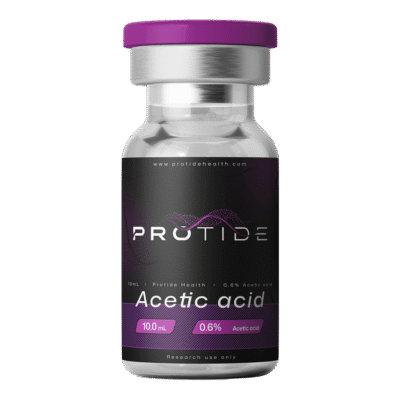
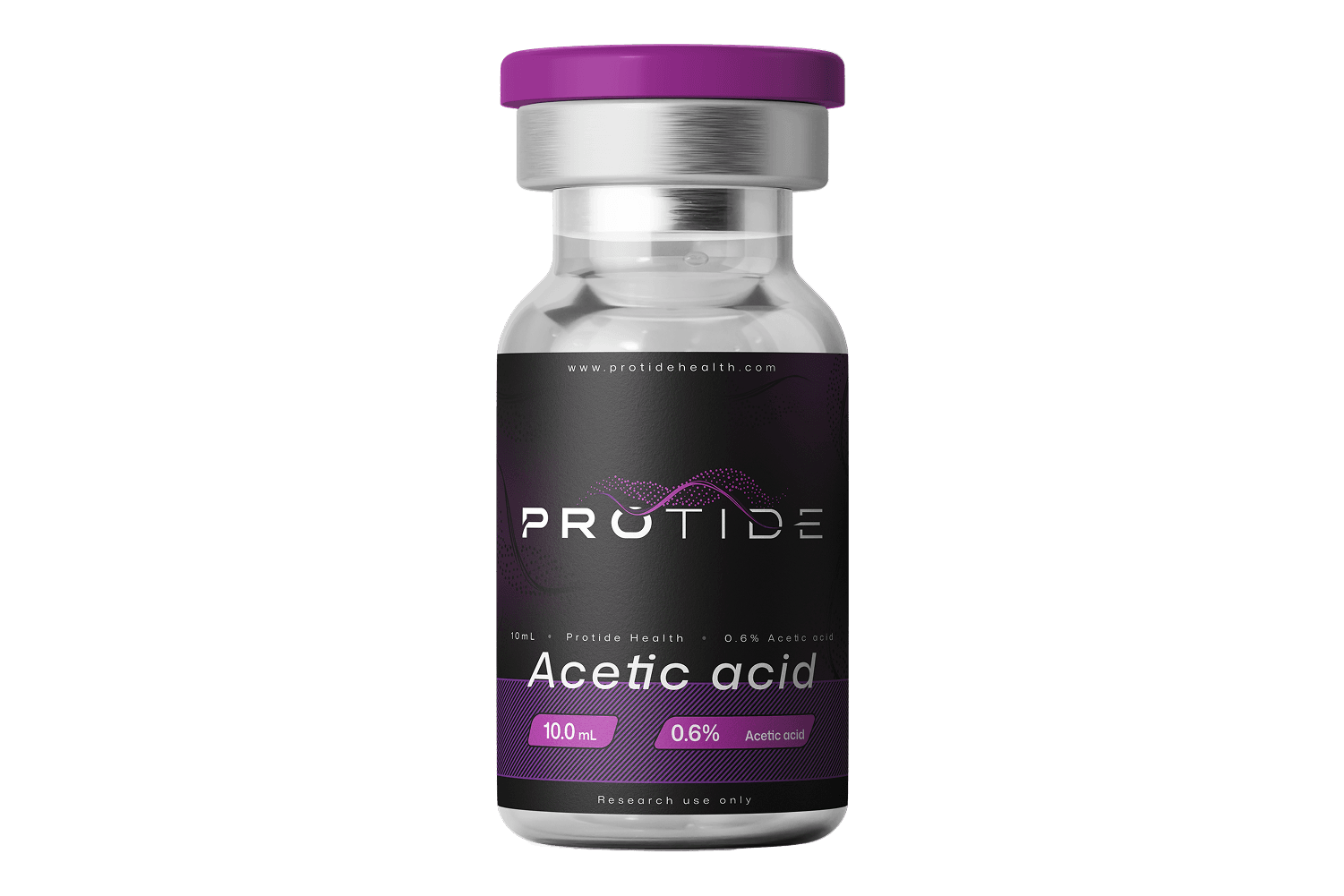
Acetic Acid (0.6%)
$14.99
Laboratory-Grade Peptide Solvent.
Acetic Acid 0.6% (10mL) is a specialized reconstitution solution designed for lyophilized research peptides that are highly basic, hydrophobic, or prone to aggregation in neutral pH environments (such as Bacteriostatic Water). It lowers the solution pH to prevent clumping and maintain structural stability during in vitro studies. For Research Use Only. Not for human use.
In stock
Free shipping on orders over $149!
- 99% Purity (HPLC-MS Verified)
- Independent Third-Party Tested
- USA GMP Manufactured
- Complimentary BAC Water
- Ships in 24 Hours (USA)
Disclaimer: This product is intended solely for laboratory research purposes. It is not for human consumption, medical use, veterinary use, or household application. All product information on this website is provided for educational purposes only. Researchers must handle this product with appropriate safety protocols and comply with all applicable regulations. Please review our Terms & Conditions before purchasing.
Acetic Acid 0.6% (10mL)
Acetic Acid 0.6% is a specialized laboratory solvent designed to optimize the solubility and stability of hydrophobic or basic research peptides. While Bacteriostatic Water is the standard diluent for many compounds, studies show that peptides with high isoelectric points—such as AOD-9604 or fragments of IGF-1 LR3—may aggregate or degrade in neutral pH environments. This acidic solution protonates basic amino acid residues, preventing precipitation and ensuring consistent concentration for in vitro analysis.
Chemical Properties & Laboratory Purpose
Research peptides are often lyophilized (freeze-dried) to maintain stability during transport. However, the reconstitution process requires matching the solvent’s pH to the peptide’s chemical structure.
Mechanism of Action
Acetic acid (CH₃COOH) acts as a weak organic acid that modifies the ionization state of peptide side chains.
Protonation: In a pH environment of 3.0–4.0, basic residues like arginine, lysine, and histidine become protonated (positively charged).
Electrostatic Repulsion: This positive charge creates repulsion between peptide molecules, which inhibits the intermolecular bonding that causes visible clumping or “gelation” (PubMed).
Structural Integrity: For specific sequences, maintaining an acidic environment prevents deamidation and oxidation, preserving the peptide’s primary structure for extended study periods (ScienceDirect).
Applications in Peptide Research
In laboratory settings, Acetic Acid 0.6% is the preferred solvent for compounds that exhibit poor water solubility.
Hydrophobic Peptide Recovery
Peptides with significant hydrophobic regions, such as Tesamorelin, may resist dissolution in neutral Bacteriostatic Water. Protocols often utilize a “two-step” reconstitution method:
Initial Solubilization: A small volume of acetic acid is added to dissolve the lyophilized cake.
Dilution: The solution is then brought to volume with a neutral buffer to achieve the target concentration (PubMed).
Stability Comparison
Proper handling is critical to maintaining the sterility and efficacy of research reagents.
Temperature Control: Store sealed vials at controlled room temperature (20°C to 25°C). Once opened, the solution should be used within standard laboratory timelines or discarded to prevent contamination.
Reconstitution Technique: Inject the solvent slowly down the side of the vial to avoid foaming. Gentle swirling is recommended over shaking, which can shear fragile peptide bonds (Nature Protocols).
Storage of Reconstituted Peptides: Peptides dissolved in acetic acid often remain stable for longer periods at 4°C compared to those in neutral water, though this varies by peptide sequence.
Product Specifications
| Parameter | Detail |
|---|---|
| Product | Acetic Acid |
| Concentration | 0.6% (Approx. 0.1M) |
| Volume | 10mL Multi-Use Vial |
| pH Range | 3.0 – 4.0 |
| Grade | Laboratory Reagent Grade |
| Intended Use | In vitro and analytical research only |
Citations:
Manning MC, et al. Stability of Protein Pharmaceuticals. Pharm Res. PubMed
Voidarou C, et al. Antimicrobial activity of organic acids against bacteria. Anaerobe. PubMed
Geiger T, et al. Deamidation of Asparagine Residues in Peptides. J Biol Chem. PubMed
Frokjaer S, et al. Protein Instability in Pharmaceutical Formulation. Nat Rev Drug Discov. Nature
Analytical guidelines for peptide solubility. J Pept Sci. Wiley
FAQs
You may also like…
-

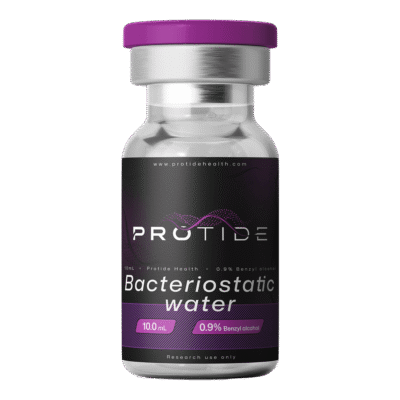
Bacteriostatic Water
Price range: $14.99 through $18.99Select options This product has multiple variants. The options may be chosen on the product page -
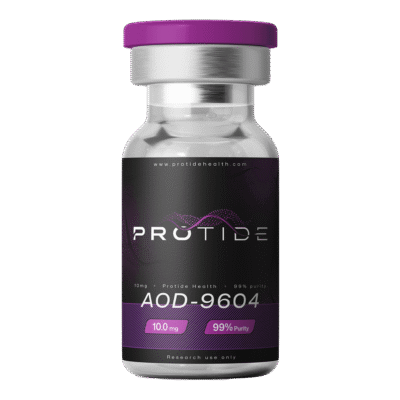
AOD-9604
Price range: $60.00 through $115.00Select options This product has multiple variants. The options may be chosen on the product page -
Sale!
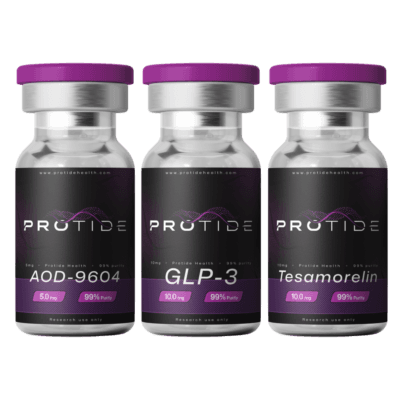
Metabolic Research Bundle (GLP-3, AOD-9604, Tesamorelin)
Original price was: $285.00.$260.00Current price is: $260.00.