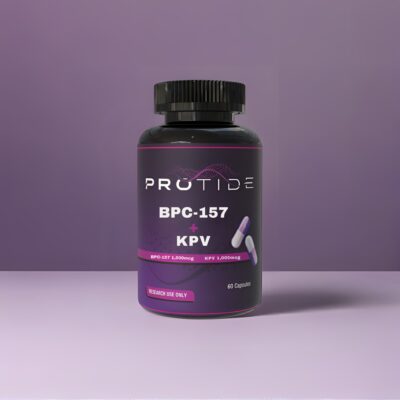
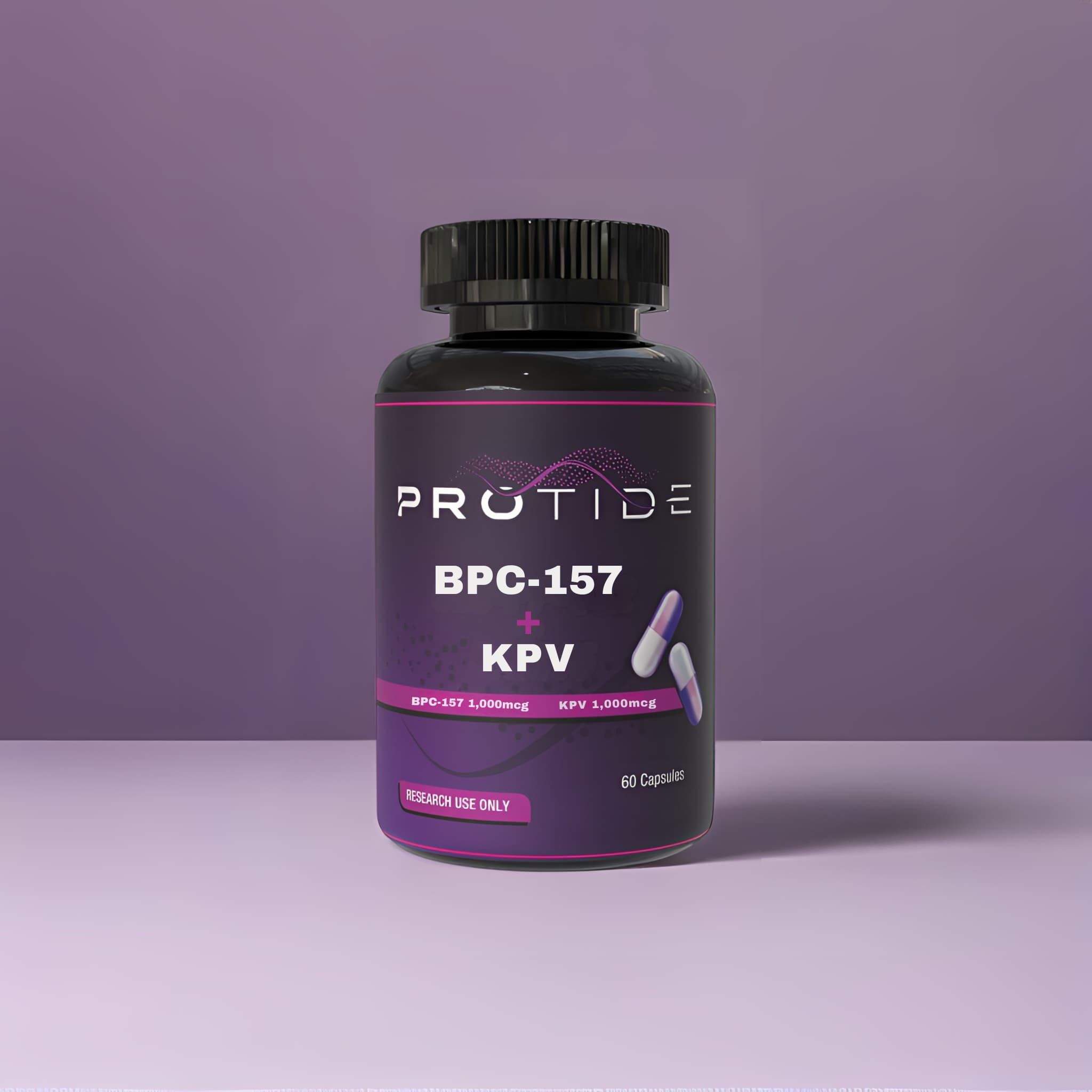
BPC-157 & KPV Capsules
$199.00
BPC-157 + KPV Capsules combine two gut-targeted peptides in a convenient oral formulation. BPC-157 promotes tissue repair through angiogenesis and cytoprotection, while KPV suppresses NF-κB inflammatory signaling via PepT1 uptake in intestinal cells. For research use only — not for human consumption.
In stock
Free shipping on orders over $149!
- 99% Purity
- Third-Party Tested
- Secure Payments
- Free BAC Water
- Satisfaction Guaranteed
Disclaimer: This product is intended solely for laboratory research purposes. It is not for human consumption, medical use, veterinary use, or household application. All product information on this website is provided for educational purposes only. Researchers must handle this product with appropriate safety protocols and comply with all applicable regulations. Please review our Terms & Conditions before purchasing.
What is BPC-157 + KPV?
BPC-157 + KPV is a combination oral capsule that pairs two of the most studied gut-targeted peptides in preclinical research. BPC-157 (Body Protection Compound-157) is a 15-amino-acid peptide derived from human gastric juice that promotes tissue repair, angiogenesis, and cytoprotection throughout the gastrointestinal tract. KPV (Lysine-Proline-Valine) is a tripeptide derived from the C-terminal end of alpha-melanocyte-stimulating hormone (α-MSH) that delivers potent anti-inflammatory activity by inhibiting NF-κB signaling in intestinal epithelial and immune cells. Protide Health offers this combination capsule as a research-grade oral formulation for laboratory and preclinical studies.
Both peptides have independently demonstrated significant effects in inflammatory bowel disease models when administered orally, and both act directly on the gastrointestinal lining — making an oral combination capsule a scientifically logical delivery format. BPC-157 repairs and rebuilds damaged tissue, while KPV calms the inflammatory cascade that causes tissue damage in the first place.
- Formulation type: Oral combination capsule — two gut-targeted peptides (gastric pentadecapeptide + melanocortin-derived tripeptide) in a single oral dosage form.
- Primary research focus: Gastrointestinal mucosal protection, inflammatory bowel disease models, intestinal barrier integrity, and tissue repair research.
BPC-157 + KPV Overview & Key Properties
This combination capsule unites two peptides with deep preclinical research profiles and strong rationale for oral gut-targeted delivery.
BPC-157 (GEPPPGKPADDAGLV, MW 1,419 Da) is a synthetic pentadecapeptide first isolated from human gastric juice by Professor Predrag Sikiric at the University of Zagreb. It is uniquely stable in stomach acid for over 24 hours and has demonstrated healing activity across virtually every tissue type tested in over three decades of research. It has completed Phase II clinical trials for inflammatory bowel disease under the designations PL-10, PLD-116, and PL 14736, with no reported toxicity and no achievable lethal dose (Sikiric et al., 2011).
KPV (Lys-Pro-Val) is a tripeptide corresponding to positions 11–13 of α-MSH, the body’s natural anti-inflammatory hormone. Despite being only three amino acids long, KPV retains the full anti-inflammatory activity of the larger α-MSH molecule — and in some studies has demonstrated even stronger effects. KPV is transported into intestinal epithelial cells and immune cells via the PepT1 transporter, which is specifically upregulated during inflammatory bowel disease, making inflamed gut tissue especially receptive to the peptide (Dalmasso et al., 2008).
- Formulation type: Oral capsule containing both BPC-157 and KPV for convenient, targeted gut research dosing.
- Suggested storage concept in lab settings: Store in a cool, dry place protected from light and moisture per lab SOPs. Keep capsules sealed until use.
- Common research models: DSS (dextran sodium sulfate)-induced colitis, TNBS-induced colitis, NSAID-induced gastric lesions, intestinal anastomosis healing, short-bowel syndrome, leaky gut models, and intestinal barrier permeability assays.
BPC-157 + KPV Mechanism of Action
To understand why these two peptides work together so well for gut research, think about what happens during intestinal inflammation: the gut lining gets damaged, the barrier breaks down allowing bacteria to invade, the immune system overreacts with inflammatory signaling, and the tissue cannot heal fast enough to keep up with the damage. This combination targets both sides of that cycle.
KPV attacks the inflammation directly. When intestinal tissue is inflamed, cells lining the colon upregulate a transporter called PepT1. KPV is transported into these cells through PepT1, where it accumulates inside the cell and inhibits NF-κB — the master switch for inflammatory gene expression. This reduces the production of pro-inflammatory cytokines like TNF-α and IL-6 and decreases neutrophil infiltration into damaged tissue. Importantly, KPV’s anti-inflammatory mechanism is not mediated through melanocortin receptors (MCRs) — it works through direct intracellular NF-κB suppression via PepT1 transport, which means it targets inflammation precisely where it’s needed most: in the inflamed gut lining (Dalmasso et al., 2008).
BPC-157 drives the repair. Once inflammation is controlled, damaged tissue needs to rebuild. BPC-157 activates VEGFR2 (vascular endothelial growth factor receptor 2) to promote new blood vessel growth, upregulates the EGR-1 gene to stimulate growth factor and collagen production, enhances growth hormone receptor expression in fibroblasts, and modulates the nitric oxide system to protect the endothelium. It also acts as a free radical scavenger, helping to clean up the oxidative damage left behind by inflammation (Gwyer et al., 2019; Chang et al., 2014).
The combination logic: KPV calms the inflammatory fire, while BPC-157 rebuilds what the fire damaged. KPV is pulled into inflamed cells through upregulated PepT1 transporters, while BPC-157 survives the gastric environment to reach both the stomach and intestinal lining. Together, they create a “suppress and repair” approach to gastrointestinal research that addresses both the cause and the consequence of mucosal injury.
BPC-157 + KPV Research
1. KPV: Oral Anti-Inflammatory Activity in Colitis Models
The landmark study on oral KPV was published in Gastroenterology in 2008. Dalmasso et al. demonstrated that KPV added to drinking water significantly reduced the severity of both DSS-induced and TNBS-induced colitis in mice. Treated animals showed reduced weight loss, decreased colonic myeloperoxidase (MPO) activity (a marker of neutrophil infiltration), and markedly decreased histological signs of inflammation and pro-inflammatory cytokine mRNA levels. The researchers proved that KPV’s anti-inflammatory effect was not mediated through melanocortin receptors but through the PepT1 transporter, which is specifically upregulated in inflamed intestinal tissue (Dalmasso et al., 2008).
A separate study by Kannengiesser et al. (2008) confirmed these findings across two colitis models (DSS and CD45RBhi transfer colitis). KPV treatment led to earlier recovery, significantly stronger weight regain, and reduced inflammatory infiltrates. In mice with a nonfunctional melanocortin-1 receptor, KPV rescued all animals from death during DSS colitis — proving that its gut anti-inflammatory effects are at least partially independent of classic melanocortin signaling (Kannengiesser et al., 2008). These are preclinical animal findings and do not represent approved therapeutic claims.
2. BPC-157: Gastrointestinal Protection and Healing
BPC-157 has been described as the most broadly protective gastrointestinal peptide studied in preclinical research. In the GI tract specifically, it has healed gastric ulcers, protected against NSAID- and alcohol-induced gastric and intestinal lesions, healed esophagitis and restored sphincter function, closed intestinal fistulas (colocutaneous, gastrocutaneous, duodenocutaneous), and accelerated intestinal anastomosis healing — with some studies showing fistula closure even when treatment was delayed by one month (Sikiric et al., 2011).
In short-bowel syndrome models, oral and parenteral BPC-157 produced immediate weight gain above preoperative values with increases in villus height, crypt depth, and muscle wall thickness throughout the intestinal wall (Sikiric et al., 2011). The peptide has completed Phase II clinical trials for inflammatory bowel disease with a safety profile showing no toxicity and no achievable lethal dose (Sikiric et al., 2012). These are clinical trial observations and do not constitute FDA approval.
3. Complementary Pathways: The Rationale for Combination
While no published study has tested BPC-157 and KPV together, the scientific case for combining them is built on their complementary and non-overlapping mechanisms of action:
KPV operates as an anti-inflammatory agent. It is transported into inflamed intestinal epithelial cells and immune cells via the PepT1 transporter, where it inhibits NF-κB activation and MAP kinase inflammatory signaling, reducing pro-inflammatory cytokine production at the source. Its effects are rapid and targeted to sites of active inflammation (Dalmasso et al., 2008).
BPC-157 operates as a tissue repair agent. It promotes angiogenesis (VEGFR2), upregulates growth factors (EGR-1, growth hormone receptor), protects the endothelium, modulates the nitric oxide system, and accelerates wound healing across all GI tissue types. Its effects build over time and produce durable structural repair (Sikiric et al., 2011).
In inflammatory bowel disease and related gut conditions, inflammation and tissue damage form a vicious cycle — damage triggers inflammation, which causes more damage. KPV breaks the inflammatory arm of this cycle, while BPC-157 accelerates the repair arm. Both peptides have independently demonstrated oral efficacy in animal models, and both act directly on the gastrointestinal lining, making an oral combination formulation a rational research tool.
4. KPV: Targeted Delivery to Inflamed Tissue
One of KPV’s most compelling research properties is its built-in targeting mechanism. The PepT1 transporter, which carries KPV into cells, is normally expressed in the small intestine at low levels. However, during inflammatory bowel disease, PepT1 expression is dramatically upregulated in the colon — precisely where inflammation is most severe. This means that KPV is preferentially absorbed by the tissue that needs it most (Dalmasso et al., 2008).
Xiao et al. (2017) further explored this concept by loading KPV into hyaluronic acid-functionalized nanoparticles for targeted colonic delivery. The nanoparticle system successfully delivered KPV to colonic epithelial cells and macrophages, where it exerted combined effects of accelerating mucosal healing and alleviating inflammation in ulcerative colitis models (Xiao et al., 2017). These drug delivery findings underscore the scientific interest in oral KPV formulations for gut-targeted research. These are preclinical findings and do not represent approved treatments.
BPC-157 + KPV Dosing Concepts for Lab Research
This section is educational, not prescriptive.
In published animal research, BPC-157 has been administered orally at doses of 10 μg/kg or 10 ng/kg body weight, typically in drinking water. KPV has been administered orally in drinking water at concentrations of 100 μmol/L in colitis studies. Both peptides have demonstrated biological activity through the oral route, consistent with their gut-targeting properties — BPC-157 via gastric acid stability and KPV via PepT1 transporter uptake in inflamed intestinal tissue.
- Focus: Investigating whether the combination of anti-inflammatory (KPV) and tissue repair (BPC-157) activity produces additive or synergistic improvements in gut inflammation, mucosal healing, and barrier integrity endpoints compared to either peptide alone.
- Study design: A 2×2 factorial design (vehicle, BPC-157 alone, KPV alone, combination) using standardized colitis models with endpoints including histological scoring, MPO activity, cytokine mRNA expression, barrier permeability assays, and body weight recovery curves.
- Use the peptide dosage calculator to assist with dosing calculations and planning.
BPC-157 + KPV Specifications Table
| Parameter | Details |
|---|---|
| Product name | BPC-157 + KPV Capsules |
| Formulation | Oral capsule |
| Peptide types | Gastric pentadecapeptide (BPC-157) + melanocortin-derived tripeptide (KPV) |
| Typical use case | GI mucosal protection, inflammatory bowel disease models, intestinal barrier repair, and tissue healing research |
| Storage guidance | Cool, dry, dark; follow lab SOPs |
| Intended use | Laboratory research only, not for human use |
BPC-157 + KPV FAQs
What is the BPC-157 + KPV combination used for in research?
This combination is designed for research into gastrointestinal inflammation, mucosal healing, and intestinal barrier integrity. BPC-157 promotes tissue repair through angiogenesis, growth factor upregulation, and cytoprotection, while KPV suppresses the NF-κB inflammatory signaling that drives tissue damage. Together they address both sides of the inflammation-damage cycle that characterizes conditions like colitis, NSAID-induced gut injury, and leaky gut models.
Why are these two peptides combined in an oral capsule?
Both BPC-157 and KPV have demonstrated biological activity when administered orally in animal studies, and both act directly on the gastrointestinal lining. BPC-157 is uniquely stable in stomach acid (surviving over 24 hours in human gastric juice), while KPV is transported into inflamed intestinal cells through the PepT1 transporter, which is upregulated during inflammatory bowel disease. The oral capsule format aligns with the natural delivery route for both peptides’ gut-targeted mechanisms.
Has this exact combination been studied in published research?
No. As of early 2026, no published study has tested BPC-157 and KPV together. However, both peptides have extensive individual research profiles spanning decades, and their non-overlapping mechanisms (tissue repair vs. anti-inflammatory) provide a strong scientific rationale for combination research. This product enables researchers to investigate potential additive or synergistic effects on gastrointestinal endpoints.
How does KPV reduce gut inflammation?
KPV inhibits NF-κB activation — the master regulatory switch for inflammatory gene expression — inside intestinal epithelial cells and immune cells. It is transported into these cells through the PepT1 transporter, which is specifically upregulated during inflammatory bowel disease. Once inside the cell, KPV blocks inflammatory signaling at its source, reducing production of pro-inflammatory cytokines like TNF-α and IL-6 and decreasing neutrophil infiltration into damaged tissue.
Is BPC-157 the same in capsule form as in injectable form?
BPC-157 is the same peptide sequence (GEPPPGKPADDAGLV) regardless of delivery format. What makes BPC-157 uniquely suitable for oral administration is its stability in human gastric juice — unlike most peptides, it is not degraded by stomach acid. In published animal studies, oral and parenteral BPC-157 have produced comparable effects at the same dose ranges, supporting the scientific validity of oral delivery for this particular peptide.
Where to buy BPC-157 + KPV capsules online?
You can buy BPC-157 + KPV capsules online in the United States at Protide Health. Every compound is backed by science, clearly labeled, and third-party tested for purity and identity.
Conclusion: Summary of BPC-157 + KPV Capsules for Research
BPC-157 + KPV capsules combine two peptides with deep, complementary research profiles into a single gut-targeted oral formulation. BPC-157 brings over three decades of tissue repair research — promoting angiogenesis, growth factor activation, and cytoprotection across the entire gastrointestinal tract. KPV contributes potent, targeted anti-inflammatory activity — suppressing NF-κB signaling in inflamed intestinal cells through its unique PepT1-mediated uptake mechanism. The “suppress and repair” combination addresses both the inflammatory cause and the tissue damage consequence of gastrointestinal pathology, making it a compelling research tool for investigators studying mucosal healing, inflammatory bowel disease, and intestinal barrier function.
All research involving BPC-157 + KPV capsules should take place in controlled laboratory and preclinical settings. Neither compound has received FDA approval for therapeutic use, and these preclinical findings do not represent regulatory approval for any application. Researchers are encouraged to follow all applicable institutional and regulatory guidelines.
Citations
- Dalmasso G et al., 2008. PepT1-mediated tripeptide KPV uptake reduces intestinal inflammation. Gastroenterology.
- Kannengiesser K et al., 2008. Melanocortin-derived tripeptide KPV has anti-inflammatory potential in murine models of inflammatory bowel disease. Inflammatory Bowel Diseases.
- Xiao B et al., 2017. Orally targeted delivery of tripeptide KPV via hyaluronic acid-functionalized nanoparticles efficiently alleviates ulcerative colitis. Molecular Therapy.
- Brzoska T et al., 2008. α-MSH related peptides: a new class of anti-inflammatory and immunomodulating drugs. Annals of the Rheumatic Diseases.
- Sikiric P et al., 2011. Stable gastric pentadecapeptide BPC 157: novel therapy in gastrointestinal tract. Current Pharmaceutical Design.
- Sikiric P et al., 2012. Focus on ulcerative colitis: stable gastric pentadecapeptide BPC 157. Current Medicinal Chemistry.
- Gwyer D et al., 2019. Gastric pentadecapeptide body protection compound BPC 157 and its role in accelerating musculoskeletal soft tissue healing. Cell and Tissue Research.
- Chang CH et al., 2014. Pentadecapeptide BPC 157 enhances the growth hormone receptor expression in tendon fibroblasts. Molecules.
Legal Disclaimer for BPC-157 + KPV Capsules
The information provided in this description is for research purposes only. BPC-157 and KPV are not approved by the U.S. Food and Drug Administration (FDA) or any regulatory authority for human consumption or therapeutic use. This product is intended solely for investigational use in controlled laboratory settings by qualified researchers. Protide Health does not endorse or promote the use of BPC-157 + KPV in humans or animals outside of approved research protocols. Researchers must comply with all applicable local, state, and federal regulations, including obtaining necessary approvals for experimental use. Consult with regulatory authorities before initiating any research involving these compounds.
Products sold by Protide Health are for laboratory research purposes only and are not intended for human consumption, medical use, or veterinary use.
| Weight | 1 lbs |
|---|---|
| Dimensions | 5 × 5 × 5 in |