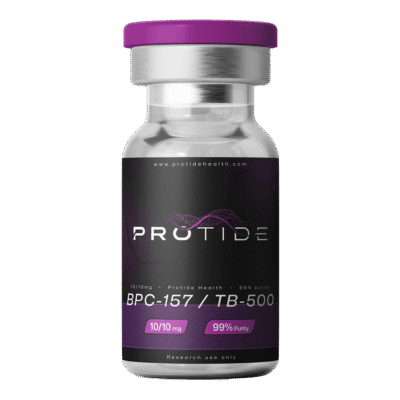
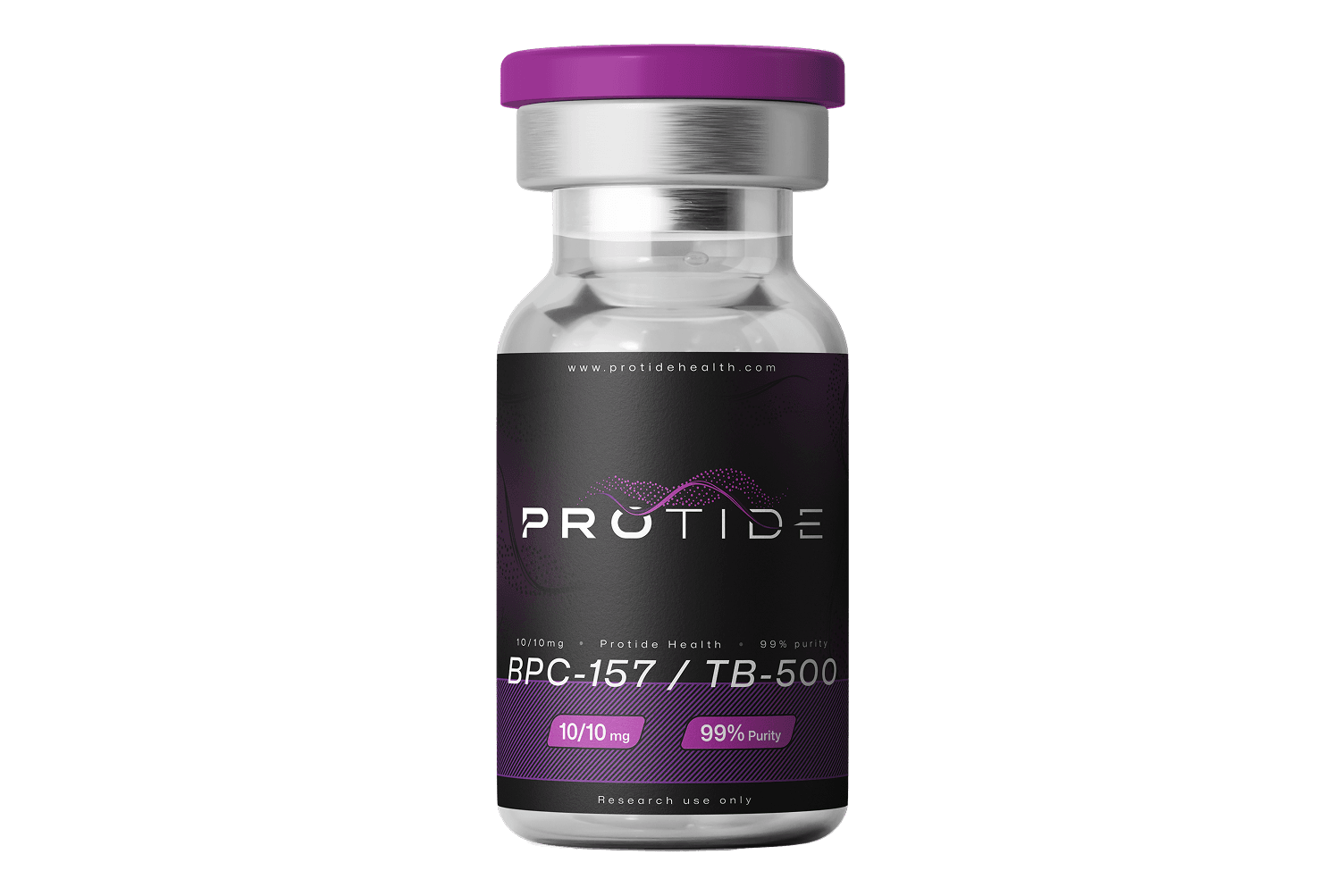


BPC-157/TB-500 10/10mg “Wolverine Blend”
Price range: $125.00 through $310.00
Wolverine peptide blend (BPC-157 10mg / TB-500 10mg) investigated in preclinical angiogenesis, actin polymerization, and endothelial migration models. Supplied as a stable lyophilized vial. Third-party HPLC-verified >99% purity. For research use only.
Free shipping on orders over $149!
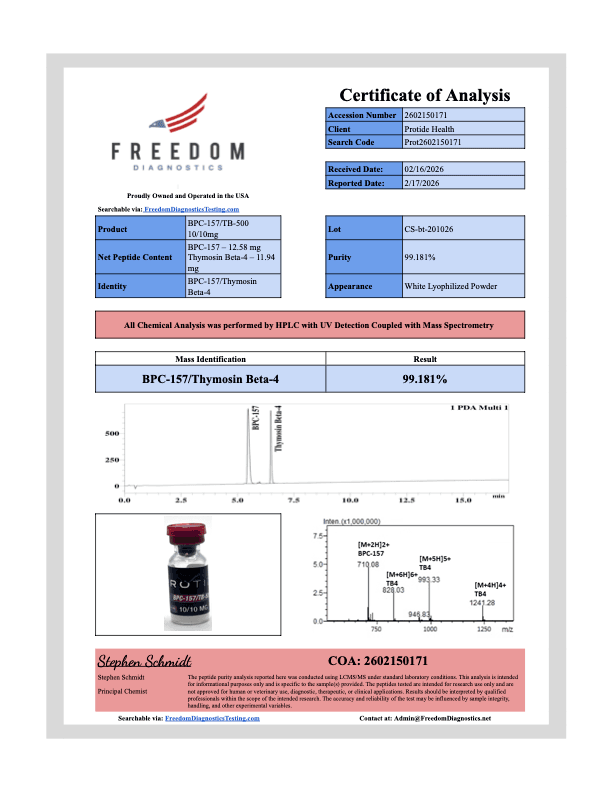
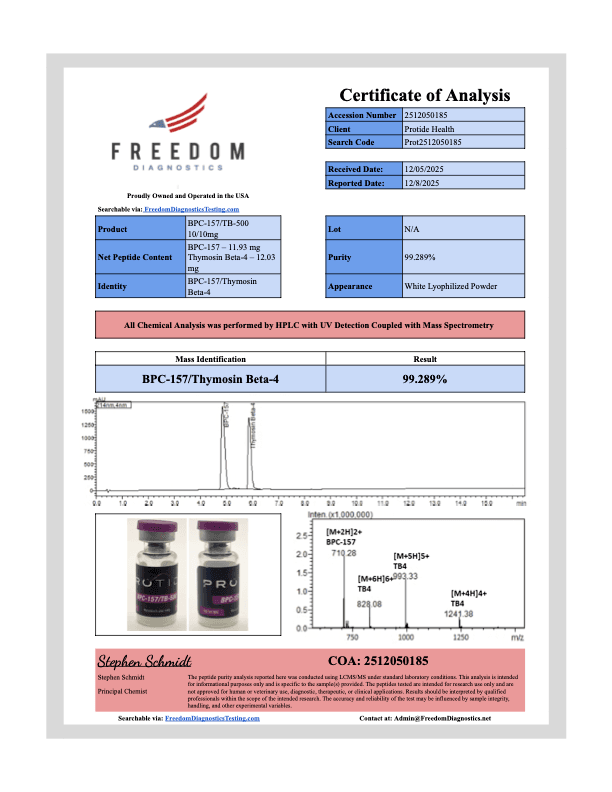
- 99% Purity (HPLC-MS Verified)
- Independent Third-Party Tested
- USA GMP Manufactured
- Complimentary BAC Water
- Ships in 24 Hours (USA)
Disclaimer: This product is intended solely for laboratory research purposes. It is not for human consumption, medical use, veterinary use, or household application. All product information on this website is provided for educational purposes only. Researchers must handle this product with appropriate safety protocols and comply with all applicable regulations. Please review our Terms & Conditions before purchasing.
Wolverine Blend (BPC-157 / TB-500)
The combination of BPC-157 and TB-500, widely cataloged in laboratory communities as the Wolverine Blend, is one of the most frequently examined multi-peptide pairings in modern preclinical literature. This formulation is extensively studied for its complementary roles in angiogenesis, actin dynamics, endothelial migration, and extracellular matrix (ECM) remodeling within controlled in vitro and animal models.
By integrating a gastric-derived pentadecapeptide (BPC-157) with a ubiquitous actin-binding peptide fragment (TB-500), this investigational blend allows researchers to interrogate distinct yet interconnected stages of the cellular regeneration cascade. Supplied as a stable, lyophilized powder by Protide Health, this 10/10mg formulation is optimized for laboratories investigating coordinated structural and microvascular responses.
Peptide Type: Pentadecapeptide & Actin-Binding Peptide Fragment
Vial Content: 10mg BPC-157 / 10mg TB-500 (20mg Total Active Peptide)
Form: Lyophilized (Freeze-Dried) for maximum biochemical stability
Wolverine Blend: Technical Overview & Research Properties
This dual-peptide blend is synthesized to investigate multi-pathway cellular dynamics. Researchers utilize this combination because each peptide influences a distinct mechanism of action within structural tissue models.
BPC-157 (Body Protection Compound-157): Explored for its upstream role in angiogenic signaling. It is frequently investigated for its interactions with VEGFR2 and AKT/eNOS pathways, which are critical for endothelial cell migration and vascular stability.
TB-500 (Thymosin Beta-4 Fragment): Derived from a naturally occurring actin-binding protein. It is extensively studied for its ability to influence actin polymerization, cytoskeletal organization, and the mechanical phases of cellular migration.
Core Research Properties:
Molecular Stability: Dual-lyophilization ensures the structural integrity of both distinct peptide sequences during transit and prolonged frozen storage.
Handling: Intended for precise laboratory reconstitution.
Primary Models: Tube-formation assays (angiogenesis), scratch-wound assays (migration), and soft-tissue integrity modeling.
Mechanism of Action: Coordinated Cellular Regeneration
In laboratory environments, the Wolverine Blend provides a synergistic framework often referred to in literature as a “complete regeneration model.” BPC-157 acts as the upstream coordinator—initiating protective signaling, enhancing endothelial cell function, and modulating cytokine expression. Concurrently, TB-500 provides the mechanical drive by reorganizing actin filaments to support rapid fibroblast and myofibroblast migration.
Research Insight: When applied together in rodent models, researchers can examine coordinated vascularization alongside structural tissue organization. By tracking ECM protein quantification and vessel density, investigators observe how BPC-157’s microvascular support sustains the high metabolic demand of TB-500’s actin-driven cellular migration.
Advanced Research Applications for the Wolverine Blend
1. Angiogenesis & Microvascular Development
The Wolverine Blend is a primary tool for studying the formation of new blood vessels. In in vitro tube-formation assays, researchers track how the combination of BPC-157’s VEGFR2 interaction and TB-500’s structural support influences microvascular branching, capillary density, and collateral circulation.
2. Actin Polymerization & Cytoskeletal Reorganization
Through the inclusion of TB-500, this blend allows investigators to map the mechanical movement of cells. Laboratory models examine actin dynamics, tracking how rapidly epithelial cells and fibroblasts migrate across structural gaps in controlled scratch-assay environments.
3. Cytokine Modulation & ECM Remodeling
The combination is heavily utilized in soft-tissue integrity studies (examining tendons, ligaments, and gastrointestinal mucosa). Researchers measure outcomes such as the tensile strength of reconstructed tissue, collagen stratification, and reductions in inflammatory cytokine profiles within targeted cellular models.
Specifications Table: Wolverine Blend
| Parameter | Technical Details |
|---|---|
| Product Name | Wolverine Blend (BPC-157 & TB-500) |
| Components | BPC-157 (Pentadecapeptide), TB-500 (Thymosin Beta-4 Fragment) |
| Total Vial Weight | 20mg (10mg BPC-157 / 10mg TB-500) |
| Purity Grade | 99%+ (Verified via HPLC/MS) |
| Solubility | Reconstitute with Bacteriostatic Water |
| Storage Temperature | -20°C (Frozen) |
| Intended Use | Laboratory Research Only |
What is the Wolverine Blend in peptide research?
The “Wolverine Blend” is an informal laboratory designation for the co-administration of BPC-157 and TB-500. It is recognized as one of the most thoroughly examined pairings in preclinical literature for studying cellular regeneration and microvascular stability.
Why are BPC-157 and TB-500 studied together?
The peptides offer complementary mechanisms. BPC-157 primarily initiates upstream angiogenic signaling and modulates cytokines, while TB-500 drives the structural and mechanical phases of repair through actin polymerization and cell migration.
How is the BPC-157 / TB-500 blend stored?
In lab environments, it must be stored as a lyophilized powder at -20°C. Once reconstituted with bacteriostatic water, the solution should be handled according to institutional SOPs and kept refrigerated to preserve the integrity of both peptide structures.
Where can I buy the Wolverine peptide blend online?
Qualified researchers looking to purchase the Wolverine Blend (BPC-157 10mg / TB-500 10mg) can acquire it directly through Protide Health, where every vial undergoes strict third-party testing to ensure >99% purity via HPLC verification.
Conclusion: Summary for Researchers
The Wolverine Blend (BPC-157 / TB-500) represents a comprehensive, multi-pathway tool for advanced cellular research. By integrating BPC-157’s endothelial support and cytokine modulation with TB-500’s profound impact on actin dynamics and cellular migration, laboratories can examine multi-layer structural regeneration in rodent and cell-based models. Available exclusively for laboratory use, this synergistic 10/10mg formulation is a vital asset for advancing preclinical discovery.
Citations
Pevec D et al., 2020. BPC-157 and VEGFR2-AKT-eNOS Pathways in Endothelial Cells. Molecular and Cellular Biochemistry.
Starešinić M et al., 2003. Gastric Pentadecapeptide BPC-157 in Rodent Models. Journal of Orthopaedic Research.
Grant DS et al., 1995. Thymosin Beta-4 Regulates Actin Polymerization. Journal of Biological Chemistry.
Malinda KM et al., 1997. Thymosin Beta-4 Promotes Angiogenesis. FASEB Journal.
Legal Disclaimer
The Wolverine Blend (BPC-157 / TB-500) is intended for laboratory research purposes only. It is not approved by the FDA for human consumption, medical use, clinical use, or veterinary administration. All research must be conducted by qualified professionals within a controlled environment. Researchers must comply with all applicable local, state, and federal regulations, including obtaining necessary approvals for experimental use. Products sold by Protide Health are not drugs and are not approved to diagnose, treat, cure, or prevent any disease.
| Select vial strength: | 10/10mg, 30/30mg |
|---|
FAQs
You may also like…
-
Sale!

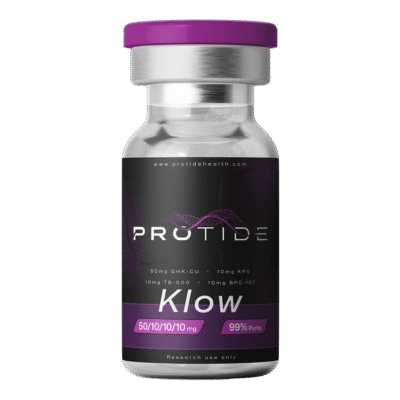
Klow Blend (GHK-CU, KPV, BPC-157, TB-500)
Original price was: $190.00.$150.00Current price is: $150.00. -
Sale!
-