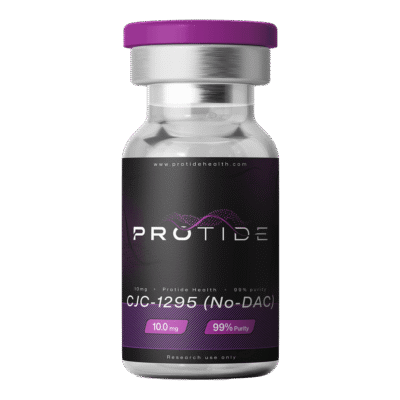
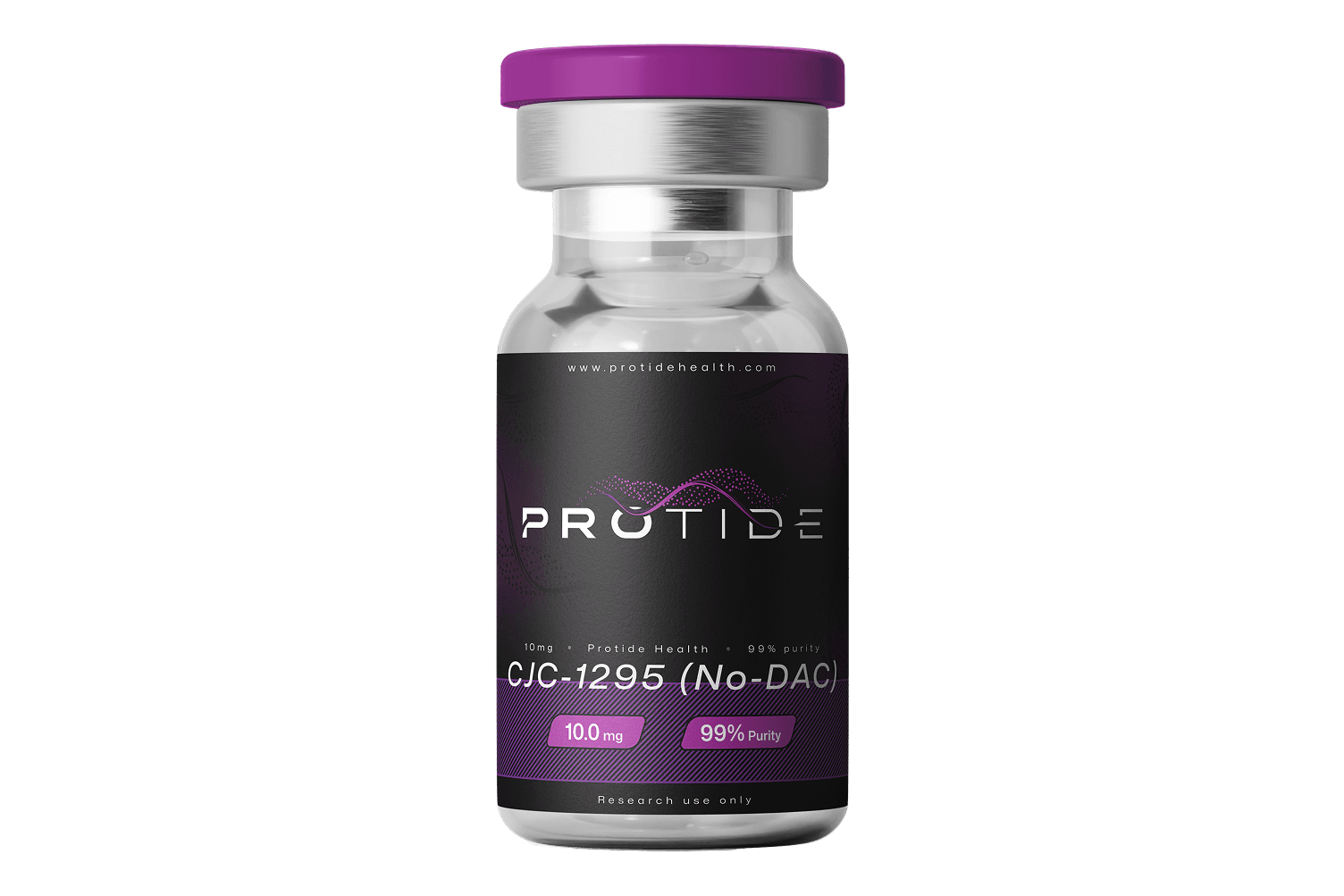


CJC-1295 (No-DAC) 10mg
$75.00
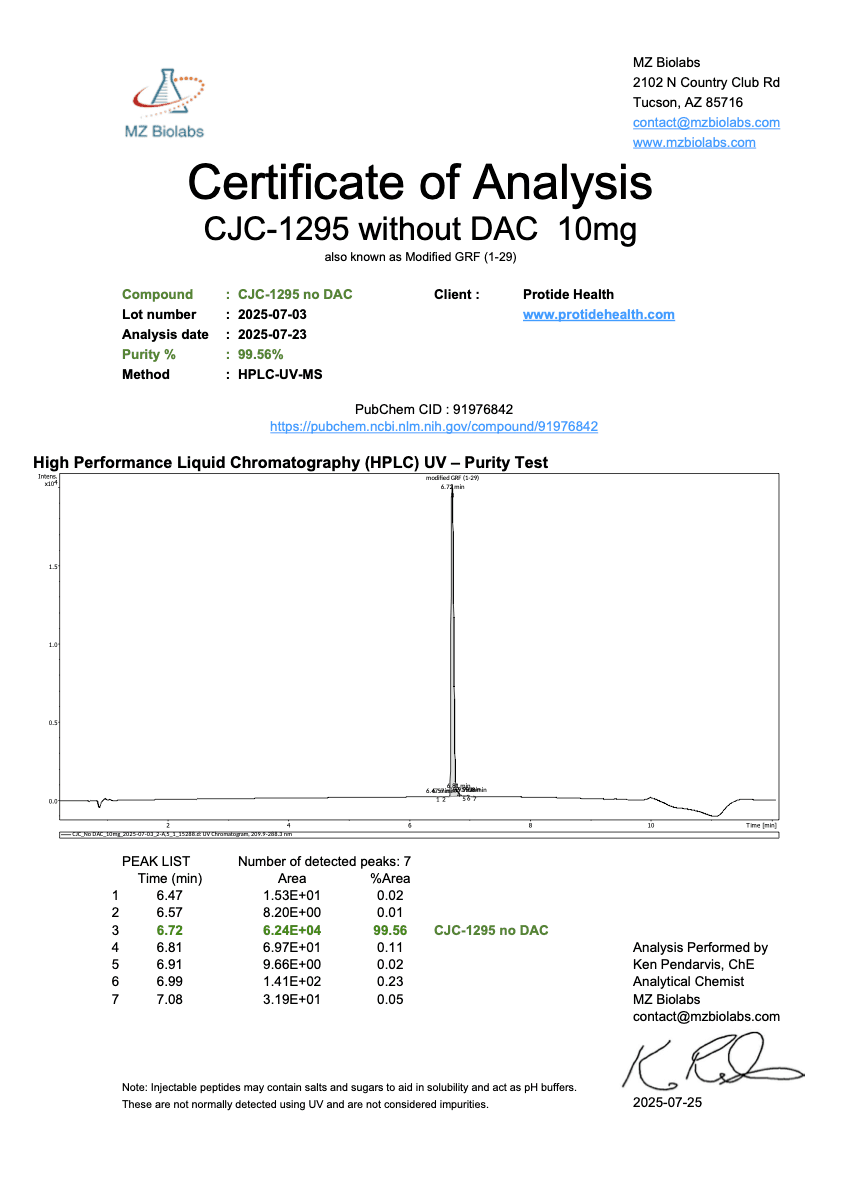
CJC-1295 No DAC (Modified GRF 1-29) is a synthetic GHRH analog investigated in preclinical neuroendocrine regulation, GH pulsatility, and cellular lipolysis models. Supplied as a stable 10mg lyophilized vial. Third-party HPLC-verified >99% purity. For research use only.
In stock
Free shipping on orders over $149!
- 99% Purity (HPLC-MS Verified)
- Independent Third-Party Tested
- USA GMP Manufactured
- Complimentary BAC Water
- Ships in 24 Hours (USA)
Disclaimer: This product is intended solely for laboratory research purposes. It is not for human consumption, medical use, veterinary use, or household application. All product information on this website is provided for educational purposes only. Researchers must handle this product with appropriate safety protocols and comply with all applicable regulations. Please review our Terms & Conditions before purchasing.
CJC-1295 No DAC (Modified GRF 1-29)
CJC-1295 No DAC (often referred to as Modified GRF 1-29) is a synthetic, tetrasubstituted 30-amino-acid peptide engineered for advanced laboratory research. Designed to mimic endogenous growth hormone-releasing hormone (GHRH), this investigational compound is utilized extensively to stimulate pulsatile growth hormone (GH) release and downstream insulin-like growth factor-1 (IGF-1) secretion in controlled preclinical models.
Presented by Protide Health, a leader in high-purity research peptides, CJC-1295 without DAC provides investigators with a highly precise molecular tool for studying neuroendocrine regulation, cellular lipolysis, and protein synthesis dynamics. Supplied as a stable, lyophilized 10mg powder, this formulation is tailored for researchers requiring standardized compounds for in vitro and animal modeling.
Peptide Type: Growth Hormone-Releasing Hormone (GHRH) Analog
Vial Content: 10mg CJC-1295 No DAC (Modified GRF 1-29)
Form: Lyophilized (Freeze-Dried) for maximum biochemical stability
Technical Overview: What is CJC 1295 No DAC?
To answer the common laboratory question of what is CJC 1295 No DAC, it is essential to look at its molecular structure. It is a synthetic analog of the first 29 amino acids of native GHRH, but it features four specific amino acid substitutions (D-Ala, Gln, Ala, Leu). These structural modifications were engineered to prevent rapid enzymatic cleavage, significantly enhancing its stability and receptor affinity compared to endogenous GHRH.
Crucially, this specific formulation lacks the Drug Affinity Complex (DAC). The absence of this complex drastically alters its pharmacokinetics, allowing researchers to study acute, pulsatile GH responses rather than the prolonged, continuous receptor activation seen in DAC-bound variants.
Core Research Properties:
Molecular Stability: Tetrasubstituted sequence prevents rapid degradation while maintaining structural integrity during frozen storage.
Handling: Intended for precise laboratory reconstitution via the peptide dosage calculator.
Primary Models: Hypothalamic-pituitary axis regulation, GH pulsatility mapping, and cellular lipolysis assays.
Mechanism of Action: Stimulation of GH Release
CJC-1295 No DAC functions by selectively binding to GHRH receptors located in the anterior pituitary. Its mechanisms have been extensively characterized in preclinical models to trigger natural, pulsatile GH release.
GHRH Receptor Activation: By mimicking endogenous GHRH, the peptide increases cyclic AMP (cAMP) production in isolated pituitary somatotrophs, leading to a marked increase in GH secretion in vitro.
GH and IGF-1 Elevation: In rodent models, controlled administration elevates plasma GH levels by 200–1000% within a rapid 15–30 minute window, driving subsequent increases in hepatic IGF-1 production.
Metabolic Modulation: The resulting GH release stimulates cellular lipolysis and protein synthesis pathways. Preclinical studies indicate notable increases in free fatty acid oxidation within targeted adipocyte cultures.
Advanced Research Applications for CJC 1295 Without DAC
1. Growth Hormone Secretion Dynamics
CJC-1295 No DAC is heavily utilized to study GH pulsatility and endocrine feedback mechanisms. By enhancing GH pulse amplitude in animal models, it offers researchers critical insights into the regulation of the hypothalamic-pituitary axis without causing prolonged receptor desensitization.
2. Lipid Metabolism & Cellular Lipolysis
The peptide facilitates advanced in vitro studies of GH-mediated lipolysis. Researchers observe the upregulation of hormone-sensitive lipase (HSL) and track increases in free fatty acid release in rodent adipocytes, mapping the compound’s impact on metabolic breakdown pathways.
3. Protein Synthesis and Cellular Regeneration
CJC-1295 without DAC is explored for its downstream effects on protein metabolism. Laboratory models track the upregulation of IGF-1 to observe increases in protein synthesis within rodent muscle cells, as well as enhanced collagen deposition in preclinical cellular regeneration assays.
Specifications Table: CJC-1295 No DAC
| Parameter | Technical Details |
|---|---|
| Product Name | CJC-1295 No DAC (Modified GRF 1-29) |
| Sequence | Tetrasubstituted 30-amino-acid GHRH analog |
| Vial Weight | 10mg (Active Peptide) |
| Molecular Weight | ~3367.9 Da |
| Purity Grade | 99%+ (Verified via HPLC/MS) |
| Solubility | Reconstitute with Bacteriostatic Water |
| Intended Use | Laboratory Research Only |
CJC 1295 DAC vs No DAC: What is the difference?
When determining whether to utilize CJC 1295 with or without DAC for a specific study, researchers must look at the desired pharmacokinetic profile. The “Drug Affinity Complex” (DAC) allows the peptide to bind to blood albumin, causing a continuous, week-long elevation of GH. Conversely, CJC-1295 No DAC rapidly spikes GH levels to mimic a natural biological pulse, clearing the system much faster.
What is the CJC-1295 No DAC half-life in research models?
The CJC-1295 No DAC half-life is approximately 30 minutes in standard in vivo animal models. This short half-life is precisely why researchers prefer it for studies mapping natural, episodic GH pulsatility, as it necessitates frequent, controlled dosing rather than sustained elevation.
Does Protide Health supply CJC with or without DAC?
Protide Health supplies highly purified CJC-1295 without DAC (No DAC) in 10mg lyophilized vials, optimized for researchers requiring short-acting GHRH analogs for their in vitro and preclinical models.
Conclusion: Summary for Researchers
CJC-1295 No DAC is an indispensable GHRH analog offering significant potential as a research tool for studying episodic GH secretion, lipid metabolism, and protein synthesis. By triggering rapid, pulsatile GH release, it allows investigators to model natural neuroendocrine regulation and metabolic pathways with extreme precision. Its unique pharmacokinetic profile and lack of a Drug Affinity Complex confine its utility to specific, acute observational windows. Supplied exclusively for laboratory research, this 10mg formulation is a vital asset for advancing preclinical endocrinology.
Citations
Martin WH et al., 2007. GHRH analogs overview and receptor activation. Endocrine Reviews.
Teichman SL et al., 2006. CJC-1295 mechanism, pharmacokinetics, and GH release. Journal of Clinical Endocrinology & Metabolism.
Jette L et al., 2006. CJC-1295 metabolism and lipolysis models. Endocrinology.
Legal Disclaimer
CJC-1295 No DAC is intended for laboratory research purposes only. It is not approved by the U.S. Food and Drug Administration (FDA) or any regulatory authority for human consumption, medical use, or therapeutic application. It is intended solely for investigational use in controlled laboratory settings by qualified researchers. Protide Health does not endorse or promote the use of CJC-1295 No DAC in humans or animals outside of approved research protocols. Researchers must comply with all applicable local, state, and federal regulations, including obtaining necessary approvals for experimental use.
FAQs
You may also like…
-
Sale!

Musculoskeletal & Tissue Research Bundle (Tesamorelin, Ipamorelin, BPC-157, TB-500)
Original price was: $285.00.$250.00Current price is: $250.00. -
Sale!