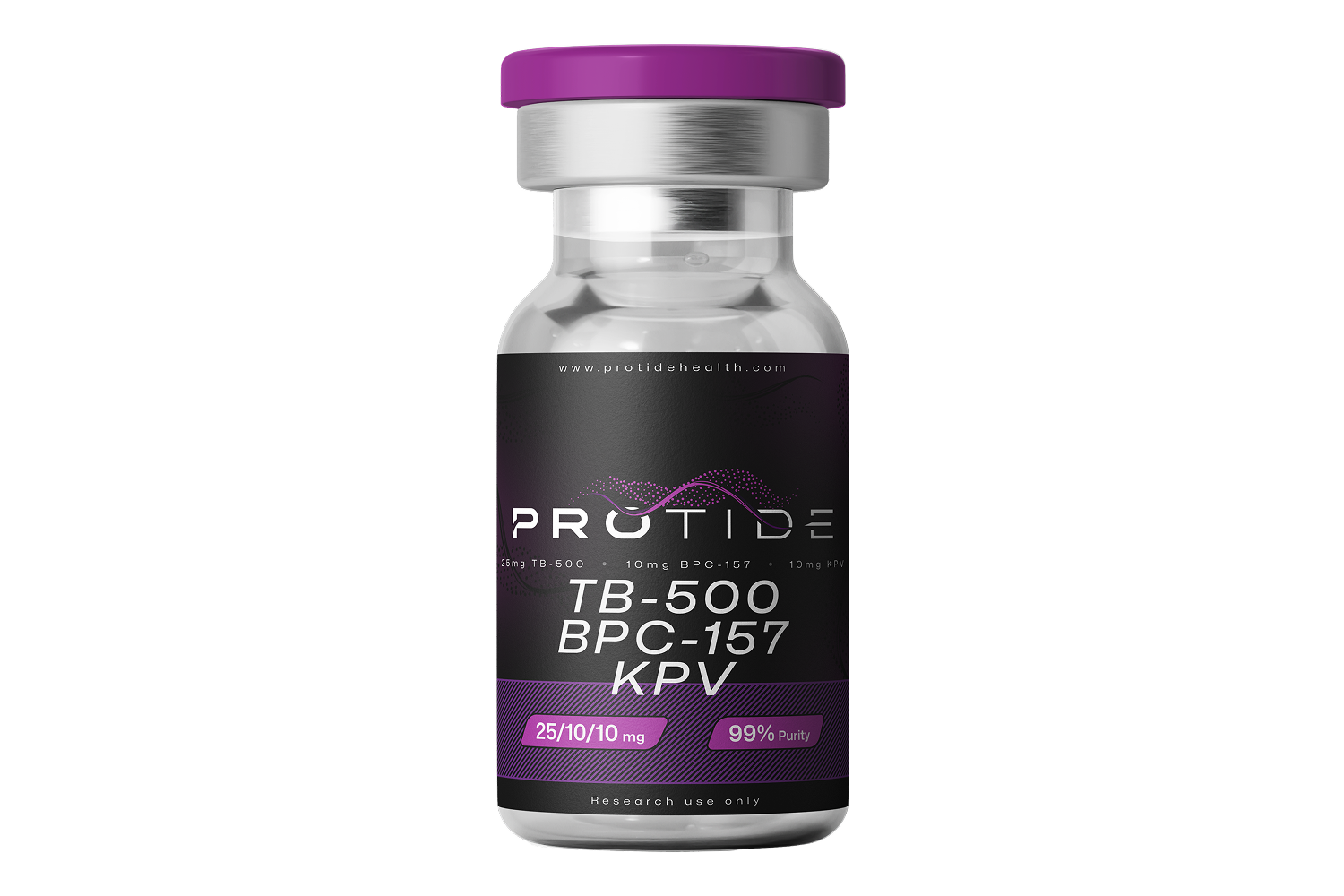
Coremend Blend (TB-500, BPC-157, KPV)
$225.00
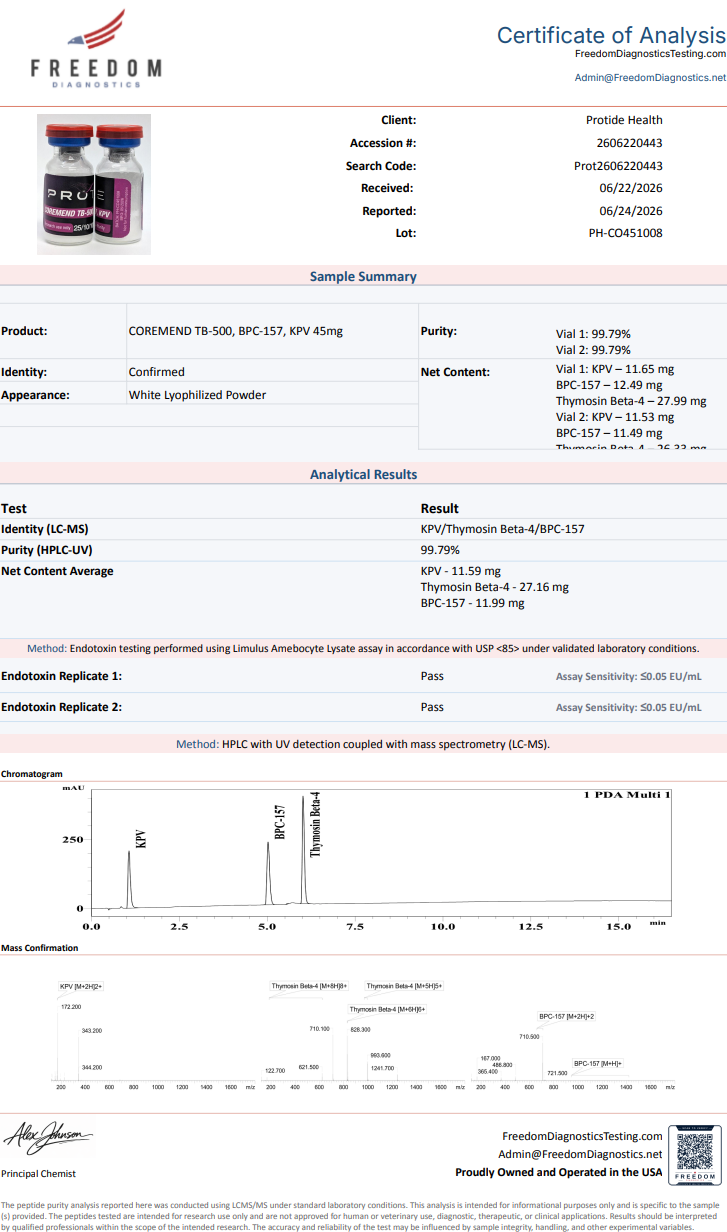
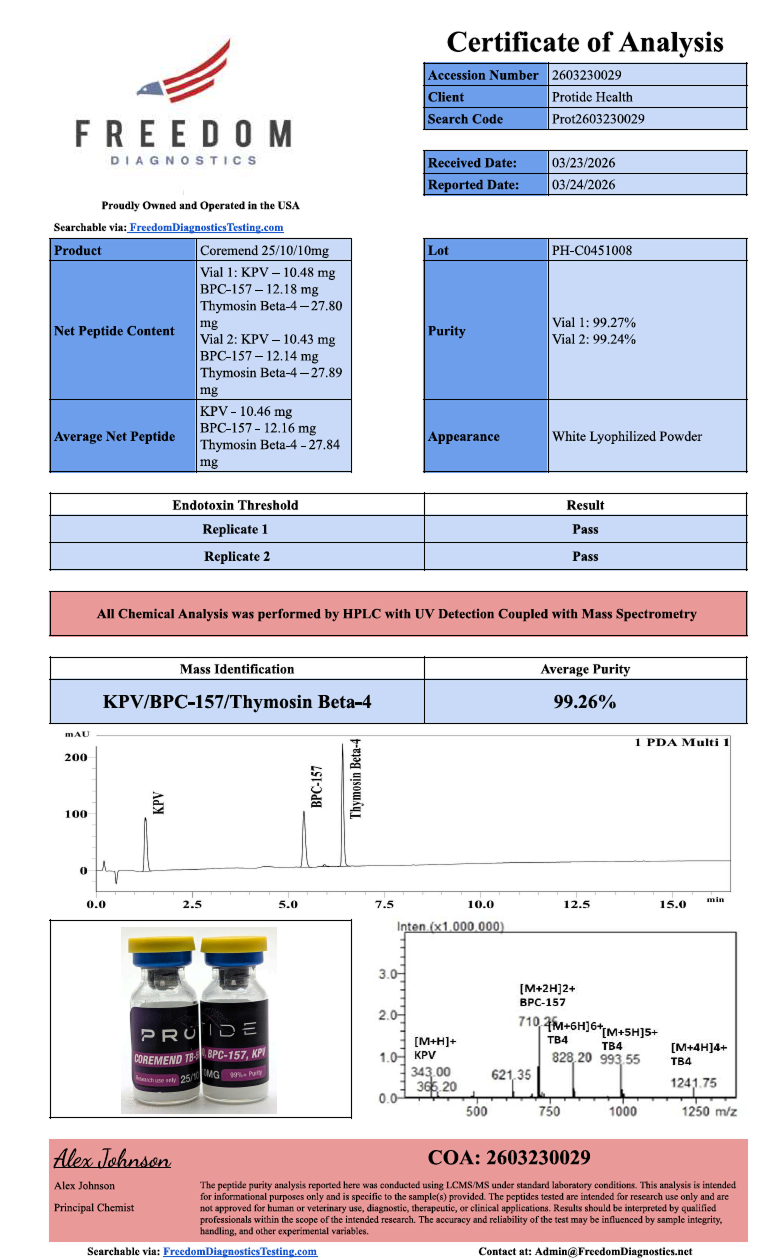
Coremend is a multi-compound research formulation featuring TB-500 (25mg), BPC-157 (10mg), and KPV (10mg). Investigated in preclinical models of inflammatory resolution, angiogenesis, and structural tissue repair. Supplied as a stable lyophilized vial. Third-party HPLC-verified 99% purity. For research use only. Not for human consumption.

In stock
Free shipping on orders over $149!
- 99% Purity (HPLC-MS Verified)
- Independent Third-Party Tested
- USA GMP Manufactured
- Complimentary BAC Water
- Ships in 24 Hours (USA)
Disclaimer: This product is intended solely for laboratory research purposes. It is not for human consumption, medical use, veterinary use, or household application. All product information on this website is provided for educational purposes only. Researchers must handle this product with appropriate safety protocols and comply with all applicable regulations. Please review our Terms & Conditions before purchasing.
Coremend: A Three-Phase Tissue and Inflammatory Research Blend
Coremend is a specialized, multi-compound research formulation that combines TB-500 (25mg), BPC-157 (10mg), and KPV (10mg) into a single lyophilized vial. Designed for comprehensive tissue repair investigations, this blend allows researchers to model the complete biological recovery cycle within controlled environments. Scientists utilize Coremend to track molecular sequences from initial inflammatory regulation to structural regeneration.
Investigating the Three-Phase Repair Model
Research indicates that effective tissue regeneration follows a sequential biological cascade. Preclinical models utilize the Coremend blend to investigate how targeting different phases simultaneously alters the overall trajectory of cellular recovery.
Suppress, Supply, Rebuild Pathways
Coremend introduces a structured, three-axis approach to tissue research by integrating the anti-inflammatory properties of KPV with the established mechanisms of the Wolverine Blend. Animal models and in vitro assays examine specific pathways:
Phase 1 (Suppress): KPV modulates immune signaling by suppressing NF-κB/MAPK pathways to resolve the initial inflammatory cascade.
Phase 2 (Supply): BPC-157 upregulates VEGFR2/Akt/eNOS signaling, driving angiogenesis to construct new vascular networks.
Phase 3 (Rebuild): TB-500 manages actin sequestration and cellular migration, mobilizing fibroblasts to rebuild structural integrity.
Investigators can explore comprehensive tissue regeneration research models to contextualize multi-peptide applications.
Experimental Applications of Coremend
The primary advantage of this tri-peptide formulation is the ability to study complex, overlapping biological systems simultaneously. Scientists deploy this compound in models where unchecked inflammation typically hinders subsequent regenerative processes.
Advanced Structural and Vascular Modeling
Animal studies measure the synergistic influence of inflammatory resolution combined with angiogenesis. Preclinical models of structural damage examine biological shifts following multi-target exposure. Research investigates several endpoints:
Variations in re-epithelialization rates during dermal and epithelial assays.
Reductions in prolonged inflammatory responses via nanomolar NF-κB inhibition.
Enhanced cellular migration combined with multi-tissue cytoprotection.
Peptide Formulation Characteristics
Researchers must maintain strict environmental controls to preserve the stability of the three distinct compounds within the lyophilized powder.
Key Research Takeaways
Coremend provides researchers with a robust, three-phase tool for investigating the complex continuum of tissue repair. Preclinical studies continue to examine how suppressing early inflammation with KPV enhances the structural and vascular signaling of TB-500 and BPC-157.
References
Legal Disclaimer for Coremend
The information provided in this description is for research and educational purposes only. The compounds included in this formulation — TB-500, BPC-157, and KPV — are not approved by the U.S. Food and Drug Administration (FDA) as drugs or dietary supplements for any medical condition. All research cited in this description was conducted in preclinical settings (cell cultures and animal models) unless otherwise noted. No published study has tested the specific three-compound combination included in this product. These products are intended solely for investigational use in controlled laboratory and research settings by qualified researchers. Protide Health does not endorse or promote the use of these compounds for the diagnosis, treatment, cure, or prevention of any disease. Researchers must comply with all applicable local, state, and federal regulations.
Products sold by Protide Health are for laboratory research purposes only and are not intended for human consumption, medical use, or veterinary use.
Coremend Components and Research Overview
Component 1: TB-500 (Thymosin Beta-4) — 25mg
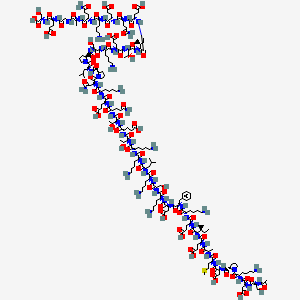
TB-500 is a synthetic fragment of Thymosin Beta-4 (Tβ4), a 43-amino-acid peptide found in virtually every cell in the human body. Tβ4 is one of the most abundant naturally occurring peptides, playing a central role in cell migration, tissue repair, and the formation of new blood vessels. TB-500 contains the active region of Tβ4 responsible for its actin-binding and cell-signaling properties.
Malinda et al. (1999) demonstrated that Tβ4 promoted dermal wound repair in rats, increasing re-epithelialization rates by 61% and stimulating keratinocyte migration 2–3-fold compared to controls. These effects were attributed to Tβ4’s ability to sequester G-actin monomers, reorganize the cellular cytoskeleton, and facilitate directed cell movement to injury sites (Malinda et al., 1999). Sosne et al. (2002) showed that Tβ4 promotes corneal wound healing by modulating inflammatory mediators and accelerating epithelial cell migration in ocular injury models (Sosne et al., 2002).
At 25mg per vial, Coremend contains 2.5 times the TB-500 found in the standard Wolverine Blend (10mg), providing researchers with a higher-dose format for studying dose-dependent tissue regeneration effects.
Component 2: BPC-157 (Body Protection Compound) — 10mg
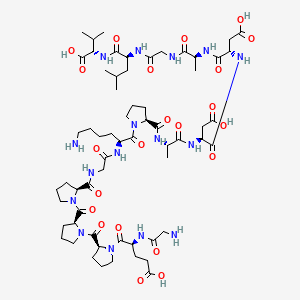
BPC-157 is a synthetic pentadecapeptide (15 amino acids) derived from a protective protein found in human gastric juice. Unlike most peptides that show activity in one or two systems, BPC-157 has demonstrated effects across multiple tissue types in preclinical studies — earning it the designation “body protection compound” in the research literature.
Seiwerth et al. (2018) published a comprehensive review documenting BPC-157’s cytoprotective and wound-healing activity across skin, muscle, tendon, ligament, bone, and gastrointestinal tissue in multiple animal models. The authors attributed these broad-spectrum effects to BPC-157’s interaction with the nitric oxide (NO) system, VEGFR2-mediated angiogenesis (new blood vessel formation), and the Akt/eNOS signaling cascade (Seiwerth et al., 2018). Vasireddi et al. (2025) further mapped BPC-157’s signaling network, identifying activation of ERK1/2, upregulation of growth hormone receptors via JAK2, and promotion of fibroblast migration — all critical steps in connective tissue remodeling (Vasireddi et al., 2025).
Component 3: KPV — 10mg
KPV (Lys-Pro-Val) is a tripeptide derived from the C-terminal end of alpha-melanocyte-stimulating hormone (α-MSH), a naturally occurring hormone with broad anti-inflammatory and immunomodulatory activity. Despite being only three amino acids long, KPV retains the full anti-inflammatory potency of its much larger parent molecule — researchers have described it as the “business end” of α-MSH’s inflammation-fighting capacity.
Dalmasso et al. (2008) demonstrated that nanomolar concentrations of KPV inhibit the activation of NF-κB and MAPK inflammatory signaling pathways — the two master regulators of pro-inflammatory cytokine production — and reduce secretion of pro-inflammatory cytokines in human intestinal epithelial cells and T cells. KPV enters cells via the PepT1 transporter with unusually high affinity (Km ~160 μmol/L, among the lowest reported for PepT1), allowing very low concentrations to produce significant intracellular effects. Oral KPV administration reduced the severity of chemically-induced colitis in two separate mouse models (Dalmasso et al., 2008). Luger et al. (2007) reviewed the broader α-MSH literature and confirmed that KPV exerts similar or even more pronounced anti-inflammatory activity compared to full-length α-MSH across multiple inflammatory models (Luger et al., 2007).
How Coremend Works: The Three-Phase Framework
Tissue repair doesn’t happen all at once — it follows a sequential biological timeline. Each phase must complete before the next can proceed efficiently. Coremend provides a research compound for each phase.
Phase 1 — Inflammatory Resolution (KPV)
When tissue is damaged, the immune system responds with inflammation — a necessary first step that clears debris and signals for help. But when inflammation becomes excessive or chronic, it actually blocks the repair process. Elevated NF-κB signaling produces a flood of pro-inflammatory cytokines (TNF-α, IL-1β, IL-6) that maintain tissue in a destructive rather than regenerative state. KPV directly suppresses this cascade at nanomolar concentrations, inhibiting both NF-κB and MAPK pathways without broadly suppressing immune function. This targeted inflammatory control creates the permissive environment that tissue rebuilding requires.
Phase 2 — Vascular Supply (BPC-157)
Damaged tissue can only repair itself if it receives adequate blood supply — oxygen, nutrients, growth factors, and immune cells must be delivered to the injury site. BPC-157 promotes angiogenesis through the VEGFR2 and Akt/eNOS signaling cascades, building new capillary networks in and around damaged areas. It also interacts with the nitric oxide system to regulate blood vessel tone and blood flow distribution. This vascular remodeling establishes the supply infrastructure that structural repair depends on.
Phase 3 — Structural Regeneration (TB-500)
With inflammation controlled and blood supply established, the final phase is structural rebuilding. TB-500 drives this process through its unique ability to reorganize the actin cytoskeleton — the internal scaffolding that gives cells their shape and enables them to move. By sequestering G-actin monomers, TB-500 facilitates the directed migration of repair cells (keratinocytes, fibroblasts, endothelial progenitors) to the injury site. Malinda et al. (1999) documented a 61% increase in re-epithelialization and 2–3-fold increases in cell migration. At the 25mg dose in Coremend, researchers have ample material for studying dose-response relationships in structural tissue repair models.
The Integration: Why All Three Phases Matter
In the Wolverine Blend, BPC-157 and TB-500 address phases 2 and 3 — vascular supply and structural repair. Coremend adds the critical first phase that the Wolverine Blend does not directly address: inflammatory resolution. Research consistently shows that unresolved inflammation impairs both angiogenesis and cell migration. KPV’s suppression of NF-κB removes this barrier, theoretically enabling BPC-157’s angiogenic signaling and TB-500’s cell migration effects to operate in a more permissive tissue environment.
Additionally, there is mechanistic overlap that may create additive effects. BPC-157 has demonstrated anti-inflammatory properties through its interaction with the NO system. TB-500 reduces inflammation through modulation of inflammatory mediators in wound models. KPV provides a third, independent anti-inflammatory pathway through direct NF-κB/MAPK suppression via PepT1 uptake. Three compounds approaching inflammatory control through three distinct mechanisms may provide more comprehensive resolution than any single compound alone.
No published study has tested this exact three-compound combination, and the synergy between Coremend components remains a theoretical research hypothesis based on converging mechanistic evidence.
Coremend Research
1. TB-500 — Cell Migration and Structural Repair
Malinda et al. (1999) showed that Tβ4 accelerated wound closure in full-thickness dermal wounds in rats, with treated wounds showing 61% more re-epithelialization and 2–3-fold greater keratinocyte migration compared to vehicle-treated controls. The researchers demonstrated that Tβ4’s wound-healing effects were mediated through its ability to promote cell migration rather than cell proliferation, distinguishing it from growth-factor-based repair mechanisms (Malinda et al., 1999).
Sosne et al. (2002) extended these findings to corneal tissue, demonstrating accelerated epithelial wound healing and anti-inflammatory effects in ocular injury models. Tβ4 treatment reduced inflammatory cell infiltration while simultaneously promoting epithelial cell migration to the wound bed — evidence that TB-500’s repair activity includes an inherent anti-inflammatory dimension (Sosne et al., 2002). Philp et al. (2004) showed that Tβ4 promotes angiogenesis in endothelial cells and cardiac tissue, contributing to improved blood flow in ischemic tissue — a mechanism that overlaps with and potentially amplifies BPC-157’s vascular effects (Philp et al., 2004).
2. BPC-157 — Angiogenesis and Cytoprotection
Seiwerth et al. (2018) compiled evidence from multiple animal models demonstrating BPC-157’s ability to accelerate healing across diverse tissue types including gastric mucosa, skin, muscle, tendon, ligament, and bone. The peptide’s consistent efficacy across tissues was attributed to its activation of the VEGFR2-Akt-eNOS angiogenic pathway and its modulation of the nitric oxide system — mechanisms that create new vascular supply regardless of the specific tissue type damaged (Seiwerth et al., 2018).
Vasireddi et al. (2025) provided an updated mechanistic map of BPC-157 signaling, identifying ERK1/2 activation, growth hormone receptor upregulation via the JAK2 pathway, and enhanced fibroblast migration as key downstream effects. The authors noted that BPC-157’s ability to upregulate GH receptors in tendon fibroblasts makes it particularly relevant for connective tissue research — damaged tendons and ligaments treated with BPC-157 become more sensitive to circulating growth factors (Vasireddi et al., 2025). Chang et al. (2014) demonstrated that BPC-157 promotes tendon-to-bone healing in a rat rotator cuff model, with enhanced collagen fiber organization at the repair site (Chang et al., 2014).
3. KPV — NF-κB Suppression and Inflammatory Control
Dalmasso et al. (2008) showed that nanomolar KPV concentrations inhibit both NF-κB and MAPK inflammatory cascades in human intestinal epithelial cells and immune cells. The anti-inflammatory effect operates through the PepT1 transporter — KPV is actively taken up into cells where it accumulates and directly suppresses inflammatory signaling pathways. PepT1 shows unusually high affinity for KPV (Km ~160 μmol/L), allowing efficient intracellular delivery at low concentrations. Oral KPV reduced the severity of DSS- and TNBS-induced colitis in mice, with decreased pro-inflammatory cytokine expression (Dalmasso et al., 2008).
Viennois et al. (2016) demonstrated that oral KPV administration reduced colitis-associated tumorigenesis in a PepT1-dependent manner, decreasing tumor number, tumor size, and epithelial cell proliferation in AOM/DSS-treated mice. The anti-tumorigenic effect was abolished in PepT1-knockout mice, confirming the transporter’s essential role in KPV’s mechanism (Viennois et al., 2016). Luger and colleagues reviewed the broader melanocortin literature and concluded that KPV retains the full anti-inflammatory potency of α-MSH while offering advantages as a smaller, more targeted molecule with a more limited spectrum of biological activity — reducing the hormonal side effects associated with full-length α-MSH (Luger et al., 2007).
4. Coremend vs. Wolverine Blend — What’s Different?
The Wolverine Blend (BPC-157 10mg + TB-500 10mg) is a dual-compound formulation targeting vascular repair and structural regeneration. Coremend builds on this foundation with three key upgrades:
Added inflammatory axis (KPV 10mg): The Wolverine Blend does not include a dedicated anti-inflammatory compound. While both BPC-157 and TB-500 have demonstrated secondary anti-inflammatory properties, neither directly targets NF-κB/MAPK pathways as its primary mechanism. KPV fills this gap with targeted, nanomolar-potent inflammatory suppression — establishing the permissive tissue environment before repair processes begin.
Higher TB-500 dose (25mg vs. 10mg): Coremend contains 2.5x the TB-500 of the Wolverine Blend, providing researchers with a higher starting material for investigating dose-dependent effects on cell migration, re-epithelialization, and structural tissue repair. This is particularly relevant for researchers studying larger tissue repair models or extended protocol timelines.
Three-phase framework: Where the Wolverine Blend operates on two phases (supply → rebuild), Coremend operates on three (suppress → supply → rebuild), providing a more complete model of the tissue repair cascade from initial inflammatory response through final structural regeneration.
Dosing Concepts for Lab Research
This section is educational, not prescriptive.
Standard reconstitution for Coremend: Add 3mL bacteriostatic water to the vial. This yields approximate concentrations of TB-500 at 8.33mg/mL, BPC-157 at 3.33mg/mL, and KPV at 3.33mg/mL.
- Focus: Investigating the sequential phases of tissue repair — inflammatory resolution, vascular remodeling, and structural regeneration — and how compounds targeting each phase may interact.
- Use the peptide dosage calculator to assist with dosing calculations and planning.
Coremend FAQs
How does Coremend compare to the Wolverine Blend?
The Wolverine Blend (BPC-157 10mg + TB-500 10mg) covers vascular repair and structural regeneration. Coremend adds a third dimension — KPV for direct inflammatory control — and increases the TB-500 dose to 25mg. If the Wolverine Blend is a two-phase repair tool (supply + rebuild), Coremend is a three-phase tool (suppress + supply + rebuild) with a heavier structural repair component.
Why is inflammatory resolution important for tissue repair?
Inflammation is the body’s first response to tissue damage, and it’s necessary for debris clearance and immune recruitment. But when inflammation becomes excessive or fails to resolve, it actively blocks repair processes. Elevated NF-κB signaling maintains a pro-inflammatory cytokine environment (TNF-α, IL-1β, IL-6) that inhibits angiogenesis and impairs cell migration. KPV’s targeted suppression of these pathways clears the way for the repair mechanisms that BPC-157 and TB-500 drive.
Why is TB-500 dosed at 25mg while BPC-157 and KPV are at 10mg?
The dosing reflects the different potency profiles and research applications of each compound. KPV operates at nanomolar concentrations for inflammatory signaling suppression. BPC-157 has demonstrated efficacy at microgram-level doses across multiple tissue models. TB-500’s cell migration and structural repair effects have been studied across a broader dose range, and the 25mg loading provides researchers with flexibility for extended protocols and dose-optimization studies.
Can Coremend be used for gut-related research?
Yes. All three compounds have demonstrated relevant activity in gastrointestinal models. BPC-157 was originally identified in gastric juice and has extensive gut-protective data. KPV’s best-studied mechanism — PepT1-mediated NF-κB suppression — was demonstrated specifically in intestinal epithelial cells and colitis models. TB-500’s tissue repair activity includes mucosal surfaces. This makes Coremend particularly relevant for GI repair research.
Has this exact three-compound combination been studied?
No. No published study has tested the specific combination of TB-500, BPC-157, and KPV together in a single formulation. The rationale is based on converging mechanistic evidence from independent studies of each compound. Researchers investigating this combination would be conducting novel exploratory work.
Where to buy Coremend?
You can buy Coremend online at Protide Health. Each compound is backed by science, clearly labeled, and third-party tested for purity and identity. Free shipping on orders over $149.
Conclusion: Summary of Coremend
Coremend combines TB-500 (25mg), BPC-157 (10mg), and KPV (10mg) into a three-phase tissue repair formulation that addresses the complete recovery arc — from inflammatory resolution through vascular remodeling to structural regeneration. KPV provides targeted NF-κB and MAPK suppression at nanomolar potency, clearing the inflammatory barrier that stalls tissue repair. BPC-157 builds new vascular supply through VEGFR2/Akt/eNOS-mediated angiogenesis, establishing the nutrient delivery infrastructure damaged tissue requires. TB-500 drives structural rebuilding through actin-mediated cell migration, promoting re-epithelialization and tissue remodeling at a higher dose (25mg) than standard dual-peptide formulations.
For researchers already working with the Wolverine Blend, Coremend represents a natural upgrade — adding the inflammatory resolution axis that the dual formulation lacks and providing 2.5x the TB-500 for dose-optimization studies. The three-phase suppress → supply → rebuild framework offers a more complete model of the tissue repair cascade for preclinical investigation.
All research involving these compounds should take place in controlled laboratory and clinical settings. TB-500, BPC-157, and KPV are not approved by the U.S. Food and Drug Administration (FDA) for any medical condition. Researchers must comply with all applicable local, state, and federal regulations.
Products sold by Protide Health are for laboratory research purposes only and are not intended for human consumption, medical use, or veterinary use.
Citations
- Malinda KM et al., 1999. Thymosin β4 accelerates wound healing. Journal of Investigative Dermatology.
- Sosne G et al., 2002. Thymosin beta 4 promotes corneal wound healing and modulates inflammatory mediators. Experimental Eye Research.
- Philp D et al., 2004. Thymosin beta 4 increases hair growth by activation of hair follicle stem cells / promotes angiogenesis. FASEB Journal.
- Seiwerth S et al., 2018. BPC 157’s effect on healing. Current Pharmaceutical Design.
- Vasireddi A et al., 2025. BPC-157 signaling mechanisms including ERK1/2, JAK2, VEGFR2, and GH receptor pathways. PubMed.
- Chang CH et al., 2014. BPC-157 promotes tendon-to-bone healing in rotator cuff repair model. PubMed.
- Dalmasso G et al., 2008. PepT1-mediated tripeptide KPV uptake reduces intestinal inflammation. Gastroenterology / PMC.
- Viennois E et al., 2016. Critical role of PepT1 in colitis-associated cancer and therapeutic benefits of KPV. Cellular and Molecular Gastroenterology and Hepatology / PMC.
- Luger TA et al., 2007. α-MSH related peptides: a new class of anti-inflammatory and immunomodulating drugs. Annals of the Rheumatic Diseases / PMC.
Legal Disclaimer for Coremend
The information provided in this description is for research and educational purposes only. The compounds included in this formulation — TB-500, BPC-157, and KPV — are not approved by the U.S. Food and Drug Administration (FDA) as drugs or dietary supplements for any medical condition. All research cited in this description was conducted in preclinical settings (cell cultures and animal models) unless otherwise noted. No published study has tested the specific three-compound combination included in this product. These products are intended solely for investigational use in controlled laboratory and research settings by qualified researchers. Protide Health does not endorse or promote the use of these compounds for the diagnosis, treatment, cure, or prevention of any disease. Researchers must comply with all applicable local, state, and federal regulations.
Products sold by Protide Health are for laboratory research purposes only and are not intended for human consumption, medical use, or veterinary use.