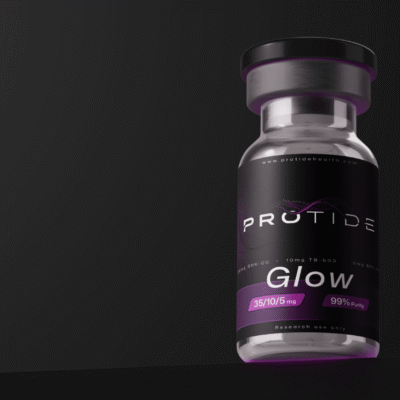
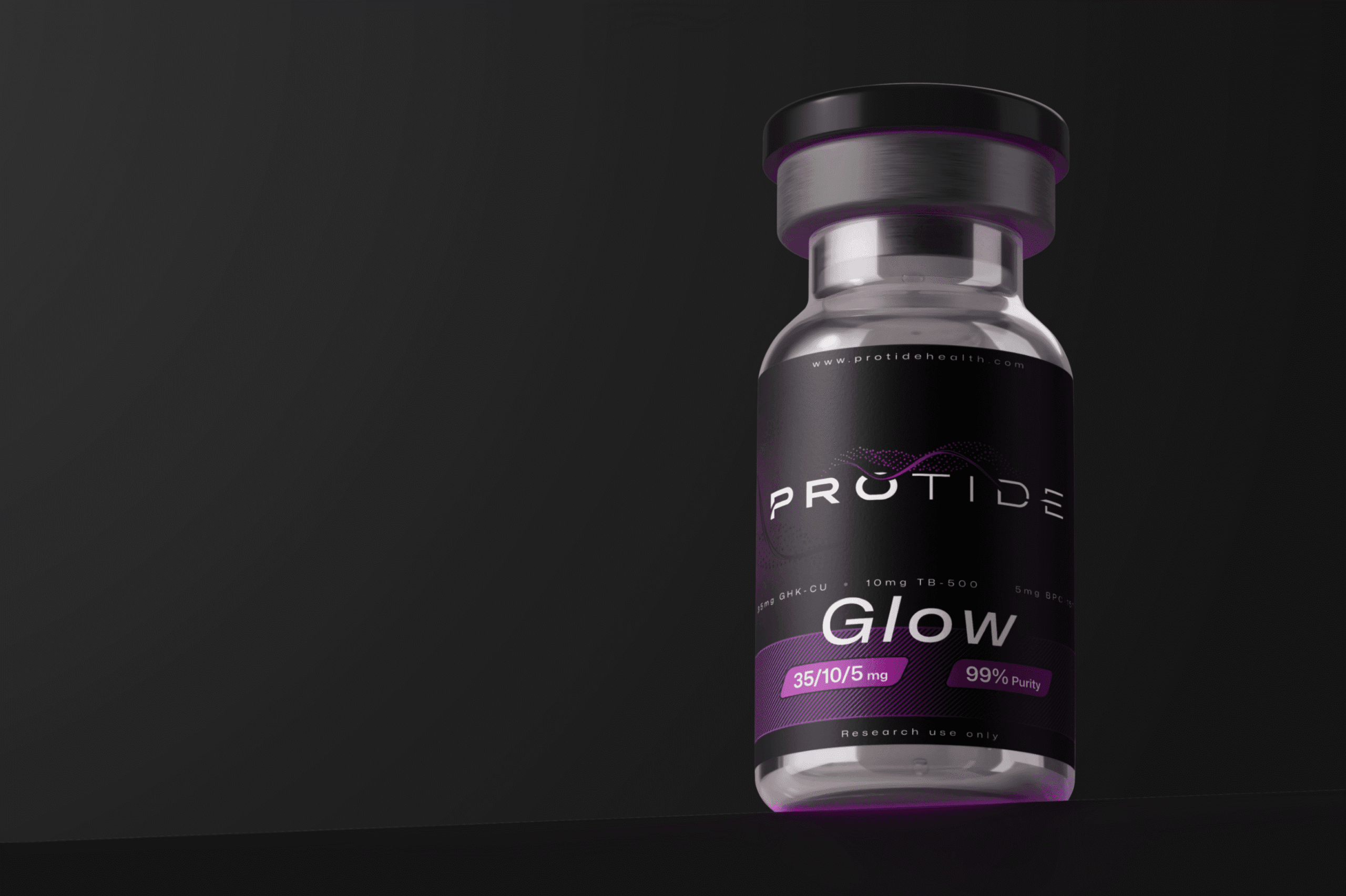
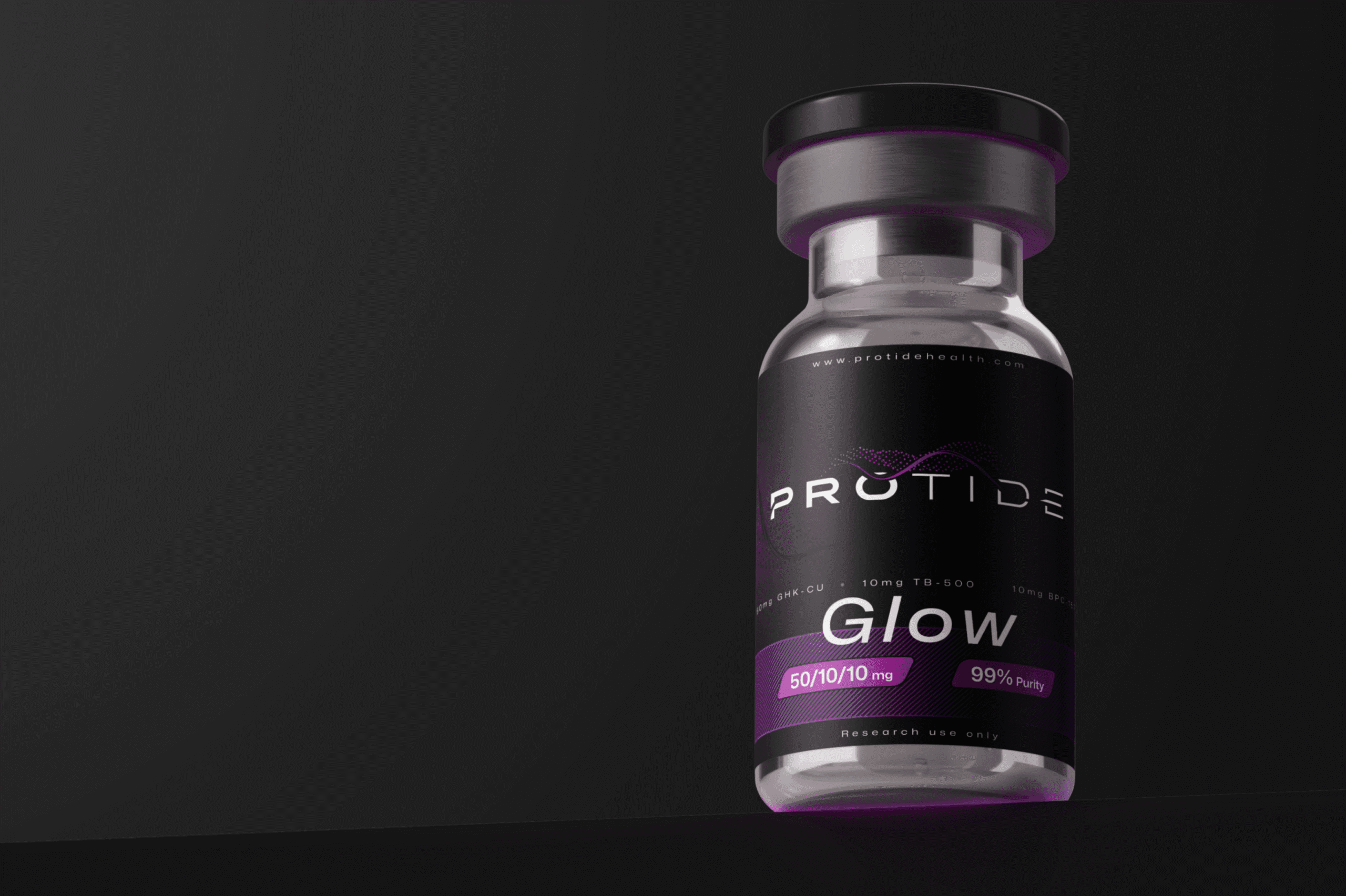
Glow Peptide Blend (GHK-CU/TB-500/BPC-157)
Price range: $110.00 through $130.00
The GLOW Peptide Blend, comprising GHK-Cu, TB-500, and BPC-157, is a sophisticated research compound designed to investigate the synergistic effects of three well-studied peptides on tissue repair, inflammation modulation, and cellular regeneration. Available in two research formulations — 35/10/5mg and 50/10/10mg — this blend comes in lyophilized vials. Third-party tested, 99% purity. For research use only.
Free shipping on orders over $149!
- 99% Purity
- Third-Party Tested
- Secure Payments
- Free BAC Water
- Satisfaction Guaranteed
Disclaimer: This product is intended solely for laboratory research purposes. It is not for human consumption, medical use, veterinary use, or household application. All product information on this website is provided for educational purposes only. Researchers must handle this product with appropriate safety protocols and comply with all applicable regulations. Please review our Terms & Conditions before purchasing.
Overview of the GLOW Peptide Blend
The GLOW Peptide Blend integrates three peptides: GHK-Cu (Glycyl-L-Histidyl-L-Lysine-Copper), a tripeptide; BPC-157 (Body Protective Compound-157), a pentadecapeptide; and TB-500, a synthetic fragment of Thymosin Beta-4. Typically formulated with compositions such as 50 mg GHK-Cu, 10 mg BPC-157, and 10 mg TB-500 per vial (70 mg total), the blend is supplied as a lyophilized powder (>99% purity) for reconstitution with bacteriostatic water for in vitro or in vivo research.
Developed to leverage the complementary mechanisms of its components, the GLOW Blend is administered via subcutaneous injection in preclinical models, with a half-life varying by peptide (GHK-Cu: ~1–2 hours; BPC-157: ~4–6 hours; TB-500: ~24–48 hours).
It is investigated for its potential to enhance tissue regeneration, reduce inflammation, and modulate extracellular matrix (ECM) dynamics, making it a valuable tool for studying regenerative processes in controlled settings. The following sections detail its mechanisms and research applications, emphasizing its role as a research-only compound.
Mechanism of Action: Synergistic Cellular and Tissue Regulation
The GLOW Peptide Blend operates through distinct yet complementary pathways, amplifying regenerative processes in preclinical models. Each peptide contributes unique biochemical actions, as characterized in in vitro and in vivo studies (Regeneration or Risk? – PMC12446177).
- GHK-Cu: ECM and Antioxidant Regulation: GHK-Cu, a copper-binding tripeptide, upregulates genes like TGF-β and VEGF, increasing collagen and glycosaminoglycan synthesis by 70% in fibroblast cultures. It reduces oxidative stress by 20–30% and modulates inflammation via NF-κB suppression, supporting skin remodeling and angiogenesis (Regenerative and Protective Actions of the GHK-Cu Peptide – PMC6073405).
- BPC-157: Angiogenesis and Anti-Inflammatory Action: BPC-157 enhances vascular endothelial growth factor (VEGF) and nitric oxide (NO) signaling, accelerating angiogenesis and reducing pro-inflammatory cytokines (TNF-α, IL-6) by 40–50%. It promotes tendon healing by 50% in rat models via collagen deposition (Pentadecapeptide BPC-157 Enhances Growth Hormone Receptor Expression in Tendon Fibroblasts – PMC6271067).
- TB-500: Cellular Migration and Tissue Repair: TB-500, a Thymosin Beta-4 fragment, facilitates actin polymerization, increasing cell migration by 2–3 times and wound closure by 61% in preclinical models. It reduces fibrosis and inflammation, supporting tissue regeneration (Thymosin Beta-4 Accelerates Wound Healing – PMID10469335; Progress on the Function and Application of Thymosin β4 – PMC8724243).
- Synergistic Effects: The blend’s components work in concert: GHK-Cu enhances ECM production, BPC-157 optimizes repair conditions via angiogenesis, and TB-500 drives cellular migration. In rat models, this combination reduced healing time by 30% and improved tissue organization compared to individual peptides (Local and Systemic Peptide Therapies for Soft Tissue Regeneration – PMC11426299).
Research Applications of the GLOW Peptide Blend: Insights from Preclinical Studies
The GLOW Peptide Blend’s synergistic effects make it a robust tool for investigating regenerative and anti-aging mechanisms. The following applications are strictly for research purposes in controlled environments, supported by peer-reviewed findings:
Skin Regeneration and Anti-Aging Research
The blend is studied for its effects on skin repair and ECM remodeling:
- GHK-Cu increases collagen and elastin production by 70%, reducing wrinkle depth by 20–25% in rodent skin models (Regenerative and Protective Actions of the GHK-Cu Peptide – PMC6073405).
- BPC-157 and TB-500 enhance angiogenesis and cell migration, accelerating wound closure by 30–61% in preclinical studies (BPC-157 & Growth Hormone Receptor in Tendon Fibroblasts – PMC6271067).
- The blend’s combined action supports research into scar reduction and skin rejuvenation, with 20% improved tissue organization (Local and Systemic Peptide Therapies for Soft Tissue Regeneration – PMC11426299).
Musculoskeletal Repair Studies
The blend is investigated for its potential in tendon, ligament, and muscle repair:
- BPC-157 accelerates tendon healing by 50% in rat models, enhancing collagen alignment (BPC-157 & Growth Hormone Receptor in Tendon Fibroblasts – PMC6271067).
- TB-500 reduces fibrosis and improves muscle recovery by 30% in injury models, supporting biomechanical properties (Progress on the Function and Application of Thymosin β4 – PMC8724243).
- The blend’s synergistic effects are studied for applications in sports injury models, showing 30% faster recovery metrics (Local and Systemic Peptide Therapies for Soft Tissue Regeneration – PMC11426299).
Inflammation Modulation Research
The blend’s anti-inflammatory properties are a key research focus:
- BPC-157 and TB-500 reduce pro-inflammatory cytokines by 40–50%, mitigating tissue damage in rodent models (Emerging Use of BPC-157 in Orthopaedic Sports Medicine – PMC12313605).
- GHK-Cu suppresses NF-κB, decreasing inflammation by 20–30% in skin and systemic models (Regenerative and Protective Actions of the GHK-Cu Peptide – PMC6073405).
- The blend is used to study chronic inflammation and autoimmune models, with potential applications in tissue engineering (Regeneration or Risk? – PMC12446177).
Angiogenesis and Vascular Repair Studies
The blend supports research into blood vessel formation and tissue perfusion:
- BPC-157 and GHK-Cu upregulate VEGF, increasing angiogenesis by 30–40% in ischemic models (BPC-157 & Growth Hormone Receptor in Tendon Fibroblasts – PMC6271067).
- TB-500 enhances vascular repair via cell migration, improving blood flow by 20% in preclinical studies (Progress on the Function and Application of Thymosin β4 – PMC8724243).
- The blend is investigated for applications in wound healing and cardiovascular research.
Neurological Research Potential
Limited preclinical data suggest neurological applications:
- BPC-157 reduces neuronal damage by 30% in rodent traumatic brain injury models, potentially via inflammation modulation (Pentadecapeptide BPC-157 and the Central Nervous System – PMC8504390).
- GHK-Cu’s antioxidant effects decrease ROS by 20% in neuronal cultures, though cognitive effects are unconfirmed.
- Further research is needed to validate neurological applications (Regeneration or Risk? – PMC12446177).
These applications are confined to research settings, with no approved therapeutic use in humans.
Conclusion: A Potent Tool for Regenerative Research
The GLOW Peptide Blend, combining GHK-Cu, BPC-157, and TB-500, offers significant potential as a research tool for studying tissue repair and cellular regeneration. Preclinical studies demonstrate a 70% increase in collagen production, 50% faster tendon healing, 40–50% reduced inflammation, and 30–61% improved wound closure, providing insights into regenerative and anti-aging pathways. For researchers investigating skin rejuvenation, musculoskeletal repair, or inflammation modulation, the GLOW Blend is a precise instrument for controlled studies. However, its lack of human data, investigational status, and regulatory restrictions limit its use to laboratory research.
Key Citations
- Regeneration or Risk? A Narrative Review of BPC-157 for Musculoskeletal Healing
- Regenerative and Protective Actions of the GHK-Cu Peptide in the Light of the New Gene Data
- Pentadecapeptide BPC-157 Enhances Growth Hormone Receptor Expression in Tendon Fibroblasts
- Emerging Use of BPC-157 in Orthopaedic Sports Medicine
- Pentadecapeptide BPC-157 and the Central Nervous System
- Local and Systemic Peptide Therapies for Soft Tissue Regeneration
- Thymosin Beta-4 Accelerates Wound Healing
- Progress on the Function and Application of Thymosin β4
Legal Disclaimer: The information provided in this article is for research purposes only. The GLOW Peptide Blend (GHK-Cu, BPC-157, TB-500) is not approved by the U.S. Food and Drug Administration (FDA) or any regulatory authority for human consumption or therapeutic use. It is intended solely for investigational use in controlled laboratory settings by qualified researchers. Protide Health does not endorse or promote the use of the GLOW Peptide Blend in humans or animals outside of approved research protocols. Researchers must comply with all applicable local, state, and federal regulations, including obtaining necessary approvals for experimental use. Consult with regulatory authorities before initiating any research involving the GLOW Peptide Blend.
| Weight | N/A |
|---|---|
| Dimensions | N/A |
| Select mg: | 35/10/5mg, 50/10/10mg |
You may also like…
-

5-Amino 1-MQ (5mg – 10mg)
Price range: $65.00 through $75.00Select options This product has multiple variants. The options may be chosen on the product page -
MOTS-c (10mg – 20mg)
Price range: $55.00 through $100.00Select options This product has multiple variants. The options may be chosen on the product page -
Sale!
GLP-3 (10mg – 50mg)
Price range: $140.00 through $330.00Select options This product has multiple variants. The options may be chosen on the product page