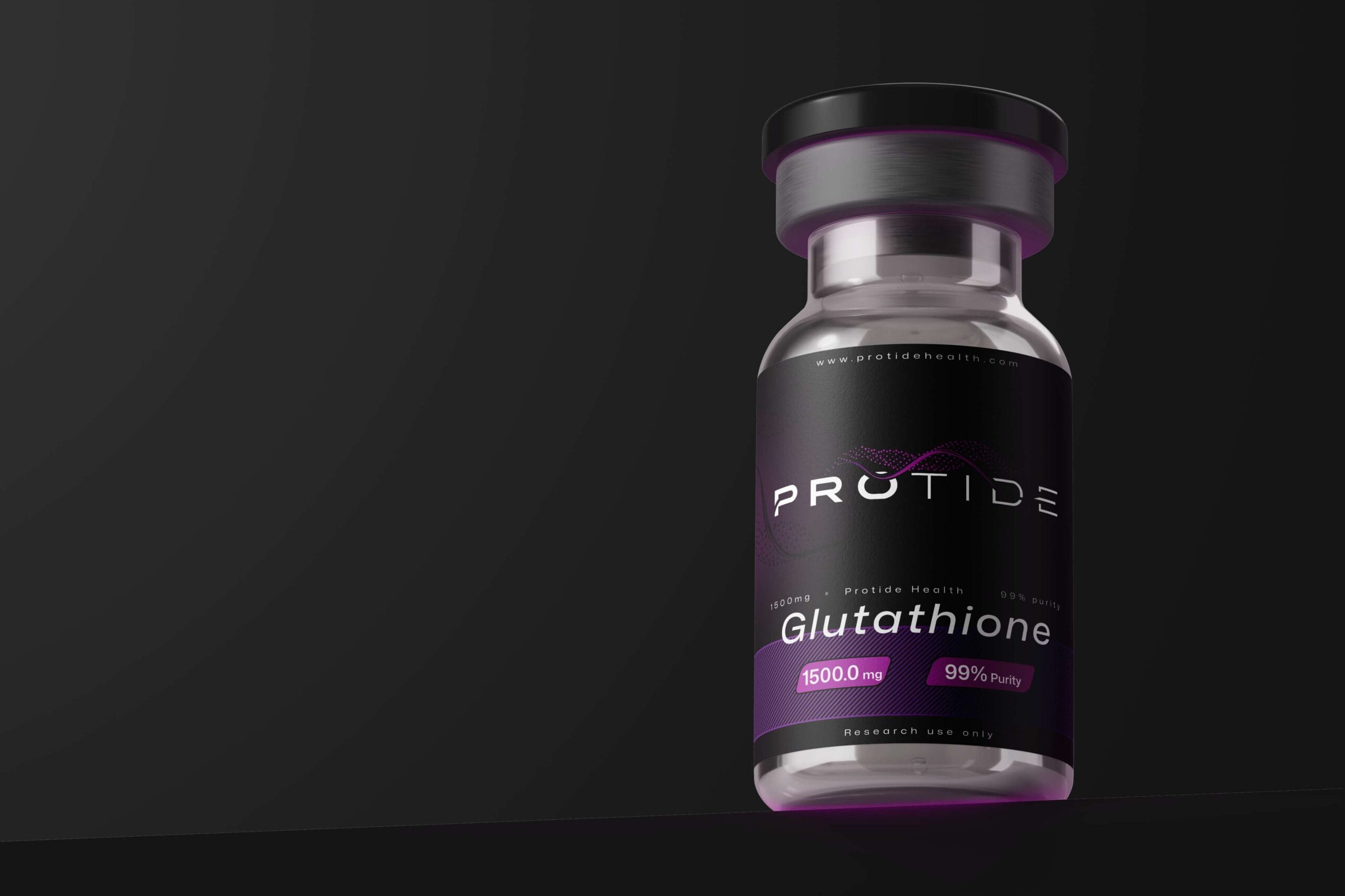
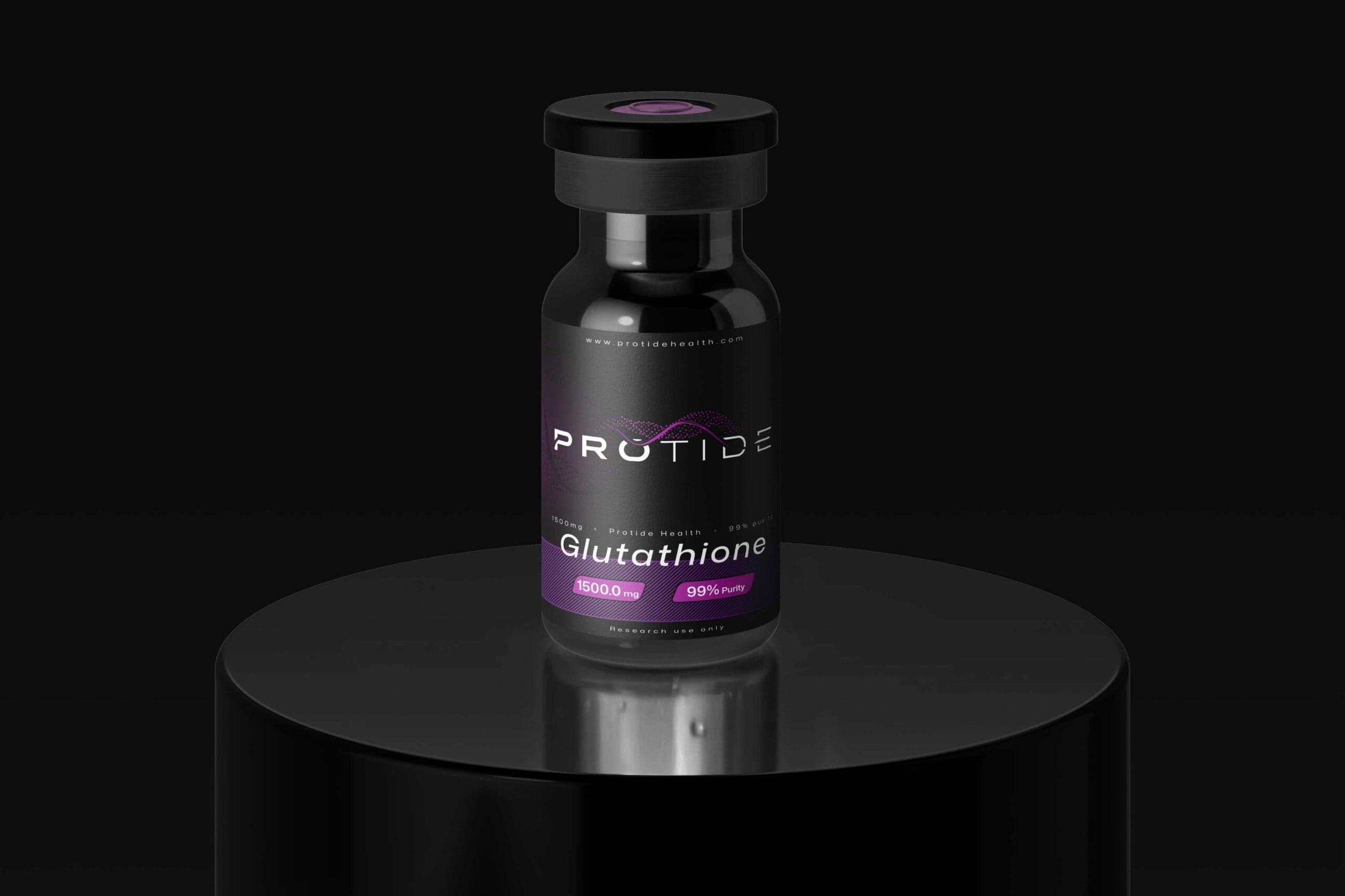
Glutathione 1500mg
$105.00
Glutathione (GSH) is the most abundant cellular tripeptide studied in redox biology and antioxidant enzyme research. This 1500mg lyophilized vial delivers consistent, research-grade material for oxidative stress models, GPx/GST enzyme assays, and mitochondrial ROS studies.
In stock
Free shipping on orders over $149!
- 99% Purity
- Third-Party Tested
- Secure Payments
- Free BAC Water
- Satisfaction Guaranteed
Glutathione Peptide 1500mg
Glutathione is a naturally occurring tripeptide (gamma-glutamyl-cysteinyl-glycine) that laboratories study for its role in cellular redox homeostasis and antioxidant enzyme systems PMC. This research-grade glutathione peptide is supplied as a 1500mg lyophilized vial designed for controlled investigation. Studies examine glutathione’s function as a cofactor for glutathione peroxidases (GPx) and glutathione S-transferases (GST), and measure redox balance via the GSH/GSSG ratio in oxidative stress models Frontiers. Human research observations do not equal approved medical use.
What is Glutathione Peptide?
Glutathione (GSH) is a water-soluble tripeptide composed of three amino acids: glutamate, cysteine, and glycine, linked by a unique gamma-peptide bond that resists enzymatic degradation PMC. Cells synthesize glutathione via two ATP-dependent enzymes—glutamate-cysteine ligase (GCL) and glutathione synthetase—making it a fundamental component of cellular antioxidant networks. Glutathione maintains cellular redox balance by cycling between its reduced form (GSH) and oxidized form (GSSG), a process regulated by glutathione reductase using NADPH Frontiers.
Laboratories use glutathione peptide in:
Oxidative stress models measuring ROS (reactive oxygen species) scavenging
Enzyme activity assays for GPx and GST pathways
Redox signaling studies examining protein S-glutathionylation
Preclinical models investigating mitochondrial oxidative balance
Storage and handling: lyophilized powder stored cool, dry, and dark per lab SOPs; reconstituted solutions often aliquoted to preserve stability. Explore the peptide reconstitution tool for vial handling.
Glutathione Mechanism & Redox Pathways
Direct Antioxidant Activity
Glutathione functions as a direct scavenger of free radicals and ROS, including hydroxyl radicals (- OH), hydrogen peroxide (H₂O₂), and lipid peroxyl radicals PMC. The thiol (-SH) group on cysteine donates electrons to neutralize reactive species, converting GSH to GSSG. This oxidation-reduction cycle is measured in preclinical models to assess cellular antioxidant capacity. Studies show glutathione can compensate for reduced superoxide dismutase (SOD) activity in cell lines, buffering oxidative stress and preventing cell death PMC.
Enzyme Cofactor Functions
Glutathione serves as a cofactor for multiple antioxidant enzymes:
Glutathione peroxidases (GPx): catalyze reduction of H₂O₂ and lipid hydroperoxides, converting GSH to GSSG PubMed
Glutathione S-transferases (GST): conjugate GSH to electrophilic toxins and xenobiotics, facilitating detoxification PubMed
Glutathione reductase (GR): regenerates GSH from GSSG using NADPH, maintaining redox balance
Alpha-class GSTs exhibit dual functionality, catalyzing both conjugation reactions and peroxidase activity toward phospholipid hydroperoxides in biological membranes PubMed. This mechanistic versatility is studied in enzyme kinetics and detoxification pathway research.
Redox Signaling & Protein Regulation
Glutathione participates in redox signaling via S-glutathionylation, a reversible post-translational modification where GSH forms mixed disulfides with protein cysteine residues PMC. This process modulates protein function, gene expression (e.g., NF-κB pathways), and signal transduction cascades measured in cell culture models. Laboratories track S-glutathionylation patterns to map how redox shifts regulate cellular responses to stress.
Glutathione Peptide Research Applications
Oxidative Stress & Redox Balance Models
Researchers measure the GSH:GSSG ratio as a biomarker of cellular redox status in oxidative stress experiments PMC. Studies examine how glutathione depletion or supplementation affects ROS levels, mitochondrial function, and cell viability. One cartilage stress model showed glutathione content increased following pro-oxidant exposure, enhancing oxidative stress resistance PMC. Age-related glutathione oxidation was also observed, with N-acetylcysteine (NAC) treatment significantly increasing the GSH:GSSG ratio in tissue explants PMC.
Biomechanical loading studies demonstrated that intermittent cyclic compression upregulated total glutathione content in bovine cartilage, suggesting mechanical stress modulates antioxidant networks PMC. These are mechanistic observations in preclinical models, not clinical outcomes.
Detoxification Enzyme Pathways
Glutathione’s role in detoxification is studied via GST-mediated conjugation reactions, where electrophilic compounds are tagged with GSH and excreted Frontiers. Preclinical models investigate:
Heavy metal detoxification (e.g., mercury, cadmium)
Drug metabolism and xenobiotic clearance
Lipid peroxidation product neutralization (e.g., malondialdehyde, 4-hydroxynonenal)
Researchers measure GST activity, conjugate formation, and excretion rates to map detoxification capacity under controlled conditions PubMed. Human evidence remains limited to observational studies.
Mitochondrial & Metabolic Research
Laboratories examine glutathione’s protective effects on mitochondrial redox balance and electron transport chain function PMC. Mitochondrial GSH scavenges ROS generated during oxidative phosphorylation, preventing apoptosis triggered by oxidative damage. NAD⁺-related research shows glutathione reductase reduces ROS by 25–30% in neuronal cultures, supporting mitochondrial integrity Protide Health.
Studies also investigate how glutathione supports sirtuin signaling (SIRT3) and metabolic resilience in response to oxidative challenges PMC. These are experimental endpoints measured in cell and animal models.
Human Research Context
A randomized controlled trial reported that oral glutathione supplementation (1000 mg/day for 6 months) increased blood GSH levels and reduced oxidative stress markers in healthy adults (n=54) PubMed. Another study examined glutathione’s effects on liver detoxification in NAFLD patients, measuring enzyme activity and oxidative biomarkers. Human research observations do not establish FDA-approved medical use, and this product is not sold for human consumption.
Laboratory Handling & Experimental Design
This section is educational for laboratory planning only.
Vial Reconstitution & Aliquoting
Lyophilized glutathione peptide (1500mg) is typically reconstituted with sterile water or phosphate-buffered saline to working concentrations appropriate for the experimental model. Labs often prepare multiple aliquots to avoid repeated freeze-thaw cycles, which may oxidize GSH to GSSG and reduce antioxidant capacity. Use the peptide reconstitution tool to plan reconstitution volumes.
Study Design Considerations
Research protocols typically include:
Dose-range testing: multiple GSH concentrations with vehicle controls
Time-course sampling: early versus late time points to track GSH/GSSG dynamics
Endpoint selection: ROS assays, enzyme activity (GPx, GST, GR), redox biomarkers
Preclinical models use cell culture, tissue explants, or animal studies depending on the research question. Replication across multiple runs establishes consistency and statistical power. Findings from controlled studies do not translate to approved use outside of research.
Glutathione Peptide Specifications
| Parameter | Details |
|---|---|
| Peptide name | Glutathione (GSH) |
| Vial content | 1500mg (lyophilized powder) |
| Sequence | γ-Glu-Cys-Gly (gamma-glutamyl-cysteinyl-glycine) |
| Molecular weight | ~307.3 g/mol |
| Typical models | Oxidative stress assays, enzyme cofactor studies, redox signaling research |
| Storage | Cool, dry, dark; follow lab SOPs |
| Intended use | Laboratory research only |
Glutathione Peptide FAQs
What is glutathione peptide used for in laboratory research?
Glutathione peptide is studied in redox biology, oxidative stress models, and enzyme cofactor research PMC. Common research themes include measuring GSH/GSSG ratios, GPx and GST enzyme activity, mitochondrial ROS scavenging, and protein S-glutathionylation. Results vary by experimental design and do not establish clinical use.
Is glutathione a “real peptide”?
Yes. Glutathione is a tripeptide composed of three amino acids (glutamate, cysteine, glycine) linked by peptide bonds Frontiers. Its unique gamma-peptide bond between glutamate and cysteine provides resistance to proteolytic degradation, distinguishing it from standard linear peptides.
How is glutathione peptide typically stored and handled?
Labs store lyophilized glutathione powder in cool, dry, dark conditions per SOPs. After reconstitution, researchers often aliquot solutions and freeze them to minimize oxidation from repeated thawing. Stability testing should follow validated laboratory procedures.
What makes glutathione different from other research peptides?
Most research peptides are signaling molecules that bind specific receptors (e.g., BPC-157, oxytocin). Glutathione functions primarily as a redox buffer and enzyme cofactor, participating in cellular antioxidant defense rather than receptor-mediated signaling PMC.
Can glutathione be studied in both cell and animal models?
Yes. Glutathione is investigated in cell culture (ROS assays, enzyme activity), tissue explants (redox balance), and animal models (systemic oxidative stress) PMC. Model choice depends on research endpoints such as GSH biosynthesis, detoxification pathways, or mitochondrial function.
Where can I buy glutathione peptide for laboratory research?
You can buy glutathione peptide online at Protide Health in the United States. Every compound is clearly labeled for research use only and supported with third-party testing documentation where available. Explore related research tools in the immune research category.
Glutathione Peptide Summary for Laboratory Investigation
Glutathione peptide is a foundational tripeptide studied for its role in cellular redox homeostasis, antioxidant enzyme systems, and detoxification pathways PMC. The 1500mg vial format supports controlled laboratory handling for teams investigating oxidative stress, GPx and GST activity, mitochondrial ROS scavenging, and redox signaling mechanisms. Studies examine glutathione in cell culture models, preclinical tissue systems, and regulated human research PubMed. Findings highlight context-dependent effects on antioxidant capacity, enzyme function, and stress resilience.
References
Aquilano K et al., 2014. Glutathione: new roles in redox signaling for an old antioxidant. PMC
Labarrere CA et al., 2022. Glutathione: A Samsonian life-sustaining small molecule. Frontiers
Narayanankutty A, 2019. Glutathione, an Antioxidant Tripeptide: Dual Roles in Carcinogenesis and Chemoprevention. PubMed
Yang Y et al., 2002. Role of alpha class glutathione S-transferases as antioxidant enzymes. PubMed
Zhu S et al., 2019. Glutathione as a Mediator of Cartilage Oxidative Stress Resistance and Resilience. PMC
Richie JP Jr. et al., 2015. Randomized controlled trial of oral glutathione supplementation. PubMed
Lu SC, 2013. Glutathione synthesis. PubMed
Pompella A et al., 2003. The changing faces of glutathione. PubMed
Ribeiro B et al., 2023. Glutathione: the master antioxidant. Dialnet
Mandal PK et al., 2022. Glutathione and Its Potential to Protect Methionine-35 of Aβ. ACS
Legal Disclaimer
The information provided in this description is for research purposes only. The Glutathione peptide is not approved by the U.S. Food and Drug Administration (FDA) or any regulatory authority for human consumption or therapeutic use. It is intended solely for investigational use in controlled laboratory settings by qualified researchers. Protide Health does not endorse or promote the use of Glutathione peptide in humans or animals outside of approved research protocols. Researchers must comply with all applicable local, state, and federal regulations, including obtaining necessary approvals for experimental use. Consult with regulatory authorities before initiating any research involving Glutathione peptide.
Products sold by Protide Health are for laboratory research purposes only and are not intended for human consumption, medical use, or veterinary use.
| Weight | 1 lbs |
|---|---|
| Dimensions | 1 × 1 × 1 in |
You may also like…
-
Sale!
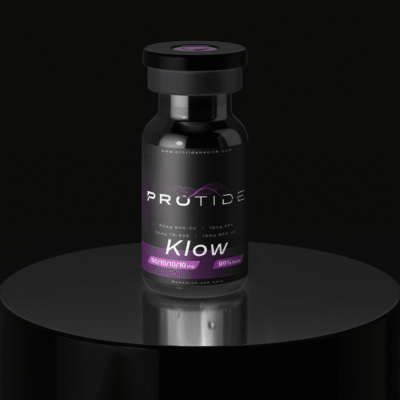
Klow Blend: 50mg/10/10/10 (GHK-CU, KPV, BPC-157, TB-500)
Original price was: $190.00.$150.00Current price is: $150.00. -
-