

Musculoskeletal & Tissue Research Bundle (Tesamorelin, Ipamorelin, BPC-157, TB-500)
Original price was: $285.00.$250.00Current price is: $250.00.
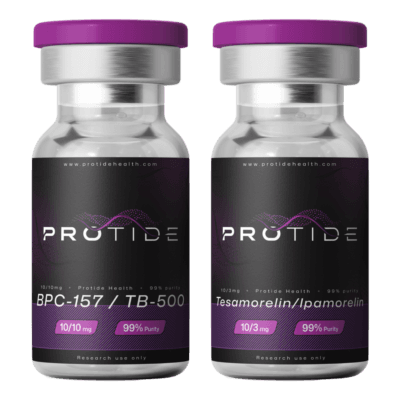
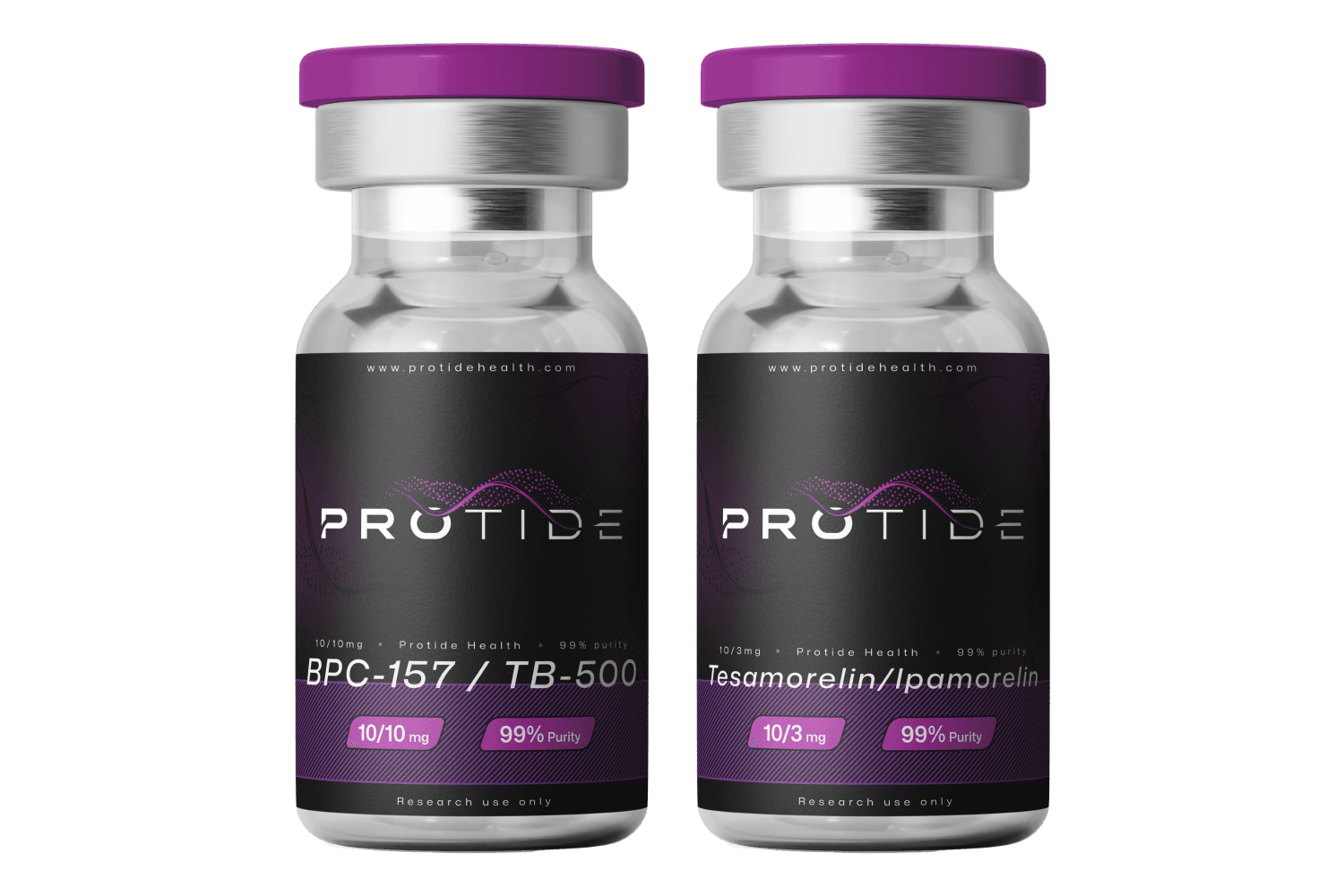
Two of our most advanced dual-peptide research formulations, including the Tesamorelin & Ipamorelin Blend (10mg/3mg) and the Wolverine Blend (BPC-157 10mg / TB-500 10mg), bundled together to provide everything needed to investigate growth hormone secretagogue pathways, actin upregulation, and in vitro angiogenesis in one convenient, cost-effective package.
Total Value: $285.00
Bundle Price: $250.00 (You Save $35.00)
Shipping: Free Shipping Included
Research use only. Not for human use or consumption.
Free shipping on orders over $149!
- 99% Purity (HPLC-MS Verified)
- Independent Third-Party Tested
- USA GMP Manufactured
- Complimentary BAC Water
- Ships in 24 Hours (USA)
Disclaimer: This product is intended solely for laboratory research purposes. It is not for human consumption, medical use, veterinary use, or household application. All product information on this website is provided for educational purposes only. Researchers must handle this product with appropriate safety protocols and comply with all applicable regulations. Please review our Terms & Conditions before purchasing.
What is the Musculoskeletal & Tissue Regeneration Research Bundle?
The Musculoskeletal & Tissue Regeneration Research Bundle pairs two of Protide Health’s most complementary research products — the Tesamorelin/Ipamorelin Blend and the Wolverine Blend (BPC-157 / TB-500) — into a single bundled purchase for investigators studying the intersection of secretagogue signaling and cellular dynamics. Together, these products address two distinct biological systems: the GH/IGF-1 axis and localized cellular response cascades. Protide Health offers this bundle strictly for laboratory and preclinical research use.
The rationale behind this bundle centers on overlapping mechanistic pathways. Secretagogue signaling and cellular structural responses are interconnected in laboratory models. Somatotropic activation upregulates downstream pathways like collagen synthesis and cellular proliferation. Simultaneously, compounds like BPC-157 and TB-500 are studied for their roles in localized actin regulation and cellular migration. Bundling a dual-receptor secretagogue with a dual-peptide cellular dynamics blend creates a comprehensive framework for in vitro assay development.
Bundle contents: Tesamorelin/Ipamorelin Blend (10mg/3mg) + Wolverine Blend BPC-157/TB-500 (10mg/10mg)
Research applications: Somatotropic axis signaling, cellular proliferation, actin dynamics, matrix remodeling, and secretagogue receptor agonism.
Bundle Components Overview
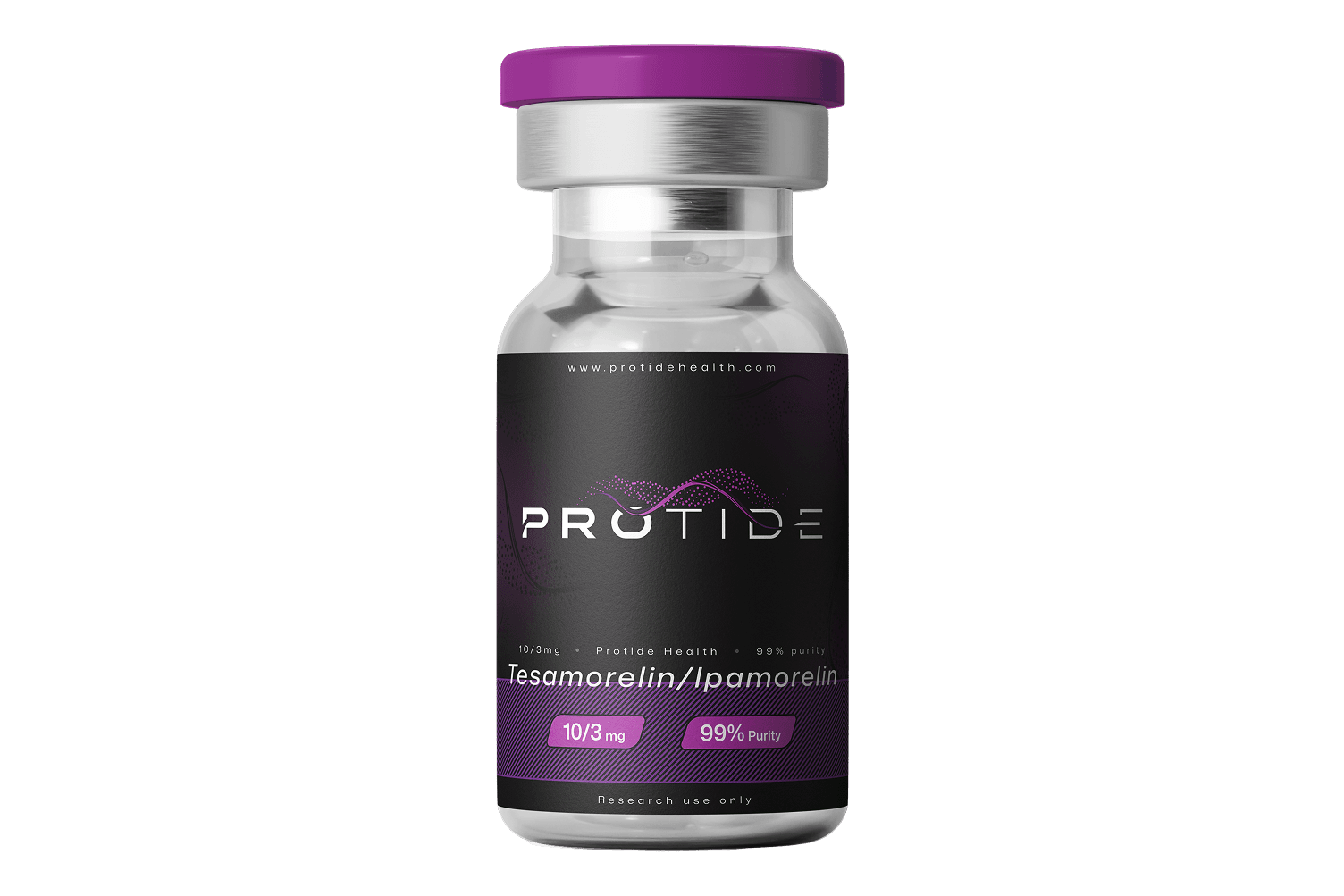
Component 1: Tesamorelin/Ipamorelin Blend (10mg/3mg)
This blend combines two synthetic secretagogues that act through distinct receptor pathways in laboratory models.
Tesamorelin is a stabilized 44-amino-acid synthetic analog that binds to specific pituitary receptors, activating cAMP/PKA signaling to observe somatotropic secretion patterns in vitro.
Ipamorelin is a synthetic pentapeptide that selectively agonizes the GHSR-1a receptor to stimulate secretion via the Gq/PLC/Ca²⁺ pathway. In cellular assays, ipamorelin is noted for its high selectivity, showing minimal interaction with ACTH or prolactin pathways compared to earlier generation secretagogues (Raun et al., 1998).
Research Rationale: Activating both the cAMP/PKA and Gq/PLC/Ca²⁺ pathways simultaneously allows researchers to observe convergent signaling cascades and study potential synergistic cellular responses (Sinha et al., 2020).
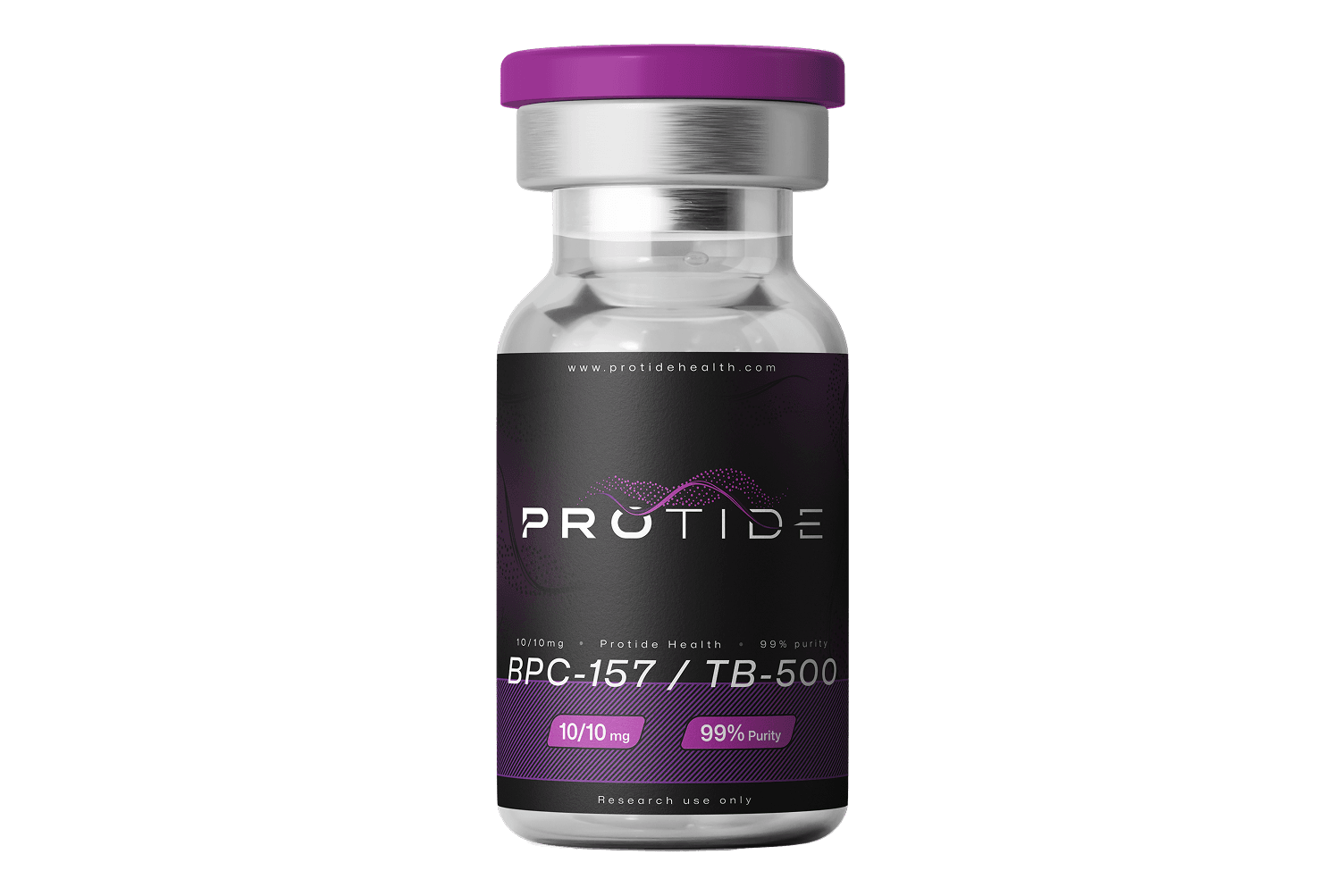
Component 2: Wolverine Blend — BPC-157 / TB-500 (10mg/10mg)
The Wolverine Blend combines two peptides frequently utilized in structural biology and tissue remodeling assays.
BPC-157 is a 15-amino-acid synthetic sequence. In vitro studies demonstrate its ability to activate VEGFR2 signaling, upregulate EGR-1 transcription factor expression, and modulate nitric oxide synthesis through the Akt-eNOS axis. These pathways are central to observing cellular proliferation and angiogenesis models (Vasireddi et al., 2025).
TB-500 is a synthetic analog of Thymosin Beta-4. Its primary mechanism involves the regulation of actin, a cytoskeletal protein critical for cell structure and migration. In laboratory models, it is utilized to observe endothelial cell differentiation and cellular motility (Malinda et al., 1999).
Research Rationale: BPC-157 primes the microenvironment by upregulating growth factor receptors (via VEGF/VEGFR2), while TB-500 facilitates structural execution by driving cellular migration (via actin dynamics). Together, they create a comprehensive model for investigating matrix remodeling.
Mechanistic Intersections
The scientific rationale for this pairing is based on the convergence of secretagogue signaling and cellular structural responses.
Published literature indicates that BPC-157 may upregulate specific receptor expressions in cellular fibroblast models, potentially activating downstream JAK2 signaling (Chang et al., 2014). This suggests that localized cellular environments may exhibit altered sensitivity to the very signaling molecules upregulated by the Tesamorelin/Ipamorelin blend. While this exact four-peptide combination requires novel exploratory work, it provides a theoretical framework for researchers studying multi-pathway biological interactions.
Specifications
| Parameter | Tesamorelin/Ipamorelin Blend | Wolverine Blend (BPC-157/TB-500) |
|---|---|---|
| Amounts per vial | 10mg / 3mg | 10mg / 10mg |
| Molecular targets | GHRH-R (cAMP/PKA) + GHSR-1a (Gq/PLC) | VEGFR2/eNOS/EGR-1 + Actin regulation |
| Research focus | Somatotropic signaling, receptor agonism | Cellular dynamics, matrix remodeling |
| Storage | Lyophilized: Room Temp. Reconstituted: 2–8°C | Lyophilized: Room Temp. Reconstituted: 2–8°C |
| Intended use | Laboratory research only | Laboratory research only |
Frequently Asked Questions
Why bundle these compounds for research?
This combination provides researchers with tools to study both systemic signaling drivers (secretagogues) and localized cellular effectors (structural peptides) within a single, value-oriented package for comprehensive assay development.
What is the basis for Tesamorelin + Ipamorelin synergy?
These compounds activate different intracellular signaling cascades (cAMP/PKA vs. Gq/PLC/Ca²⁺). Published research investigates how activating both pathways simultaneously may alter secretion thresholds in laboratory models.
How does BPC-157 connect to somatotropic pathways?
Literature suggests BPC-157 can upregulate specific receptor expression in fibroblast models, acting as a potential mechanistic bridge to the systemic signaling pathways targeted by secretagogues.
Citations
Chang CH et al., 2014. BPC-157 enhances tendon healing involving tendon-to-bone interaction via upregulation of growth hormone receptor. PubMed.
Malinda KM et al., 1999. Thymosin beta4 accelerates wound healing. Journal of Investigative Dermatology.
Raun K et al., 1998. Ipamorelin, the first selective growth hormone secretagogue. European Journal of Endocrinology.
Sinha DK et al., 2020. Beyond the androgen receptor: the role of growth hormone secretagogues in the modern management of body composition in hypogonadal males. Translational Andrology and Urology.
Vasireddi A et al., 2025. Regeneration or risk? A narrative review of BPC-157 for musculoskeletal healing. PMC.
Legal Disclaimer
The information provided is for educational and research purposes only. The compounds included in this bundle are intended solely for investigational use in controlled laboratory and in vitro settings by qualified researchers. Protide Health does not endorse or promote the use of these compounds for the diagnosis, treatment, cure, or prevention of any disease. Products sold by Protide Health are strictly for laboratory research purposes and are not intended for human consumption, medical use, or veterinary application.
Tesamorelin & Ipamorelin Blend
| Select vial strength: | 10/3mg |
|---|
BPC-157/TB-500 10/10mg "Wolverine Blend"
| Select vial strength: | 10/10mg, 30/30mg |
|---|