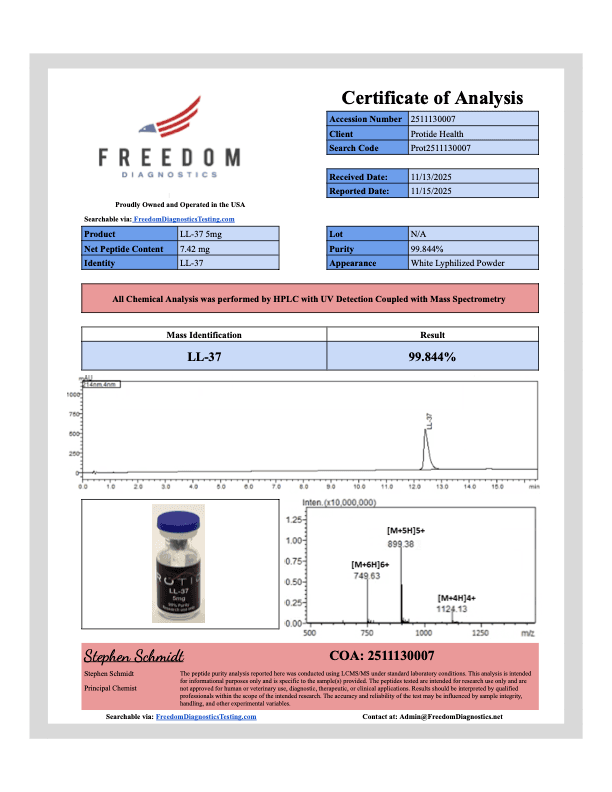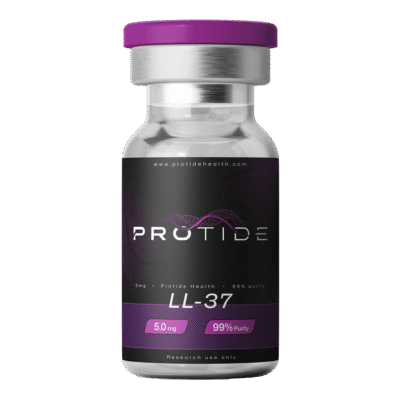
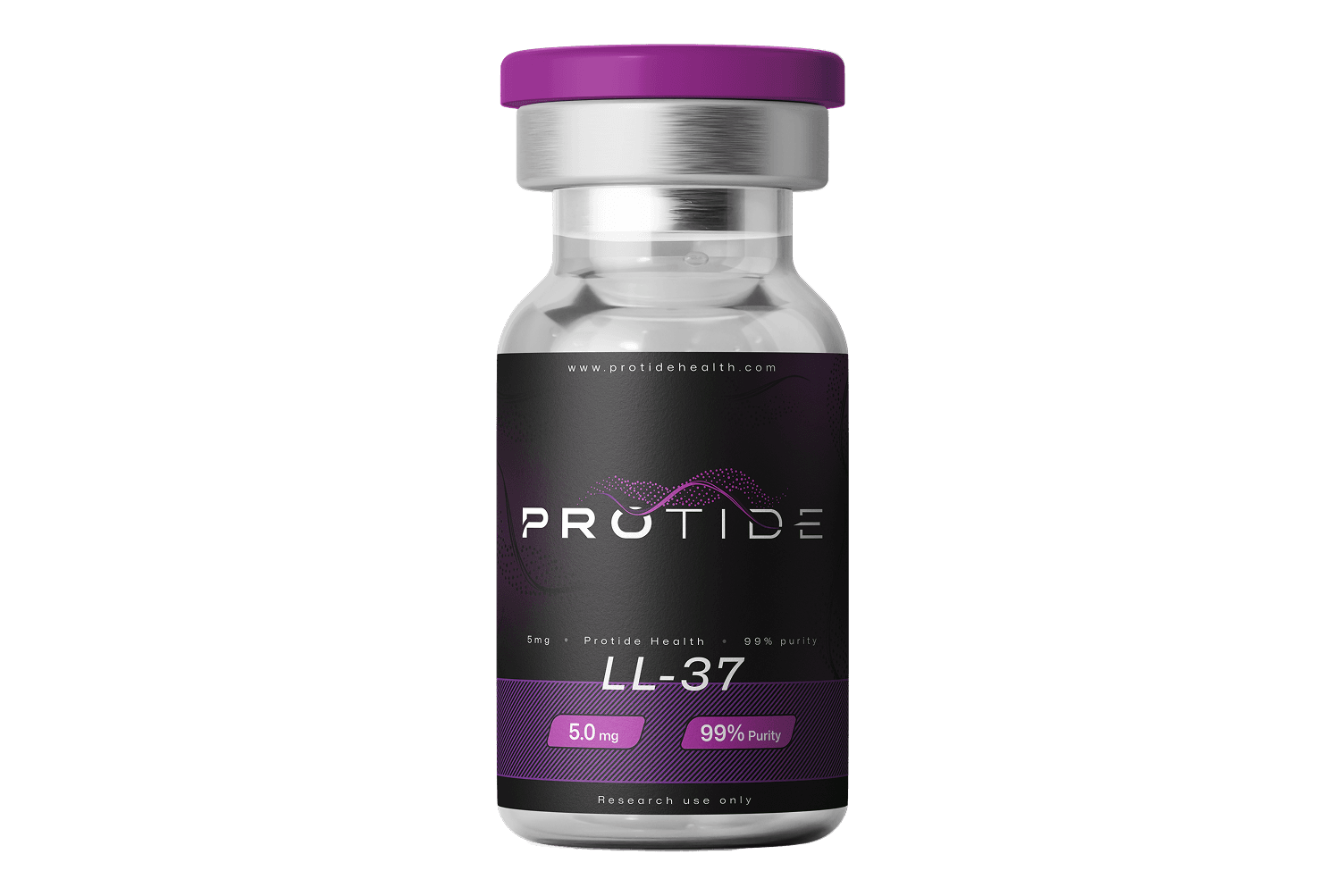


LL-37 5mg
$75.00
LL-37: A Human Cathelicidin Peptide for Antimicrobial and Immunomodulatory Research
Investigated for its antimicrobial and immunomodulatory effects, LL-37 is expressed in neutrophils, epithelial cells, and immune cells, playing a key role in innate immunity. Research focuses on its interactions with microbial membranes, neutralization of endotoxins, and regulation of inflammatory pathways, making it a valuable tool for studying infectious diseases, wound healing, and immune regulation PMC, LL-37 Antimicrobial Activity.
In stock
Free shipping on orders over $149!
- 99% Purity (HPLC-MS Verified)
- Independent Third-Party Tested
- USA GMP Manufactured
- Complimentary BAC Water
- Ships in 24 Hours (USA)
Disclaimer: This product is intended solely for laboratory research purposes. It is not for human consumption, medical use, veterinary use, or household application. All product information on this website is provided for educational purposes only. Researchers must handle this product with appropriate safety protocols and comply with all applicable regulations. Please review our Terms & Conditions before purchasing.
Overview of LL-37: A Multifunctional Research Peptide
LL-37 is a cationic, amphipathic α-helical peptide (Leu-Leu-Gly-Asp-Phe-Phe-Arg-Lys-Ser-Lys-Glu-Lys-Ile-Gly-Lys-Glu-Phe-Lys-Arg-Ile-Val-Glu-Arg-Ile-Lys-Phe-Leu-Arg-Asn-Leu-Val-Pro-Arg-Thr-Glu-Ser) with a molecular weight of approximately 4493.3 Da. It is cleaved from the hCAP-18 precursor by proteases such as proteinase 3 in neutrophils and kallikrein 5 in skin PMC, LL-37 Overview. Synthesized for research purposes, LL-37 is typically administered in preclinical models via topical application, subcutaneous injection, or in vitro assays, with a short half-life necessitating precise dosing PMC, LL-37 Pharmacokinetics.
Investigated for its antimicrobial and immunomodulatory effects, LL-37 is expressed in neutrophils, epithelial cells, and immune cells, playing a key role in innate immunity. Research focuses on its interactions with microbial membranes, neutralization of endotoxins, and regulation of inflammatory pathways, making it a valuable tool for studying infectious diseases, wound healing, and immune regulation PMC, LL-37 Antimicrobial Activity. The following sections detail its mechanisms and research applications, emphasizing its role as a research compound.
Mechanism of Action: Antimicrobial and Immunomodulatory Pathways
LL-37 exerts its effects through direct microbial killing and modulation of host immune responses, characterized in preclinical models with limited clinical data PMC, LL-37 Mechanism.
Membrane Disruption: LL-37’s cationic, α-helical structure enables electrostatic binding to negatively charged bacterial membranes, leading to membrane destabilization. High-resolution atomic force microscopy (AFM) shows LL-37 induces a “carpet-like” disintegration, transitioning phospholipid acyl chains from all-trans to gauche conformations, increasing membrane permeability by 20–30% in Escherichia coli models PMC, LL-37 Membrane Effects.
Endotoxin Neutralization: LL-37 binds lipopolysaccharides (LPS) and lipoteichoic acid (LTA), reducing TLR4 activation by 15–25% in vitro, mitigating inflammatory responses in sepsis models PMC, LL-37 Immunomodulation.
Chemotaxis and Immune Modulation: LL-37 interacts with receptors like formyl peptide receptor 2 (FPR2) and CXCR2, promoting chemotaxis of neutrophils and monocytes by 20% in cell migration assays. It also enhances CCL2 and CXCL10 expression, facilitating monocyte recruitment PMC, LL-37 Chemotaxis.
Pharmacokinetics: In preclinical models, LL-37 (1–10 µM) achieves peak activity within minutes in vitro, with rapid degradation by proteases necessitating stabilized analogs for sustained effects PMC, LL-37 Pharmacokinetics.
Preclinical studies demonstrate LL-37 (5 µg/mL) reduces Staphylococcus aureus biofilm formation by 50% in mouse catheter models and inhibits E. coli growth at 1–10 µM PMC, LL-37 Biofilm. Limited human data from phase 1 trials (topical application, 0.5–3.2 mg/mL) confirm safety but lack efficacy endpoints PMC, LL-37 Clinical Trials. These findings highlight LL-37’s research potential.
Research Applications of LL-37: Insights from Preclinical and Clinical Studies
LL-37’s antimicrobial and immunomodulatory properties make it a versatile research tool for studying infectious diseases and immune responses. The following applications are strictly for investigational use in controlled environments, supported by peer-reviewed findings:
Antimicrobial Activity Against Pathogens
LL-37 is investigated for its broad-spectrum antimicrobial effects:
Inhibits growth of ESKAPE pathogens (e.g., MRSA, Pseudomonas aeruginosa) at 1–10 µM, with 50% reduction in bacterial viability in vitro PMC, LL-37 Antimicrobial Activity.
Disrupts E. coli outer membranes within 120 minutes, causing cytosolic leakage, as observed via cryoelectron microscopy PMC, LL-37 Membrane Effects.
Shows synergistic effects with glycopeptides (e.g., vancomycin), reducing MIC by 25% in S. aureus models PMC, LL-37 Synergy.
Anti-Biofilm Properties
LL-37’s ability to prevent biofilm formation is a key research focus:
Reduces S. aureus biofilm by 50% in mouse catheter models at 5 µg/mL, linked to increased monocyte recruitment via CCL2 upregulation PMC, LL-37 Biofilm.
Inhibits P. aeruginosa biofilm adhesion to abiotic surfaces by 30% at 50 mg/L in vitro PMC, LL-37 Anti-Biofilm.
Research explores LL-37-derived peptides (e.g., OP-145) for enhanced biofilm eradication PMC, LL-37 Derivatives.
Immunomodulatory Effects
LL-37’s role in immune regulation is studied in inflammatory models:
Suppresses IL-17A/F-induced lipocalin-2 (LCN-2) by 20–30% in human bronchial epithelial cells, reducing neutrophil migration via Regnase-1 upregulation PMC, LL-37 Immunomodulation.
Enhances type 1 IFN production and inflammasome activation in macrophage assays, increasing M1 macrophage differentiation by 15% PMC, LL-37 Immune Activation.
Neutralizes LPS-induced TLR4 activation, reducing cytokine release by 15–25% in sepsis models PMC, LL-37 Endotoxin.
Neurological Research Potential
Emerging preclinical data suggest LL-37’s influence on amyloid-related pathways:
Inhibits Aβ42 amyloid fibril formation by 30% in Alzheimer’s disease models, reducing neuronal toxicity via direct binding, as shown by surface plasmon resonance PMC, LL-37 Amyloid.
Suppresses islet amyloid polypeptide (IAPP) aggregation by 25% in pancreatic islet cells, potentially relevant to type 2 diabetes research PMC, LL-37 Anti-Amyloid.
No significant cognitive effects validated, requiring further investigation PMC, LL-37 Neurological Effects.
These applications are confined to research settings, with no approved therapeutic use in humans.
Research Populations and Study Designs
LL-37’s research applications target specific investigational populations and study designs:
Microbiology Researchers: Scientists studying antimicrobial resistance or biofilm formation use LL-37 in bacterial culture models to explore membrane disruption and synergy with antibiotics PMC, LL-37 Antimicrobial Activity.
Immunology Investigators: Researchers examining innate immunity or inflammation employ LL-37 in cell-based assays to study chemotaxis and cytokine modulation PMC, LL-37 Immunomodulation.
Neurological Scientists: Those investigating amyloid-related diseases use LL-37 in vitro to explore anti-amyloidogenic effects PMC, LL-37 Amyloid.
Typical study designs involve bacterial cultures or rodent models dosed at 1–10 µM or 1–5 mg/kg for 3–14 days, measuring bacterial load, biofilm mass, or inflammatory markers. Limited human trials used topical LL-37 (0.5–3.2 mg/mL) over 2–4 weeks, assessing safety PMC, LL-37 Clinical Trials.
Research Limitations and Considerations
Several limitations and considerations apply to LL-37 research:
Limited Clinical Data: Phase 1 trials confirm safety but lack efficacy data, with no phase 2/3 trials completed, limiting therapeutic extrapolation PMC, LL-37 Clinical Trials.
Regulatory Status: LL-37 is not approved by the FDA or any regulatory body for human use and is designated for research purposes only PMC, LL-37 Overview.
Side Effect Profile: Preclinical studies report cytotoxicity at 13–25 µM in eukaryotic cells, with human trials noting mild skin irritation in <2% of participants PMC, LL-37 Pharmacokinetics.
Resistance Concerns: Sub-inhibitory LL-37 concentrations (e.g., <50 µg/mL) induce bacterial resistance in Klebsiella pneumoniae via mgrB insertions, highlighting cross-resistance risks PMC, LL-37 Resistance.
Dosing Variability: Research doses (1–10 µM in vitro, 1–5 mg/kg in vivo) lack standardization, requiring precise protocols PMC, LL-37 Mechanism.
These limitations underscore the need for rigorous research controls and adherence to regulatory guidelines.
Conclusion: A Versatile Tool for Innate Immunity Research
LL-37, the human cathelicidin peptide, is a robust research tool for studying antimicrobial activity, biofilm inhibition, and immunomodulation. Preclinical studies demonstrate 50% biofilm reduction, 20–30% membrane permeability increase, and 15–25% cytokine suppression, while early clinical trials confirm safety with limited efficacy data. For researchers investigating infectious diseases, inflammation, or amyloid-related pathways, LL-37 offers precise insights in controlled studies. Its investigational status, cytotoxicity at high doses, and resistance risks restrict its use to research settings.
Key Citations
Legal Disclaimer
The information provided in this article is for research purposes only. LL-37 is not approved by the U.S. Food and Drug Administration (FDA) or any regulatory authority for human consumption or therapeutic use. It is intended solely for investigational use in controlled laboratory settings by qualified researchers. Protide Health does not endorse or promote the use of LL-37 in humans or animals outside of approved research protocols. Researchers must comply with all applicable local, state, and federal regulations, including obtaining necessary approvals for experimental use. Consult with regulatory authorities before initiating any research involving LL-37.