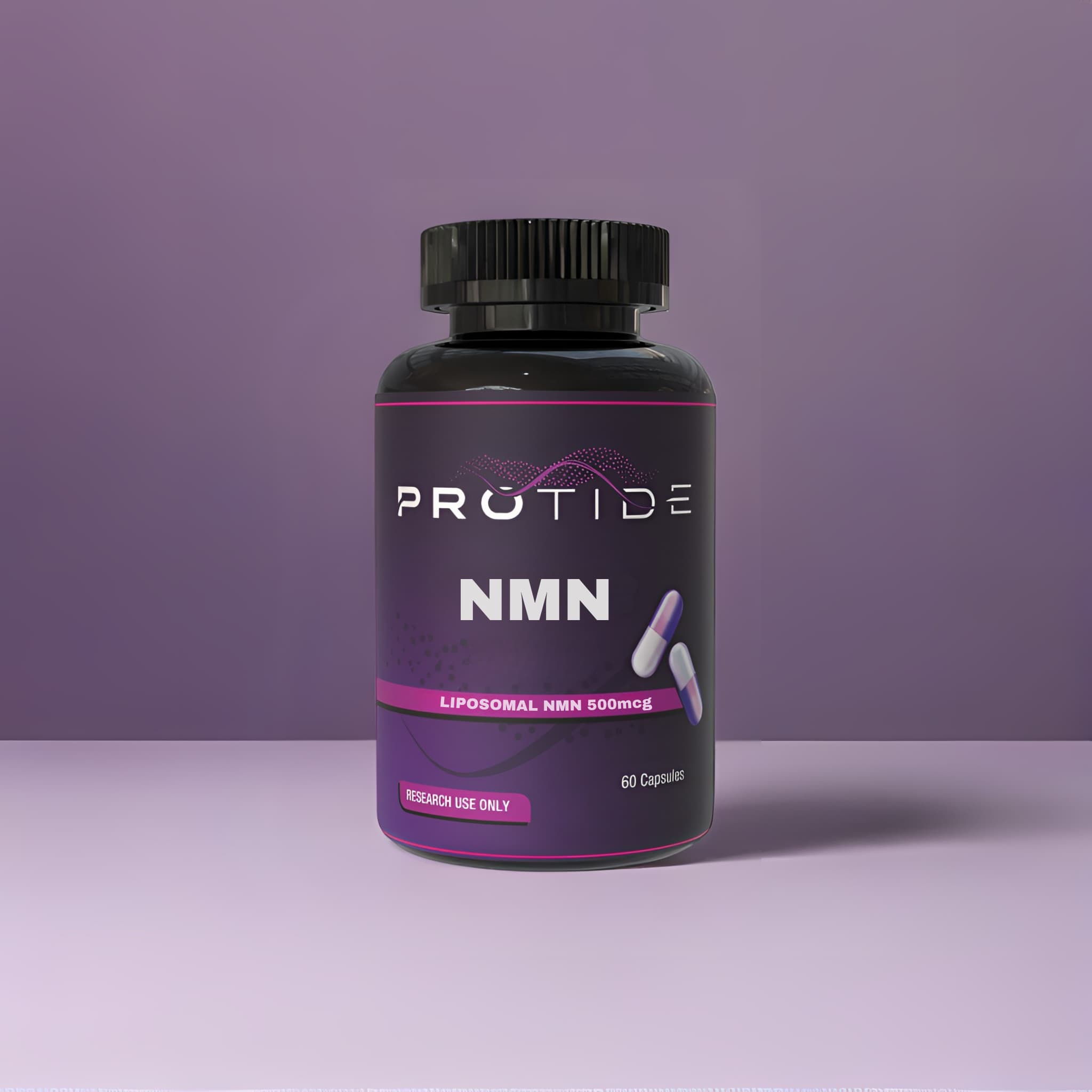
NMN (Liposomal)
Original price was: $99.00.$79.00Current price is: $79.00.
NMN: A Nicotinamide Adenine Dinucleotide Precursor for Cellular Metabolism Research
Nicotinamide Mononucleotide (NMN), a key precursor to nicotinamide adenine dinucleotide (NAD+), is a vital research compound investigated for its role in cellular energy metabolism, aging, and metabolic regulation. As a nucleotide derived from vitamin B3, NMN is explored in controlled studies to understand its impact on NAD+ biosynthesis and related physiological processes.
In stock
Free shipping on orders over $149!
- 99% Purity
- Third-Party Tested
- Secure Payments
- Free BAC Water
- Satisfaction Guaranteed
Disclaimer: This product is intended solely for laboratory research purposes. It is not for human consumption, medical use, veterinary use, or household application. All product information on this website is provided for educational purposes only. Researchers must handle this product with appropriate safety protocols and comply with all applicable regulations. Please review our Terms & Conditions before purchasing.
What is NMN?
NMN (nicotinamide mononucleotide) is a naturally occurring molecule that serves as a direct precursor to NAD+ (nicotinamide adenine dinucleotide), one of the most important coenzymes in the human body. NAD+ is involved in hundreds of cellular processes including energy metabolism, DNA repair, gene expression, and cellular stress responses. The problem is that NAD+ levels decline significantly with age — dropping in key tissues like muscle, liver, brain, and skin — and this decline is now recognized as a central driver of age-related metabolic dysfunction. Protide Health offers NMN Capsules as a high-purity oral formulation for laboratory and cellular aging research.
NMN supplementation has been studied in both animal models and human clinical trials, making it one of the most clinically advanced longevity research compounds available. Oral NMN has been shown to increase blood NAD+ levels in a dose-dependent manner in multiple randomized, double-blind, placebo-controlled human trials, with no significant adverse effects reported.
- Compound type: Small molecule — a nucleotide derived from nicotinamide (a form of vitamin B3) that is directly converted to NAD+ inside cells via the enzyme NMNAT.
- Formulation: Oral capsule for convenient daily research dosing.
- Primary research focus: NAD+ metabolism, cellular aging, sirtuin activation, mitochondrial function, insulin sensitivity, and physical performance research.
NMN Capsule Overview & Key Properties
NMN is a naturally occurring intermediate in the NAD+ biosynthesis salvage pathway — the body’s primary method for recycling and maintaining NAD+ levels. Inside cells, the enzyme nicotinamide phosphoribosyltransferase (NAMPT) converts nicotinamide into NMN, and then NMN adenylyltransferase (NMNAT) converts NMN into NAD+. This makes NMN the immediate precursor to NAD+ — just one enzymatic step away from the finished product (Nadeeshani et al., 2022).
The reason NMN has attracted so much research attention is that NAMPT activity — the rate-limiting step in NAD+ production — declines with age. As NAMPT decreases, so does NMN availability, which leads to falling NAD+ levels throughout the body. Supplementing with exogenous NMN essentially bypasses this bottleneck, providing cells with the raw material they need to restore NAD+ to more youthful levels (Nadeeshani et al., 2022).
NMN enters cells through multiple pathways, including dephosphorylation to NR (nicotinamide riboside) via CD73 followed by uptake through equilibrative nucleoside transporters, and potentially through the recently discovered Slc12a8 transporter. Once inside cells, it is rapidly converted to NAD+ by NMNAT enzymes in the cytoplasm, mitochondria, and nucleus (Song et al., 2023).
- Compound class or family: NAD+ precursor — a nucleotide in the salvage pathway of NAD+ biosynthesis, one enzymatic step from NAD+ itself.
- Formulation and typical lab handling: Oral capsules for standardized daily dosing. No reconstitution required.
- Suggested storage concept in lab settings: Store in a cool, dry place protected from light and moisture per lab SOPs. Keep capsules sealed until use.
- Common research models: Aging mouse models (C57BL/6), diet-induced obesity models, human clinical trials (healthy adults, prediabetic populations, older adults), C2C12 muscle cells, hepatocytes, and sirtuin activity assays.
NMN Mechanism of Action
To understand NMN, you need to understand NAD+. Think of NAD+ as a universal currency that cells spend on essential maintenance tasks — repairing damaged DNA, powering mitochondria, activating longevity genes, and responding to stress. The problem is that this currency gets depleted as we age, and the “minting press” (the NAMPT enzyme) slows down. NMN supplementation is essentially refilling the treasury.
Step 1 — NAD+ restoration: Once NMN enters cells, it is converted to NAD+ by NMNAT enzymes. This directly increases the pool of NAD+ available for cellular processes. Human clinical trials have confirmed that oral NMN supplementation dose-dependently increases blood NAD+ levels — with one trial showing average levels of 58.8 μM in the 1000 mg/day group compared to 23.8 μM in the placebo group (Yi et al., 2023).
Step 2 — Sirtuin activation: NAD+ is a required co-substrate for sirtuins (SIRT1-7), a family of enzymes often called “longevity regulators.” Sirtuins control gene expression related to inflammation, metabolism, mitochondrial biogenesis, and DNA repair. When NAD+ levels are low, sirtuin activity drops, accelerating the aging process. Restoring NAD+ through NMN reactivates this protective signaling (Nadeeshani et al., 2022).
Step 3 — Downstream effects: With NAD+ restored and sirtuins reactivated, cells show improved mitochondrial function, enhanced DNA repair capacity, reduced inflammation (through NF-κB modulation), improved insulin signaling, and better resistance to oxidative stress. These effects have been documented across muscle, liver, brain, heart, and immune cells in preclinical models (Alegre et al., 2024).
NMN Capsule Research
1. NMN and NAD+ Restoration in Human Trials
Multiple randomized, double-blind, placebo-controlled human clinical trials have confirmed that oral NMN supplementation increases blood NAD+ levels. Yi et al. (2023) conducted a multicenter dose-dependent trial in 80 healthy middle-aged adults receiving placebo, 300 mg, 600 mg, or 900 mg NMN daily for 60 days. Blood NAD+ concentrations increased approximately 3-fold at 300 mg, 6-fold at 600 mg, and dose-dependently at 900 mg. Participants in the 600 mg and 900 mg groups walked approximately 1.5-fold farther during the 6-minute walk test. The biological age score increased significantly in the placebo group but remained unchanged in NMN-treated groups (Yi et al., 2023).
Igarashi et al. (2022) found that 250 mg/day NMN for 12 weeks in healthy older men increased whole blood NAD+ levels by 6-fold, with improvements in gait speed and grip strength. A separate 12-week trial in older adults showed that NMN intake maintained walking speed and improved sleep quality relative to placebo (Katayoshi et al., 2024). No significant adverse effects were observed in any of these trials. These are clinical trial findings and do not constitute FDA-approved medical claims.
2. NMN and Insulin Sensitivity
The most rigorous metabolic study of NMN in humans was published in Science in 2021. Yoshino et al. conducted a 10-week, randomized, placebo-controlled, double-blind trial in postmenopausal women with prediabetes who were overweight or obese. NMN supplementation at 250 mg/day increased muscle insulin sensitivity (measured by hyperinsulinemic-euglycemic clamp), enhanced skeletal muscle insulin signaling (increased phosphorylation of AKT and mTOR), and upregulated genes related to muscle remodeling — including platelet-derived growth factor receptor β (Yoshino et al., 2021).
A 2024 meta-analysis of 9 studies including 412 participants found that NMN supplementation had positive effects on muscle function (measured by gait speed), reduced insulin resistance (HOMA-IR), and lowered liver enzyme levels (ALT) in middle-aged and older adults. The authors noted that lower doses of NMN showed the most prominent impact on insulin resistance measures. These are research observations and do not represent approved treatments for diabetes or insulin resistance.
3. NMN and Physical Performance
Exercise capacity and physical function have emerged as consistent endpoints across NMN human trials. In addition to the walking distance improvements reported by Yi et al. (2023), a separate study found that NMN supplementation at 600 mg and 1200 mg per day increased aerobic capacity in amateur runners during exercise training, with the improvements attributed to enhanced oxygen utilization in skeletal muscle (Song et al., 2023).
In aging mouse models, long-term NMN administration (300 mg/kg/day for 12 months) enhanced energy metabolism, increased physical activity, and improved insulin sensitivity and lipid profiles. These preclinical findings provided the foundation for the human exercise and performance trials now underway (Nadeeshani et al., 2022). These are research findings and do not represent approved performance enhancement claims.
4. NMN and Cellular Aging Pathways
Beyond the clinical endpoints, NMN’s effects on fundamental aging biology are well-documented in preclinical models. NAD+ decline with aging impairs DNA repair (through reduced PARP activity), decreases mitochondrial function, increases chronic inflammation (through NF-κB pathway dysregulation), and reduces stem cell regenerative capacity. NMN supplementation has been shown to counteract each of these hallmarks in animal models (Alegre et al., 2024).
A 2024 comprehensive review noted that NMN intake alters gut microbiota composition, restores mitochondrial function, inhibits inflammatory pathways, improves metabolism, counteracts oxidative stress, and alleviates inflammation — demonstrating effects across virtually every cellular aging mechanism studied (Zhang et al., 2024). Whether these broad preclinical benefits fully translate to humans remains an active area of investigation, with over a dozen clinical trials currently underway worldwide.
NMN Capsule Dosing Concepts for Lab Research
This section is educational, not prescriptive.
In published human clinical trials, NMN has been administered orally at doses ranging from 250 mg to 1200 mg per day, typically taken once daily before breakfast. Dose-dependent increases in blood NAD+ have been observed at 300, 600, and 900 mg/day. In mouse studies, common doses range from 100 to 500 mg/kg/day administered in drinking water or via oral gavage. Trial durations in humans have ranged from 14 days to 12 weeks, with most studies showing NAD+ increases within 30 days.
- Focus: Correlating oral NMN dose with tissue NAD+ levels and downstream functional endpoints (physical performance, insulin sensitivity, mitochondrial markers, sirtuin activity).
- Study design: Randomized, placebo-controlled trials with blood NAD+ levels as the primary biomarker and functional assessments (walking tests, metabolic clamps, sleep quality, biological age calculators) as secondary endpoints.
- Use the peptide dosage calculator to assist with dosing calculations and planning.
NMN Capsule Specifications Table
| Parameter | Details |
|---|---|
| Compound name | NMN (Nicotinamide Mononucleotide) |
| Also known as | β-Nicotinamide mononucleotide, β-NMN |
| Molecular weight | 334.22 Da |
| Formulation | Oral capsule |
| Compound type | Small molecule (NAD+ precursor) |
| Typical use case | NAD+ metabolism, cellular aging, sirtuin activation, insulin sensitivity, and physical performance research |
| Storage guidance | Cool, dry, dark; follow lab SOPs |
| Intended use | Laboratory research only, not for human use |
NMN Capsule FAQs
What is NMN used for in research?
NMN is primarily studied as a tool for restoring NAD+ levels that decline with age. Research applications span cellular aging, mitochondrial function, sirtuin biology, insulin sensitivity, physical performance, DNA repair, neuroprotection, and cardiovascular health. NMN is one of the most clinically advanced longevity research compounds, with over a dozen completed or ongoing human clinical trials.
How is NMN different from NR (nicotinamide riboside)?
Both NMN and NR are NAD+ precursors, but NMN is one step closer to NAD+ in the biosynthesis pathway. NR must first be converted to NMN by NRK enzymes before it can become NAD+, while NMN is converted directly to NAD+ by NMNAT. Some researchers theorize this makes NMN a more efficient precursor, though both have demonstrated the ability to raise NAD+ levels in human trials.
Has NMN been tested in human clinical trials?
Yes. Multiple randomized, double-blind, placebo-controlled clinical trials have been completed in healthy adults, older adults, prediabetic women, and athletes. These trials have consistently shown that oral NMN increases blood NAD+ levels in a dose-dependent manner with no significant adverse effects. Functional improvements in walking speed, aerobic capacity, insulin sensitivity, sleep quality, and biological age markers have been reported across various trials.
Is NMN safe based on current research?
In all completed human clinical trials to date, NMN supplementation at doses up to 900 mg/day has been well-tolerated with no significant adverse effects. Long-term safety data beyond 12 weeks is still limited. In animal studies, NMN has shown a favorable safety profile even at high doses administered over 12 months. NMN is not currently FDA-approved as a drug or dietary supplement for any medical condition.
What is the regulatory status of NMN?
NMN’s regulatory status is complex. In November 2022, the FDA determined that NMN was excluded from the dietary supplement definition because it was authorized for investigation as a new drug prior to being marketed as a supplement. However, enforcement of this ruling has been limited, and NMN continues to be widely sold. This product is sold for research purposes only.
Where to buy NMN capsules online?
You can buy NMN capsules online in the United States at Protide Health. Every compound is backed by science, clearly labeled, and third-party tested for purity and identity.
Conclusion: Summary of NMN Capsules for Research
NMN capsules provide one of the most scientifically validated NAD+ precursors in a convenient oral research formulation. With a mechanism that directly feeds the body’s primary NAD+ biosynthesis pathway, NMN has demonstrated the ability to restore age-depleted NAD+ levels in human clinical trials at doses from 250 to 900 mg/day. The downstream effects — improved sirtuin activation, enhanced mitochondrial function, better insulin sensitivity, and maintained physical performance — touch on virtually every hallmark of cellular aging. Among longevity research compounds, NMN stands out for its combination of strong preclinical evidence, a growing body of human clinical trial data, and a favorable safety profile.
All research involving NMN capsules should take place in controlled laboratory and clinical settings. NMN is not FDA-approved for any therapeutic use, and clinical trial findings do not constitute regulatory approval for anti-aging or metabolic applications. Researchers are encouraged to follow all applicable institutional and regulatory guidelines.
Citations
- Nadeeshani H et al., 2022. Nicotinamide mononucleotide (NMN) as an anti-aging health product — promises and safety concerns. Journal of Advanced Research.
- Song Q et al., 2023. The safety and anti-aging effects of nicotinamide mononucleotide in human clinical trials: an update. Advances in Nutrition.
- Yi L et al., 2023. The efficacy and safety of β-nicotinamide mononucleotide (NMN) supplementation in healthy middle-aged adults. GeroScience.
- Yoshino M et al., 2021. Nicotinamide mononucleotide increases muscle insulin sensitivity in prediabetic women. Science.
- Katayoshi T et al., 2024. Ingestion of β-nicotinamide mononucleotide increased blood NAD levels, maintained walking speed, and improved sleep quality in older adults. GeroScience.
- Alegre GFS et al., 2024. Role and potential mechanisms of nicotinamide mononucleotide in aging. Aging and Disease.
- Zhang Y et al., 2024. Research progress on anti-aging effects of β-nicotinamide mononucleotide (NMN). Sheng Wu Gong Cheng Xue Bao.
Legal Disclaimer for NMN Capsules
The information provided in this description is for research purposes only. NMN (nicotinamide mononucleotide) is not approved by the U.S. Food and Drug Administration (FDA) as a drug or dietary supplement for any medical condition. In November 2022, the FDA determined that NMN does not qualify as a dietary supplement under current regulations. This product is intended solely for investigational use in controlled laboratory and research settings by qualified researchers. Protide Health does not endorse or promote the use of NMN for the diagnosis, treatment, cure, or prevention of any disease. Researchers must comply with all applicable local, state, and federal regulations.
Products sold by Protide Health are for laboratory research purposes only and are not intended for human consumption, medical use, or veterinary use.
| Weight | 1 lbs |
|---|---|
| Dimensions | 1 × 1 × 1 in |