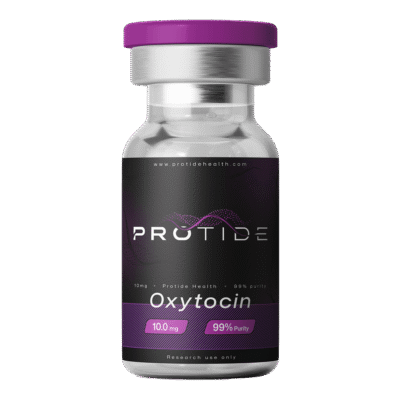
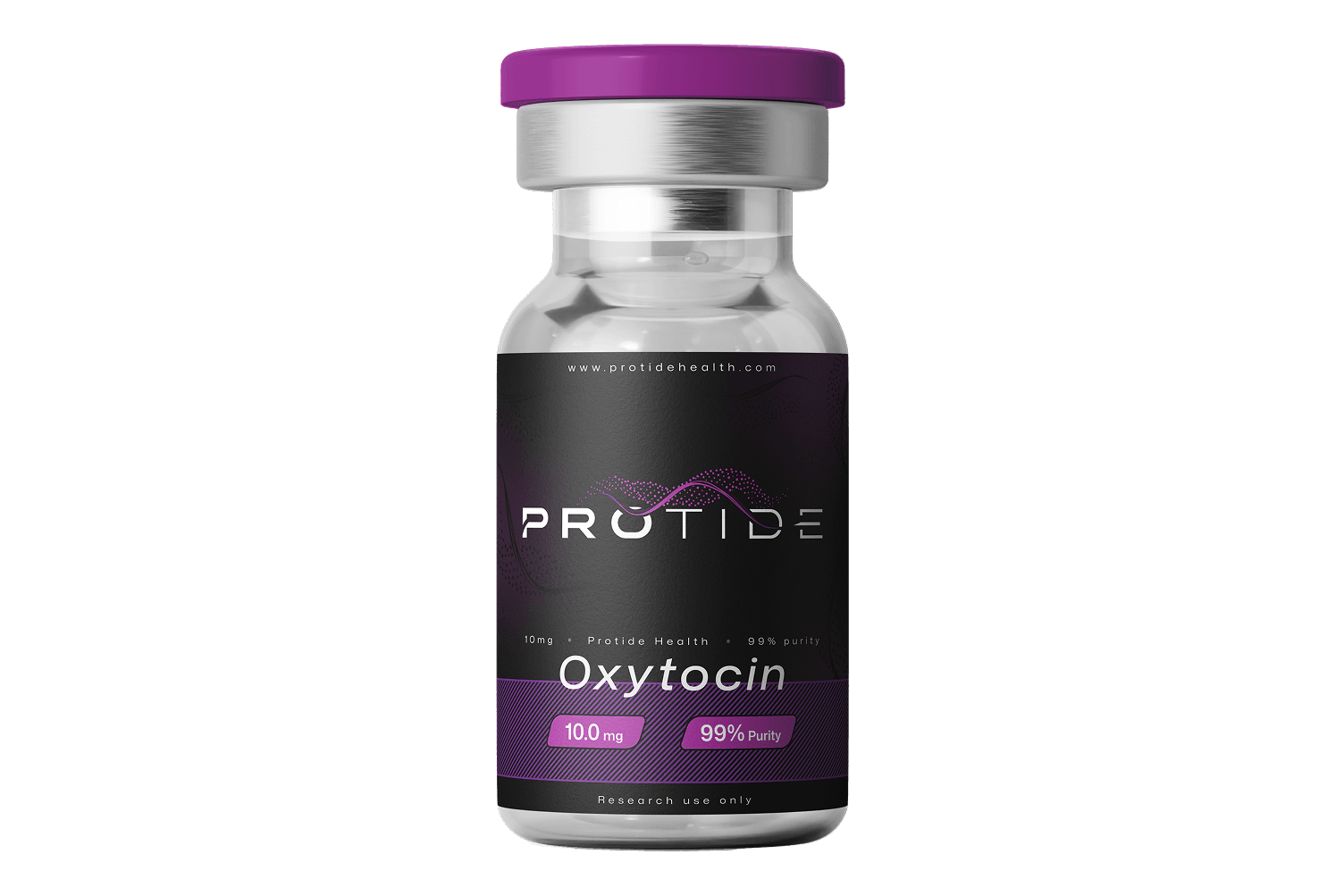


Oxytocin 10mg
$55.00
Oxytocin is a nine-amino-acid signaling peptide widely studied for its role in oxytocin receptor (OXTR) activation and GPCR signaling pathways. Laboratories investigate oxytocin in social behavior models, stress-response research, and receptor biology studies. This 10mg lyophilized vial supports controlled experimental work with consistent batch-to-batch handling.
In stock
Free shipping on orders over $149!
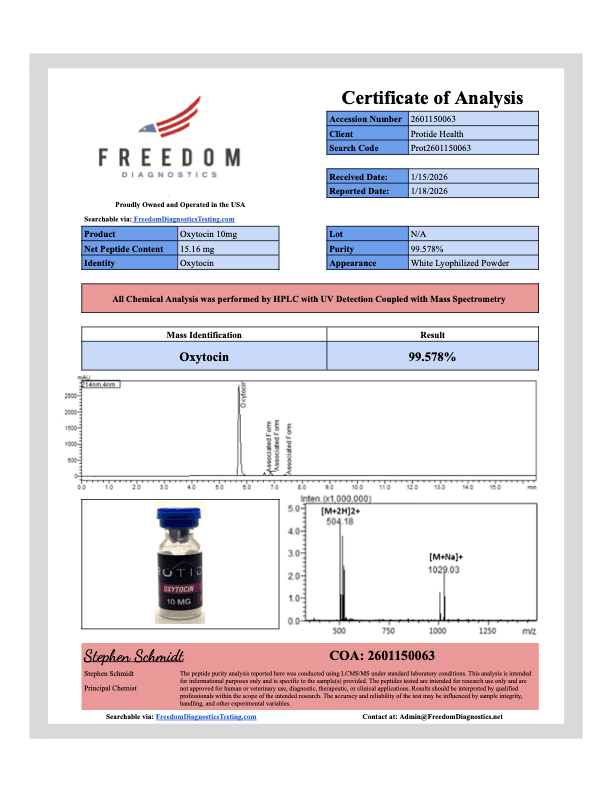
- 99% Purity (HPLC-MS Verified)
- Independent Third-Party Tested
- USA GMP Manufactured
- Complimentary BAC Water
- Ships in 24 Hours (USA)
Disclaimer: This product is intended solely for laboratory research purposes. It is not for human consumption, medical use, veterinary use, or household application. All product information on this website is provided for educational purposes only. Researchers must handle this product with appropriate safety protocols and comply with all applicable regulations. Please review our Terms & Conditions before purchasing.
Oxytocin Peptide 10mg: Laboratory Research Overview
Oxytocin is a short signaling peptide that laboratories study for its role in receptor biology and cell communication pathways PMC. This research-grade oxytocin peptide is supplied as a 10mg lyophilized vial designed for controlled laboratory investigation. Studies examine oxytocin’s interactions with the oxytocin receptor (OXTR), a G protein-coupled receptor (GPCR), and explore how this signaling cascade may influence experimental models related to social behavior, stress-response pathways, and cellular signaling. Human research observations do not equal approved medical use.
What is Oxytocin Peptide?
Oxytocin is a naturally occurring nine-amino-acid peptide produced synthetically for research to ensure batch-to-batch consistency Nature. In the body, oxytocin binds to OXTR, a cell-surface receptor that belongs to the GPCR family. When oxytocin attaches to OXTR, it initiates an internal signaling cascade—a chain of molecular events inside the cell. Structural research shows OXTR couples primarily to Gq/11 pathways, which activate phospholipase C (PLC) and increase intracellular calcium (Ca²⁺) levels PMC.
Laboratories use oxytocin peptide in:
Receptor signaling assays that measure GPCR activation
Preclinical behavioral models focused on social cognition pathways
Cell-culture systems investigating calcium mobilization
Translational research measuring stress-related biomarkers
Storage and handling: lyophilized powder kept cool, dry, and dark per lab SOPs; reconstituted aliquots often frozen to limit freeze-thaw cycles. Explore the peptide reconstitution tool to plan vial handling.
Oxytocin Receptor Mechanism & Signaling Pathways
OXTR and GPCR Signaling
OXTR functions as a GPCR, meaning it spans the cell membrane and activates intracellular G proteins when oxytocin binds ACS. Binding triggers Gq/11 protein activation, which stimulates PLC to cleave membrane phospholipids into second messengers (IP₃ and DAG). IP₃ releases Ca²⁺ from internal stores, while DAG activates protein kinase C (PKC)—pathways measured in cell signaling research OUP.
Receptor Interaction Networks
Recent reviews describe OXTR as a “hub” in GPCR heteroreceptor networks, meaning it can form complexes with other receptors on the cell surface PMC. Studies investigate:
OXTR-dopamine D2 receptor (D2R) pairs in amygdala models
OXTR-ghrelin receptor (GHS-R1a) complexes in hippocampal cultures
OXTR-serotonin receptor (5-HT2A/2C) interactions
These heterocomplex formations may alter signaling outputs. For example, OXTR-GHS-R1a pairing attenuates oxytocin-induced Ca²⁺ mobilization in in vitro models, suggesting that receptor context changes pathway activation PMC. This is a mechanistic observation, not a therapeutic endpoint.
Oxytocin Peptide Research Applications
Social Behavior & Cognition Models
Oxytocin is widely studied in neuroscience research examining social signaling pathways ScienceDirect. Animal studies measure OXTR activation in brain regions linked to social recognition and bonding behaviors. Controlled human research trials have administered intranasal oxytocin and measured social cognition endpoints, with mixed results depending on population and study design PubMed.
A meta-analysis of randomized controlled trials reports inconsistent findings across studies investigating neurodevelopmental disorder models PubMed. Variability may reflect differences in dosing, timing, subject characteristics, or outcome measures. These are investigational observations; human data do not establish medical use.
Stress-Response Signaling Pathways
Laboratories investigate oxytocin’s interactions with stress-related biomarkers, including cortisol and HPA-axis (hypothalamic-pituitary-adrenal) signaling PMC. Human research examines cardiovascular reactivity and autonomic nervous system markers following oxytocin administration under controlled social-stress conditions PMC.
One double-blind placebo-controlled study measured cardiac output and ventricular contractility during social evaluation tasks PMC. Findings showed trends in physiological activation patterns, suggesting oxytocin may modulate ANS responses in specific contexts. Another study measured cortisol responses and reported individual variability based on traits and experimental conditions PubMed. These are research endpoints, not clinical outcomes.
Cellular & Tissue Research Models
Preclinical work explores oxytocin in experimental models examining:
Wound healing endpoints in rodent skin models PubMed
Social isolation effects on tissue repair pathways in animal studies PubMed
Inflammatory signaling modulation measured via cytokine markers Frontiers
Research investigates oxytocin’s effects on immune cell populations (lymphocyte proliferation, neutrophil activity) and antioxidant pathways in preclinical models Frontiers. Animal studies show context-dependent effects, meaning outcomes vary by model, timing, and social environment PubMed. Human evidence remains limited.
Laboratory Handling & Reconstitution Concepts
This section is educational for laboratory planning only.
Vial Reconstitution
Lyophilized oxytocin peptide (10mg) is typically reconstituted with bacteriostatic water to a working concentration suitable for the experimental model ScienceDirect. Labs often prepare multiple aliquots to avoid repeated freeze-thaw cycles, which may degrade peptide integrity. Use the peptide reconstitution tool to plan reconstitution volumes.
Study Design Considerations
Research protocols typically include:
Dose-range testing: multiple exposure levels with vehicle controls
Time-course sampling: early versus late time points to map signaling kinetics
Replication: repeat runs to establish consistency
Preclinical models use subcutaneous, intranasal, or in vitro exposure depending on the research question. Human research follows regulated clinical-trial protocols. Findings from controlled studies do not translate to approved use outside of research.
Oxytocin Peptide Specifications
| Parameter | Details |
|---|---|
| Peptide name | Oxytocin peptide |
| Vial content | 10mg (lyophilized powder) |
| Sequence length | 9 amino acids |
| Receptor target | OXTR (oxytocin receptor, a GPCR) |
| Typical models | Social behavior research, stress-response studies, receptor signaling assays |
| Storage | Cool, dry, dark; follow lab SOPs |
| Intended use | Laboratory research only |
Oxytocin Peptide FAQs
What is oxytocin peptide used for in laboratory research?
Oxytocin peptide is studied in receptor biology, neuroscience, and cell signaling research PMC. Common research themes include social cognition pathways, stress-response signaling, GPCR heterocomplex formation, and immune modulation in preclinical models. Results vary by experimental design and do not establish clinical use.
How is oxytocin peptide typically stored and handled?
Labs store lyophilized oxytocin in cool, dry, dark conditions per SOPs. After reconstitution, researchers often prepare aliquots and freeze them to minimize repeated thawing, which can degrade peptide stability. Always follow your laboratory’s validated handling procedures.
What is the oxytocin receptor (OXTR)?
OXTR is the primary receptor oxytocin binds to, and it belongs to the GPCR superfamily PMC. Binding triggers Gq/11-mediated signaling, activating PLC and increasing intracellular Ca²⁺. OXTR also forms heterocomplexes with other GPCRs, which can alter signaling outputs measured in cell-based assays PMC.
Is oxytocin naturally occurring or synthetic?
Oxytocin is naturally produced in humans, but research materials are synthesized to ensure consistent purity and sequence fidelity across batches Nature. Synthetic production supports reproducible experimental results in laboratory settings.
Where can I buy oxytocin peptide for laboratory research?
You can buy oxytocin peptide online at Protide Health in the United States. Every compound is clearly labeled for research use only and supported with third-party testing documentation where available.
Oxytocin Peptide Summary for Laboratory Investigation
Oxytocin peptide is a widely studied signaling molecule best known for its role in GPCR biology and neuroscience research PMC. The 10mg vial format supports controlled laboratory handling for teams investigating OXTR signaling, receptor heterocomplex formation, and context-dependent effects observed in preclinical and regulated human research. Studies examine oxytocin in social behavior models, stress-response pathways, cellular signaling assays, and translational research PMC. Findings are variable and model-dependent, highlighting the importance of rigorous experimental design and replication.
References
Borroto-Escuela DO et al., 2022. The oxytocin receptor represents a key hub in the GPCR heteroreceptor network. PMC
Hasbi A et al., 2004. Real-time detection of interactions between the human oxytocin receptor and G protein-coupled receptor kinase. OUP
Lin YT et al., 2018. Oxytocin receptor signaling in the hippocampus: Role in regulating neuronal excitability. ScienceDirect
Liu H et al., 2020. The oxytocin receptor signalling system and breast cancer. Nature
Jarskog LF et al., 2017. 12-week randomized controlled trial of intranasal oxytocin in schizophrenia spectrum disorders. PubMed
Keech B et al., 2018. Meta-analysis of intranasal oxytocin and social cognition trials. PubMed
Love TM, 2018. Oxytocin, motivation and the role of dopamine. PMC
Tabak BA et al., 2012. Oxytocin effects on response to social stress in men and women. PMC
Quirin M et al., 2011. Oxytocin and cortisol responses to stress in a controlled human study. PubMed
Vitalo A et al., 2009. Oxytocin effects on experimental skin wound healing model. PubMed
Shanks N et al., 2025. Oxytocin administration and social isolation effects in wound healing animal models. PubMed
Mehdi SF et al., 2022. Oxytocin and related peptide hormones: Candidate anti-inflammatory therapy. Frontiers
Grifnée E et al., 2025. Development and validation of a highly-sensitive oxytocin detection method. ScienceDirect
McCall C, Singer T, 2012. The animal and human neuroendocrinology of social cognition, motivation and behavior. Nature Neuroscience
Calcagnoli F et al., 2020. Extrahypothalamic oxytocin neurons drive stress-induced social anxiety. PNAS
Legal Disclaimer
The information provided in this description is for research purposes only. The Oxytocin peptide is not approved by the U.S. Food and Drug Administration (FDA) or any regulatory authority for human consumption or therapeutic use. It is intended solely for investigational use in controlled laboratory settings by qualified researchers. Protide Health does not endorse or promote the use of Oxytocin peptide in humans or animals outside of approved research protocols. Researchers must comply with all applicable local, state, and federal regulations, including obtaining necessary approvals for experimental use. Consult with regulatory authorities before initiating any research involving Oxytocin peptide.
Products sold by Protide Health are for laboratory research purposes only and are not intended for human consumption, medical use, or veterinary use.
FAQs
You may also like…
-

-
DSIP
Price range: $55.00 through $100.00Select options This product has multiple variants. The options may be chosen on the product page -