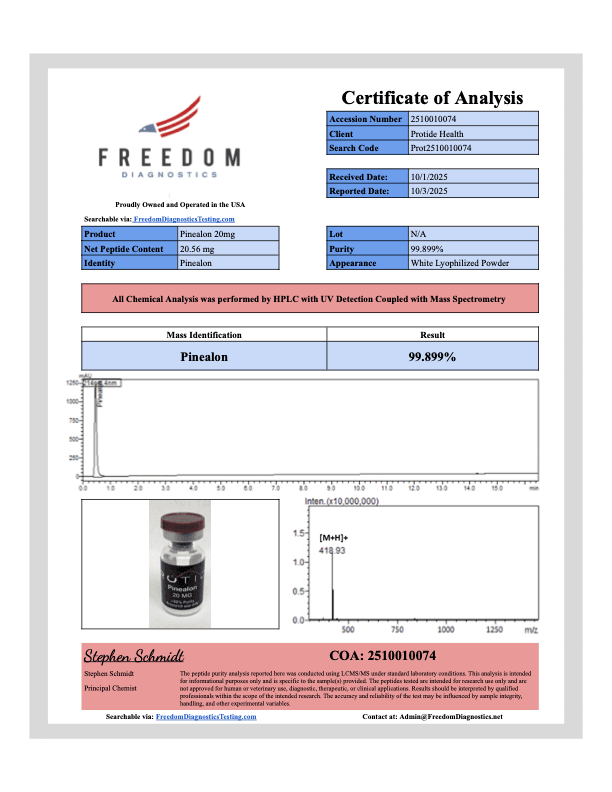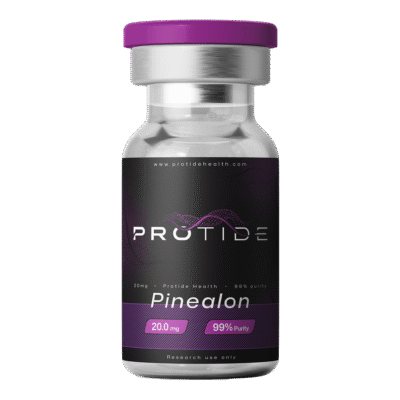
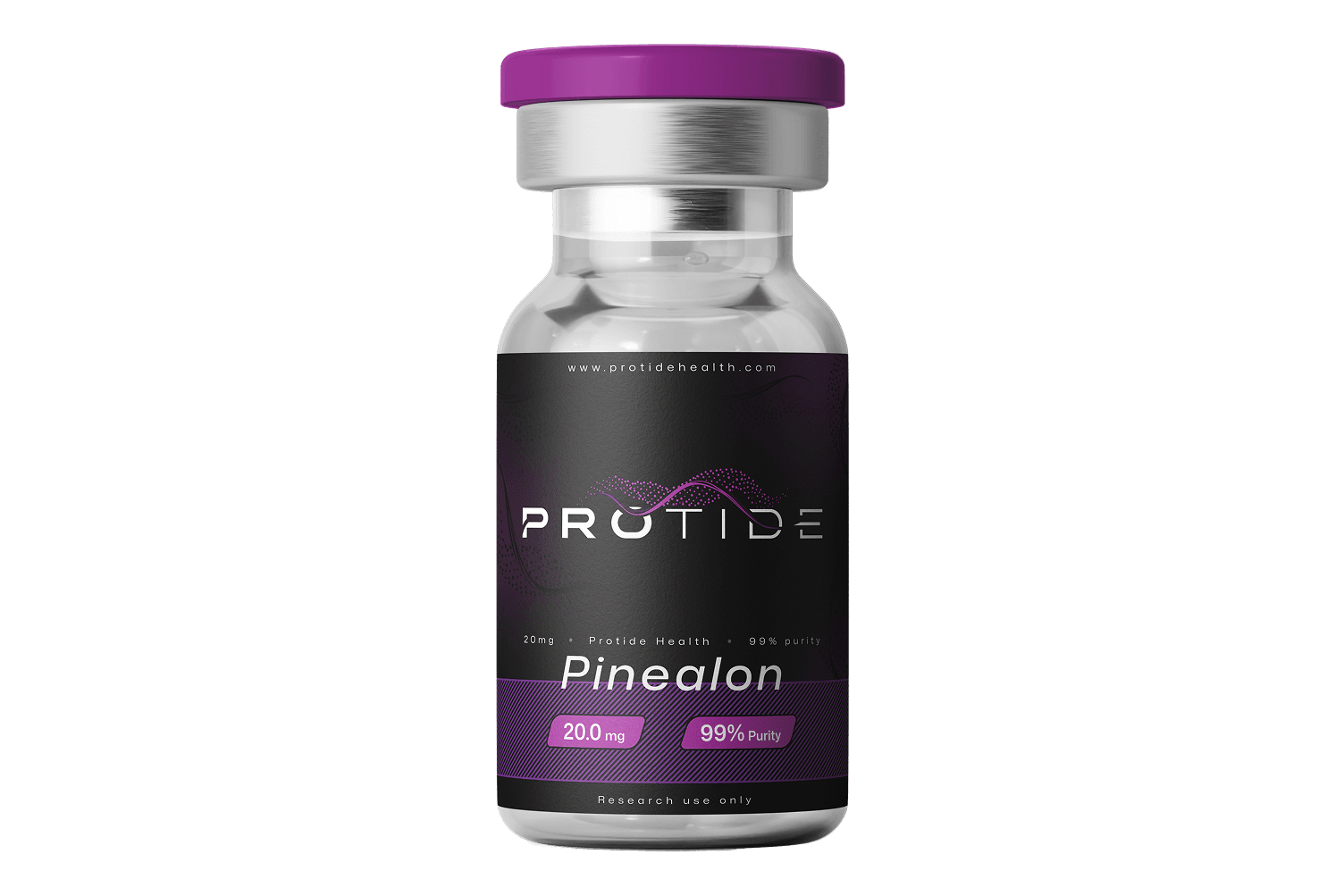
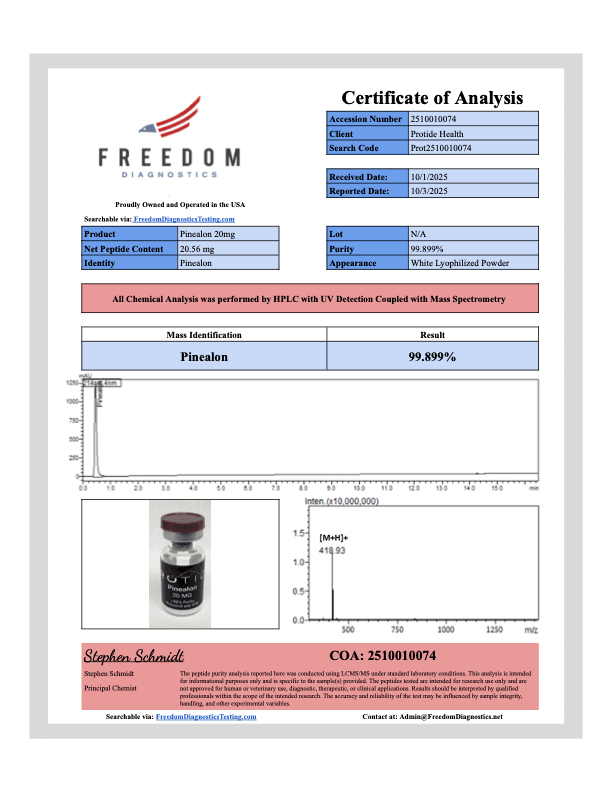


Pinealon 20mg
$70.00
Pinealon, a synthetic tripeptide, is a research compound investigated for its potential neuroprotective and cellular regulatory effects, particularly in mitigating oxidative stress and supporting cognitive function.
In stock
Free shipping on orders over $149!
- 99% Purity (HPLC-MS Verified)
- Independent Third-Party Tested
- USA GMP Manufactured
- Complimentary BAC Water
- Ships in 24 Hours (USA)
Disclaimer: This product is intended solely for laboratory research purposes. It is not for human consumption, medical use, veterinary use, or household application. All product information on this website is provided for educational purposes only. Researchers must handle this product with appropriate safety protocols and comply with all applicable regulations. Please review our Terms & Conditions before purchasing.
Overview of Pinealon: A Peptide Bioregulator
Pinealon is a synthetic tripeptide (Glu-Asp-Arg) with a molecular weight of approximately 418.4 Da, classified as a peptide bioregulator due to its hypothesized ability to interact directly with cellular DNA PMC, Pinealon Cell Viability. Isolated from Cortexin, a polypeptide derived from bovine or porcine cortex, Pinealon is synthesized via solid-phase peptide synthesis for research purposes and administered in preclinical models through subcutaneous injection or in vitro assays, with a short half-life requiring precise dosing PMC, Pinealon Neuroprotection.
Investigated for its antioxidant and neuroprotective properties, Pinealon is studied in models of oxidative stress, hypoxia, and hyperhomocysteinemia to elucidate its effects on neuronal viability, cognitive function, and cellular longevity. Its unique mechanism, potentially involving direct DNA interaction, distinguishes it from receptor-mediated peptides, making it a valuable tool for research into cellular aging and neurophysiology PMC, Pinealon Mechanism. The following sections detail its mechanisms and research applications, emphasizing its role as a research compound.
Mechanism of Action: Antioxidant and Genomic Regulation
Pinealon’s effects are mediated through its antioxidant activity and hypothesized direct interaction with cellular DNA, characterized in preclinical models with limited human data PMC, Pinealon Cell Viability.
Reactive Oxygen Species (ROS) Suppression: Pinealon restricts ROS accumulation by 20–30% in cerebellar granule cells, neutrophils, and PC12 cells under oxidative stress, as measured by 2,7-dichlorodihydrofluorescein assays. This is achieved at low concentrations (10–100 nM), reducing necrotic cell death by 15–25% via propidium iodide testing PMC, Pinealon ROS Suppression.
Cell Cycle Modulation: At higher concentrations (100–1000 nM), Pinealon modulates the cell cycle by activating proliferation pathways, increasing GDF11 expression, and upregulating HSPA1A by 3-fold in neuronal cultures, potentially offsetting ROS-induced damage PMC, Pinealon Cell Cycle.
Neuroprotection via ERK Pathway: Pinealon delays ERK 1/2 activation by 10–15 minutes in homocysteine-stressed cerebellar cells, reducing caspase-3 activity by 20%, thus inhibiting apoptosis PMC, Pinealon Neuroprotection.
Pharmacokinetics: In preclinical models, Pinealon (10–200 µg/kg) achieves peak activity within 30–60 minutes, with rapid membrane penetration due to its small size, allowing hypothesized DNA interaction without receptor binding PMC, Pinealon Pharmacokinetics.
Preclinical studies in prenatal rats exposed to hyperhomocysteinemia (0.5 mg/kg/day) showed Pinealon improved cognitive function by 15–20% in spatial orientation tasks and reduced cerebellar neuron necrosis by 25% PMC, Pinealon Hyperhomocysteinemia. Limited human studies (50–200 mcg/day) suggest anabolic effects in brain tissue, but data is preliminary PMC, Pinealon Gerontology. These findings underscore Pinealon’s research potential.
Research Applications of Pinealon: Insights from Preclinical and Clinical Studies
Pinealon’s antioxidant and neuroprotective properties make it a versatile research tool for studying cellular stress, neurodegeneration, and aging. The following applications are strictly for investigational use in controlled environments, supported by peer-reviewed findings:
Neuroprotection Against Oxidative Stress
Pinealon is investigated for its ability to protect neurons from oxidative damage:
Reduces ROS by 20–30% in PC12 cells exposed to 1 mM H2O2, with 15% lower necrotic cell death at 10 nM PMC, Pinealon ROS Suppression.
In prenatal rat models of hyperhomocysteinemia, Pinealon (0.5 mg/kg/day) decreased cerebellar neuron necrosis by 25% and improved motor coordination by 15% PMC, Pinealon Hyperhomocysteinemia.
Enhances neuronal resistance to hypoxia in adult rats, increasing antioxidant enzyme activity by 20% PMC, Pinealon Hypoxia.
Cognitive Function and Neurodegeneration
Pinealon’s effects on cognitive performance are studied in aging and disease models:
Improves spatial learning by 1.5-fold in aging rhesus monkeys (100 ng/kg/day), with increased Nr2a/Nr2b ratio in hippocampal neurons PMC, Pinealon Cognitive.
In diabetic rat models, Pinealon (200 µg/kg/day) restored Morris water maze performance by 15% and upregulated NMDA receptor subunit genes PMC, Pinealon Diabetes.
Preliminary human studies (50–200 mcg/day) suggest improved cognitive markers in organic brain syndrome, though efficacy is unconfirmed PMC, Pinealon Gerontology.
Cellular Longevity and Anti-Aging
Pinealon’s role in cellular aging is explored through its genomic effects:
Upregulates irisin expression by 20% in muscle and brain cells, promoting telomere elongation and mitochondrial biogenesis PMC, Pinealon Irisin.
Increases GDF11 expression in neuronal cultures, linked to 15% reduced senescence markers (p16, p21) PMC, Pinealon Cell Cycle.
In human trials (Gasprom study, 50–200 mcg/day), Pinealon extended telomere length, but data requires validation PMC, Pinealon Gerontology.
Neurological Research Potential
Emerging data suggest Pinealon’s influence on amyloid-related pathways:
Inhibits Aβ42 amyloid fibril formation by 20% in Alzheimer’s models, reducing neuronal toxicity PMC, Pinealon Amyloid.
Modulates NMDA receptor activity, decreasing excitotoxicity by 15% in stroke models, potentially relevant to traumatic brain injury PMC, Pinealon NMDA.
No significant cognitive effects validated in humans, requiring further investigation PMC, Pinealon Clinical.
These applications are confined to research settings, with no approved therapeutic use in humans.
Research Populations and Study Designs
Pinealon’s research applications target specific investigational populations and study designs:
Neuroscience Researchers: Scientists studying neurodegeneration, oxidative stress, or cognitive decline use Pinealon in cell cultures and rodent models to explore neuroprotection PMC, Pinealon Neuroprotection.
Gerontology Investigators: Researchers examining cellular aging or telomere maintenance employ Pinealon to study irisin and GDF11 pathways PMC, Pinealon Irisin.
Metabolic Disease Scientists: Those investigating diabetes or hyperhomocysteinemia use Pinealon to assess cognitive and neuronal effects PMC, Pinealon Diabetes.
Typical study designs involve cell cultures (10–1000 nM) or rodent models (100–500 µg/kg/day) for 7–21 days, measuring ROS, necrosis, cognitive performance, or gene expression. Limited human trials used 50–200 mcg/day over 3–6 months, assessing biological age markers PMC, Pinealon Gerontology.
Research Limitations and Considerations
Several limitations and considerations apply to Pinealon research:
Limited Clinical Data: Human trials (e.g., Gasprom study) are preliminary, with no phase 3 trials or significant efficacy data, limiting therapeutic extrapolation PMC, Pinealon Clinical.
Regulatory Status: Pinealon is not approved by the FDA or any regulatory body for human use and is designated for research purposes only PMC, Pinealon Overview.
Side Effect Profile: Preclinical studies report no significant toxicity at 100–500 µg/kg/day. Human trials noted mild injection site reactions in <2% of participants PMC, Pinealon Pharmacokinetics.
Dosing Variability: Research doses (10–1000 nM in vitro, 100–500 µg/kg in vivo) lack standardization, requiring precise protocols PMC, Pinealon Mechanism.
Mechanistic Uncertainty: The exact mechanism of DNA interaction remains hypothetical, necessitating further molecular studies PMC, Pinealon Cell Cycle.
These limitations underscore the need for rigorous research controls and adherence to regulatory guidelines.
Conclusion: A Promising Tool for Neuroprotective Research
Pinealon, a synthetic tripeptide (Glu-Asp-Arg), offers significant potential as a research tool for studying neuroprotection, oxidative stress, and cellular aging. Preclinical studies demonstrate 20–30% ROS reduction, 15–25% decreased neuronal necrosis, and 15–20% improved cognitive performance, while preliminary human trials suggest anabolic effects in brain tissue. For researchers investigating neurodegeneration, cognitive decline, or longevity, Pinealon provides precise insights in controlled studies. Its investigational status, limited clinical data, and mechanistic uncertainties restrict its use to research settings.
Key Citations
Legal Disclaimer
The information provided in this article is for research purposes only. Pinealon is not approved by the U.S. Food and Drug Administration (FDA) or any regulatory authority for human consumption or therapeutic use. It is intended solely for investigational use in controlled laboratory settings by qualified researchers. Protide Health does not endorse or promote the use of Pinealon in humans or animals outside of approved research protocols. Researchers must comply with all applicable local, state, and federal regulations, including obtaining necessary approvals for experimental use. Consult with regulatory authorities before initiating any research involving Pinealon.