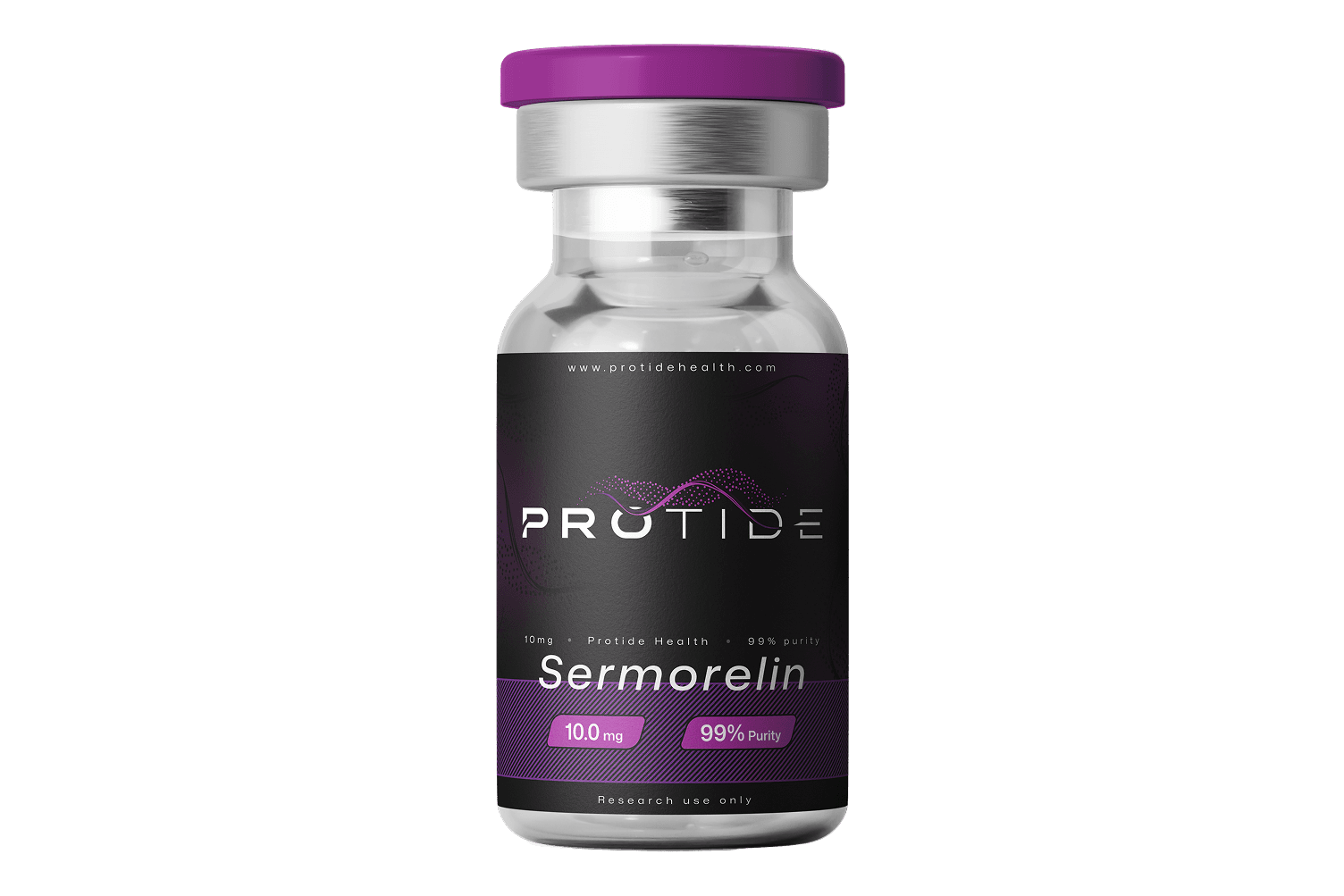
Sermorelin
Price range: $55.00 through $105.00
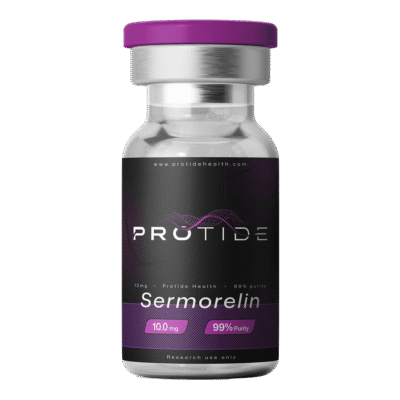
Sermorelin (GHRH 1-29-NH₂) is a synthetic 29-amino-acid peptide analog of endogenous growth hormone-releasing hormone. It is utilized in preclinical research to investigate GHRH receptor binding, pulsatile neuroendocrine signaling, and downstream IGF-1 transcription. Available in 5mg and 10mg lyophilized vials. Third-party HPLC-verified >99% purity. For research purposes only.
Free shipping on orders over $149!
- 99% Purity (HPLC-MS Verified)
- Independent Third-Party Tested
- USA GMP Manufactured
- Complimentary BAC Water
- Ships in 24 Hours (USA)
Disclaimer: This product is intended solely for laboratory research purposes. It is not for human consumption, medical use, veterinary use, or household application. All product information on this website is provided for educational purposes only. Researchers must handle this product with appropriate safety protocols and comply with all applicable regulations. Please review our Terms & Conditions before purchasing.
What is Sermorelin?
Sermorelin is a synthetic peptide made up of the first 29 amino acids of human growth hormone-releasing hormone (GHRH). It is the shortest fragment of GHRH that keeps full biological activity, meaning it can tell the pituitary gland to produce and release growth hormone just like the natural, full-length version does. Protide Health offers Sermorelin peptide in 5mg or 10mg, high-purity lyophilized (freeze-dried) powder for laboratory and preclinical research.
Unlike direct growth hormone injections, Sermorelin peptide works with the body’s own feedback systems. It stimulates the pituitary gland to release growth hormone in natural pulses rather than in a constant stream, which has made it a focus of research in aging, body composition, and metabolic health.
- Peptide type: Single peptide — a 29-amino-acid analog of growth hormone-releasing hormone (GHRH 1-29 NH₂) that stimulates the pituitary gland to release endogenous growth hormone.
- Vial content: 5mg or 10mg lyophilized powder.
- Primary research focus: Growth hormone secretion models, aging and body composition research, and pituitary function studies.
Sermorelin Peptide Overview & Key Properties
Sermorelin (also known as GRF 1-29 NH₂) was originally developed in the late 20th century for diagnosing and treating growth hormone deficiency in children. It was FDA-approved for pediatric use in 1997 but was later discontinued in 2008 due to manufacturing difficulties — not safety concerns (Ishida et al., 2020). Today, it remains one of the most studied growth hormone secretagogues in research.
The peptide is derived from the naturally occurring 44-amino-acid GHRH molecule. Researchers discovered that the first 29 amino acids contain everything needed for full receptor binding and biological activity. Sermorelin binds specifically to the GHRH receptor on the anterior pituitary gland, triggering growth hormone release without significantly affecting other pituitary hormones like prolactin, cortisol, or thyroid hormones (Kemp & Frindik, 2011). It arrives as a lyophilized powder that should be stored cool, dry, and protected from light.
- Peptide class or family: Growth hormone-releasing hormone (GHRH) analog — the shortest fully active fragment of the body’s natural growth hormone-releasing signal.
- Vial content and typical lab handling: 5mg or 10mg lyophilized powder; reconstituted with bacteriostatic water or sterile saline per lab protocols before use.
- Suggested storage concept in lab settings: Keep cool, dry, and away from light according to lab SOPs. Reconstituted solutions should be aliquoted and frozen to preserve stability, as sermorelin has a short half-life (approximately 11–12 minutes).
- Common research models: Pituitary cell assays, aging rodent models, human clinical studies (diagnostic and therapeutic), and combination protocols with growth hormone-releasing peptides (GHRPs).
Sermorelin Mechanism of Action
Sermorelin works by mimicking the body’s natural wake-up call for growth hormone. When you inject sermorelin, it travels to the pituitary gland — a pea-sized gland at the base of the brain — and locks onto a specific receptor called the GHRH receptor. This tells special cells called somatotrophs to make and release growth hormone into the bloodstream (Kemp & Frindik, 2011).
What makes sermorelin different from injecting growth hormone directly is that it respects the body’s natural “off switch.” A hormone called somatostatin acts as a brake on growth hormone release. When growth hormone levels get high enough, somatostatin tells the pituitary to slow down. Because sermorelin works through this natural system, it produces growth hormone in pulses — the same pattern the body uses on its own — rather than the constant, flat levels that come from injecting growth hormone directly (Walker, 2006).
Sermorelin also appears to support the pituitary gland’s long-term health. Research suggests it stimulates the gene transcription (the process of making new proteins) of growth hormone within pituitary cells, which may help preserve pituitary reserve — essentially keeping the gland “younger” and more responsive over time (Walker, 2006).
Sermorelin Peptide Research
1. Sermorelin and Growth Hormone Secretion in Aging
One of the most consistent findings in aging research is that growth hormone production drops steadily after age 30, a process sometimes called somatopause. Corpas et al. (1992) conducted a study in which young men (ages 22–33) and elderly men (ages 60–78) received short-term subcutaneous sermorelin injections. The researchers found that sermorelin successfully reversed age-related declines in growth hormone and IGF-1 (insulin-like growth factor 1, the main downstream marker of growth hormone activity) in the elderly men, raising their levels toward those of the younger group (Corpas et al., 1992).
Notably, IGF-1 levels remained elevated even two weeks after stopping sermorelin, suggesting the pituitary gland had been “reactivated” rather than simply receiving a one-time signal. These findings highlight sermorelin’s potential as a research tool for studying age-related changes in the growth hormone axis, though they do not represent approved medical use.
2. Sermorelin and Body Composition Models
In a randomized, placebo-controlled trial, Khorram et al. (1997) studied 19 men and women ages 55–71 who received nightly injections of a GHRH analog for approximately 4 months. The researchers observed significant increases in nocturnal growth hormone and IGF-1 levels in both sexes. Men showed increases in lean body mass (an average gain of about 1.26 kg), improved insulin sensitivity, and increased skin thickness. Women showed increased skin thickness but did not experience the same lean body mass gains (Khorram et al., 1997).
A separate review noted that in diet-induced obese (DIO) models and elderly subjects, growth hormone secretagogues like sermorelin and related peptides reduced body fat and increased lean mass, with the combination of sermorelin and growth hormone-releasing peptides (GHRPs) producing synergistic effects on IGF-1 levels (Sigalos et al., 2017). These are controlled research observations and do not constitute approved therapeutic claims.
3. Sermorelin and Cognitive Function Research
A 2006 study examined the effects of six months of daily sermorelin treatment on cognitive function in 89 elderly adults. The researchers found significant improvements on several cognitive assessments, particularly in areas of problem-solving, psychomotor processing speed, and working memory. Tests measuring crystallized intelligence (general knowledge and vocabulary) did not change. Higher growth hormone levels were associated with better performance IQ scores, and greater IGF-1 increases correlated with higher verbal fluency scores (Vitiello et al., 2006).
These cognitive findings are intriguing but should be interpreted carefully. The study involved a relatively small number of participants, and the clinical significance of the observed improvements is still being evaluated in the broader research community.
4. Sermorelin and IGF-1 Stimulation
Sigalos et al. (2017) conducted a retrospective review of 105 men on testosterone therapy who were also prescribed a combination of sermorelin, GHRP-2, and GHRP-6. Among the 14 men who met strict compliance criteria, the researchers observed significant increases in serum IGF-1 levels during the treatment period. Interestingly, men who also used an estrogen receptor blocker showed smaller but still significant IGF-1 increases, suggesting that estrogen may play a role in mediating the growth hormone response (Sigalos et al., 2017).
This study highlights how sermorelin is often researched in combination with other secretagogues, as the synergistic effects of GHRH analogs and GHRPs on growth hormone release have been repeatedly documented in both animal and human models. These are research findings, not recommendations for clinical use.
Sermorelin Peptide Specifications Table
| Parameter | Details |
|---|---|
| Peptide name | Sermorelin peptide |
| Vial content | 5mg and 10mg (lyophilized powder) |
| Peptide type | Single peptide |
| Typical use case | Growth hormone secretion, aging, and body composition research models |
| Storage guidance | Cool, dry, dark; follow lab SOPs |
| Intended use | Laboratory research only, not for human use |
Sermorelin Peptide FAQs
What is Sermorelin peptide used for in research?
Sermorelin peptide is used in research to study how stimulating the pituitary gland with a GHRH analog affects growth hormone release, IGF-1 levels, body composition, cognitive function, and aging-related changes. It was previously FDA-approved for diagnosing and treating growth hormone deficiency in children but was discontinued due to manufacturing issues. It remains widely used in preclinical and clinical research settings.
How is Sermorelin different from growth hormone injections?
Sermorelin stimulates the pituitary gland to produce its own growth hormone, while growth hormone injections deliver the hormone directly. This means sermorelin works through the body’s natural feedback loop (including the braking effect of somatostatin), producing growth hormone in pulses rather than a constant level. In research, this is considered a more physiological approach that may help preserve pituitary function over time.
How is Sermorelin peptide typically stored in a lab?
Sermorelin peptide should be stored as a lyophilized powder in a cool, dry, and dark environment per lab standard operating procedures. After reconstitution, the solution should be divided into single-use aliquots and frozen promptly, as sermorelin has a short half-life and degrades relatively quickly in solution. Avoid repeated freeze-thaw cycles.
Can Sermorelin be combined with other peptides in research?
Yes, sermorelin is frequently studied in combination with growth hormone-releasing peptides (GHRPs) such as GHRP-2 and GHRP-6. Research has shown that GHRH analogs and GHRPs act through different receptors and can produce synergistic increases in growth hormone release when used together. These combination protocols are common in both preclinical and clinical research.
Is Sermorelin peptide similar to Tesamorelin?
Both sermorelin and tesamorelin are GHRH analogs, but they differ in structure. Sermorelin consists of the first 29 amino acids of GHRH, while tesamorelin is a modified version of the full 44-amino-acid GHRH with a trans-3-hexenoic acid group attached to increase stability. Tesamorelin is FDA-approved for reducing excess abdominal fat in HIV patients, while sermorelin is primarily used in research contexts.
Where to buy Sermorelin online?
You can buy Sermorelin online in the United States at Protide Health. Every compound is backed by science, clearly labeled, and third-party tested for purity and identity.
Conclusion: Summary of Sermorelin Peptide for Research
Sermorelin peptide is a well-characterized GHRH analog with decades of research behind it. As the shortest fully active fragment of growth hormone-releasing hormone, it offers a unique research tool for studying pituitary function, growth hormone secretion patterns, body composition changes, and the aging process. Its ability to stimulate growth hormone through the body’s natural feedback systems — rather than bypassing them — makes it especially valuable for research into the somatopause and age-related hormonal decline.
All research involving Sermorelin peptide for research should take place in controlled laboratory and preclinical settings. Results from clinical studies do not represent regulatory approval for anti-aging or body composition applications. Researchers are encouraged to follow all applicable institutional and regulatory guidelines.
Citations
- Kemp SF & Frindik JP, 2011. Sermorelin: a review of its use in the diagnosis and treatment of children with idiopathic growth hormone deficiency. BioDrugs.
- Walker RF, 2006. Sermorelin: a better approach to management of adult-onset growth hormone insufficiency? Clinical Interventions in Aging.
- Ishida J et al., 2020. Growth hormone secretagogues: history, mechanism of action, and clinical development. JCSM Rapid Communications.
- Corpas E et al., 1992. Human growth hormone and human aging. Endocrine Reviews.
- Khorram O et al., 1997. Endocrine and metabolic effects of long-term administration of GHRH analog in age-advanced men and women. Journal of Clinical Endocrinology & Metabolism.
- Sigalos JT et al., 2017. Growth hormone secretagogue treatment in hypogonadal men raises serum IGF-1 levels. American Journal of Men’s Health.
- Vitiello MV et al., 2006. Treating age-related changes in somatotrophic hormones, sleep, and cognition. Dialogues in Clinical Neuroscience.
- Garcia JM et al., 2019. Growth hormone in aging. Endotext / NCBI Bookshelf.
Legal Disclaimer for Sermorelin Peptide
The information provided in this description is for research purposes only. The Sermorelin peptide is not approved by the U.S. Food and Drug Administration (FDA) or any regulatory authority for human consumption or therapeutic use outside of its previously approved pediatric indications (now discontinued). It is intended solely for investigational use in controlled laboratory settings by qualified researchers. Protide Health does not endorse or promote the use of Sermorelin peptide in humans or animals outside of approved research protocols. Researchers must comply with all applicable local, state, and federal regulations, including obtaining necessary approvals for experimental use. Consult with regulatory authorities before initiating any research involving Sermorelin peptide. Products sold by Protide Health are for laboratory research purposes only and are not intended for human consumption, medical use, or veterinary use.
| Select vial strength: | 5mg, 10mg |
|---|
FAQs
You may also like…
-

-
GLP-3
Price range: $140.00 through $330.00Select options This product has multiple variants. The options may be chosen on the product page -
Tesamorelin & Ipamorelin Blend
Price range: $110.00 through $140.00Select options This product has multiple variants. The options may be chosen on the product page