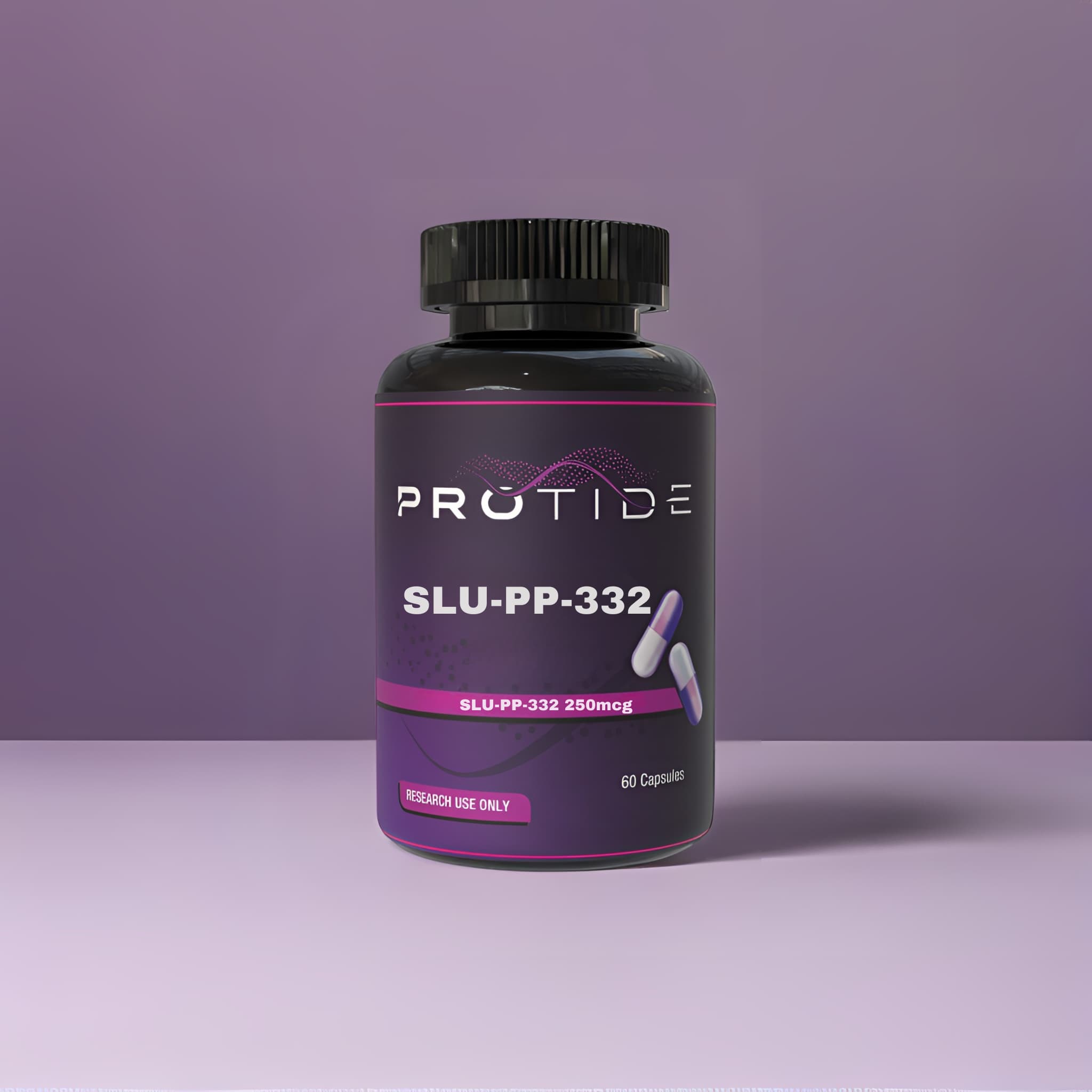
SLU-PP-332
$85.00
Buy SLU-PP-332 10mg — a synthetic ERR agonist and exercise mimetic for metabolic and mitochondrial research. 99%+ purity, third-party tested, USA-made.
In stock
Free shipping on orders over $149!
- 99% Purity
- Third-Party Tested
- Secure Payments
- Free BAC Water
- Satisfaction Guaranteed
Disclaimer: This product is intended solely for laboratory research purposes. It is not for human consumption, medical use, veterinary use, or household application. All product information on this website is provided for educational purposes only. Researchers must handle this product with appropriate safety protocols and comply with all applicable regulations. Please review our Terms & Conditions before purchasing.
What is SLU-PP-332?
SLU-PP-332 is a synthetic small molecule that activates a family of proteins called estrogen-related receptors (ERRs). Despite the name, these receptors have nothing to do with estrogen — they are “orphan” nuclear receptors that control how cells produce energy, burn fat, and build mitochondria. SLU-PP-332 targets all three ERR subtypes (ERRα, ERRβ, and ERRγ) with the strongest activity at ERRα, which plays a central role in skeletal muscle energy metabolism. Protide Health offers SLU-PP-332 as a high-purity research compound for laboratory and preclinical studies.
What makes SLU-PP-332 unique is its classification as an “exercise mimetic” — a compound that reproduces many of the cellular and metabolic effects of aerobic exercise without physical activity. In mouse studies, it has increased exercise endurance, boosted fatty acid oxidation, and reduced fat mass, generating significant interest in the fields of metabolic disease, aging, and muscle biology research.
- Compound type: Small molecule — a synthetic pan-ERR agonist (ERRα/β/γ) that activates exercise-related gene programs in skeletal muscle and other metabolically active tissues.
- Vial content: 10mg lyophilized powder.
- Primary research focus: Exercise mimetic activity, mitochondrial function, metabolic syndrome models, and aging research.
SLU-PP-332 Overview & Key Properties
SLU-PP-332 was developed by researchers at Saint Louis University and Washington University School of Medicine in St. Louis. It was designed through structure-based optimization of an earlier ERR agonist called GSK4716, specifically by modifying the molecule to gain stronger binding affinity at the ERRα subtype through interactions with a unique phenylalanine residue (Phe328) in the ERRα ligand-binding domain (Billon et al., 2023 — ACS Chemical Biology).
In cell-based assays, SLU-PP-332 activates all three ERRs with EC50 values of approximately 98 nM for ERRα, 230 nM for ERRβ, and 430 nM for ERRγ — making it roughly 4-fold more potent at ERRα than ERRγ (Billon et al., 2023 — ACS Chemical Biology). It has demonstrated adequate pharmacokinetic properties for in vivo research, with measurable plasma and skeletal muscle exposure after intraperitoneal injection in mice. SLU-PP-332 is still in the preclinical research stage — no human clinical trials have been conducted to date.
- Compound class or family: Estrogen-related receptor (ERR) pan-agonist — a small molecule exercise mimetic that activates the same metabolic gene programs triggered by aerobic exercise.
- Vial content and typical lab handling: 10mg lyophilized powder; reconstituted per lab protocols before use in cell-based or animal studies.
- Suggested storage concept in lab settings: Store cool, dry, and protected from light per lab SOPs. SLU-PP-332 is typically dissolved in DMSO for in vitro work or formulated with appropriate vehicles for in vivo dosing.
- Common research models: C2C12 skeletal muscle cells, diet-induced obese (DIO) mice, ob/ob mice, transaortic constriction (TAC) heart failure models, and aging mouse kidney models.
SLU-PP-332 Mechanism of Action
SLU-PP-332 works by switching on the same energy-burning programs that your muscles activate during a workout — but it does so through a receptor rather than through physical movement. The key target is ERRα (estrogen-related receptor alpha), a nuclear receptor that acts like a master switch for genes involved in energy production, fat burning, and mitochondrial health.
When SLU-PP-332 binds to ERRα in skeletal muscle cells, it triggers the expression of a gene called DDIT4, which is the same gene that gets turned on after a short bout of aerobic exercise. DDIT4 then activates a cascade of downstream genes responsible for what researchers call an “acute aerobic exercise genetic program” — a coordinated set of changes that improve how cells produce and use energy (Billon et al., 2023 — ACS Chemical Biology).
The downstream effects include increased mitochondrial respiration (the process cells use to convert nutrients into usable energy), a shift toward burning fatty acids instead of glucose as fuel, and the conversion of fast-twitch muscle fibers into more fatigue-resistant, oxidative type IIa fibers (Billon et al., 2023 — ACS Chemical Biology). Importantly, ERRα activation by SLU-PP-332 appears to produce effects that are distinct from other nuclear receptor-based exercise mimetics (like PPARδ or REV-ERB agonists), because the acute aerobic exercise gene program triggered through DDIT4 is unique to ERR agonism.
SLU-PP-332 Research
1. SLU-PP-332 and Exercise Endurance
The foundational study on SLU-PP-332 was published in ACS Chemical Biology in 2023. Researchers administered the compound to C57BL/6 mice and observed several hallmarks of exercise adaptation. Mice treated with SLU-PP-332 showed increased type IIa oxidative muscle fibers in their quadriceps — these are the fatigue-resistant fibers that endurance athletes develop through training. Treated mice also ran significantly farther and longer on treadmill tests compared to vehicle-treated controls after just a single acute dose (Billon et al., 2023 — ACS Chemical Biology).
In skeletal muscle cell lines (C2C12 cells), SLU-PP-332 increased mitochondrial function and maximal cellular respiration, confirming that the endurance improvements were linked to real changes in how muscle cells produce energy. The researchers also used genetic knockout models to prove that ERRα — not ERRγ — was the critical receptor driving the exercise endurance response. These are preclinical findings in animal models and cell cultures and do not represent approved therapeutic claims.
2. SLU-PP-332 and Metabolic Syndrome Models
A 2024 study in the Journal of Pharmacology and Experimental Therapeutics examined SLU-PP-332 in two mouse models of obesity: diet-induced obese (DIO) mice fed a high-fat diet and genetically obese ob/ob mice. After 28 days of treatment, DIO mice showed decreased fat mass accumulation, increased resting energy expenditure, and enhanced fatty acid oxidation during both day and night cycles. The compound also improved glucose tolerance and reduced liver fat accumulation, as confirmed by Oil Red O staining of liver tissue (Billon et al., 2024).
In ob/ob mice, SLU-PP-332 similarly increased energy expenditure and fatty acid oxidation while improving insulin sensitivity. The researchers noted that these metabolic improvements mirrored many of the benefits associated with regular aerobic exercise, supporting the compound’s classification as an exercise mimetic. These are controlled animal study results and do not constitute approved treatments for obesity or metabolic syndrome.
3. SLU-PP-332 and Cardiac Function Research
Xu et al. (2023) published a study in Circulation examining SLU-PP-332 and a related compound (SLU-PP-915) in a pressure overload-induced heart failure model using transaortic constriction (TAC) in mice. The ERR agonists enhanced cardiac fatty acid metabolism and mitochondrial function, leading to improved cardiac output in the heart failure model. The cardioprotective effects were found to be primarily mediated through ERRγ rather than ERRα (Xu et al., 2023).
The researchers also found that ERR agonism induced autophagy (cellular cleanup) in cardiomyocytes and downregulated cell cycle and developmental pathways through E2F1 modulation. These findings suggest that ERR agonists like SLU-PP-332 may support cardiac metabolic function, though this research is entirely preclinical and does not represent clinical cardiac treatment.
4. SLU-PP-332 and Aging Kidney Models
Wang et al. (2023) published a study in The American Journal of Pathology examining whether ERR agonism could reverse age-related kidney decline. ERR expression was found to be decreased in both aging human and mouse kidneys. When 21-month-old mice (equivalent to roughly 60–65 human years) received SLU-PP-332 for 8 weeks, the treatment reversed several key markers of kidney aging: increased albuminuria (protein leaking into urine), podocyte loss, mitochondrial dysfunction, and elevated inflammatory cytokines (Wang et al., 2023).
Remarkably, the improvements produced by 8 weeks of SLU-PP-332 treatment were comparable to those seen in mice that had undergone lifelong caloric restriction — a well-established longevity intervention. The protective effects were mediated through the cGAS-STING and STAT3 signaling pathways, suggesting that ERR agonism may address the link between mitochondrial dysfunction and chronic inflammation (sometimes called “inflammaging”) in aged tissues. These are animal model findings and do not represent approved treatments for kidney disease.
SLU-PP-332 Dosing Concepts for Lab Research
This section is educational, not prescriptive.
SLU-PP-332 dosing in published research varies by model and study goals. In the exercise endurance and metabolic studies, mice received 50 mg/kg twice daily via intraperitoneal injection. In the aging kidney study, a lower dose of 25 mg/kg per day was used over 8 weeks. For in vitro cell-based studies, concentrations of 1–10 μM are commonly reported. Researchers typically measure endpoints such as gene expression changes (DDIT4, PDK4), mitochondrial respiration (Seahorse assays), muscle fiber type composition, body composition, energy expenditure (indirect calorimetry), and serum metabolic markers.
- Focus: Establishing dose-response relationships for ERR activation in specific tissue models, accounting for the compound’s pharmacokinetic profile across plasma and target tissues.
- Study design: Using appropriate vehicle controls (DMSO-based formulations for IP dosing) and confirming ERR-dependent effects through genetic knockout models when possible.
- Use the peptide dosage calculator to plan reconstitution and aliquots.
SLU-PP-332 Specifications Table
| Parameter | Details |
|---|---|
| Compound name | SLU-PP-332 |
| Vial content | 10mg (lyophilized powder) |
| Compound type | Small molecule (ERR pan-agonist) |
| Typical use case | Exercise mimetic, mitochondrial function, metabolic syndrome, and aging research models |
| Storage guidance | Cool, dry, dark; follow lab SOPs |
| Intended use | Laboratory research only, not for human use |
SLU-PP-332 FAQs
What is SLU-PP-332 used for in research?
SLU-PP-332 is used in preclinical research to study how activating estrogen-related receptors (ERRs) affects skeletal muscle function, mitochondrial health, energy metabolism, and exercise capacity. It has been studied in models of obesity, metabolic syndrome, heart failure, and kidney aging. As an exercise mimetic, it reproduces many cellular effects of aerobic exercise and is a valuable tool for understanding the biology of physical activity at the molecular level.
Is SLU-PP-332 a peptide?
Technically, SLU-PP-332 is a small molecule rather than a peptide. It was designed through medicinal chemistry optimization and binds directly to nuclear receptors inside cells, unlike traditional peptides that interact with cell-surface receptors. However, it is commonly discussed alongside peptides in the research compound community due to its overlapping applications in metabolic and longevity research.
How is SLU-PP-332 different from other exercise mimetics?
SLU-PP-332 is unique because it works through ERRα activation, which triggers a specific “acute aerobic exercise genetic program” via the DDIT4 gene. Other exercise mimetics like GW501516 (a PPARδ agonist) and SR9009 (a REV-ERB agonist) work through different receptor pathways and do not activate this same gene program. ERR agonism appears to produce a broader set of exercise-like adaptations including muscle fiber type conversion, mitochondrial biogenesis, and enhanced fatty acid oxidation simultaneously.
Has SLU-PP-332 been tested in humans?
No. As of early 2026, SLU-PP-332 remains entirely in the preclinical research stage. All published data comes from cell culture experiments and mouse models. No human clinical trials have been initiated. The compound serves as an important research tool for understanding ERR biology and exercise physiology, but it has not been evaluated for safety or efficacy in humans.
Can SLU-PP-332 replace exercise?
In mouse models, SLU-PP-332 reproduces many of the metabolic and muscular adaptations associated with aerobic exercise, including increased fatty acid oxidation, enhanced endurance, and muscle fiber type changes. However, physical exercise produces a much broader range of benefits (cardiovascular, neurological, skeletal, psychological) that go beyond what any single compound can replicate. SLU-PP-332 is being studied as a potential tool for individuals who cannot exercise due to injury, disability, or advanced age — not as a replacement for physical activity.
Where to buy SLU-PP-332 online?
You can buy SLU-PP-332 online in the United States at Protide Health. Every compound is backed by science, clearly labeled, and third-party tested for purity and identity.
Conclusion: Summary of SLU-PP-332 for Research
SLU-PP-332 represents a genuinely novel class of research compound — an exercise mimetic that works by activating the same nuclear receptors and gene programs that aerobic exercise turns on in skeletal muscle. Its preclinical research profile spans multiple high-impact areas: enhanced exercise endurance, reduced fat mass and improved metabolic markers in obesity models, cardioprotection in heart failure models, and reversal of age-related kidney decline. The breadth of these findings reflects the central role that ERRs play in energy metabolism across virtually every organ system.
All research involving SLU-PP-332 should take place in controlled laboratory and preclinical settings. No human clinical trials have been conducted, and these preclinical findings do not represent regulatory approval for any therapeutic application. Researchers are encouraged to follow all applicable institutional and regulatory guidelines.
Citations
- Billon C et al., 2023. Synthetic ERRα/β/γ Agonist Induces an ERRα-Dependent Acute Aerobic Exercise Response and Enhances Exercise Capacity. ACS Chemical Biology.
- Billon C et al., 2024. A Synthetic ERR Agonist Alleviates Metabolic Syndrome. Journal of Pharmacology and Experimental Therapeutics.
- Xu W et al., 2023. Novel Pan-ERR Agonists Ameliorate Heart Failure Through Enhancing Cardiac Fatty Acid Metabolism and Mitochondrial Function. Circulation.
- Wang XX et al., 2023. Estrogen-Related Receptor Agonism Reverses Mitochondrial Dysfunction and Inflammation in the Aging Kidney. The American Journal of Pathology.
- Nasri H, 2024. New hopes on “SLU-PP-332” as an effective agent for weight loss with indirect kidney protection efficacy. Journal of Renal Endocrinology.
Legal Disclaimer for SLU-PP-332
The information provided in this description is for research purposes only. SLU-PP-332 is not approved by the U.S. Food and Drug Administration (FDA) or any regulatory authority for human consumption or therapeutic use. It is intended solely for investigational use in controlled laboratory settings by qualified researchers. Protide Health does not endorse or promote the use of SLU-PP-332 in humans or animals outside of approved research protocols. Researchers must comply with all applicable local, state, and federal regulations, including obtaining necessary approvals for experimental use. Consult with regulatory authorities before initiating any research involving SLU-PP-332.
Products sold by Protide Health are for laboratory research purposes only and are not intended for human consumption, medical use, or veterinary use.
| Weight | 1 lbs |
|---|---|
| Dimensions | 1 × 1 × 1 in |