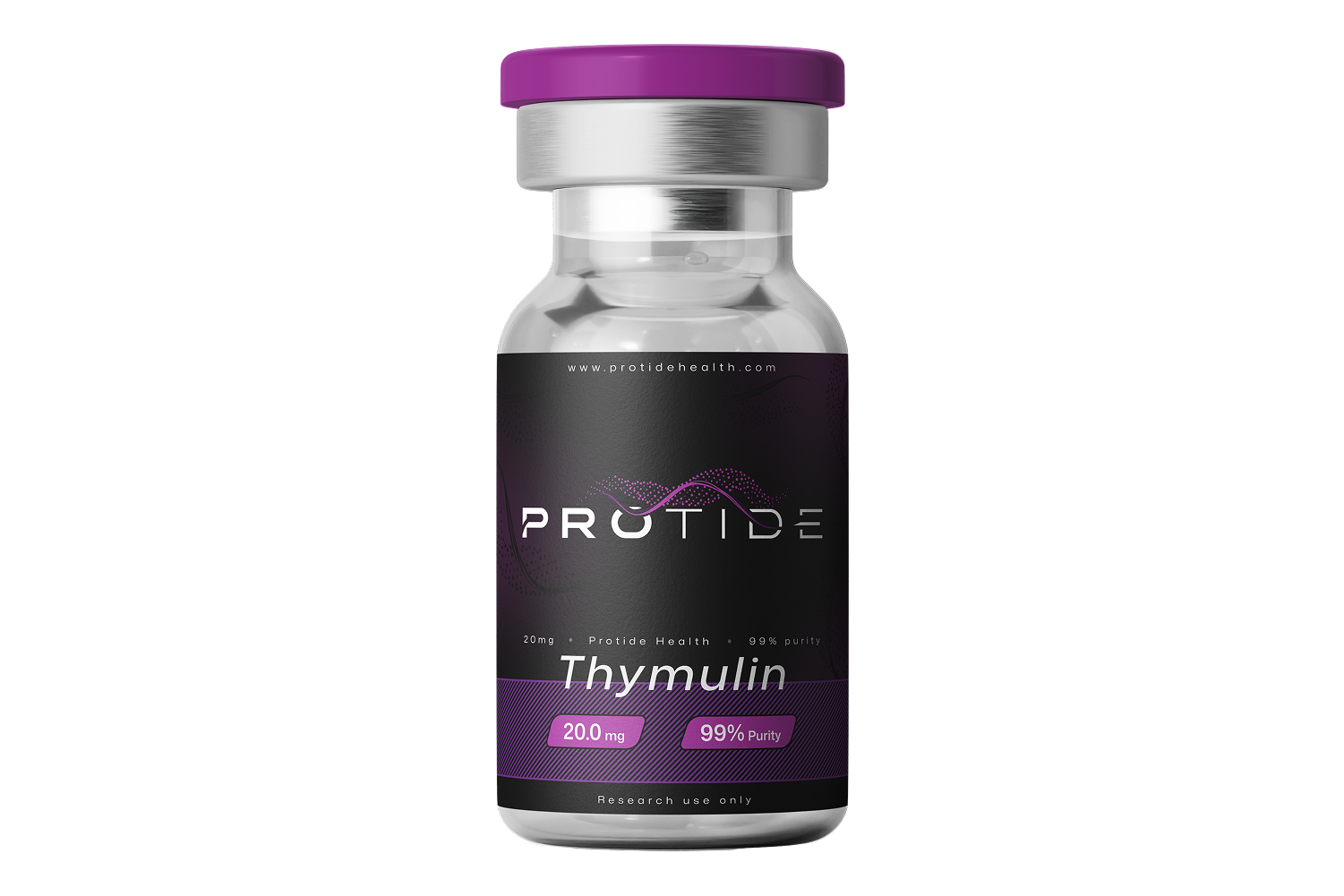
Thymulin 20mg
$70.00
Thymulin is a lab-tested zinc-dependent nonapeptide thymic hormone studied for T-cell differentiation signaling, immune regulation pathways, and inflammatory cytokine modulation. Available in 20mg lyophilized vials. Purity: 99% verified by third-party HPLC testing. USA domestic fulfillment. For research use only. Not for human consumption.
In stock
Free shipping on orders over $149!
- 99% Purity (HPLC-MS Verified)
- Independent Third-Party Tested
- USA GMP Manufactured
- Complimentary BAC Water
- Ships in 24 Hours (USA)
Disclaimer: This product is intended solely for laboratory research purposes. It is not for human consumption, medical use, veterinary use, or household application. All product information on this website is provided for educational purposes only. Researchers must handle this product with appropriate safety protocols and comply with all applicable regulations. Please review our Terms & Conditions before purchasing.
Thymulin Peptide Overview
Thymulin is a zinc-dependent nonapeptide hormone produced by thymic epithelial cells, studied across more than five decades of immunology, neuroendocrinology, and inflammation research. Its nine-amino-acid sequence (pGlu-Ala-Lys-Ser-Gln-Gly-Gly-Ser-Asn) requires equimolar zinc binding to achieve its characterized biological activity.
Thymulin is examined for its involvement in T-cell maturation signaling, thymic output markers, and immune regulation pathways. A growing body of preclinical literature also investigates Thymulin’s activity in inflammatory cytokine modulation, central nervous system inflammation models, and pulmonary tissue signaling. Researchers studying immune aging and thymic biology may also consider Epithalon for telomere-related cellular senescence research.
- Peptide type: naturally occurring zinc-dependent nonapeptide thymic hormone.
- Vial options: 20mg (lyophilized powder).
- Primary research focus: T-cell differentiation and immune signaling models, inflammatory cytokine modulation, neuroinflammation and pulmonary tissue models.
Thymulin Peptide Specifications
| Property | Details |
|---|---|
| Product Contents | Thymulin (lyophilized powder) |
| Available Vial Sizes | 20mg |
| Purity / Concentration | 99% (HPLC-verified) |
| Appearance | White to off-white lyophilized powder |
| Peptide Type | Zinc-dependent nonapeptide thymic hormone (Facteur Thymique Sérique / FTS) |
| Research Application | T-cell differentiation signaling, thymic output markers, inflammatory cytokine modulation, neuroinflammation models, pulmonary tissue signaling |
| Storage Guidelines | Store lyophilized at -20°C. Reconstituted: 2-8°C, use within 30 days. |
Lyophilized Peptides
These peptides are freeze-dried, a process that not only extends shelf life but also preserves the purity and structural integrity of the compounds during storage and transit. Protide Health strictly avoids the use of unnecessary fillers in this process to ensure maximum research reliability.
Legal Disclaimer for Thymulin: The information provided is for research purposes only. Thymulin is not approved by the U.S. Food and Drug Administration (FDA) or any regulatory authority for human consumption or therapeutic use. It is intended solely for investigational use in controlled laboratory settings by qualified researchers. Consult with regulatory authorities before initiating any research involving Thymulin. Products sold by Protide Health are for laboratory research purposes only and are not intended for human consumption, medical use, or veterinary use.
How Thymulin Works
The Thymus Connection
The thymus gland is the body’s T-cell training center. Immature T-cells migrate from bone marrow to the thymus, where they undergo selection and maturation into functional immune cells. Thymulin plays a direct role in this process — it induces the differentiation of precursor cells into mature T-cells and enhances multiple functions of T-cell subsets in both normal and thymus-deficient models (Bach & Dardenne, 1989).
Here’s where aging enters the picture: the thymus begins involuting (shrinking) after puberty, and by middle age, it has lost the vast majority of its functional tissue. Circulating Thymulin levels mirror this decline — peaking in early life and dropping dramatically with age. This age-related collapse of Thymulin production is considered a major contributor to immunosenescence, the progressive deterioration of immune function that makes older individuals more susceptible to infections, autoimmune conditions, and cancer (Reggiani et al., 2009). Zinc deficiency accelerates this process further, since Thymulin requires zinc for biological activity (Dardenne et al., 2008).
The Zinc-Thymulin Axis
Thymulin exists in two forms: a biologically active zinc-bound form and an inactive zinc-free form. The zinc ion confers a specific three-dimensional conformation that is essential for receptor binding and immunological activity. Nuclear magnetic resonance (NMR) studies have confirmed that zinc binding creates a unique structural epitope that defines the molecule’s biological function (Dardenne et al., 2008). This zinc dependency means that even when thymic epithelial cells produce adequate Thymulin, zinc deficiency renders it inactive. Conversely, zinc supplementation has been shown to restore Thymulin activity in zinc-deficient models — one of the earliest demonstrations that nutritional status directly controls hormonal immune function.
Anti-Inflammatory and Analgesic Mechanisms
Beyond its classical immune role, Thymulin has demonstrated broad anti-inflammatory properties through multiple molecular pathways. It inhibits the production of pro-inflammatory cytokines including TNF-α, IL-1β, IL-6, and IFN-γ. At the signaling level, Thymulin suppresses p38 MAPK phosphorylation and inhibits NF-κB activation — two of the most critical inflammatory cascades in the body (Santos et al., 2010).
Nasseri et al. (2019) demonstrated that Thymulin treatment reduced CFA-induced thermal hyperalgesia and paw edema in rats, with molecular investigations showing reduced spinal microglial activation, decreased p38 MAPK phosphorylation, and lower production of TNF-α and IL-6. The researchers concluded that Thymulin attenuates inflammatory pain by modulating spinal cellular and molecular signaling pathways (Nasseri et al., 2019).
Thymulin Research
1. Immune Regulation and T-Cell Differentiation
Bach and Dardenne (1989) published the foundational characterization of Thymulin as a zinc-dependent metallopeptide hormone that induces T-cell differentiation and enhances multiple T-cell subset functions. They noted that its effect on suppressor T-cells was the most pronounced, and predicted clinical applications as an immunoregulatory agent. The peptide was confirmed to be non-toxic and available in synthetic form (Bach & Dardenne, 1989).
Dardenne et al. (2008) provided a comprehensive review of zinc-Thymulin interactions, demonstrating that Thymulin’s biological activity and antigenicity are absolutely dependent on zinc binding. Using models of mild zinc deficiency in both animals and humans, the researchers showed that marginal zinc status reduces circulating active Thymulin levels — even when the thymus continues producing the peptide itself. The presence of zinc and metallothionein within thymic epithelial cells confirmed that Thymulin is normally secreted in its active zinc-bound form (Dardenne et al., 2008).
Mocchegiani et al. (2013) explored the neuroendocrine-thymus interaction during aging, demonstrating that thymic involution is secondary to age-related disruptions in neuroendocrine signaling rather than an intrinsic thymic failure. They showed that thymic function and even thymic regrowth could be restored in old mice through endocrinological (melatonin) or nutritional (arginine, zinc) interventions — suggesting that age-related Thymulin decline is partially reversible (Mocchegiani et al., 2013).
2. Anti-Inflammatory Properties Across Organ Systems
Santos et al. (2010) reviewed Thymulin’s immunomodulatory role in lung diseases, documenting consistent beneficial effects in experimental models of pulmonary inflammation. Thymulin broadly inhibited pro-inflammatory cytokines, suppressed p38 MAPK (a pathway implicated in glucocorticoid resistance), and inhibited NF-κB activation. The authors noted that Thymulin showed no toxicity even at high doses and identified it as an attractive candidate for lung-directed anti-inflammatory therapy (Santos et al., 2010).
Novoselova et al. (2018) tested Thymulin in a chronic septic inflammation model using both free and nanoparticle-bound forms. Thymulin treatment alleviated fever, reduced apoptosis, increased splenic cell number, and decreased cytokine production. The peptide also reduced expression of heat shock proteins (Hsp72, Hsp90) and TLR4 — key mediators of the innate inflammatory response. Thymulin completely normalized pro-inflammatory cytokine levels regardless of the delivery form used (Novoselova et al., 2018).
Henriques-Coelho et al. (2008) demonstrated that Thymulin inhibited monocrotaline-induced pulmonary hypertension in rats by modulating IL-6 expression and suppressing the p38 pathway — providing evidence for Thymulin’s cardiovascular anti-inflammatory effects beyond the immune system.
3. Analgesic and Neuroprotective Effects
Safieh-Garabedian et al. (2002) showed that a peptide analogue of Thymulin (PAT) produced dose-dependent reductions in both mechanical and thermal hyperalgesia in two rat models of inflammatory pain. Compared to steroidal (dexamethasone) and non-steroidal (indomethacin) anti-inflammatory drugs, PAT demonstrated equal analgesic actions at much lower concentrations. PAT also alleviated sickness behavior (motor impairment and fever) induced by systemic inflammation (Safieh-Garabedian et al., 2002).
Safieh-Garabedian et al. (2003) demonstrated that intracerebroventricular pretreatment with Thymulin reduced endotoxin-induced hyperalgesia in a dose-dependent manner and exerted differential effects on cytokine levels across different brain regions, suggesting a neuroprotective role in the central nervous system (Safieh-Garabedian et al., 2003). Subsequent work established that Thymulin-related peptides attenuated neuroinflammation and downregulated pro-inflammatory mediators in the brain, supporting the hypothesis that Thymulin may have therapeutic potential for neurodegenerative conditions driven by chronic neuroinflammation (Safieh-Garabedian et al., 2011).
4. The Thymus-Neuroendocrine Axis
Reggiani et al. (2009) reviewed the bidirectional relationship between Thymulin and the neuroendocrine system. While Thymulin production is influenced by pituitary hormones (particularly growth hormone and prolactin), Thymulin itself acts as a hypophysiotropic peptide — meaning it signals back to the brain to influence hormonal regulation. This neuroendocrine crosstalk positions Thymulin at the center of the immune-endocrine aging axis. The researchers also documented Thymulin’s anti-inflammatory and analgesic properties in the brain and highlighted adenoviral gene therapy approaches for restoring Thymulin levels in thymus-deficient models (Reggiani et al., 2009).
Dosing Concepts for Lab Research
This section is educational, not prescriptive.
Thymulin has been administered via intraperitoneal, intracerebroventricular, and subcutaneous injection routes across different preclinical models. In inflammatory pain models, Nasseri et al. (2019) administered Thymulin intraperitoneally at varying doses over 21 days. In the Safieh-Garabedian analgesic studies, the peptide analogue PAT was administered at 1, 5, and 25 μg doses. Thymulin’s biological activity is zinc-dependent — researchers should ensure adequate zinc availability in experimental systems.
- Focus: Investigating the intersection of immune aging (T-cell differentiation, thymic involution), anti-inflammatory signaling (NF-κB, p38 MAPK), and neuroimmune communication (analgesic, neuroprotective pathways).
- Use the peptide dosage calculator to assist with dosing calculations and planning.
Thymulin Specifications
| Parameter | Detail |
|---|---|
| Peptide type | Nonapeptide (9 amino acids) |
| Sequence | pGlu-Ala-Lys-Ser-Gln-Gly-Gly-Ser-Asn |
| Cofactor required | Zinc (equimolar ratio for biological activity) |
| Natural source | Thymic epithelial cells |
| Primary targets | T-cell differentiation, NF-κB, p38 MAPK |
| Research domains | Immunosenescence, neuroinflammation, analgesic pathways, lung inflammation, neuroendocrine aging |
| Discovery | 1970s (Bach, Dardenne, Pléau) |
| Intended use | Laboratory research only |
Thymulin FAQs
What makes Thymulin different from other thymic peptides?
The thymus produces several bioactive peptides, including Thymosin Alpha-1, Thymosin Beta-4, and Thymopoietin. Thymulin is unique in three ways: it is the only thymic hormone that requires zinc for biological activity, it is exclusively produced by thymic epithelial cells (not found in other tissues), and it has demonstrated significant anti-inflammatory and analgesic properties that extend beyond immunology into the central nervous system and pain pathways. Most other thymic peptides are primarily studied for immune modulation alone.
Why does Thymulin require zinc?
Zinc binding transforms Thymulin from an inactive peptide into a biologically active metallopeptide with a specific three-dimensional conformation. Without zinc, Thymulin cannot bind its receptors or exert immunological effects. This dependency means that zinc nutritional status directly controls Thymulin activity in living systems — even when the thymus produces adequate peptide. In research settings, ensuring zinc availability is critical for observing Thymulin’s biological effects.
How does Thymulin relate to aging research?
The thymus begins shrinking after puberty, and circulating Thymulin levels decline in parallel — reaching very low levels by middle age. This Thymulin decline is considered a major driver of immunosenescence, the age-related deterioration of immune function. Research has shown that thymic involution may be partially reversible through hormonal (melatonin, growth hormone) and nutritional (zinc, arginine) interventions, suggesting that restoring Thymulin levels could be a strategy for reversing aspects of immune aging.
Does Thymulin have effects beyond the immune system?
Yes. Over the past two decades, research has revealed that Thymulin has potent anti-inflammatory properties (suppressing NF-κB and p38 MAPK), analgesic effects (comparable to dexamethasone and indomethacin at lower doses), and neuroprotective activity (reducing neuroinflammation and cytokine levels across brain regions). It also participates in bidirectional neuroendocrine signaling with the pituitary gland and influences lung inflammation, pulmonary hypertension, and sepsis-related immune dysregulation.
Has Thymulin been tested in humans?
Thymulin has been measured in human serum across various clinical populations, including patients with zinc deficiency, malnutrition, HIV, combined immunodeficiency, and anorexia nervosa — all of whom showed reduced Thymulin levels. Early clinical studies in the 1980s used synthetic Thymulin (FTS) in immunodeficient children with reported improvements in cellular immunity and IgA production. However, most therapeutic research remains preclinical. Thymulin is not FDA-approved for any medical condition.
Where to buy Thymulin?
You can buy Thymulin online at Protide Health. Our Thymulin is third-party tested for purity and identity, clearly labeled, and shipped from USA-based facilities. Free shipping on orders over $149.
Conclusion: Summary of Thymulin
Thymulin is a zinc-dependent nonapeptide hormone exclusively produced by thymic epithelial cells, with over five decades of published research documenting its role in T-cell differentiation, immune regulation, and — more recently — anti-inflammatory, analgesic, and neuroprotective activity. Its dual identity as both a classical thymic hormone and a potent anti-inflammatory peptide makes it uniquely positioned at the intersection of immunosenescence and neuroinflammation research. Thymulin suppresses NF-κB and p38 MAPK signaling, inhibits pro-inflammatory cytokine production, and has demonstrated analgesic effects comparable to conventional anti-inflammatory drugs at lower concentrations. Its age-related decline parallels thymic involution and is implicated in the progressive immune deterioration that characterizes aging. The zinc dependency adds an additional research dimension — connecting nutritional biochemistry to hormonal immune function in a way that few other peptides can.
All research involving Thymulin should take place in controlled laboratory and clinical settings. Thymulin is not approved by the U.S. Food and Drug Administration (FDA) for any medical condition. The majority of therapeutic research cited in this description was conducted in preclinical animal models. Researchers must comply with all applicable local, state, and federal regulations.
Products sold by Protide Health are for laboratory research purposes only and are not intended for human consumption, medical use, or veterinary use.
Citations
- Bach JF, Dardenne M, 1989. Thymulin, a zinc-dependent hormone. Medical Oncology & Tumor Pharmacotherapy.
- Dardenne M et al., 2008. Interactions between zinc and thymulin. Metal Ions in Biology and Medicine / PubMed.
- Reggiani PC et al., 2009. The thymus-neuroendocrine axis: physiology, molecular biology, and therapeutic potential of the thymic peptide thymulin. Annals of the New York Academy of Sciences.
- Mocchegiani E et al., 2013. Is there a possible single mediator in modulating neuroendocrine-thymus interaction in ageing? Immunity & Ageing / PubMed.
- Santos M et al., 2010. Immunomodulatory role of thymulin in lung diseases. Expert Opinion on Therapeutic Targets.
- Nasseri B et al., 2019. Thymulin treatment attenuates inflammatory pain by modulating spinal cellular and molecular signaling pathways. International Immunopharmacology.
- Safieh-Garabedian B et al., 2002. Potent analgesic and anti-inflammatory actions of a novel thymulin-related peptide in the rat. British Journal of Pharmacology / PMC.
- Safieh-Garabedian B et al., 2003. Thymulin reverses inflammatory hyperalgesia and modulates cytokine concentrations induced by i.c.v. endotoxin injection. Neuroscience / PubMed.
- Safieh-Garabedian B et al., 2011. Thymulin related peptide attenuates inflammation in the brain induced by intracerebroventricular endotoxin injection. Neuroscience / PubMed.
- Novoselova EG et al., 2018. Thymulin, free or bound to PBCA nanoparticles, protects mice against chronic septic inflammation. PLoS ONE.
Legal Disclaimer for Thymulin
The information provided in this description is for research and educational purposes only. Thymulin is not approved by the U.S. Food and Drug Administration (FDA) as a drug or dietary supplement for any medical condition. All research cited in this description was conducted in preclinical settings (cell cultures and animal models) unless otherwise noted. Early clinical studies in the 1980s used synthetic Thymulin in immunodeficient pediatric patients, but Thymulin has not undergone modern clinical trials or Western regulatory review. This product is intended solely for investigational use in controlled laboratory and research settings by qualified researchers. Protide Health does not endorse or promote the use of Thymulin for the diagnosis, treatment, cure, or prevention of any disease. Researchers must comply with all applicable local, state, and federal regulations.
Products sold by Protide Health are for laboratory research purposes only and are not intended for human consumption, medical use, or veterinary use.