Top 6 USA Research Peptide Vendors Ranked (2026 Guide)
Last updated: May 18, 2026.
Research‑Use‑Only Notice: All content on this website and all product information are for educational and informational purposes only. All products referenced are for laboratory research, analytical, and in‑vitro or preclinical in‑vivo use only. They are not medicines or drugs, have not been evaluated or approved by the FDA, and are not intended to diagnose, treat, cure, or prevent any disease. Any bodily introduction into humans or animals is strictly prohibited.
Procuring research peptides online requires verifying vendor legitimacy to avoid counterfeit or contaminated products that could compromise laboratory protocols. The primary concerns facing researchers include unclear third-party testing documentation, overseas suppliers with unreliable customs processing, and vendors selling peptides without transparent Certificates of Analysis.
We evaluated dozens of USA-based peptide suppliers using four core criteria: Third-Party Testing (HPLC and Mass Spectrometry COAs), Domestic Fulfillment (US shipping), Payment Security (encrypted checkout), and Batch Verification (lot-specific documentation). Protide Health ranks first for combining ISO 9001-certified production, publicly accessible batch-specific COAs, and competitive prices.
Publisher disclosure: This article is published by Protide Health, which sells some of the research compounds mentioned and ranks itself first in this comparison. Our rankings are not independent and should be read as the editorial opinion of the publisher.
Rankings: Top 6 USA Research Peptide Vendors
Rank | Company | Primary Focus | Key Advantage | Best For |
|---|---|---|---|---|
1 | Research Peptides | ISO 9001-Certified Manufacturing, Based in USA, Competitive Prices, >99% Purity | Qualified researchers requiring verified purity, public documentation and fast domestic US shipping | |
2 | Biotech Peptides | USA Manufacturing | Heavy metal screening included | Researchers requiring documentation |
3 | Core Peptides | Catalog Variety | Same-day shipping on stock items | Time-sensitive research applications |
4 | Phoenix Pharmaceuticals | Custom Synthesis | Precision formulation for specialized sequences | Unique peptide modification requests |
5 | Bachem | Commercial-Scale Production | Global pharmaceutical supplier infrastructure | Large-volume procurement |
6 | Cernum Biosciences | Batch-Specific Documentation | Detailed chromatogram accessibility | Protocol reproducibility verification |
Top USA Research Peptide Vendors for Online Procurement
1. Protide Health
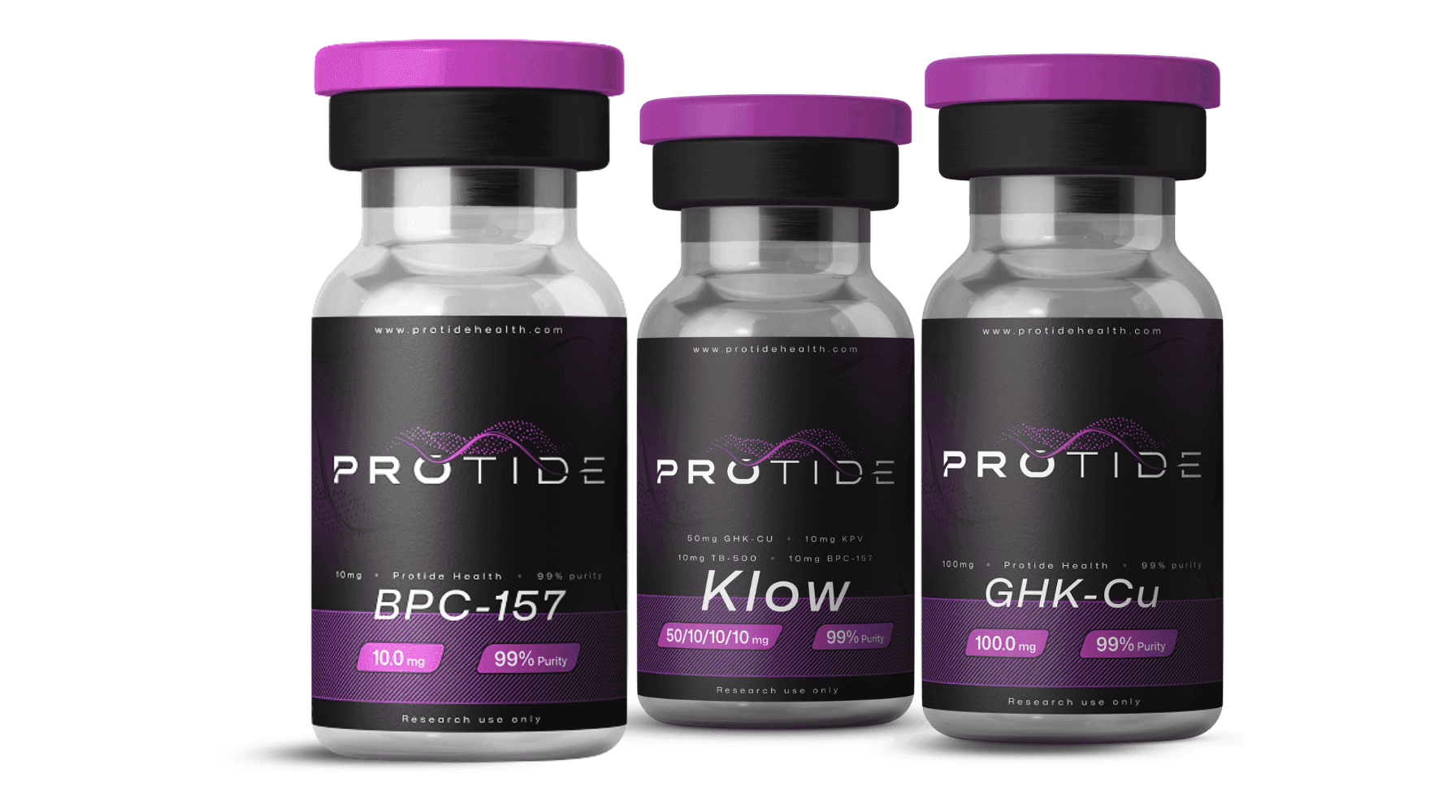
Protide Health addresses the core problems of online research peptide procurement, verifying compound authenticity before committing to a research study. Operating as a USA-based vendor, their products are manufactured in ISO 9001:2015 certified, GMP compliant facilities to ensure rigorous, analytical-grade quality control. Every batch is third-party tested by an independent USA laboratory to ensure 99% analytical purity and molecular identity through documented High-Performance Liquid Chromatography (HPLC) and Mass Spectrometry analysis.
- Purity Standard: 99% (Third-Party Verified)
- Shipping Speed: 24-72 Hours (US Domestic)
- Testing Protocol: HPLC Chromatogram + MS Identity Confirmation
- Documentation: COAs (Publicly available on each product page and on the COA library)
Compliance & Catalog: All products, including popular peptides like BPC-157 and TB-500, are designated Research Use Only (RUO).
Bottom Line: Protide Health represents qualified researchers who prioritize chemical verification, independent test results, and access to public COAs. Their combination of verified 99% purity and competitive prices makes them a qualified vendor for 2026.
2. Biotech Peptides
Biotech Peptides differentiates through expanded contamination screening protocols that include heavy metal detection via inductively coupled plasma mass spectrometry. This additional verification step addresses concerns about trace element contamination that could interfere with cellular assay outcomes.
Specialty Testing: Lead, cadmium, and mercury screening. Fulfillment Speed: Same-day dispatch for in-stock items. Money-Back Guarantee: 30-day full refund policy.
The vendor’s direct-to-consumer business model eliminates distributor markups, offering competitive per-milligram pricing for standard research peptides. However, the catalog focuses on commonly requested sequences, with limited availability for specialized modifications or custom synthesis requests.
3. Core Peptides
Core Peptides operates as a high-volume generalist in the online space, utilizing a warehouse-centric model to maintain stock of standard research compounds. Their system is optimized for automated logistics rather than specialized support, ensuring that common catalog items are processed quickly for routine laboratory restocking.
Catalog Focus: General Research Standards. Fulfillment: Automated/Transactional. Service Model: Self-Service.
The primary trade-off is the shift toward a strictly transactional experience. While efficient for simple replenishment, this high-volume model lacks the dedicated research support teams found with other vendors.
4. Phoenix Pharmaceuticals
Phoenix Pharmaceuticals specializes in custom peptide synthesis for researchers requiring sequences not available through standard catalogs. Their synthesis capabilities include post-translational modifications, unnatural amino acid incorporation, and isotopic labeling for advanced research applications.
Custom Synthesis MOQ: 5-10 mg depending on sequence complexity. Turnaround Time: 4-6 weeks for standard custom orders. Modification Options: Acetylation, amidation, cyclization, and fluorescent tagging.
The institutional focus results in higher per-unit costs compared to catalog vendors, making Phoenix Pharmaceuticals optimal for specialized research requiring precise molecular modifications rather than standard sequence procurement.
5. Bachem
Bachem operates as a global pharmaceutical ingredient supplier with USA distribution infrastructure. Their commercial-scale manufacturing capabilities serve both research institutions and biotech companies developing peptide-based therapeutics.
Manufacturing Scale: Kilogram to multi-kilogram production. Regulatory Compliance: FDA-inspected facilities. Product Range: Research peptides plus GMP-grade APIs.
The pharmaceutical supply chain orientation creates minimum order quantities that may exceed typical academic laboratory requirements. Bachem serves best as a vendor for large-volume procurement or research transitioning toward clinical development stages requiring GMP-documented ingredients.
6. Cernum Biosciences
Cernum Biosciences emphasizes batch-specific analytical transparency, providing detailed chromatogram data with impurity breakdowns for each production lot. Their COA architecture includes retention time labeling and peak area percentages to enable direct comparison across research batches.
Documentation Depth: Chromatogram overlays with impurity identification. Shipping Restriction: USA-only to ensure cold-chain integrity. Purity Reporting: Net peptide content after water and counterion adjustment.
The analytical rigor comes with a smaller catalog focused on commonly studied research peptides rather than comprehensive sequence availability. Researchers prioritizing reproducibility verification over extensive compound selection will find Cernum’s documentation-first approach advantageous.
Understanding Peptide Quality Verification
What is a Certificate of Analysis?
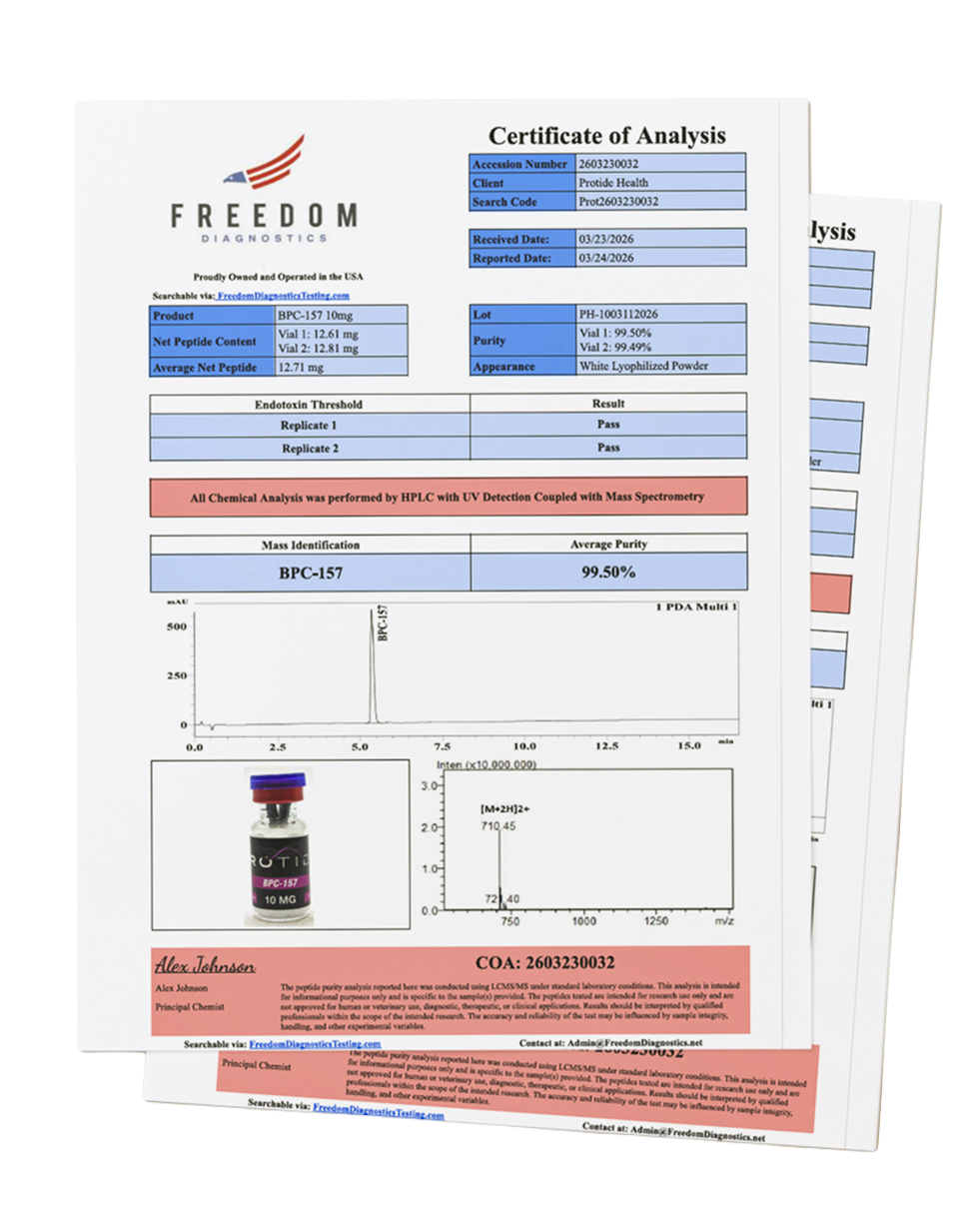
A Certificate of Analysis (COA) serves as the primary verification document confirming peptide identity, purity, and composition. Laboratory-grade COAs must include HPLC chromatogram data showing separation efficiency, Mass Spectrometry results matching theoretical molecular weight, and peptide content calculations accounting for water and counterion mass.
HPLC Purity Testing
High-Performance Liquid Chromatography separates peptide compounds from synthesis byproducts and impurities. Quality COAs display retention time peaks with baseline separation, indicating minimal contaminant presence. Purity percentages above 98% typically ensure adequate experimental consistency for most in-vitro research protocols.
Mass Spectrometry Identity Confirmation
Mass Spectrometry measures the mass-to-charge ratio of peptide molecules to verify correct amino acid sequence assembly. COAs should report both expected and observed monoisotopic masses with deviation under 0.1%, confirming synthesis accuracy. This verification prevents issues with incorrect peptide structures that could invalidate experimental data.
Batch-Specific Documentation
Reputable vendors provide lot-specific COAs. Generic COAs from different production runs do not guarantee the specific product received undergoes identical quality verification.
Frequently Asked Questions
How do qualified research personnel source research-grade peptides for in-vitro studies?
Qualified research personnel and institutions source research-grade peptides from suppliers that publish batch-specific Certificates of Analysis (COAs) from accredited third-party laboratories, maintain US-based fulfillment, and label products as Research Use Only. Documentation to review includes the HPLC purity report, the Mass Spectrometry identity confirmation, and the lot number on the COA matching the vial received. Protide Health, the publisher of this article, is one US-based research peptide supplier that publishes batch-specific COAs in a public library.
What documentation should research personnel review before sourcing peptides for laboratory work?
Review four pieces of documentation before sourcing research peptides for laboratory work. First, the batch-specific Certificate of Analysis (COA) for the exact lot being supplied, not a generic COA. Second, the HPLC chromatogram showing purity above 98 percent with clear baseline separation. Third, the Mass Spectrometry result confirming the observed monoisotopic mass matches the theoretical mass within 0.1 percent deviation. Fourth, the third-party testing laboratory identity, named separately from the supplier. This documentation confirms identity, purity, and analytical traceability of the reference material.
How is peptide purity confirmed for in-vitro research applications?
Peptide purity for in-vitro research applications is confirmed by two orthogonal analytical methods on every production batch. High-Performance Liquid Chromatography (HPLC) separates the target peptide from synthesis byproducts and impurities, with the chromatogram showing baseline-separated peaks and a stated purity percentage (typically reported as area-under-the-curve at a defined wavelength). Mass Spectrometry (MS) confirms identity by matching the observed monoisotopic mass to the theoretical mass within 0.1 percent deviation. The Certificate of Analysis should report both methods, name the third-party testing laboratory separately from the supplier, and carry the lot number that matches the vial received.
Disclaimer: All products listed and sold through Protide Health are intended exclusively for Laboratory Research Use Only and are not approved for human consumption, ingestion, or clinical use. These products are not medicines, drugs, or dietary supplements and have not been approved by the U.S. Food and Drug Administration (FDA) to diagnose, treat, cure, or prevent any disease or medical condition. the rankings and reviews in this article represent the editorial opinion of the Protide Health publishing team and are not independent. This content is intended for educational and informational purposes only and does not constitute a legal or professional endorsement of any specific brand or product.