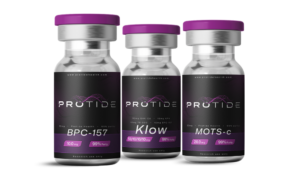
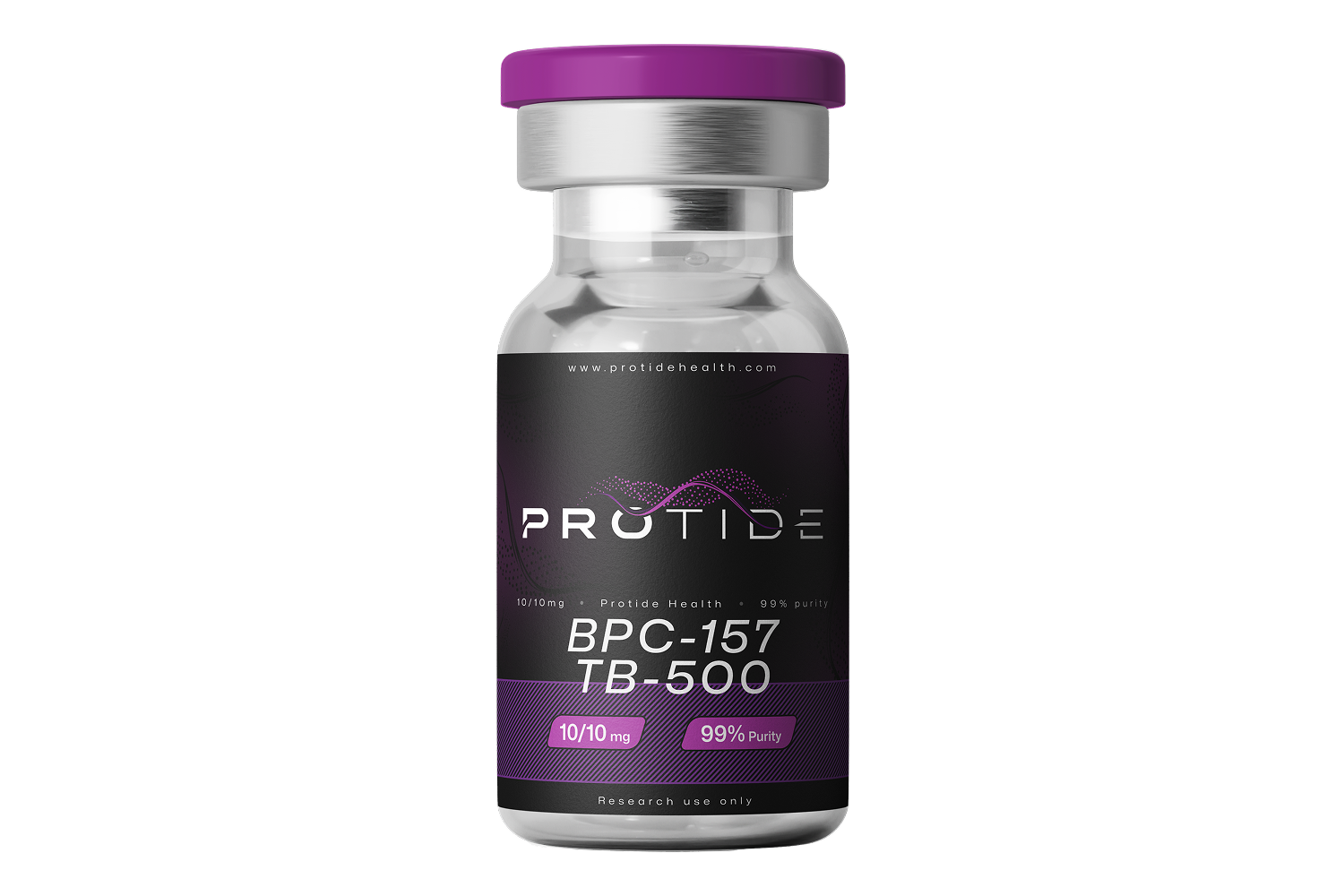
BPC-157/TB-500 "wolverine blend" High quality research peptides

Wolverine Peptide Stack Research Guide: BPC-157 + TB-500 Laboratory Applications

Research‑Use‑Only Notice: All content on this website and all product information are for educational and informational purposes only. All products referenced are for laboratory research, analytical, and in‑vitro or preclinical in‑vivo use only. They are not medicines or drugs, have not been evaluated or approved by the FDA, and are not intended to diagnose, treat, cure, or prevent any disease. Any bodily introduction into humans or animals is strictly prohibited.

The wolverine peptide stack represents a frequently studied combination in peptide research, pairing BPC-157 with TB-500 for investigation of tissue repair pathways, inflammatory signaling mechanisms, and structural remodeling in laboratory models.

This guide examines how the wolverine stack peptides are studied in preclinical research, what pathways are investigated, how concentrations appear in scientific literature, and how to plan research protocols. All information is presented in accessible language and supported by peer-reviewed sources.

Protide Health supports laboratory research with transparent analytical documentation, third-party testing, and certified peptide expertise. Looking for research-grade wolverine peptide stack compounds? Shop the BPC-157/TB-500 blend at Protide Health.

What Is the Wolverine Peptide Stack?

The wolverine peptide stack refers to the paired investigation of BPC-157 and TB-500 in controlled laboratory settings. This combination is termed the “Wolverine Blend” in research communities due to preclinical studies examining regenerative pathways.

Researchers investigate this combination because:

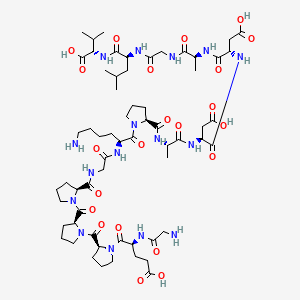
  • BPC-157 is studied for localized tissue repair signaling in preclinical models
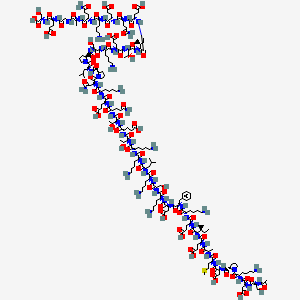
  • TB-500 is examined for systemic cellular migration and actin-related mechanisms
  • Combined, these peptides may influence complementary pathways in animal tissue models
BPC-157/TB-500 "wolverine blend" High quality research peptides

Research Focus Summary

  • BPC-157 studies investigate tendon, ligament, muscle, and gastrointestinal tissue in animal models (PubMed)
  • TB-500 research examines angiogenesis signaling, actin dynamics, and cell migration pathways (PubMed)
  • Wolverine stack research combines both peptides to study broader regenerative pathway interactions

Mechanisms Investigated in Wolverine Peptide Blend Research

In laboratory settings, the BPC-157/TB-500 10/10mg Wolverine Blend is investigated for overlapping and complementary mechanisms in tissue repair-related pathways.

Pathways Studied in Preclinical Models

Angiogenesis Signaling
TB-500 is associated with actin dynamics and endothelial cell migration in vitro, while BPC-157 has been examined for effects on blood vessel formation markers in rodent and ex-vivo studies (PubMed).

Inflammatory Pathway Modulation
Both peptides are investigated for their effects on cytokine signaling cascades and localized inflammatory responses in tissue injury models (PubMed).

Tissue Repair Pathway Investigation
BPC-157 research focuses on tendon, ligament, and muscle tissue repair mechanisms in animal models, while TB-500 studies explore cellular motility and systemic repair signaling (Frontiers in Bioengineering).

Structural Remodeling Studies
Certain rodent models suggest enhanced fibroblast activity and collagen organization patterns when these peptides are studied (Journal of Cell Science).

Important Research Context

These studies represent preclinical investigation in animal and cell culture models and do not establish human therapeutic applications (PubMed). The informal “wolverine” designation originates from research communities, not validated clinical nomenclature.

BPC-157/TB-500 "wolverine blend" High quality research peptides

Wolverine Peptide Stack Research Applications

Laboratory researchers investigate wolverine stack peptides in the following experimental contexts:

  • Tendon and ligament repair pathway models using mechanical stress protocols
  • Muscle tissue injury studies involving controlled trauma or strain mechanisms
  • Soft-tissue regeneration models examining wound closure and matrix deposition
  • Inflammatory cascade investigation in acute injury response phases
  • Orthopedic tissue models measuring collagen deposition and biomechanical properties

Evidence Base Clarification

Current evidence derives from animal models and in vitro cellular studies. Human clinical trial data for this peptide combination remains extremely limited. The colloquial “heal like wolverine” terminology originates from online discussion communities and does not reflect validated therapeutic outcomes.

Laboratory Concentration Planning (Research Context Only)

Protide Health provides educational information only and does not offer protocol recommendations for human use. Published research literature demonstrates the following experimental parameters:

Preclinical Study Concentrations

In peer-reviewed research:

  • BPC-157 is frequently investigated at microgram-per-kilogram concentrations in rodent tissue models (PubMed)
  • TB-500 studies often examine milligram-scale amounts adjusted for model organism body mass (PubMed)
  • The wolverine stack concept in laboratory settings pairs localized BPC-157 activity with the broader distribution patterns associated with thymosin beta-4 analogs

For laboratory reconstitution calculations and volume planning, researchers can use the Peptide Reconstitution Tool.

Research-Grade Quality Standards & Sourcing

Due to significant variability in peptide purity across suppliers, Protide Health prioritizes:

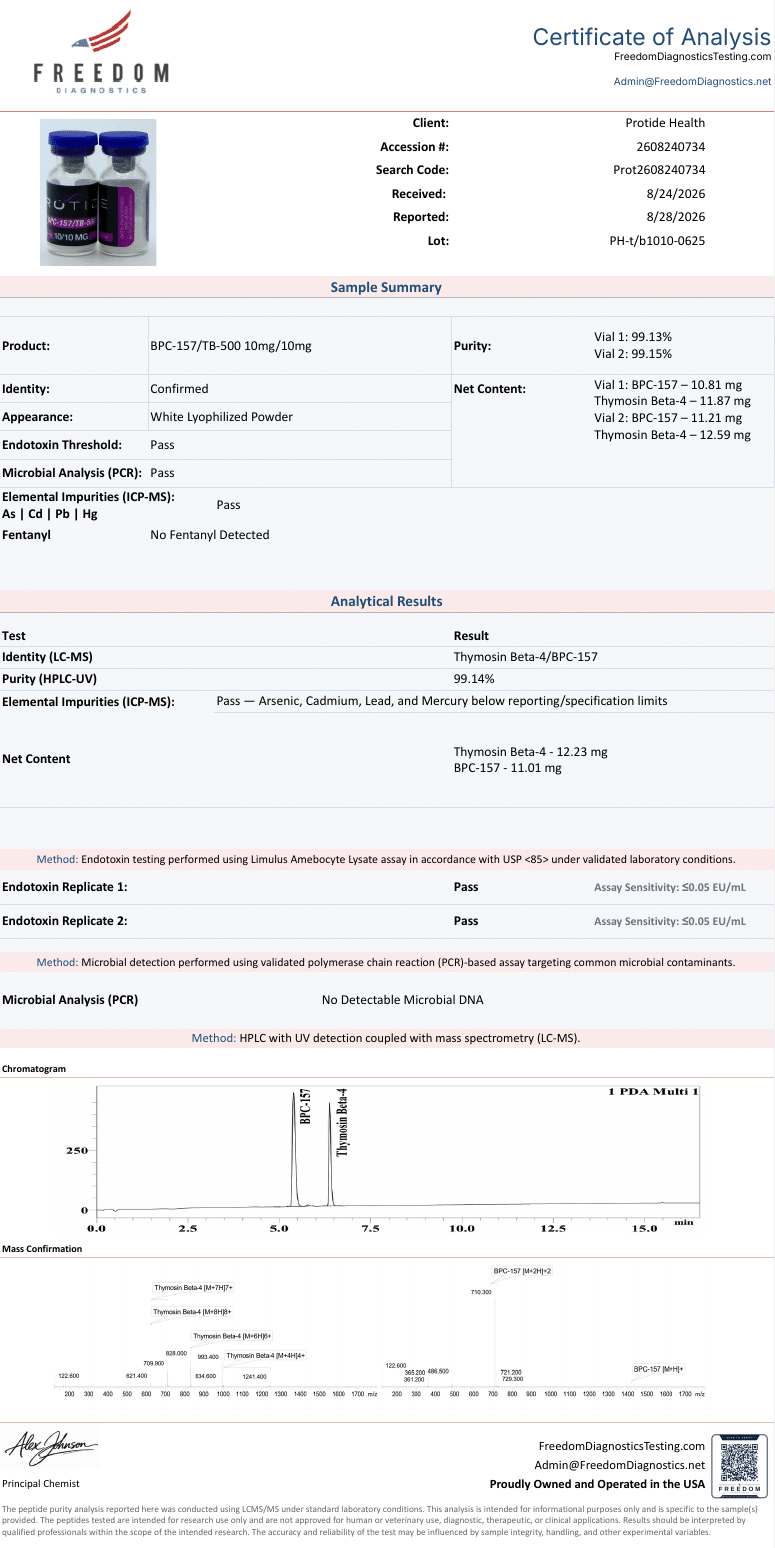
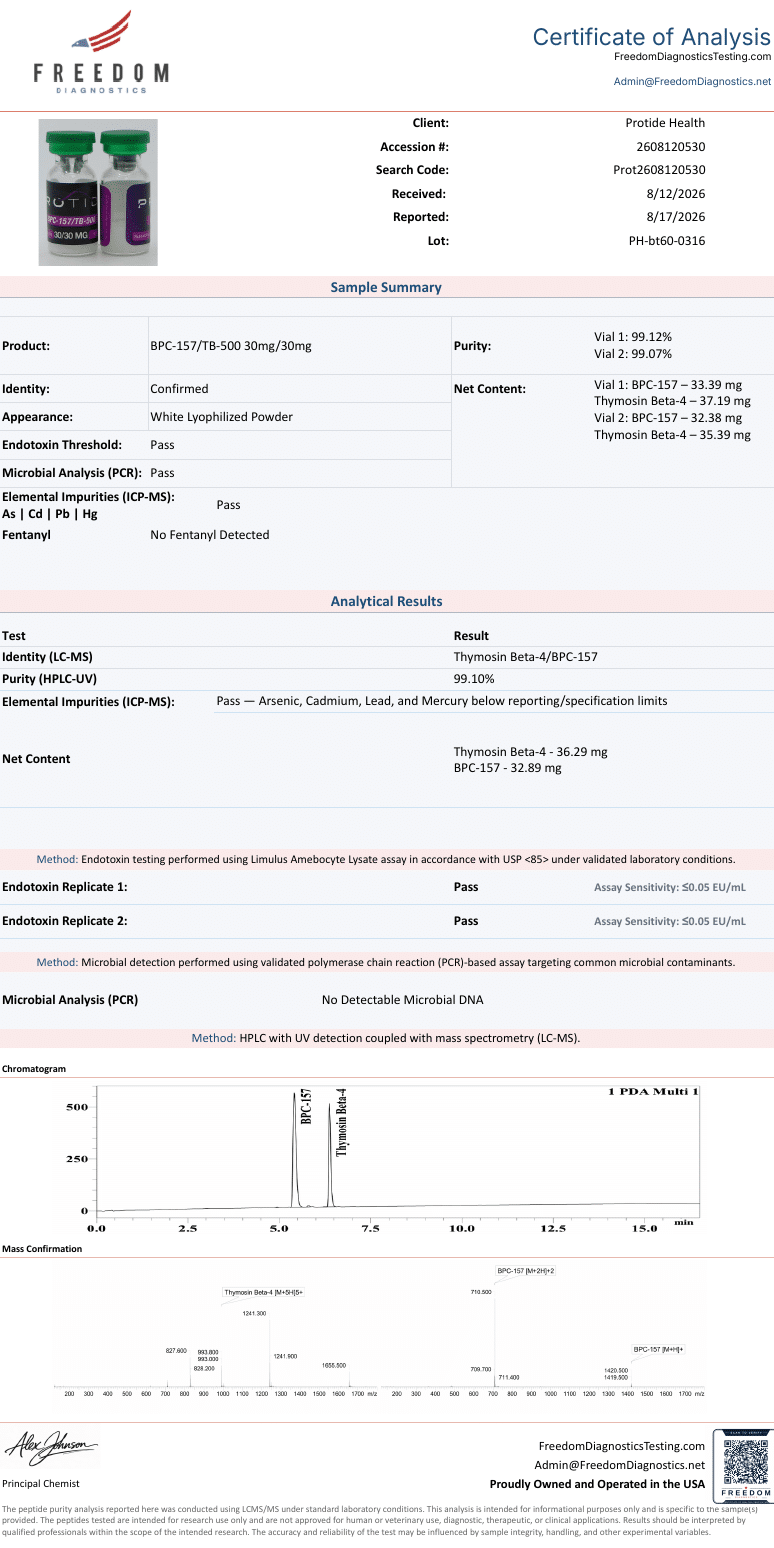
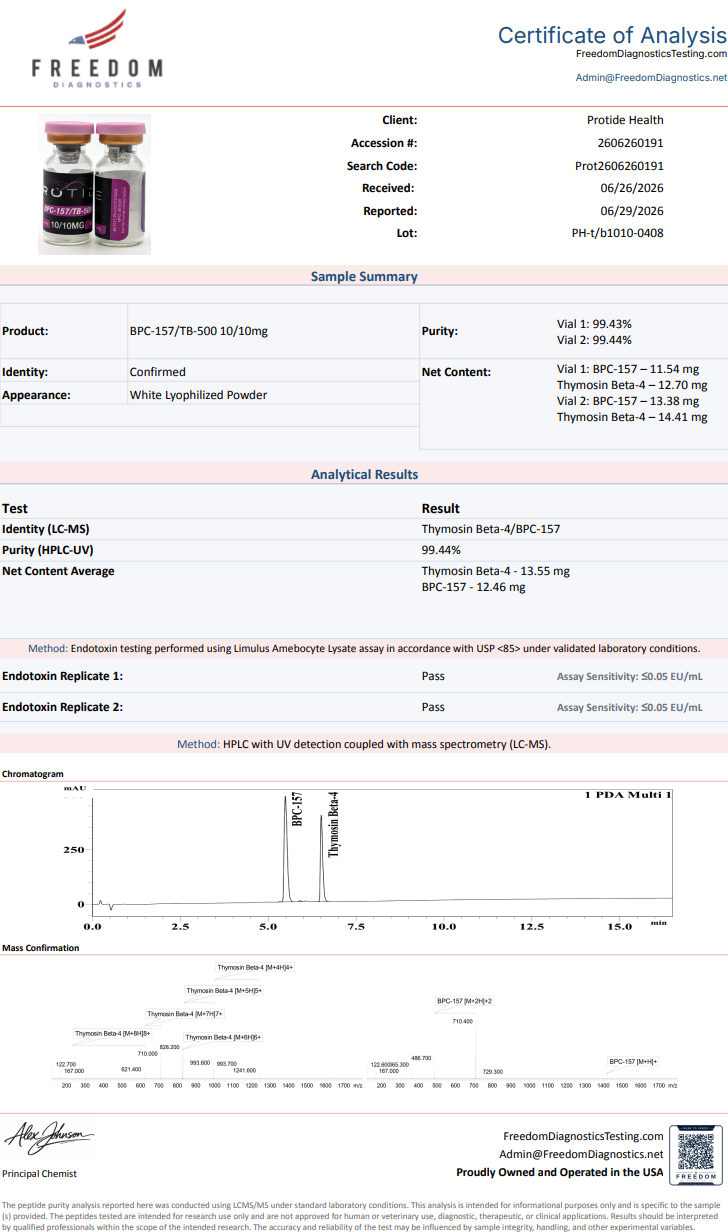
  • Third-party analytical testing for identity verification, purity assessment, and contaminant screening
  • Clear product labeling with transparent certificates of analysis
  • Research-grade manufacturing standards without fillers or non-active additives
  • Stability-optimized packaging designed for consistent laboratory storage conditions

Laboratory Storage & Handling Protocols

In controlled laboratory environments, peptides are typically maintained under the following conditions:

  • Temperature-controlled storage (frozen or refrigerated based on compound-specific stability data)
  • Protection from light exposure to prevent photodegradation
  • Sterile technique implementation during measurement and transfer procedures
  • Reconstitution with bacteriostatic water for injection when preparing working solutions

Research Protocol Planning Checklist

A systematic approach for laboratory investigation of wolverine peptides:

  1. Define Experimental Parameters – Establish tissue model, endpoint measurements, and study timeline
  2. Source Research-Grade Compounds – Select suppliers with third-party analytical verification
  3. Review Foundational Literature – Consult peer-reviewed research
  4. Calculate Reconstitution Parameters – Use the Peptide Reconstitution Tool for concentration planning
  5. Document Methodology – Maintain detailed records for experimental reproducibility and control validation

Explore the research-grade BPC-157/TB-500 Wolverine Blend for laboratory investigation.

Shop Research-Grade Wolverine Peptide Compounds

Explore the analytical-grade BPC-157/TB-500 10/10mg Wolverine Blend for laboratory investigation.


Frequently Asked Questions: Wolverine Peptide Research

What is the Wolverine protocol in peptide research?

The Wolverine protocol refers to the paired investigation of BPC-157 with TB-500 in laboratory settings. This combination is studied in preclinical models examining complementary repair pathways including tissue repair signaling, inflammatory pathway modulation, angiogenesis markers, and cellular migration mechanisms (PubMed).

What timeline do animal studies show for BPC-157 pathway changes?

Published animal studies demonstrate variability in measured outcomes. Some rodent tendon and muscle tissue models show early pathway marker changes within days of exposure, while structural tissue remodeling endpoints require weeks of observation (PubMed). Human timeline data does not exist due to the absence of clinical trials.

What is the typical study duration for wolverine stack investigation?

In published preclinical research, these peptides are examined over 2–8 week periods depending on tissue model and measured endpoints. No human study duration standards exist, as these figures derive exclusively from animal research protocols (Frontiers in Bioengineering).

Are there peptide combinations that should not be studied together?

Research incompatibilities may arise from overlapping pathway mechanisms, unclear pharmacokinetic interactions, or regulatory classification considerations. While no absolute contraindications exist in laboratory research, investigating multiple growth-factor-related peptides simultaneously without clear experimental rationale can complicate endpoint interpretation and data analysis.

BPC-157 vs TB-500: Which peptide should researchers prioritize?

These peptides serve distinct roles in preclinical research models:

1. BPC-157 is investigated for localized tissue repair pathway signaling
2. TB-500 is studied for systemic cellular migration and angiogenesis mechanisms

The wolverine stack approach combines both peptides to investigate broader pathway coverage in tissue repair models.

Does BPC-157 influence muscle hypertrophy in research models?

Direct muscle-building effects are not supported by available research literature. Preclinical models suggest BPC-157 may influence recovery markers following induced tissue injury, but do not demonstrate hypertrophic or strength-enhancing effects in uninjured muscle tissue (PubMed).

What administration routes are studied for BPC-157 in research?

Published studies employ both injectable and oral administration depending on experimental model design. Oral stability has been demonstrated in certain rodent gastrointestinal and ligament studies, while subcutaneous or intramuscular injection is common in localized tissue injury experiments. No standardized human administration protocols exist.


Disclaimer: All products sold by Protide Health are intended for laboratory research purposes only. These materials are not for human consumption, medical use, diagnostic purposes, or veterinary applications. This article provides educational information only and does not constitute medical advice, protocol recommendations, or therapeutic guidance. Researchers should consult appropriate institutional review and safety protocols before beginning experimental work.


References

  1. Pountos I, Georgouli T, Calori GM, Giannoudis PV. “The role of peptides in bone healing and regeneration: a systematic review of preclinical studies.” Injury. 2016. https://pubmed.ncbi.nlm.nih.gov/27301920/
  2. Gwyer D, Wragg NM, Wilson SL. “A journey through the secretome: an overview of the regenerative role of extracellular vesicles and associated molecules in orthopaedic research.” Frontiers in Bioengineering and Biotechnology. 2019. https://www.frontiersin.org/articles/10.3389/fbioe.2019.00252/full
  3. Hinkel R, El-Aouni C, Olson EN, Horstkotte J, Mayer S, et al. “Thymosin beta4 is an essential mediator of angiogenesis and vasculogenesis in the adult heart.” Circulation Research. 2008. https://pubmed.ncbi.nlm.nih.gov/18436783/
  4. Chang J, et al. “Role of actin dynamics and remodeling in wound repair.” Journal of Cell Science. https://journals.biologists.com/jcs/article/131/4/jcs207563/20456/Actin-dynamics-and-remodeling-in-wound-repair
  5. World Anti-Doping Agency (WADA). 2025 Prohibited List. https://www.wada-ama.org/en/prohibited-list

Similar Posts

Leave a Reply

Your email address will not be published. Required fields are marked *