CJC-1295 / Ipamorelin Peptide Blend: What the Research Actually Shows
Research‑Use‑Only Notice: All content on this website and all product information are for educational and informational purposes only. All products referenced are for laboratory research, analytical, and in‑vitro or preclinical in‑vivo use only. They are not medicines or drugs, have not been evaluated or approved by the FDA, and are not intended to diagnose, treat, cure, or prevent any disease. Any bodily introduction into humans or animals is strictly prohibited.
The CJC-1295 (No DAC) / Ipamorelin blend is one of the most frequently studied peptide combinations in growth hormone axis research. This pairing of a GHRH receptor agonist with a selective ghrelin receptor agonist allows researchers to investigate synergistic GH secretion, pulsatile endocrine signaling, and downstream IGF-1 regulation in preclinical models.
But what actually makes this combination worth studying? Why do researchers pair these specific peptides instead of using them independently? And what does the published evidence actually show?
This guide breaks down the science — the receptor pathways, the preclinical data, the pharmacokinetic profiles, and the critical distinctions that matter for laboratory research. Every claim is grounded in peer-reviewed literature, with 14 PubMed-cited references so you can verify the evidence yourself.
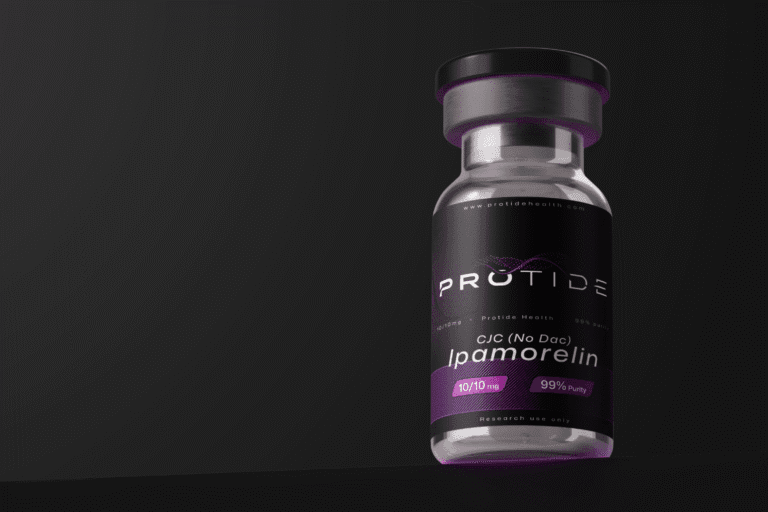
Protide Health supports laboratory research with transparent analytical documentation, third-party HPLC and mass spectrometry testing, and ISO 9001:2015 certified manufacturing. Shop the CJC-1295 (No DAC) / Ipamorelin 10mg Blend at Protide Health.
What Is the CJC-1295 / Ipamorelin Peptide Blend?
The CJC-1295 / Ipamorelin blend combines two mechanistically distinct growth hormone secretagogues that target complementary receptor systems on anterior pituitary somatotroph cells. This isn’t a random pairing — it’s grounded in the physiology of how the GH axis is regulated through dual inputs.
Here’s the fundamental logic of the combination:
- CJC-1295 (No DAC), also known as Modified GRF (1–29), is a tetrasubstituted GHRH analog that binds the GHRH receptor (GHRHR) and activates cAMP/PKA-mediated GH synthesis. It essentially mimics the hypothalamic “release” signal but with enhanced stability against enzymatic degradation (Jetté et al., 2005 — PubMed).
- Ipamorelin is a synthetic pentapeptide that selectively binds the ghrelin receptor (GHS-R1a), triggering calcium-dependent signaling that amplifies GH pulse amplitude. Critically, it does this without significantly raising ACTH, cortisol, prolactin, or other pituitary hormones — a selectivity profile that distinguishes it from earlier secretagogues like GHRP-6 and GHRP-2 (Raun et al., 1998 — PubMed).
- Together, the blend engages both the cAMP pathway (via GHRHR) and the calcium signaling pathway (via GHS-R1a) simultaneously on the same somatotroph cell population, producing a dual-receptor model for studying synergistic GH pulsatility.
This makes the CJC-1295 / Ipamorelin blend a preferred research tool for investigating growth hormone axis regulation through coordinated receptor activation — not because one peptide is “better,” but because the two address mechanistically distinct inputs to the same physiological output.
Shop the research-grade CJC/Ipamorelin Blend at Protide Health →
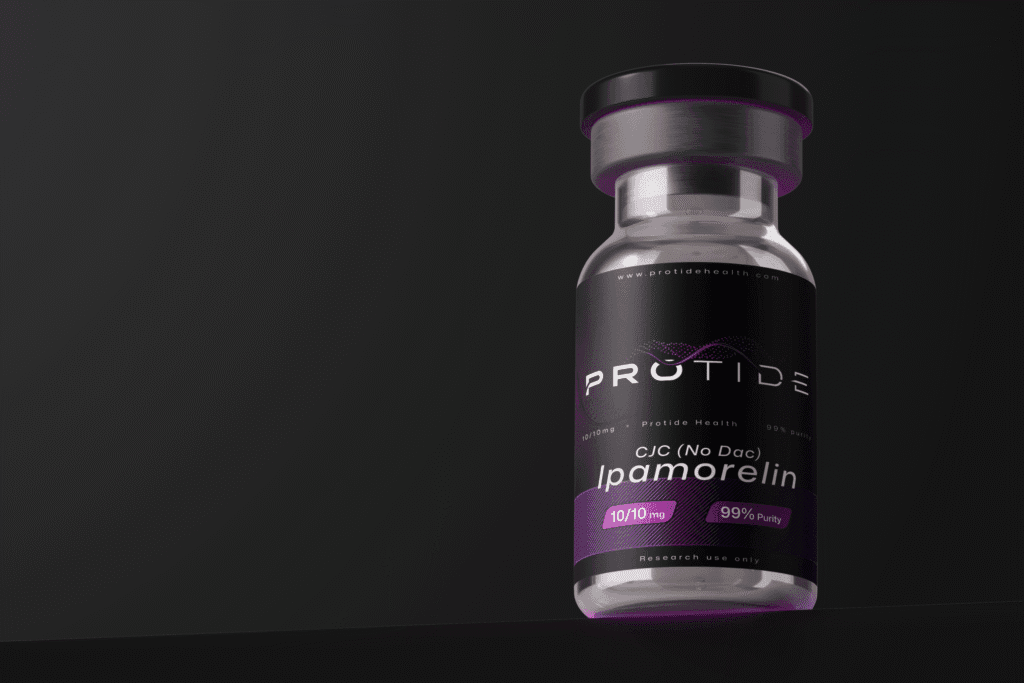
How the CJC-1295 / Ipamorelin Blend Works: Mechanism of Action
Understanding why researchers combine CJC-1295 (No DAC) with Ipamorelin requires a closer look at the two signaling pathways converging on pituitary somatotrophs.
CJC-1295 (No DAC): The GHRH Receptor Pathway
CJC-1295 (No DAC) — also referred to as Modified GRF (1–29) or Mod GRF — is a 29-amino acid synthetic analog of the bioactive N-terminal region of endogenous GHRH (1–44). Four targeted amino acid substitutions (D-Ala², Gln⁸, Ala¹⁵, Leu²⁷) give it dramatically improved resistance to DPP-IV proteolytic cleavage compared to native GRF (1–29), which has a half-life of under 10 minutes.
The signaling cascade:
GHRHR binding → Gs protein activation → adenylate cyclase stimulation → intracellular cAMP increase → PKA-linked phosphorylation → GH gene transcription and secretion
In preclinical models, this pathway drives both the synthesis of new GH within somatotrophs and the release of stored GH in a pulsatile pattern. Jetté et al. (2005) identified CJC-1295 as a long-lasting GRF analog that produced a 4-fold increase in GH area under the curve compared to native hGRF(1–29) in rat models (PubMed).
Ipamorelin: The Ghrelin Receptor (GHS-R1a) Pathway
Ipamorelin (Aib-His-D-2-Nal-D-Phe-Lys-NH₂) is a pentapeptide originally developed by Novo Nordisk through systematic modification of the GHRP-1 peptide series. It binds the same GHS-R1a receptor as ghrelin, GHRP-6, GHRP-2, and MK-677 — but with a critical difference.
The selectivity advantage:
In the landmark study by Raun et al. (1998), ipamorelin released GH from pituitary cells with potency comparable to GHRP-6 (EC₅₀ = 1.3 nmol/L vs. 2.2 nmol/L). But when tested in conscious swine for hormonal specificity, ipamorelin produced no significant elevation of ACTH or cortisol — even at concentrations exceeding 200-fold the ED₅₀ for GH release. By contrast, both GHRP-6 and GHRP-2 produced measurable increases in both stress hormones at therapeutic GH-releasing doses (PubMed).
This selectivity makes ipamorelin the preferred research tool when investigators need to study GH-axis effects in isolation, without the confounding multi-hormonal stimulation seen with less selective secretagogues.
The Synergy: Why Dual-Receptor Activation Matters
The scientific rationale for combining these peptides isn’t just additive — it’s based on the established physiology of GH regulation through two complementary inputs:
- GHRH (via CJC-1295 No DAC) primarily drives GH synthesis and pulse amplitude — how much GH is made and how high each pulse peaks
- Ghrelin/GHS-R1a agonism (via Ipamorelin) primarily modulates GH pulse frequency and timing — when pulses occur and how they’re triggered
When both pathways are activated simultaneously, research models show GH release amplitudes greater than either peptide alone, while the pulsatile secretion pattern — considered important for many of GH’s physiological effects — is preserved. Ionescu and Frohman (2006) specifically confirmed that GH pulsatility persisted even during continuous GHRH-type stimulation (PubMed).
What Does the Published Research Actually Show?
One of the problems in the peptide space is that mechanistic rationale gets conflated with proven outcomes. Here’s what the peer-reviewed evidence actually demonstrates — and where the knowledge gaps remain.
Human Pharmacokinetic Data (CJC-1295)
Teichman et al. (2006) conducted two randomized, placebo-controlled, double-blind trials examining CJC-1295 (with DAC variant) in healthy adults aged 21–61. Key findings:
- Single subcutaneous injections produced dose-dependent GH increases of 2- to 10-fold sustained for 6+ days
- IGF-1 levels increased 1.5- to 3-fold for 9–11 days following a single injection
- After multiple doses, IGF-1 remained above baseline for up to 28 days
- No serious adverse reactions were reported across both studies
- Estimated half-life of the DAC variant: 5.8–8.1 days
(PubMed)
Important caveat: These trials studied the DAC-conjugated version of CJC-1295, not the No DAC (Modified GRF 1–29) variant. The pharmacokinetic profiles are substantially different — see the “With DAC vs. Without DAC” section below.
Ipamorelin Selectivity Data (Animal + Human)
The selectivity profile is ipamorelin’s most rigorously documented property:
- In swine, GH release with ED₅₀ = 2.3 nmol/kg, comparable to GHRP-6 (3.9 nmol/kg)
- No significant ACTH, cortisol, FSH, LH, PRL, or TSH elevation — even at 200× the GH-releasing ED₅₀
- Human pharmacokinetic modeling (Gobburu et al., 1999) characterized dose-dependent GH release with ~2-hour terminal half-life
(Raun et al., 1998 — PubMed; Gobburu et al., 1999 — PubMed)
Bone and Musculoskeletal Research (Ipamorelin, Animal Models)
Several preclinical studies have examined ipamorelin’s effects on bone and muscle parameters:
- Andersen et al. (2001): Ipamorelin counteracted glucocorticoid-induced bone loss in adult rats — periosteal bone formation rate increased four-fold in the GC + ipamorelin group vs. GC alone. Maximum muscle tetanic tension was also significantly preserved (PubMed).
- Svensson et al. (2000): 12 weeks of ipamorelin administration increased total bone mineral content in adult female rats as measured by DXA (PubMed).
- Johansen et al. (1999): Ipamorelin dose-dependently increased longitudinal bone growth rate in adult female rats over 15 days of administration (PubMed).
Gastrointestinal Motility Research (Ipamorelin)
Ipamorelin’s ghrelin receptor agonism has been studied for gastrointestinal effects:
- Greenwood-Van Meerveld et al. (2012): Dose-dependent improvement in gastric emptying in a rodent postoperative ileus model
- Beck et al. (2014): A Phase 2, multicenter, double-blind, placebo-controlled trial of ipamorelin in bowel resection patients. The compound was well tolerated at 0.03 mg/kg twice daily, though primary efficacy endpoints were not met (PubMed)
GHRH Knockout Mouse Studies (CJC-1295)
Alba et al. (2006) demonstrated that once-daily CJC-1295 administration normalized body weight, length, and body composition in GHRH knockout mice. The treatment also increased pituitary RNA and GH mRNA levels, suggesting somatotroph cell proliferation (PubMed).
Where the Evidence Gaps Remain
Transparency matters. Here’s what the published literature does not establish:
- No large-scale human clinical trials have evaluated the CJC-1295 (No DAC) / Ipamorelin combination for any therapeutic indication
- No randomized controlled trials have measured body composition outcomes (lean mass, fat loss) from this specific combination in healthy adults
- The frequently cited “synergy” is based on mechanistic rationale and preclinical data from the individual compounds — not from controlled human studies of the blend itself
- Neither peptide is FDA-approved for any clinical indication
- Both are prohibited at all times under WADA anti-doping regulations
CJC-1295 With DAC vs. Without DAC: A Critical Distinction
This is one of the most commonly confused topics in peptide research, and the distinction has meaningful implications for laboratory protocol design.
| Parameter | CJC-1295 With DAC | CJC-1295 Without DAC (Modified GRF 1–29) |
|---|---|---|
| Half-Life | ~6–8 days | ~30 minutes |
| GH Stimulation Pattern | Sustained, continuous elevation | Transient, pulsatile release |
| Mechanism | Covalent albumin binding via maleimido-lysine | Direct GHRHR agonism without albumin conjugation |
| Dosing Frequency in Research | Weekly or biweekly | Multiple times daily |
| Physiological Mimicry | Departs from natural pulsatile rhythm | More closely approximates endogenous GH secretion |
| Human PK Data | Teichman et al. (2006) — controlled trials | Limited published human data |
Why does this matter? The No DAC variant is specifically paired with Ipamorelin because both peptides have relatively short half-lives, enabling researchers to study pulsatile GH release dynamics. The DAC variant’s week-long activity would overwhelm the pulsatile signal that makes this combination scientifically interesting.
The terminology is further complicated by the fact that “CJC-1295 without DAC” is technically imprecise. The literal CJC-1295 molecule includes the DAC-reactive lysine moiety — without DAC conjugation, this lysine would actually reduce half-life. What vendors and researchers typically mean by “CJC-1295 No DAC” is Modified GRF (1–29), which shares the same tetrasubstituted base sequence but lacks the terminal lysine entirely.
CJC/Ipamorelin Blend Research Applications
Laboratory researchers investigate the CJC-1295 (No DAC) / Ipamorelin peptide blend in these experimental contexts:
- Growth hormone axis signaling — studying pulsatile GH release amplitude and frequency through dual-receptor activation
- Receptor cross-talk investigation — examining GHRHR and GHS-R1a pathway interactions on pituitary somatotrophs
- Second messenger pathway evaluation — cAMP-dependent (via GHRHR) and calcium-dependent (via GHS-R1a) signaling cascades
- IGF-1 axis investigation — downstream metabolic signaling and insulin-like growth factor regulation
- Bone metabolism and mineral content — glucocorticoid-induced bone loss models and bone mineral density studies
- Body composition and nitrogen balance — preclinical catabolic state models
- Gastrointestinal motility — gastric emptying and intestinal transit pathway research
- Peptide pharmacokinetics — half-life characterization, receptor binding kinetics, and distribution studies
Individual Peptide Specifications
CJC-1295 (No DAC) — Modified GRF (1–29)
- Molecular Formula: C₁₅₂H₂₅₂N₄₄O₄₂
- Molar Mass: ~3,368.7 g/mol
- Structure: 29-amino acid tetrasubstituted GHRH analog (D-Ala², Gln⁸, Ala¹⁵, Leu²⁷)
- Synonyms: Mod GRF (1–29), Modified GRF, CJC-1295 without DAC
- Target Receptor: GHRHR (class B GPCR)
- Signaling Pathway: Gs → adenylate cyclase → cAMP → PKA
- Half-Life: ~30 minutes
Ipamorelin (NNC 26-0161)
- Molecular Formula: C₃₈H₄₉N₉O₅
- Molar Mass: ~711.9 g/mol
- Structure: Pentapeptide (Aib-His-D-2-Nal-D-Phe-Lys-NH₂)
- Target Receptor: GHS-R1a (ghrelin receptor)
- Signaling Pathway: Gq/11 → calcium mobilization → GH pulse amplification
- Half-Life: ~2 hours (terminal)
- Key Selectivity: No significant effect on ACTH, cortisol, prolactin, FSH, LH, or TSH
Laboratory Concentration Planning (Research Context Only)
Protide Health provides educational information only and does not offer protocol recommendations for human use. Published research literature demonstrates the following experimental parameters:
CJC-1295 (with DAC variant): Studied at 30–90 μg/kg subcutaneous doses in human PK trials. The No DAC variant has a considerably shorter half-life (~30 minutes), relevant for concentration and timing planning in pulsatile stimulation protocols (PubMed).
Ipamorelin: Studied at 0.01–1 mg/kg in rodent models and across multiple infusion rates (4.21–140.45 nmol/kg) in human pharmacokinetic evaluations (PubMed).
Research-Grade Quality: What to Look for When Sourcing CJC/Ipamorelin
Not all peptide sources are equal. An estimated 95% of online peptides are underdosed, mislabeled, or contaminated. When sourcing CJC-1295 (No DAC) / Ipamorelin for laboratory research, these quality markers distinguish reliable suppliers:
Analytical Verification:
- Third-party HPLC testing confirming 99%+ purity
- Mass spectrometry (MS) identity verification
- Batch-specific Certificates of Analysis (COAs) — not generic or shared across lots
Manufacturing Standards:
- ISO 9001:2015 certification
- GMP-compliant manufacturing facilities
- USA-based synthesis and quality control
Trust Signals:
- Credit card acceptance (payment processors independently vet high-risk peptide vendors)
- Transparent testing documentation available before purchase
- Proper “For Research Use Only” labeling and regulatory compliance
Stability & Handling:
- Stability-optimized lyophilized packaging
- Cold-chain shipping protocols
- Clear storage guidelines included with product
Protide Health meets all of these standards with ISO 9001:2015 certified, GMP-compliant manufacturing, third-party HPLC and mass spectrometry testing, and batch-specific COAs for every product.
Shop the CJC-1295 (No DAC) / Ipamorelin 10mg Blend at Protide Health →
Laboratory Storage & Handling Protocols
Proper storage directly impacts peptide integrity and experimental reproducibility:
- Lyophilized (unreconstituted): Store frozen at −20°C (−4°F). Stable for extended periods in sealed, desiccated packaging.
- Reconstituted solutions: Refrigerate at 2–8°C (35.6–46.4°F). Use within recommended timeframe.
- Light protection: Store away from direct light to prevent photodegradation.
- Freeze-thaw cycles: Avoid repeated freezing and thawing of reconstituted solutions — aliquot into single-use volumes when possible.
- Reconstitution medium: Bacteriostatic water for injection is standard for preparing working solutions.
- Sterile technique: Implement appropriate aseptic procedures during all measurement and transfer steps.
Research Protocol Planning Checklist
A systematic approach for laboratory investigation of the CJC/Ipamorelin peptide blend:
- Define Experimental Parameters — Establish your endocrine signaling model, endpoint measurements (GH pulsatility, IGF-1 levels, receptor binding kinetics), and study timeline
- Source Research-Grade Compounds — Select suppliers with third-party HPLC and mass spectrometry verification, batch-specific COAs, and documented ISO/GMP manufacturing standards
- Review Foundational Literature — Start with the peer-reviewed references cited in this guide, then extend through PubMed for compound-specific and pathway-specific research
- Calculate Reconstitution Parameters — Use a Peptide Reconstitution Calculator for concentration planning and volume calculations
- Document Methodology — Maintain detailed records for experimental reproducibility and control validation
Frequently Asked Questions: CJC-1295 / Ipamorelin Research
What is the CJC-1295 / Ipamorelin peptide blend?
The CJC-1295 (No DAC) / Ipamorelin blend is a combination of two growth hormone secretagogues that activate complementary receptor systems. CJC-1295 (No DAC) targets the GHRH receptor via cAMP-dependent signaling, while Ipamorelin selectively activates the ghrelin receptor (GHS-R1a) via calcium-dependent pathways. Together, they provide a dual-receptor model for studying synergistic GH axis stimulation in laboratory settings. Both peptides are for research use only and are not FDA-approved for any therapeutic indication (PubMed, PubMed).
How does ipamorelin differ from GHRP-6 and GHRP-2?
Ipamorelin’s defining characteristic is its selectivity. In the foundational Raun et al. (1998) study, ipamorelin released GH with potency comparable to GHRP-6 but did not significantly elevate ACTH or cortisol — even at concentrations exceeding 200× the effective dose for GH release. Both GHRP-6 and GHRP-2 produced measurable increases in these stress hormones at therapeutic GH-releasing doses. Additionally, none of the tested secretagogues (including ipamorelin) affected FSH, LH, prolactin, or TSH (PubMed).
What is the difference between CJC-1295 with DAC and without DAC?
These are pharmacokinetically distinct compounds. CJC-1295 with DAC includes a Drug Affinity Complex that enables covalent albumin binding, extending half-life to ~6–8 days and producing sustained, continuous GH elevation. CJC-1295 without DAC (Modified GRF 1–29) lacks this modification, yielding a ~30-minute half-life and transient, pulsatile GH stimulation that more closely resembles endogenous secretion patterns. The No DAC variant is specifically paired with Ipamorelin to study pulsatile dynamics, since both peptides have relatively short half-lives.
What does published research show about GH and IGF-1 changes?
In randomized, placebo-controlled human trials of CJC-1295 (with DAC), Teichman et al. (2006) reported dose-dependent GH increases of 2- to 10-fold and IGF-1 increases of 1.5- to 3-fold following subcutaneous administration. IGF-1 remained elevated above baseline for up to 28 days after multiple doses, with no serious adverse reactions reported. Ionescu and Frohman (2006) confirmed that GH pulsatility was preserved during continuous GHRH-type stimulation (PubMed, PubMed).
Has ipamorelin been studied for bone health?
Yes, in animal models. Andersen et al. (2001) demonstrated that ipamorelin counteracted glucocorticoid-induced bone formation decreases in adult rats — periosteal bone formation rate increased four-fold when ipamorelin was added to glucocorticoid treatment. Svensson et al. (2000) separately showed increased bone mineral content in rats treated with ipamorelin over 12 weeks (PubMed, PubMed).
Has ipamorelin been tested in human clinical trials?
Ipamorelin has been evaluated in limited early-phase human studies. A Phase 2 RCT (Beck et al., 2014) assessed its safety and efficacy for postoperative ileus management in 114 bowel resection patients. It was well tolerated at 0.03 mg/kg twice daily. Human PK modeling by Gobburu et al. (1999) characterized its dose-dependent GH-releasing profile. Neither CJC-1295 (No DAC) nor Ipamorelin has received FDA approval for any indication (PubMed, PubMed).
Why combine CJC-1295 (No DAC) with Ipamorelin specifically?
The combination targets two distinct receptor systems (GHRHR and GHS-R1a) that converge on the same somatotroph cells. GHRH pathway activation primarily drives GH synthesis and pulse amplitude, while ghrelin receptor agonism primarily modulates pulse frequency and timing. This dual-pathway approach produces mechanistically interpretable results without the confounding of competitive binding that would occur when combining two peptides targeting the same receptor.
Does this blend affect hormones other than growth hormone?
One distinguishing feature of this combination is its selectivity. CJC-1295 (No DAC) acts through GHRHR, which is primarily involved in GH signaling. Ipamorelin demonstrated no significant effects on ACTH, cortisol, prolactin, FSH, LH, or TSH in swine models — even at extreme doses. However, downstream effects through the GH-IGF-1 axis may indirectly influence metabolic parameters, and comprehensive research protocols should include appropriate hormonal monitoring (PubMed).
What peptides are commonly studied alongside this blend?
In research community discussions, the CJC/Ipamorelin combination is sometimes investigated in parallel with compounds that address different physiological systems. These include tissue repair peptides such as BPC-157 and TB-500 (the Wolverine Blend), skin and connective tissue peptides like GHK-Cu (found in the Klow Blend and Glow Blend), and metabolic research compounds. Each peptide serves distinct research purposes, and combining multiple growth-factor-related compounds requires clear experimental rationale to avoid complicating endpoint interpretation.
Disclaimer
All products sold by Protide Health are intended for laboratory research purposes only. These materials are not for human consumption, medical use, diagnostic purposes, or veterinary applications. This article provides educational information only and does not constitute medical advice, protocol recommendations, or therapeutic guidance. Researchers should consult appropriate institutional review and safety protocols before beginning experimental work.
References
- Jetté L, Léger R, Thibaudeau K, et al. “Human growth hormone-releasing factor (hGRF)1-29-albumin bioconjugates activate the GRF receptor on the anterior pituitary in rats: identification of CJC-1295 as a long-lasting GRF analog.” Endocrinology. 2005;146(7):3052-3058. https://pubmed.ncbi.nlm.nih.gov/15817669/
- Teichman SL, Neale A, Lawrence B, Gagnon C, Castaigne JP, Bhatt RS. “Prolonged stimulation of growth hormone (GH) and insulin-like growth factor I secretion by CJC-1295, a long-acting analog of GH-releasing hormone, in healthy adults.” J Clin Endocrinol Metab. 2006;91(2):799-805. https://pubmed.ncbi.nlm.nih.gov/16352683/
- Ionescu M, Frohman LA. “Pulsatile secretion of growth hormone (GH) persists during continuous stimulation by CJC-1295, a long-acting GH-releasing hormone analog.” J Clin Endocrinol Metab. 2006;91(12):4792-4797. https://pubmed.ncbi.nlm.nih.gov/17018654/
- Alba M, Fintini D, Sagazio A, et al. “Once-daily administration of CJC-1295, a long-acting growth hormone-releasing hormone (GHRH) analog, normalizes growth in the GHRH knockout mouse.” Am J Physiol Endocrinol Metab. 2006;291(6):E1290-E1294. https://pubmed.ncbi.nlm.nih.gov/16822960/
- Raun K, Hansen BS, Johansen NL, et al. “Ipamorelin, the first selective growth hormone secretagogue.” Eur J Endocrinol. 1998;139(5):552-561. https://pubmed.ncbi.nlm.nih.gov/9849822/
- Andersen NB, Malmlöf K, Johansen PB, Andreassen TT, Ørtoft G, Oxlund H. “The growth hormone secretagogue ipamorelin counteracts glucocorticoid-induced decrease in bone formation of adult rats.” Growth Horm IGF Res. 2001;11(5):266-272. https://pubmed.ncbi.nlm.nih.gov/11735244/
- Svensson J, Lall S, Dickson SL, et al. “The GH secretagogues ipamorelin and GH-releasing peptide-6 increase bone mineral content in adult female rats.” J Endocrinol. 2000;165(3):569-577. https://pubmed.ncbi.nlm.nih.gov/10828840/
- Johansen PB, Nowak J, Skjaerbaek C, et al. “Ipamorelin, a new growth-hormone-releasing peptide, induces longitudinal bone growth in rats.” Growth Horm IGF Res. 1999;9(2):106-113. https://pubmed.ncbi.nlm.nih.gov/10373343/
- Greenwood-Van Meerveld B, Tyler K, Mohammadi E, Pietra C. “Efficacy of ipamorelin, a ghrelin mimetic, on gastric dysmotility in a rodent model of postoperative ileus.” J Exp Pharmacol. 2012;4:149-155. https://pubmed.ncbi.nlm.nih.gov/27186128/
- Beck DE, Sweeney WB, McCarter MD; Ipamorelin 201 Study Group. “Prospective, randomized, controlled, proof-of-concept study of the Ghrelin mimetic ipamorelin for the management of postoperative ileus in bowel resection patients.” Int J Colorectal Dis. 2014;29(12):1527-1534. https://pubmed.ncbi.nlm.nih.gov/25331030/
- Gobburu JV, Agersø H, Jusko WJ, Ynddal L. “Pharmacokinetic-pharmacodynamic modeling of ipamorelin, a growth hormone releasing peptide, in human volunteers.” Pharm Res. 1999;16(9):1412-1416. https://pubmed.ncbi.nlm.nih.gov/10496658/
- Ishida J, Saitoh M, Ebner N, Springer J, Anker SD, von Haehling S. “Growth hormone secretagogues: history, mechanism of action, and clinical development.” JCSM Rapid Communications. 2020;3(1):25-37. https://onlinelibrary.wiley.com/doi/full/10.1002/rco2.9
- Sinha DK, Balasubramanian A, Tatem AJ, et al. “Beyond the androgen receptor: the role of growth hormone secretagogues in the modern management of body composition in hypogonadal males.” Transl Androl Urol. 2020;9(Suppl 2):S149-S159. https://pmc.ncbi.nlm.nih.gov/articles/PMC7108996/
- World Anti-Doping Agency (WADA). 2025 Prohibited List. https://www.wada-ama.org/en/prohibited-list