

GLP-3 Peptide: Laboratory Guide to Triple Incretin Agonist Research
Research‑Use‑Only Notice: All content on this website and all product information are for educational and informational purposes only. All products referenced are for laboratory research, analytical, and in‑vitro or preclinical in‑vivo use only. They are not medicines or drugs, have not been evaluated or approved by the FDA, and are not intended to diagnose, treat, cure, or prevent any disease. Any bodily introduction into humans or animals is strictly prohibited.
GLP-3 (LY3437943) is a synthetic triple-agonist peptide investigated in preclinical and clinical research models for GLP-1, GIP, and glucagon receptor activation. Studies examine metabolic regulation pathways, adipose tissue signaling, and hepatic lipid metabolism in controlled laboratory and trial settings.
What is GLP-3?
GLP-3 is a 39-amino-acid peptide (C223H343F3N46O70, molecular weight 4731.33 g/mol) engineered with fatty diacid conjugation for extended half-life (~6 days). Research measures its activity at three receptor targets:
- GLP-1 receptor: Incretin signaling pathways
- GIP receptor: 8.9× potency versus native GIP in receptor binding assays
- Glucagon receptor: 0.3× potency versus native glucagon (PubMed)
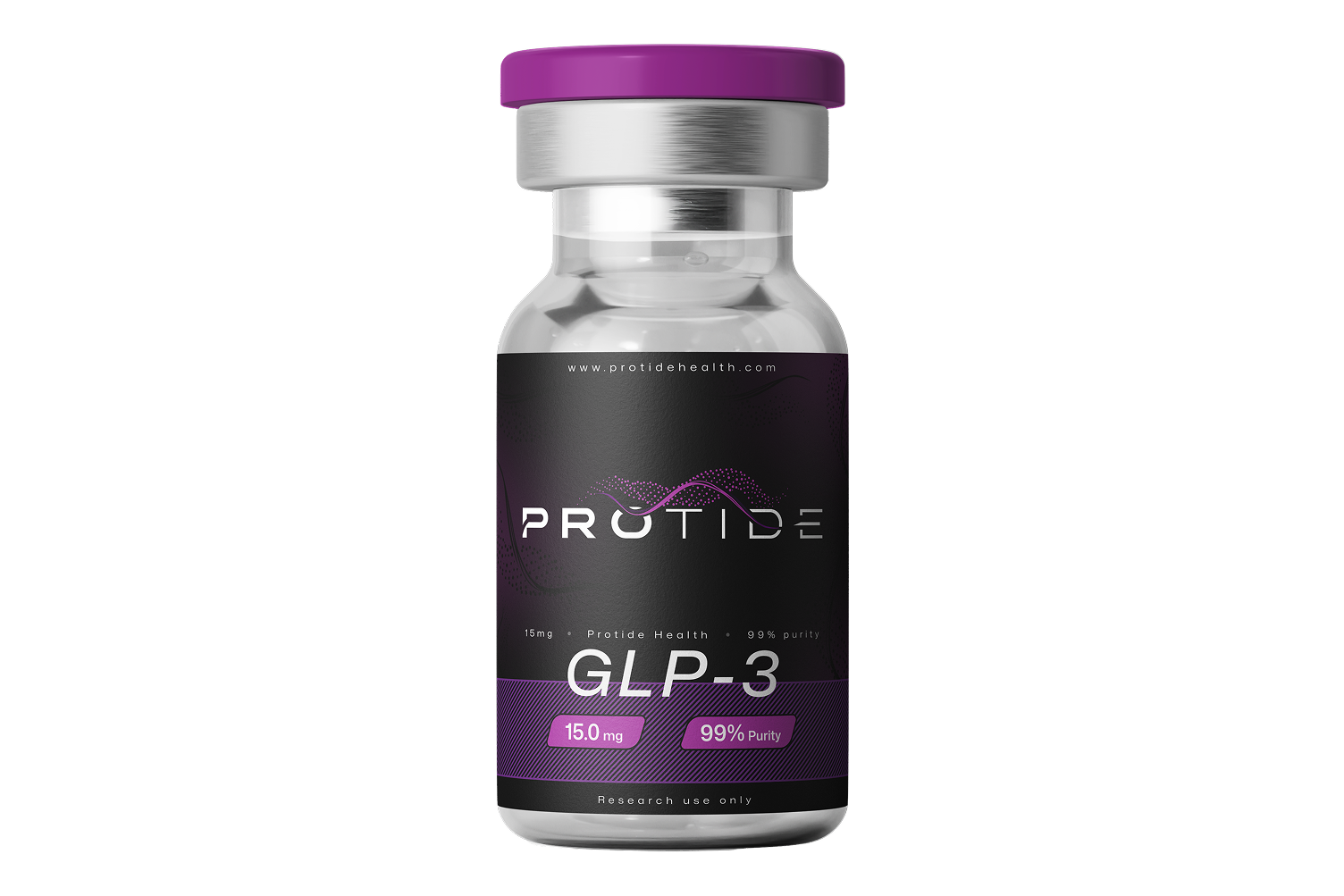
The compound is supplied as lyophilized powder for laboratory reconstitution. Explore GLP-3 research materials.
Mechanisms Investigated in Research Models
Receptor Activation Pathways
Laboratory studies examine GLP-3 for:
- GLP-1R signaling: cAMP production, insulin secretion in pancreatic beta-cell cultures
- GIPR pathways: Adipocyte lipolysis markers, insulin response amplification
- GCGR activation: Hepatic glucose output, thermogenic gene expression in brown adipose tissue (Cell Metabolism)
Animal models measure synergistic receptor crosstalk effects not observed with single-agonist compounds.
Metabolic Regulation Models
Preclinical rodent studies investigate:
- Glucose homeostasis: Glucose tolerance test (GTT) improvements in diabetic mouse models
- Energy expenditure: Indirect calorimetry measurements showing increased oxygen consumption
- Lipid metabolism: Hepatic triglyceride content reductions in MASLD (metabolic dysfunction-associated steatotic liver disease) models
Human pharmacodynamic data from Phase 2 trials measure observational endpoints only and do not establish therapeutic efficacy.
Phase 2 Research Findings
Obesity Research Models
A 48-week Phase 2 trial (n=338) investigated once-weekly subcutaneous administration in adults with obesity (NEJM). Studies measured body weight as a primary endpoint:
- Body weight changes: Mean 24.2% change observed at highest dose arm (12 mg weekly) at 48 weeks
- Dose-response relationship: 1 mg, 4 mg, 8 mg, 12 mg weekly study arms
- Gastrointestinal events: Nausea, vomiting during escalation phase (weeks 0-12)
These measurements are investigational and do not establish approved therapeutic use.
Type 2 Diabetes Models
A 36-week Phase 2 trial examined glycemic endpoints in adults with T2D (The Lancet). Research measured:
- HbA1c changes: 1.3-2.0% reductions across dose groups (0.5-12 mg weekly)
- Fasting glucose: Dose-dependent decreases measured
- Body weight: Secondary endpoint reductions observed
Human metabolic outcomes remain under investigation in ongoing Phase 3 trials.
Hepatic Lipid Research
A Phase 2a substudy (n=98) investigated MASLD using MRI-PDFF imaging (Nature Medicine). Studies measured:
- Liver fat content: Up to 86% relative reduction measured at 48 weeks (12 mg dose)
- Normalization rates: >85% of 12 mg participants achieved <5% liver fat by 24-48 weeks
- Histological markers: Fibrosis staging measured in liver biopsies
These endpoints explore hepatic steatosis pathways in clinical research models. Therapeutic significance remains unestablished.
Lipid Metabolism Endpoints
Analyses presented at ESC 2024 measured cardiometabolic markers in trial participants:
- Non-HDL cholesterol: Up to 26.9% reduction measured at 48 weeks
- Apolipoprotein B: Dose-dependent decreases observed
- Heart rate: Small transient increases (~5-7 bpm peak at week 24, returning toward baseline)
Cardiovascular outcome trials have not been completed. Clinical implications are not established.

Research Applications
Model System | Pathway Investigated | Measured Endpoints |
|---|---|---|
Pancreatic Beta-Cells | Insulin secretion | cAMP production, glucose-stimulated insulin release |
Adipocyte Cultures | Lipolysis pathways | Glycerol release, lipase activation |
Hepatocyte Models | Gluconeogenesis | G6Pase expression, glucose output |
DIO Rodents | Energy balance | Body weight, food intake, respiratory exchange ratio |
Clinical Trials | Metabolic regulation | HbA1c, liver fat (MRI-PDFF), lipid panels |
Laboratory Reconstitution Protocols
Standard preparation for research use:
- Lyophilized powder reconstituted with bacteriostatic water or appropriate research-grade diluent
- Storage: Reconstituted solutions stable 14-28 days at 2-8°C per manufacturer guidelines
- Handling: Follow standard laboratory volumetric dilution procedures
Refer to a Peptide Reconstitution Tool for laboratory volumetric calculations.
Research Material Options
Laboratory-grade GLP-3 peptide available in multiple configurations from 10mg to 50mg vials:
All products include third-party certificate of analysis (COA) documentation and HPLC purity verification (99%).
Frequently Asked Questions
What receptor pathways distinguish GLP-3 from single-agonist peptides?
GLP-3 activates GLP-1R, GIPR, and GCGR simultaneously, producing synergistic effects on insulin secretion, lipolysis, and energy expenditure not observed with GLP-1-only agonists (Cell Metabolism). Preclinical models measure additive pathway activation across all three receptor systems.
What endpoints are measured in obesity research studies?
Clinical trials measure body weight changes (primary), body composition (DXA scans), waist circumference, and metabolic markers (HbA1c, lipids, liver enzymes). Preclinical models add indirect calorimetry and tissue-specific gene expression analyses (NEJM). These are research endpoints, not therapeutic outcomes.
How is GLP-3 stored for laboratory use?
Lyophilized powder remains stable at -20°C for 12-24 months when stored properly. Reconstituted solutions store at 2-8°C for 14-28 days per manufacturer specifications. Avoid repeated freeze-thaw cycles to maintain peptide integrity and bioactivity.
Can GLP-3 be combined with other research compounds in laboratory studies?
Preclinical studies investigate combinations with SGLT2 inhibitors, metformin, or other metabolic modulators in animal models. No published human combination trials exist.
What animal models are used for GLP-3 research?
Common preclinical models include diet-induced obese (DIO) mice, db/db diabetic mice, MASLD rodent models (high-fat/high-fructose diets), and non-human primate metabolic studies (Endocrine).
Disclaimer: GLP-3 is for laboratory research purposes only and is not intended for human consumption, medical use, or veterinary use. It is not FDA-approved for any therapeutic indication. Information provided is educational and not medical advice. Researchers must comply with all applicable regulations and obtain necessary approvals for experimental use.
References
- Coskun T, et al. LY3437943, a novel triple glucagon, GIP, and GLP-1 receptor agonist for obesity. Cell Metabolism
- Jastreboff AM, et al. Triple-hormone-receptor agonist for obesity – Phase 2 Trial. NEJM
- Rosenstock J, et al. Triple incretin agonist for type 2 diabetes – Phase 2. The Lancet
- Sanyal AJ, et al. Triple-agonist peptide for metabolic dysfunction-associated steatotic liver disease. Nature Medicine
- Ma J, et al. Effects of triple incretin agonist on diabetic kidney disease in db/db mice. Endocrine
- Ray A. Triple-agonist peptide for obesity management. Expert Opinion