What Are Lyophilized Peptides? Freeze-Drying, Storage, and Shelf Life Explained
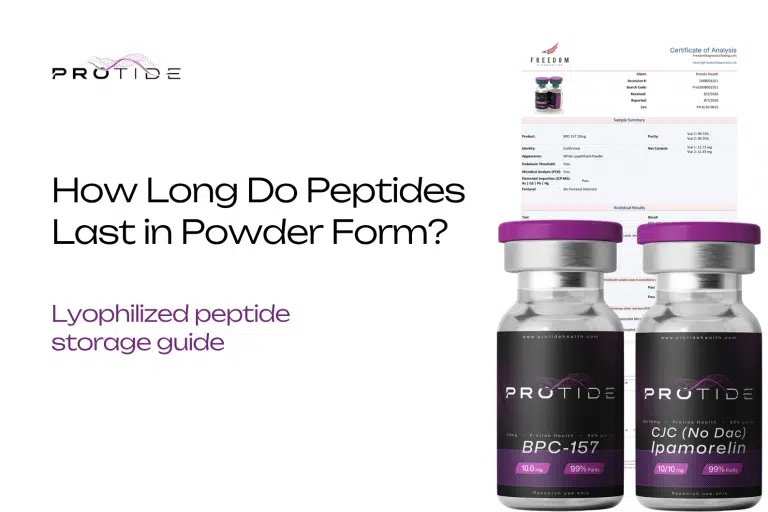
Lyophilized peptides are peptides that have been freeze-dried into a dry, stable powder. The process removes almost all water from a frozen peptide solution under vacuum, which slows the chemical reactions that break peptides down. In powder form, a peptide that would last only weeks in liquid can stay stable for months to years when stored correctly.
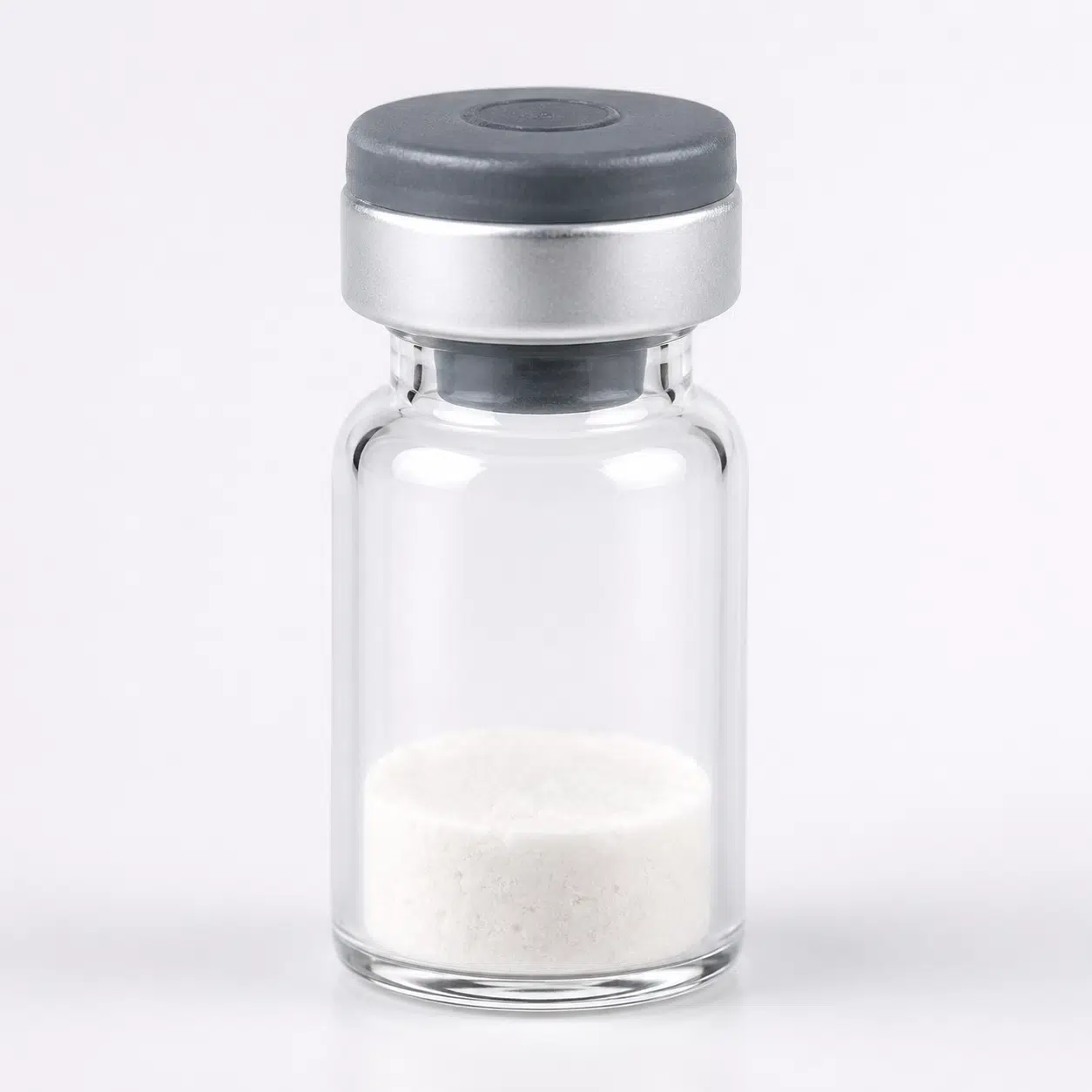
Researchers and labs receiving a shipment of research peptides may have expected a liquid, and instead may have found a small amount of white to off-white powder, or what looks like a thin film or a few flakes at the bottom. That is the lyophilized peptide. This guide explains what lyophilization is, why suppliers freeze-dry peptides, how the dry form compares to liquid, and what the research literature says about storage and shelf life.
What does “lyophilized” mean?
Lyophilization is the technical name for freeze-drying. The word comes from the Greek roots meaning “solvent-loving,” a reference to how the dried material readily takes water back up when it is dissolved again.
In simpler terms, to lyophilize something is to freeze it and then pull the water out of it while it is still frozen, without letting the ice melt back into liquid first. The result is a dry, porous solid that holds its structure and dissolves again quickly when liquid is added. The same method is used for freeze-dried foods, vaccines, and laboratory reagents. When applied to peptides, it produces the powder form that most research peptides are supplied in.
What is lyophilization (freeze-drying)?
Freeze-drying relies on sublimation, the process by which ice turns directly into water vapor without passing through a liquid phase. It is carried out in three stages.
Freezing. The peptide solution is cooled until it is fully frozen. Controlled freezing helps form a uniform structure that dries evenly and rehydrates cleanly later.
Primary drying (sublimation). The frozen solution is placed under a deep vacuum and given a small amount of heat. Under low pressure, the ice sublimes directly to vapor and is drawn away, which removes the bulk of the water while the material stays frozen. This is the longest stage.
Secondary drying (desorption). After the ice is gone, a little water remains bound to the peptide. A further, gentle rise in temperature under vacuum removes most of this residual moisture, leaving a low final water content.
Because the peptide never sits in warm liquid during the process, freeze-drying limits the reactions that would otherwise degrade it, such as hydrolysis (the breaking of peptide bonds), oxidation, and deamidation. That is why lyophilization is a standard method for stabilizing peptides and other sensitive biological molecules.
Why are peptides lyophilized?
Peptides are chains of amino acids, and in solution they are chemically fragile. Water is part of the problem: it is the reactant that drives hydrolysis, and a peptide dissolved in water is exposed to that reaction continuously. Dissolved peptides can also aggregate, oxidize, or lose their structure over time, and depending on the solvent, may end up as a “gel” or “cloudy solution“. Removing the water addresses all of these at once. The main reasons peptides are supplied in lyophilized form are:
- Stability. Taking water out slows or stops the hydrolysis, oxidation, and deamidation reactions that degrade peptides in liquid.
- Shelf life. A peptide that is stable for only days in solution can remain stable for months to years as a dry powder under proper storage (GenScript).
- Shipping and transport. The powder stays stable at room temperature for weeks, so peptides can travel by regular mail without ice packs or refrigerated shipping.
- Purity and consistency. Freeze-drying is a gentle way to isolate the peptide from the solvent, which supports the high purity that laboratory work depends on.
In short, lyophilization is the most practical way to keep a peptide intact between the point it is manufactured and the point it is studied.
Lyophilized vs. non-lyophilized peptides
“Non-lyophilized” usually refers to a peptide supplied already dissolved in liquid, sometimes called a pre-mixed or liquid peptide. The core difference is water: the lyophilized form is a dry powder, and the non-lyophilized form is already in solution. That single difference drives the rest.
|
Attribute |
Lyophilized (freeze-dried powder) |
Non-lyophilized (liquid) |
|---|---|---|
|
Physical form |
Dry powder, film, or flakes |
Solution |
|
Stability |
High; water-driven degradation is minimized |
Lower; degradation begins once in solution |
|
Typical shelf life |
Months to years as sealed powder in the freezer |
Short-lived once in solution |
|
Shipping |
Tolerant of ambient temperatures in transit |
Sensitive; benefits from cold-chain handling |
|
Handling before use |
Requires dissolution in an appropriate laboratory solvent |
Ready as supplied |
|
Common use |
The standard format for most research peptides |
Less common; convenience at the cost of shelf life |
For most research applications the lyophilized form is preferred because it lasts longer and travels better.
How long do lyophilized peptides last?
Shelf life depends on the specific peptide, its purity, and how it is stored, so exact figures vary. The single most important thing to understand is that a peptide has two very different lifespans: a long one as a dry powder, and a short one once in solution. As a general pattern reported in the literature:
- As a lyophilized powder, stored cold and dry, most peptides remain stable for several years. Guidance from suppliers commonly cites storage at around -20°C, away from light and moisture, for long-term stability (GenScript).
- As a lyophilized powder held briefly at room temperature, many peptides tolerate weeks at room temperature, which is what makes shipping without refrigeration workable (Aapptec). This is why lyophilized material tolerates ambient transit.
- Once dissolved into solution, stability drops sharply. Peptide solutions are far more fragile and are generally treated as short-lived even under refrigeration.
The takeaway is that the dry powder is the stable form, and the clock speeds up considerably once the peptide is back in liquid.
Storage and handling of lyophilized peptides
The properties that make freeze-dried peptides stable also mean they need to be kept away from the things that undo lyophilization, chiefly heat, light, and moisture. General practices described in the peptide storage literature include:
- Temperature (unopened powder). Store the sealed, lyophilized vial cold. Suppliers typically recommend -20°C or lower for long-term storage of months to years, and freezer conditions in the -20°C to -80°C range for extended stability (GenScript).
- Moisture. Peptides are hygroscopic, meaning they pull water out of the air. Keep the container tightly sealed, so that moisture does not condense onto the cold powder (Bachem).
- Light. Store away from direct light, which can drive degradation in some sequences.
Following storage guidance is what allows a lyophilized peptide to reach the multi-year shelf life that the freeze-drying process makes possible.
Do lyophilized peptides need to be refrigerated?
Yes.
As a sealed powder, a lyophilized peptide can survive limited time at room temperature, which is why it can be shipped without a cold chain. But room temperature is not a storage condition. For stability over months or years, keep the powder frozen at around -20°C or lower.
Frequently asked questions
What are lyophilized peptides?
They are peptides that have been freeze-dried into a dry, stable powder. Removing the water slows the chemical reactions that break peptides down, so the powder form has a much longer shelf life than a peptide in solution.
What does it mean when a peptide is lyophilized?
It means the peptide was frozen and then had its water removed under vacuum through sublimation, leaving a dry powder. Lyophilized and freeze-dried mean the same thing.
Why do research peptides come as a powder instead of a liquid?
Because the dry powder is far more stable. In solution, peptides degrade within days to weeks, while the lyophilized form can remain stable for months to years and can be shipped without strict refrigeration.
References
- Bachem. “Handling and Storage Guidelines for Peptides.”
- GenScript. “Peptide Storage and Handling Guidelines.”
- Aapptec. “Handling and Storage of Peptides: FAQ.”
Disclaimer (Research‑Use‑Only Notice): All content on this website and all product information are for educational and informational purposes only. All products referenced are for laboratory research, analytical, and in‑vitro use only. They are not medicines or drugs, have not been evaluated or approved by the FDA, and are not intended to diagnose, treat, cure, or prevent any disease. Any bodily introduction into humans or animals is strictly prohibited.