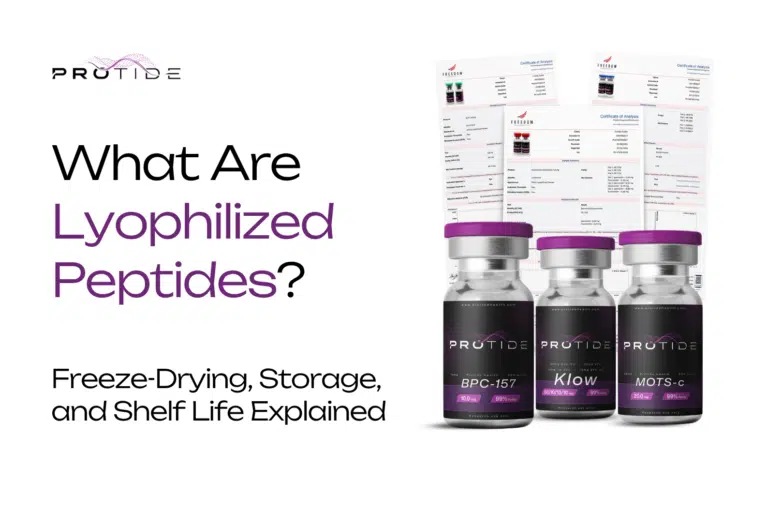
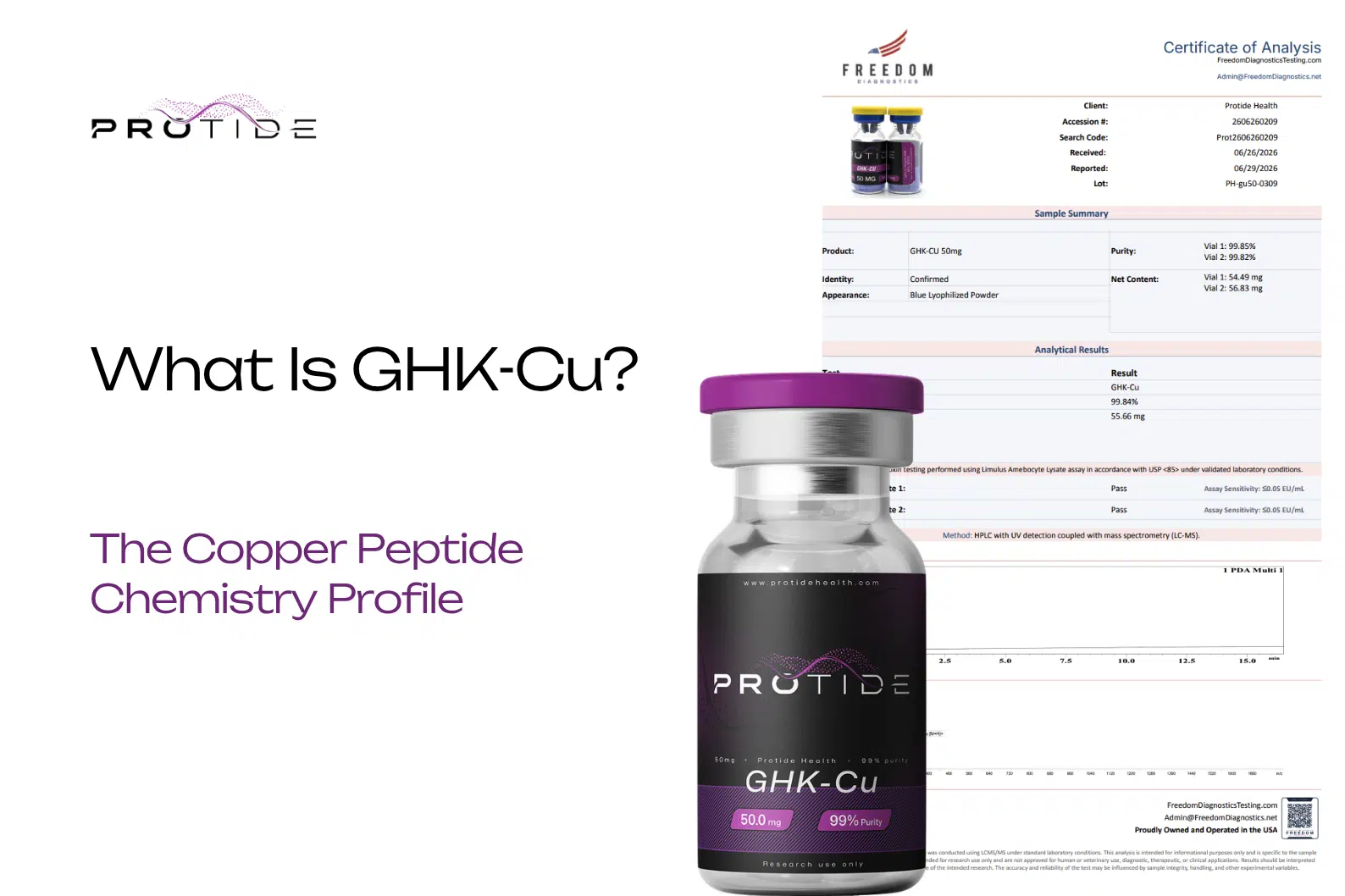
What Is GHK-Cu? The Copper Peptide Chemistry Profile
GHK-Cu is the copper(II) complex of glycyl-L-histidyl-L-lysine, a naturally occurring tripeptide first identified in human plasma in 1973. Most searches for GHK copper peptides point to this single molecule: a three-amino-acid sequence with an unusually strong affinity for copper ions, a distinctive blue color, and one of the longest research histories of any compound sold for laboratory use.
This profile covers the chemistry of GHK-Cu: its sequence and molecular weight, how it binds copper, and why the complex turns blue.
Disclaimer: All information here is educational. GHK-Cu is available strictly as a research chemical for laboratory use and is not approved for human use.
What Is GHK-Cu?
GHK-Cu is a copper-binding tripeptide composed of glycine, histidine, and lysine that occurs naturally in human plasma, saliva, and urine. Biochemist Loren Pickart first isolated the peptide in 1973 while comparing plasma from younger and older donors, and much of the published literature on the molecule comes from his research group over the following five decades (Pickart, 2008).
In research catalogs, the name GHK-Cu refers to the 1:1 complex of the free peptide (GHK) with a copper(II) ion. The two forms behave differently at the bench: free GHK is colorless, while the copper complex carries the blue-violet color that gives copper peptides their name.
GHK-Cu Chemistry: Sequence, Formula, and Molecular Weight
GHK-Cu is the smallest and most studied member of the copper peptide family. A tripeptide is a chain of three amino acids joined by peptide bonds, which places GHK among the simplest peptides in the research literature. The table below summarizes its core chemical properties.
|
Property |
Value |
|---|---|
|
Full name |
Glycyl-L-histidyl-L-lysine copper(II) |
|
Amino acid sequence |
Gly-His-Lys (single-letter codes: G, H, K) |
|
Molecular formula (free peptide) |
C14H24N6O4 |
|
Molecular weight (free peptide) |
340.4 g/mol |
|
Molecular weight (copper complex) |
Approximately 403.9 g/mol |
|
Copper binding affinity |
Formation constant commonly reported near log K 16.4 |
|
Appearance |
Blue to blue-violet lyophilized powder (copper complex); free GHK is colorless |
|
Solubility |
Freely soluble in water |
|
Common research formats |
Lyophilized GHK-Cu vials; GHK acetate salt |
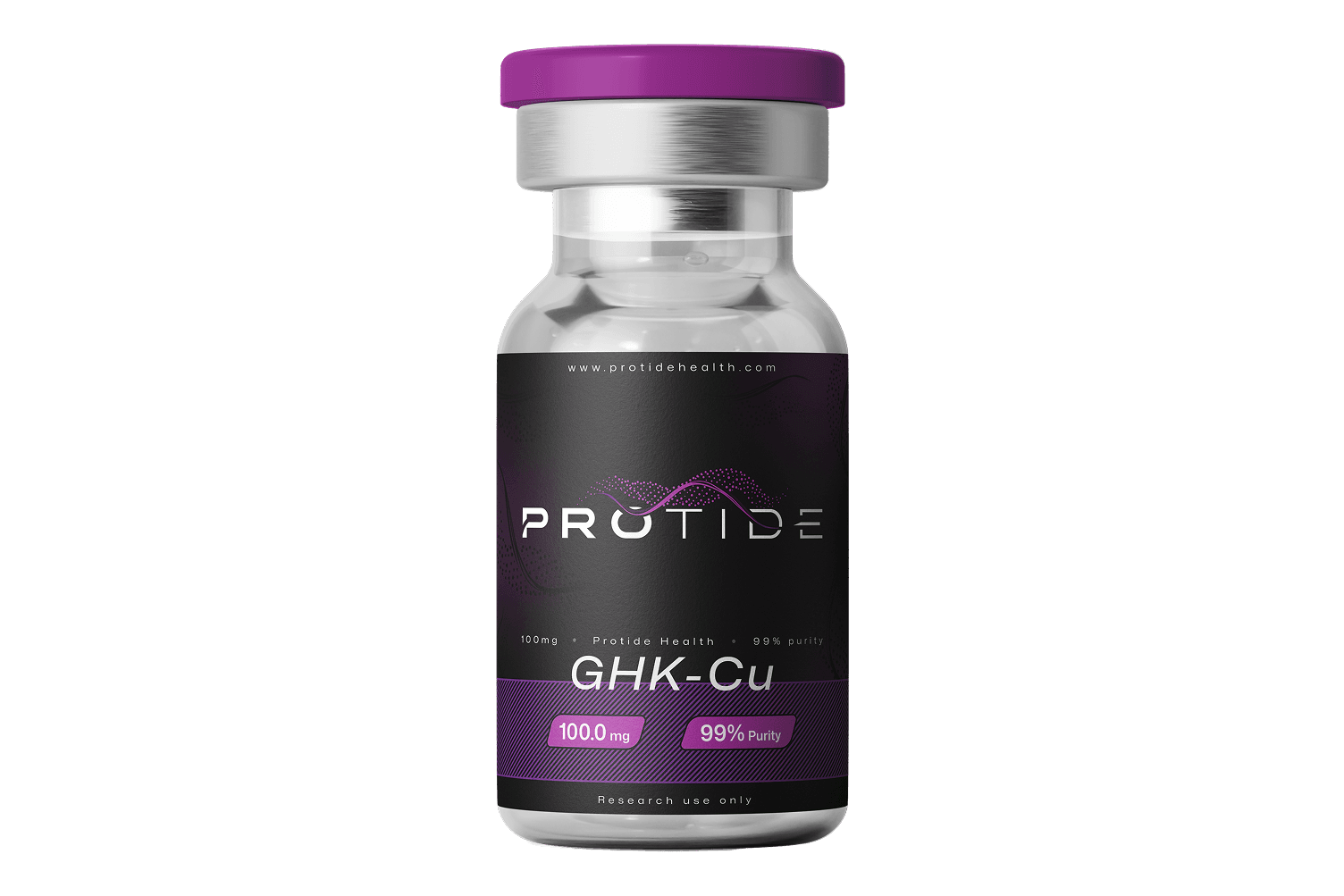
Research suppliers like Protide Health ship GHK-Cu as a lyophilized peptide, meaning the material is freeze-dried under vacuum to remove water. Lyophilization is a stability decision: dry peptide powder resists hydrolysis and degradation far longer than material in solution.
How GHK Binds Copper: Coordination Chemistry
GHK binds copper(II) through three nitrogen donor atoms: the alpha-amino nitrogen of glycine, the deprotonated amide nitrogen of the glycine-histidine peptide bond, and the imidazole nitrogen of the histidine side chain. A fourth coordination position is typically occupied by a water molecule or a carboxylate oxygen, while the lysine side chain remains free of the metal center.
The strength of this interaction is what sets GHK apart from most short peptides. The formation constant of the GHK-Cu complex is commonly reported near log K 16.4, an affinity in the same range as the copper transport site of serum albumin (Pickart, 2008). In practical terms, this small tripeptide competes for copper about as effectively as the main copper carrier protein in blood plasma.
The complex is also structurally well defined. A 2020 macromolecular crystallography study used GHK as a copper-binding phasing tag for protein structure determination, a technical role that depends on its reproducible Cu(II) coordination geometry (PMID 33263328).
Why Is GHK-Cu Blue?
GHK-Cu is blue because of d-d electronic transitions in the copper(II) ion. When copper binds the peptide’s nitrogen donors, the surrounding atoms split the energy levels of copper’s d orbitals. The complex absorbs light in the red-orange region of the visible spectrum and reflects blue and violet wavelengths. The color is a quick visual indicator that copper is present in complexed form, though color alone verifies nothing about purity or identity.
GHK-Cu in the Laboratory: Form, Stability, and Verification
Research-grade GHK-Cu arrives as a blue lyophilized powder in sealed vials, one of the few peptides a researcher can visually distinguish on sight. Standard handling practice in research settings includes:
- Storing sealed vials in cool, dry, dark conditions, with freezer for long-term and refrigeration once prepared in solvent.
- Confirming identity and purity from batch documentation rather than appearance, since color indicates complexed copper but says nothing about contaminants.
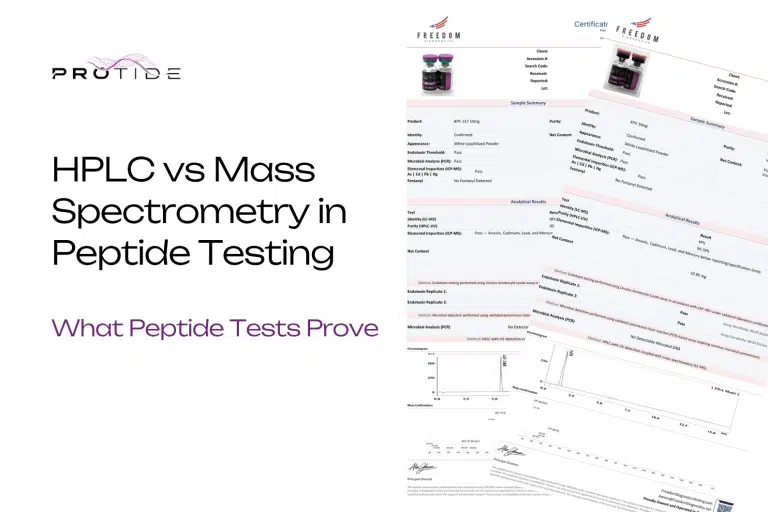
Two analytical methods dominate peptide verification: high-performance liquid chromatography (HPLC), which quantifies purity by separating the target peptide from impurities, and mass spectrometry (MS), which confirms molecular identity by weight. Our guide to HPLC vs mass spectrometry explains what each test proves, and every batch should ship with a certificate of analysis documenting the results.
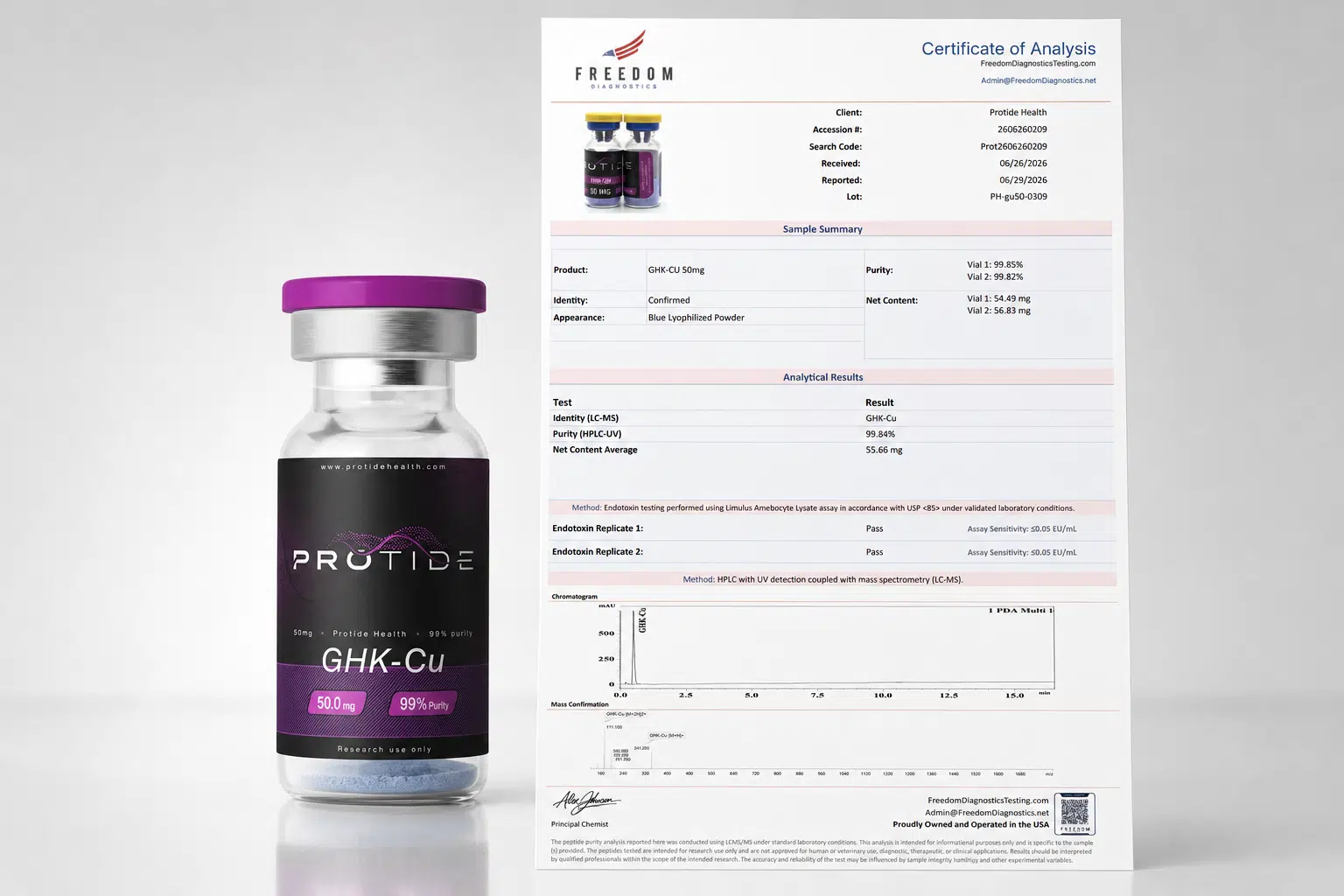
Protide Health supplies GHK-Cu copper peptide vials with HPLC-verified 99%+ purity, batch-specific third-party COAs, and endotoxin assays. All products are For Research Use Only and not for human use; our RUO explainer covers exactly what that designation means.
Frequently Asked Questions About GHK-Cu
What does GHK-Cu stand for?
GHK-Cu stands for glycyl-L-histidyl-L-lysine copper. G, H, and K are the single-letter codes for the amino acids glycine, histidine, and lysine, and Cu is the chemical symbol for copper.
Is GHK-Cu the same as copper peptides?
GHK-Cu is the most studied member of the copper peptide family, and in most research and commercial contexts the terms are used interchangeably. Strictly speaking, a copper peptide is any peptide bound to a copper ion, but nearly all copper peptide literature refers to GHK-Cu specifically.
Why is GHK-Cu blue?
The blue color comes from d-d electronic transitions in the bound copper(II) ion. The complex absorbs red-orange light and reflects blue-violet wavelengths. Free GHK peptide without copper is colorless.
What is the molecular weight of GHK-Cu?
The free GHK peptide has a molecular weight of 340.4 g/mol (molecular formula C14H24N6O4). The 1:1 copper(II) complex weighs approximately 403.9 g/mol.
Does GHK-Cu need to be refrigerated?
Sealed lyophilized GHK-Cu is generally stable for short periods at cool room temperature, and refrigeration is standard practice for longer storage. Once reconstituted for laboratory work, solutions should be kept refrigerated and used within the timeframe indicated by published stability data for the compound.
Where can researchers buy GHK-Cu?
Protide Health sells research-grade GHK-Cu in lyophilized vials starting at $55, with HPLC-verified 99%+ purity, a batch-specific third-party COA published for every batch, and USA-based fulfillment. When comparing GHK-Cu suppliers, researchers typically verify three things: HPLC-verified purity of 99% or higher, a batch-specific third-party certificate of analysis, and clear For Research Use Only labeling.
How much does GHK-Cu cost?
GHK-Cu pricing scales with the milligram amount per vial. Protide Health lists GHK-Cu at $55 per 50mg vial and $65 per 100mg vial, HPLC-verified at 99%+ purity with a batch-specific third-party COA posted publicly. When comparing prices across suppliers, confirm the listed milligram amount and whether a batch-specific COA is published, since those two variables explain most of the price difference between sources.
Is GHK-Cu legal to buy?
GHK-Cu is not a controlled substance in the United States and can be legally sold as a research chemical for laboratory use. It is not approved by the FDA for human use, which is why reputable suppliers label every vial For Research Use Only. Research suppliers such as Protide Health sell GHK-Cu under RUO terms, meaning the material is intended solely for in vitro laboratory research.
The Bottom Line on GHK Copper Peptides
GHK copper peptides occupy an unusual position in peptide research: a molecule small enough to describe completely in one table, yet studied for five decades across coordination chemistry, cell culture, and genomics. For researchers, the chemistry is the point. A defined sequence, a quantified copper affinity, and a visible signature make GHK-Cu one of the most characterized compounds in any research peptide catalog, and analytical documentation, not color, is what confirms a given vial matches that profile.
References
- Pickart L. The tri-peptide GHK. J Biomater Sci Polym Ed. 2008;19(8):969-988.
- The copper(II)-binding tripeptide GHK, a valuable crystallization and phasing tag for macromolecular crystallography. 2020.
Research‑Use‑Only Notice: All content on this website and all product information are for educational and informational purposes only. All products referenced are for laboratory research, analytical, and in‑vitro use only. They are not medicines or drugs, have not been evaluated or approved by the FDA, and are not intended to diagnose, treat, cure, or prevent any disease. Any bodily introduction into humans or animals is strictly prohibited.