Klow Peptide: What It Is, What’s In It, and Where to Source It
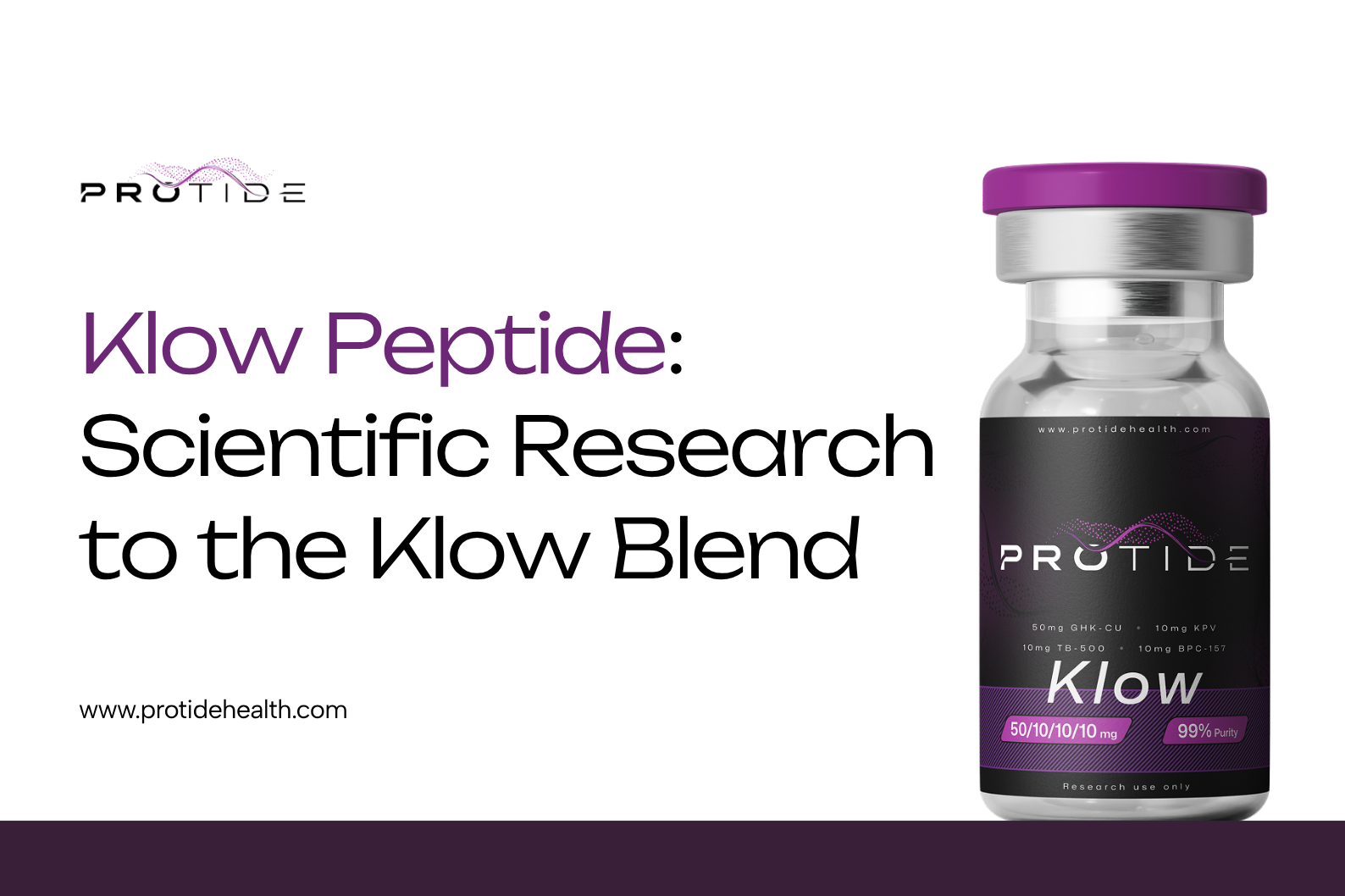
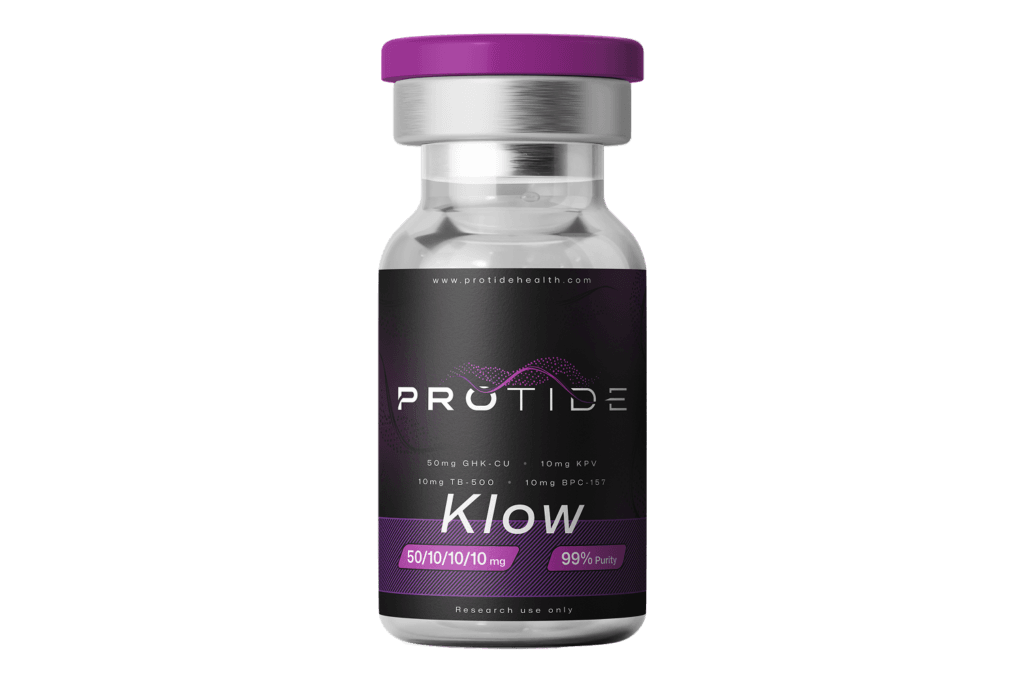
Klow is a four-peptide research blend containing GHK-Cu, KPV, BPC-157, and TB-500 in a single lyophilized vial. In the standard 80mg presentation the split is GHK-Cu 50mg, KPV 10mg, BPC-157 10mg, and TB-500 10mg. It is supplied for laboratory research use only and is not for human or veterinary use.
|
Component |
Amount per vial |
Also known as |
|---|---|---|
|
GHK-Cu |
50 mg |
Copper tripeptide-1 |
|
KPV |
10 mg |
Lysine-proline-valine, an α-MSH fragment |
|
BPC-157 |
10 mg |
Body protection compound-157 |
|
TB-500 |
10 mg |
Thymosin beta-4 fragment |
|
Total |
80 mg |
Single lyophilized vial |
This guide covers what Klow contains, how the 80mg labeling works, how Klow differs from the Glow blend, and how to verify purity before sourcing.
Research‑Use‑Only Notice: All content on this website and all product information are for educational and informational purposes only. All products referenced are for laboratory research, analytical, and in‑vitro use only. They are not medicines or drugs, have not been evaluated or approved by the FDA, and are not intended to diagnose, treat, cure, or prevent any disease. Any bodily introduction into humans or animals is strictly prohibited.
What is the Klow peptide?
Klow is a formulation name, not a compound. It refers to a vial containing four separate research peptides that have been lyophilized together rather than sold individually. The name is an acronym drawn from its components, and it is a supplier SKU identifier rather than a designation with any regulatory or clinical meaning.
The Klow peptide is a four-peptide research blend. It includes:
Blends exist for a practical reason. A laboratory studying four peptides individually has to source four vials and account for four sets of handling and documentation variables. A single-vial blend consolidates that into one lot with one certificate.
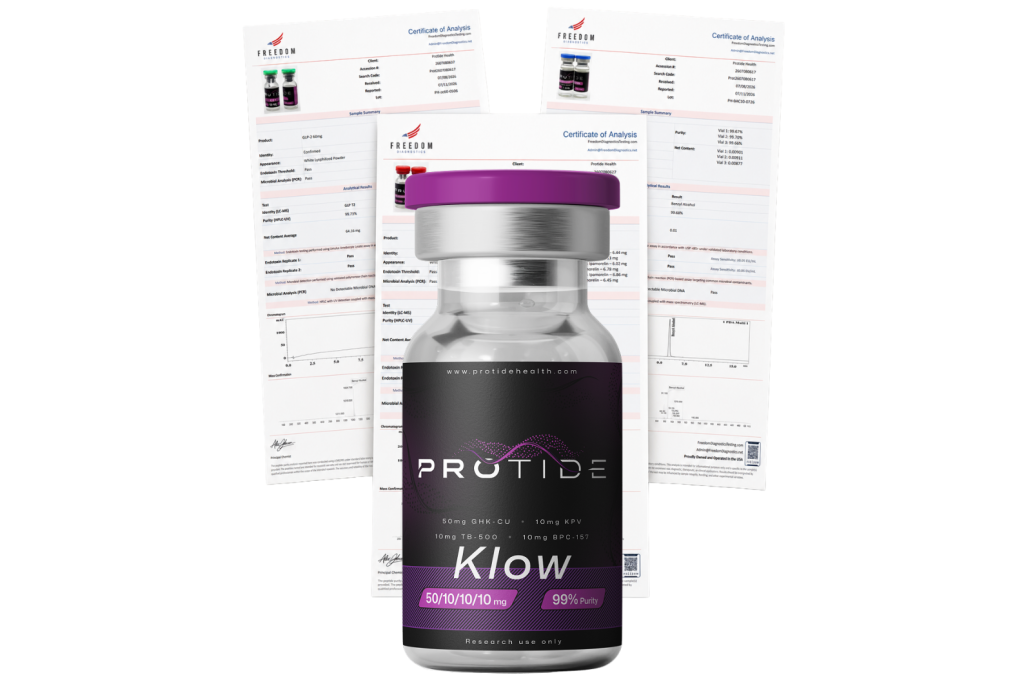
Lyophilization is freeze-drying. Removing water from the peptide solution leaves a dry powder that is far more stable in storage than a liquid, which is why nearly all research peptides ship in this form. Klow arrives as a dry cake in a sealed glass vial.
One visual detail is worth knowing before a vial arrives. Klow is blue. Most lyophilized peptides are white to off-white powders, but GHK-Cu is a copper-binding tripeptide, and the bound copper gives the finished blend a distinctly blue appearance. Certificates of Analysis for the blend record appearance as “blue lyophilized powder.” A blue vial is expected here and is not a sign of contamination or degradation.
Klow Blend has not been evaluated or approved by the FDA. It is not a drug and is not intended for human or veterinary use. Suppliers like Protide Health selling it for laboratory research state this clearly.
What’s Inside Klow: The Four Components
Each of the four peptides in Klow is a chemically distinct compound. They are not four versions of the same thing.
GHK-Cu (50 mg)
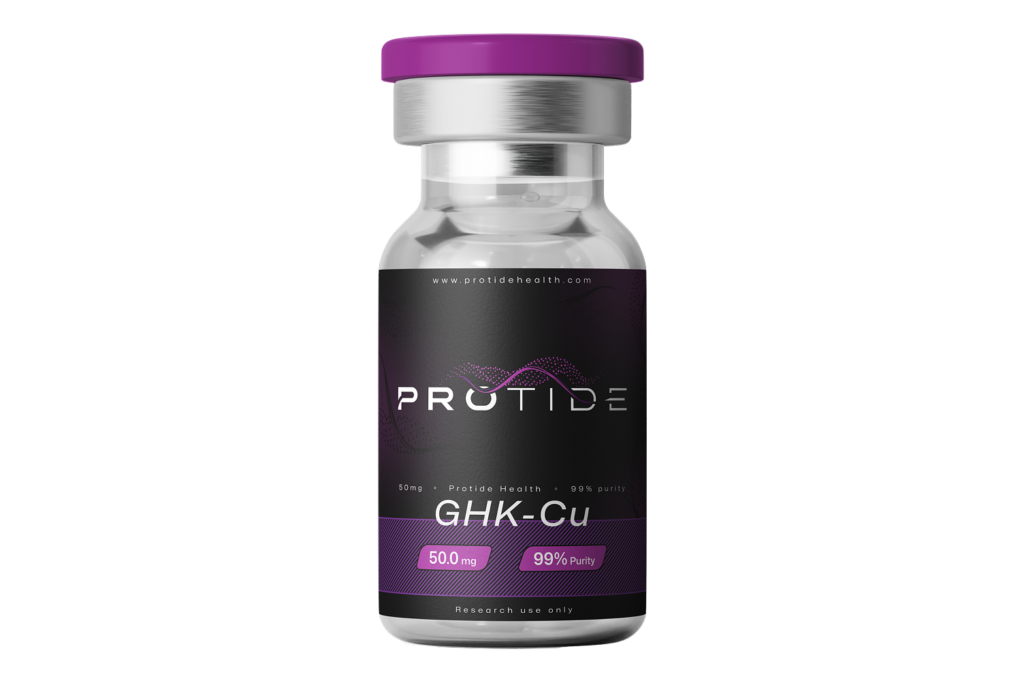
Related single-compound reference: GHK-Cu copper peptide.
KPV (10 mg)
KPV is the component that distinguishes Klow from the Glow blend, covered in detail below.
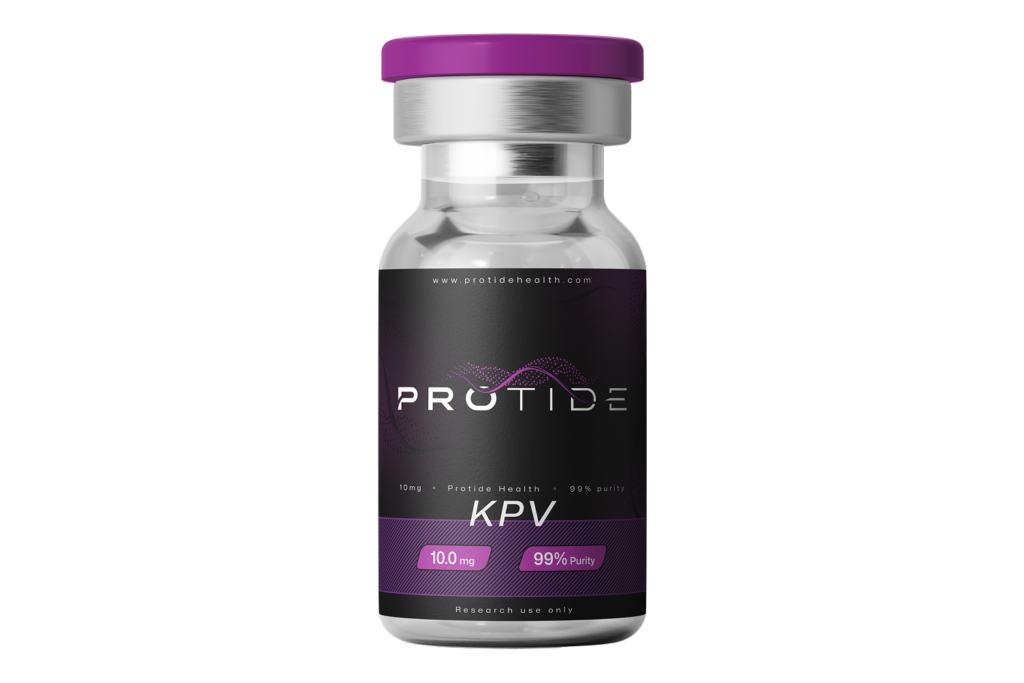
Related single-compound reference: KPV 10mg.
BPC-157 (10 mg)
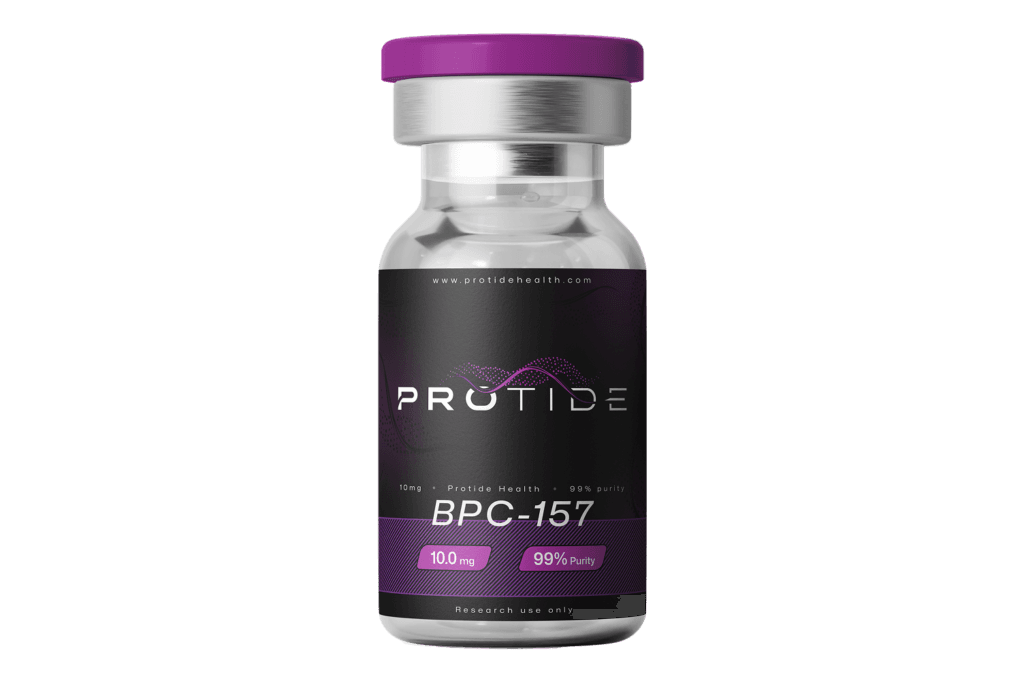
Related single-compound reference: BPC-157.
TB-500 / Thymosin Beta-4 (10 mg)
Certificates of Analysis for Klow list this component under its full name, thymosin beta-4, rather than the TB-500 shorthand.
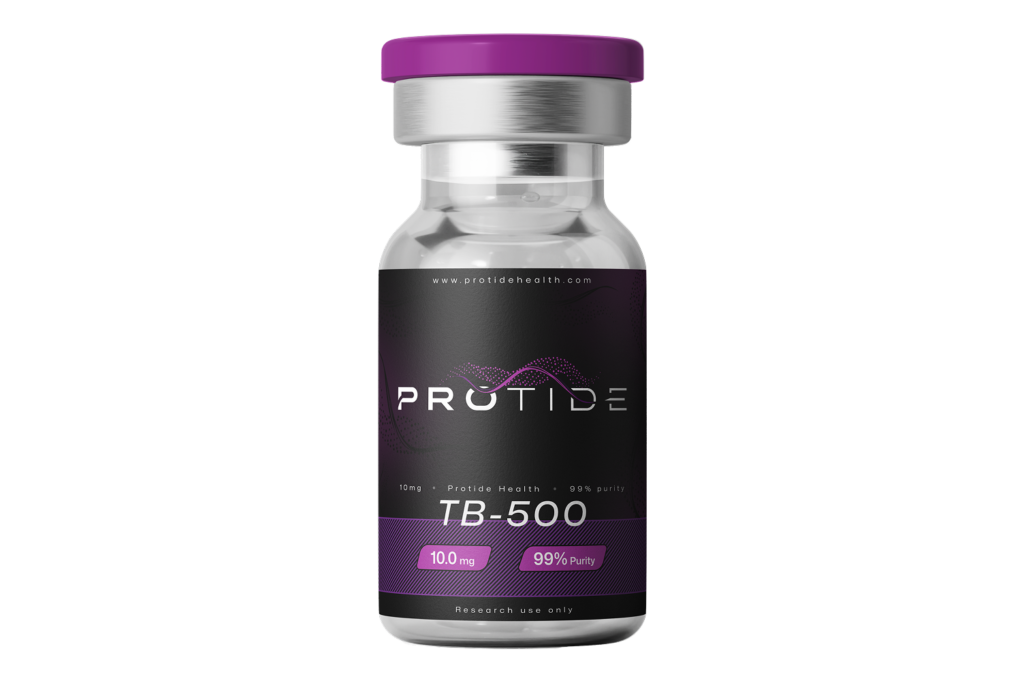
Related single-compound reference: TB-500 (Thymosin Beta-4).
Why Klow Is Labeled 80mg
Searches for “klow 80mg” and “klow 80” are common, and the number causes confusion.
80mg is the total peptide mass in the vial, arrived at by adding the four components together: 50 + 10 + 10 + 10. It describes fill quantity. Two vials both labeled 80mg from different suppliers can contain different ratios, so the component breakdown matters more than the headline number.
The shorthand “50/10/10/10” refers to the same thing, listing each component in order: GHK-Cu 50mg, KPV 10mg, BPC-157 10mg, TB-500 10mg. Suppliers use the two labels interchangeably.
Because the components are present at different masses, the vial should not be read as a single uniform 80mg unit; the per-component figures on the batch-specific Certificate of Analysis are the reference values.
Klow vs Glow: What’s the Difference?
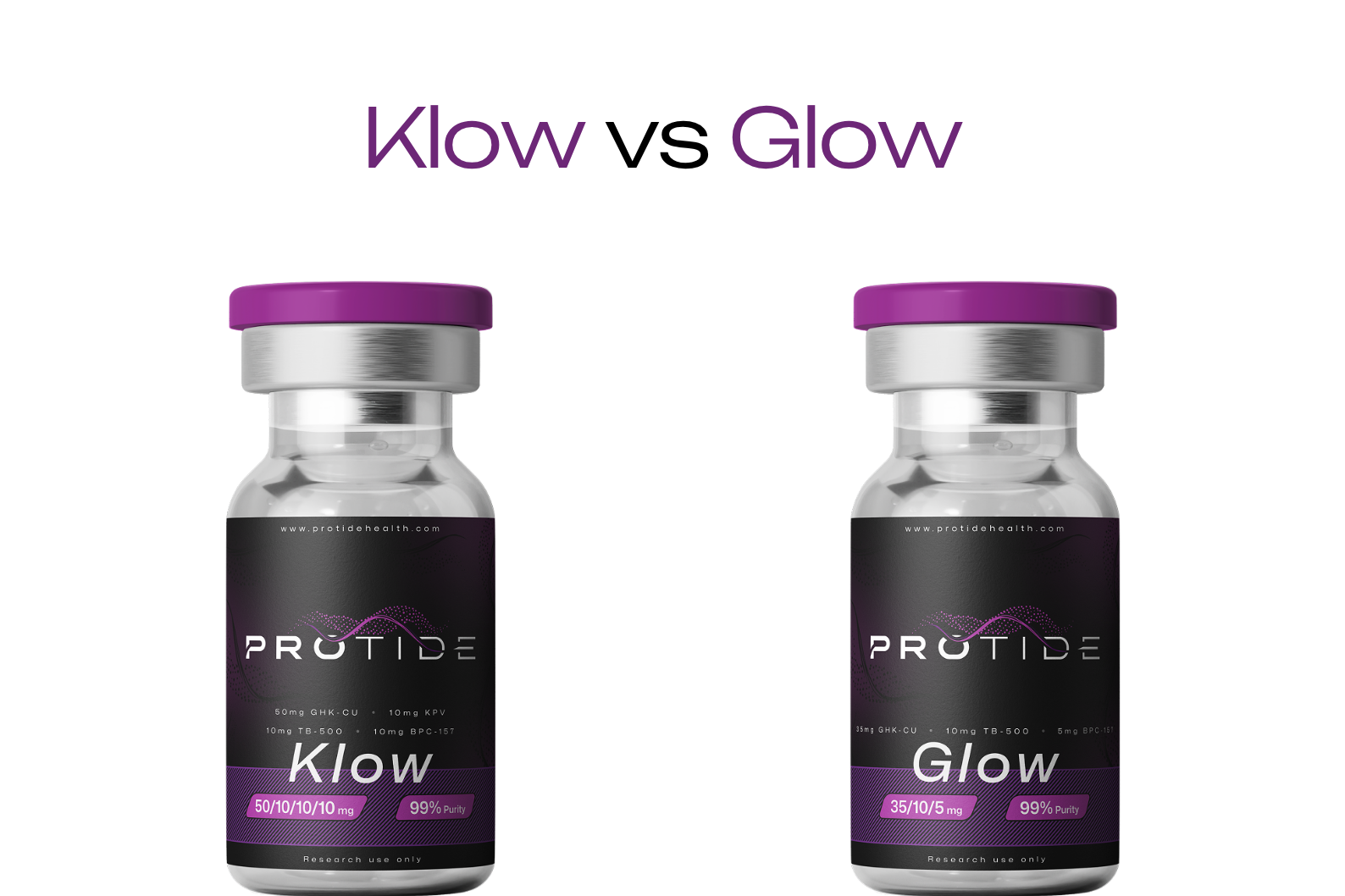
This is the most common comparison question in the category, and the answer is short: Glow contains three peptides, Klow contains four. The difference is KPV.
|
Details |
Klow Blend |
Glow Blend |
|---|---|---|
|
Components |
GHK-Cu, KPV, BPC-157, TB-500 |
GHK-Cu, BPC-157, TB-500 |
|
Number of peptides |
4 |
3 |
|
Distinguishing component |
KPV |
None additional |
|
Typical total mass |
80 mg |
Varies by supplier |
|
Appearance |
Blue lyophilized powder |
Blue lyophilized powder |
|
Format |
Single lyophilized vial |
Single lyophilized vial |
|
Intended use |
Laboratory research only |
Laboratory research only |
Both blends share the same three-peptide components of GHK-Cu, BPC-157, and TB-500. Klow adds KPV, the α-MSH fragment.
Both blends appear blue for the same reason, since both contain GHK-Cu.
Compare specifications directly: Klow Blend and Glow Blend.
How Klow Blend Is Tested
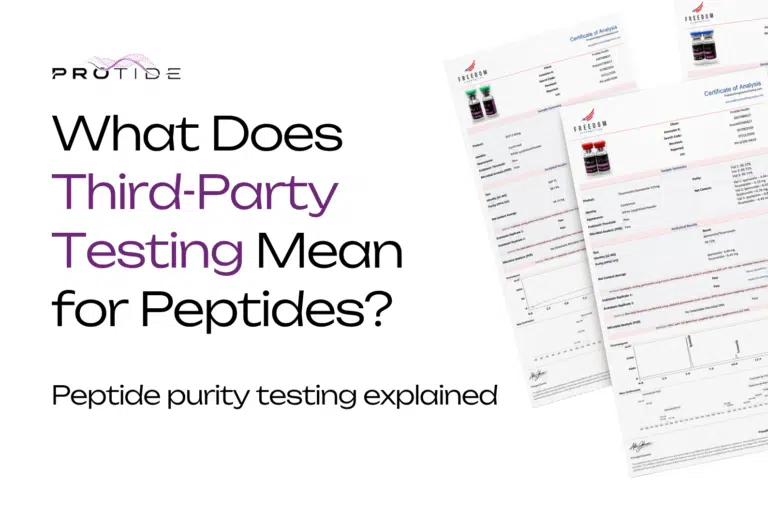
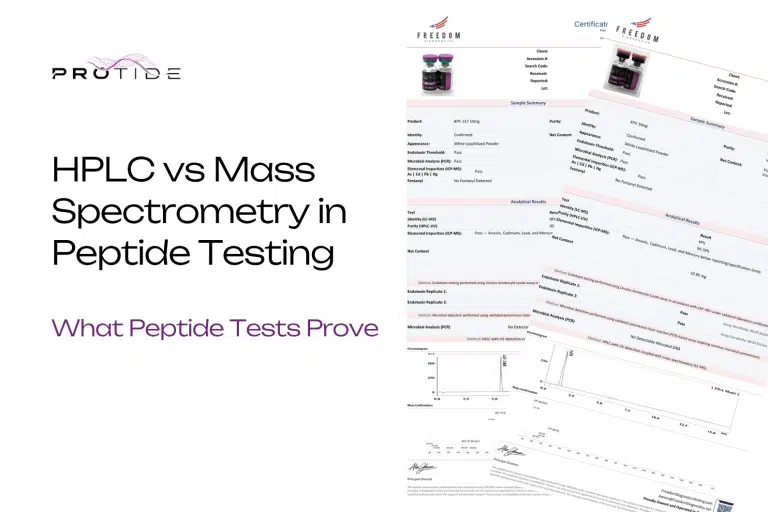
A blend introduces a verification problem that single compounds do not have. With four peptides in one vial, a purity figure alone says nothing about whether all four are present at the stated masses. A meaningful Certificate of Analysis for a blend has to confirm identity for each component, report purity, and verify net content per peptide.
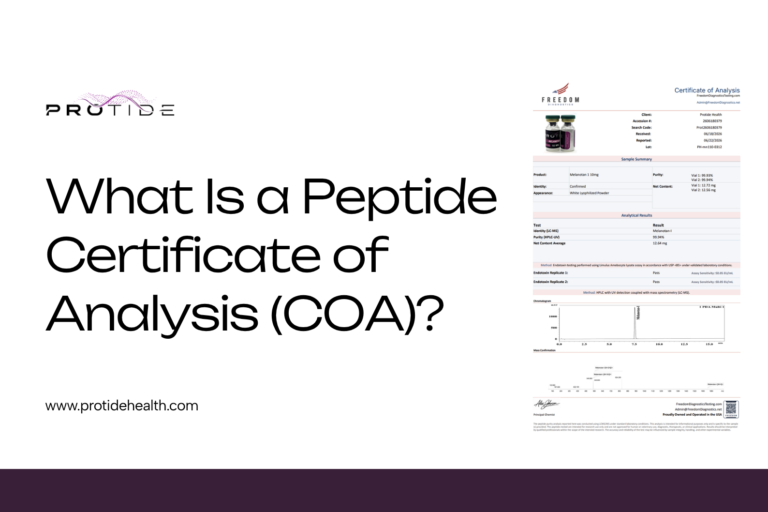
The most recent Klow Blend Certificate of Analysis published by Protide Health from independent third-party testing, covering lot PH-KO80-0309, illustrates what that looks like in practice.
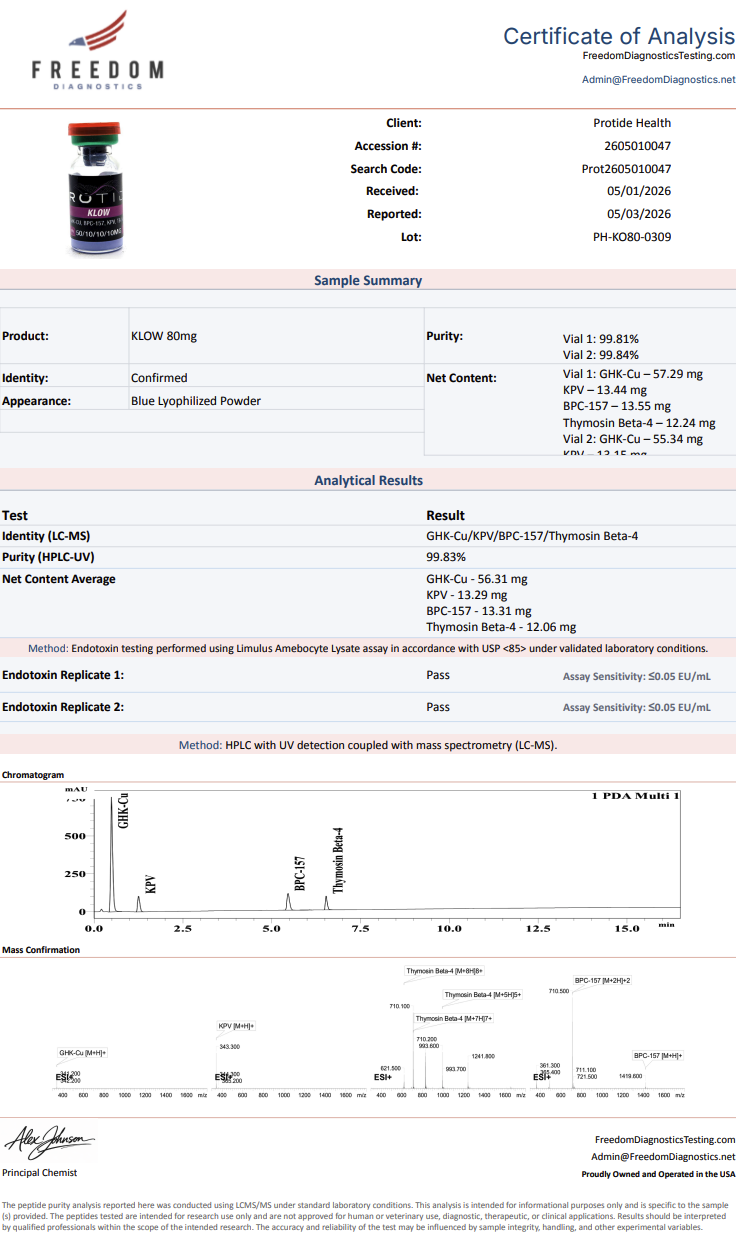
Laboratory and method. The analysis above was performed by Freedom Diagnostics, an independent US laboratory named on the certificate and signed by the analyst who ran it. Purity was measured by HPLC with UV detection coupled to mass spectrometry, and bacterial endotoxin was tested using a Limulus Amebocyte Lysate assay under validated conditions.
Purity. Two vials from the lot were assayed independently rather than as a single composite sample, returning 99.81% and 99.84% by HPLC area percent for a reported average of 99.83%.
Identity. Mass identification confirmed all four components: GHK-Cu, KPV, BPC-157, and thymosin beta-4. This is the check that matters most for a blend, because it confirms the vial contains what the label claims rather than a subset.
Net peptide content. Publishing per-component content is the only way to confirm a blend is not underfilled on its smaller constituents. Because measured content varies by lot, the batch-specific Certificate of Analysis rather than the label mass is the authoritative record of per-component content.
Endotoxin. Two replicates, both passing. Endotoxin matters because bacterial contamination can confound laboratory assay results independently of the material being tested.
Appearance. Recorded as blue lyophilized powder, consistent with the copper content of GHK-Cu.
Batch history. Three independent tests are on file for this product, showing 99.83% for lot PH-KO80-0309 reported May 2026, 99.597% for lot cs-k0801012 reported February 2026, and 99.68% for a lot reported November 2025. Retained batch history matters because it lets a laboratory trace material purchased months earlier rather than seeing only the current lot.
What to check on any Klow certificate
Regardless of supplier, the following separate a useful certificate from a decorative one:
- A named testing laboratory. A certificate carrying only a supplier’s own watermark cannot be traced to whoever ran the instrument.
- A lot number that matches the vial. Generic catalog-wide figures cannot verify the specific material shipped.
- Identity confirmation for all four components, not purity alone.
- Per-component net content, which is the only check on whether the smaller constituents are present at stated mass.
- A recent report date. Certificates more than a year old do not describe current production.
- Endotoxin results, which relatively few suppliers publish at all.
Background reading: what a peptide Certificate of Analysis actually shows. Every published Protide result is searchable in the COA library and can also be viewed in the test results archive.
Where to Source Klow Blend in the US
Klow is sold by research peptide suppliers, so sourcing decisions come down to what a supplier will document.
The practical checks are the same ones covered above. Does the supplier publish a per-lot certificate rather than a catalog-wide claim? Is the testing laboratory named? Can the certificate be read before purchase, or is it not publicly available? Does the certificate confirm identity for all four components and report net content per peptide? Is there retained batch history, or only the current lot?
Protide Health supplies the Klow Blend in an 80mg vial at GHK-Cu 50mg, KPV 10mg, BPC-157 10mg, TB-500 10mg, with certificates published openly. Testing is performed by Freedom Diagnostics across HPLC-UV purity, LC-MS identity, and endotoxin analysis, with results published per lot.
The full catalog of research compounds is available in the Protide Health peptide shop, and every published result across all products is in the COA archive.
View the latest Klow Blend COA published at Protide Health. Browse our catalog to procure research peptides with transparent specs and testing.
Klow Peptide Blend FAQs
What is the Klow peptide?
Klow is a four-peptide research blend containing GHK-Cu, KPV, BPC-157, and TB-500 in a single lyophilized vial. In the standard 80mg presentation the split is GHK-Cu 50mg, KPV 10mg, BPC-157 10mg, and TB-500 10mg. It is a supplier formulation name rather than a single compound, and it is supplied for laboratory research use only. See the Klow Blend product page for chemical details.
What is in Klow blend?
Four peptides. GHK-Cu at 50mg, a copper-binding tripeptide. KPV at 10mg, a tripeptide fragment of α-MSH. BPC-157 at 10mg, a gastric-derived pentadecapeptide. And TB-500 at 10mg, a peptide related to thymosin beta-4. Certificates of Analysis from Protide Health confirm identity for each of the four separately, and per-component net content is reported on lot PH-KO80-0309.
What is the difference between Glow peptides and Klow?
Klow contains four peptides and Glow contains three. Both share GHK-Cu, BPC-157, and TB-500. Klow adds KPV, an α-MSH fragment. That single component is the entire difference between the two formulations. Neither name is standardized across the industry, so component ratios can vary between suppliers under the same blend name.
Why is Klow blend blue?
GHK-Cu binds copper, and the bound copper gives the finished powder a blue color. Certificates of Analysis for Klow record appearance as blue lyophilized powder. Most research peptides are white to off-white, so a blue vial is specific to copper-containing formulations and is expected rather than a defect.
What does 80mg mean on a Klow vial?
It is the total peptide mass in the vial, calculated by adding the four components: 50 + 10 + 10 + 10. It describes fill quantity. The same total can be reached with different ratios, so the component breakdown carries more information than the headline number. The shorthand “50/10/10/10” describes the identical specification.
How is Klow blend tested?
At Protide Health, purity is measured by HPLC with UV detection, identity is confirmed by mass spectrometry for each of the four components, and bacterial endotoxin is tested using a Limulus Amebocyte Lysate assay. On the most recent published lot, two vials were assayed independently, returning 99.81% and 99.84% for an average of 99.83%, with net peptide content reported separately for each of the four components.
Where can Klow blend be sourced in the US?
From research peptide suppliers like Protide Health that publish per-lot documentation. The checks worth applying are whether the certificate names its testing laboratory, whether it can be read before purchase, whether it confirms identity for all four components rather than reporting purity alone, and whether batch history is retained.
Disclaimer
Disclaimer: Products sold by Protide Health are for laboratory research purposes only and are not intended for human consumption, medical use, or veterinary use. The information provided in this article is for in-vitro laboratory research only and is not intended for human or veterinary use. Nothing in this article is medical advice. Researchers must comply with all applicable federal, state, local, and institutional regulations and must obtain all necessary approvals prior to any experimental work.
References
- Pickart L, Vasquez‑Soltero J, Margolina A., 2015. Wiley Online Library
- Dalmasso G, et al, 2008. Open access via Europe PMC. Europe PMC
- Goldstein AL, Hannappel E, Kleinman HK, 2005. Cell Press
- American Journal of Physiology, 2011. APS Journals
- Hsieh MJ, et al., 2017. SpringerLink
- Pickart L. In, 2015. SpringerLink